

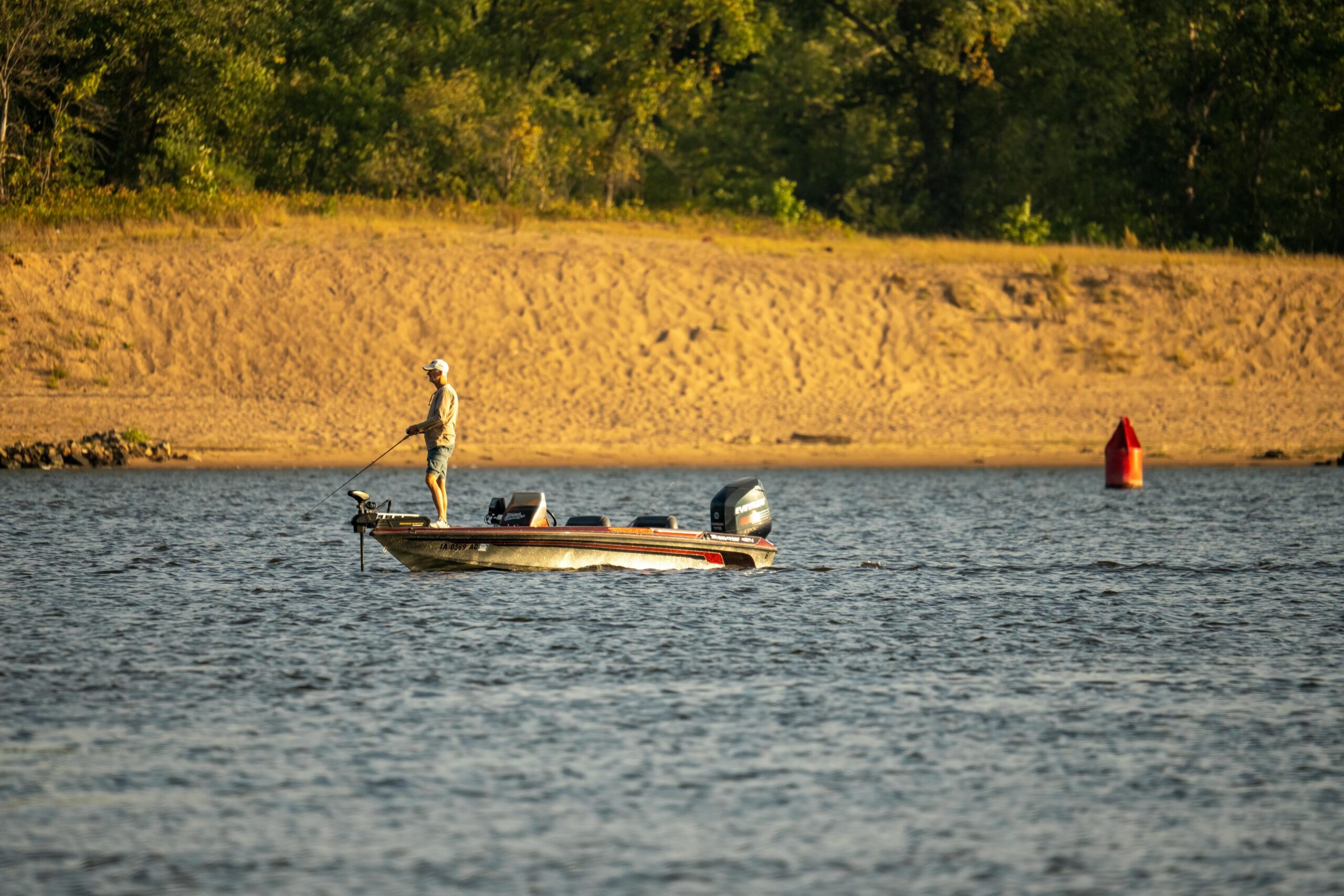
I’ve had catfish drag my rod off a bank rest into the Mississippi before I could get my hands on it. That was a $40 Shakespeare combo, and I wasn’t exactly broken up about it. But I’ve also watched guys lose legitimate flatheads fish in the 30- to 40-pound range because they were fishing with the wrong rod. Too much tip, not enough backbone, or a blank so stiff it threw circle hooks out of fish’s mouths before the fish could turn. The rod matters. Maybe more for catfishing than anything else.
The Mississippi is not a forgiving fishery. From Pool 4 up near Red Wing all the way down through the Wisconsin border pools, this river throws everything at you current that’ll drag a 4-ounce sinker sideways, timber snags that’ll punish a soft rod, and fish that can run 60-plus pounds if you’re targeting flatheads after dark. Most catfish rod content online is written by people fishing southern impoundments or pond edges for 5-pound channels. That’s not what we’re doing here. We’re talking about Midwest river catfishing: heavy current, heavy bait, and fish big enough to remind you that you probably should’ve used heavier line.
I put together this list specifically for Midwest conditions guys fishing the upper Mississippi from Minnesota and Wisconsin, working the pools, the lock-and-dam tailwaters, the backwater sloughs. There’s also a budget pick in here for anyone who wants a legitimate catfish rod without spending stupid money, because the truth is you can catch a 20-pound channel cat on a $58 rod if it’s the right $58 rod. The St. Croix entry on this list sits at the premium end, and I’ll tell you exactly when it’s worth the extra money and when it isn’t.
These four rods cover the realistic range of what a serious Midwest catfisher needs, from a budget-proof channel cat workhorse up to a sensitive, high-performance casting stick that doubles beautifully for big river bass and walleye. Read the reviews, check the comparison table, and match the rod to how you actually fish.
What Makes a Catfishing Rod Different And Why It Matters On Big Rivers
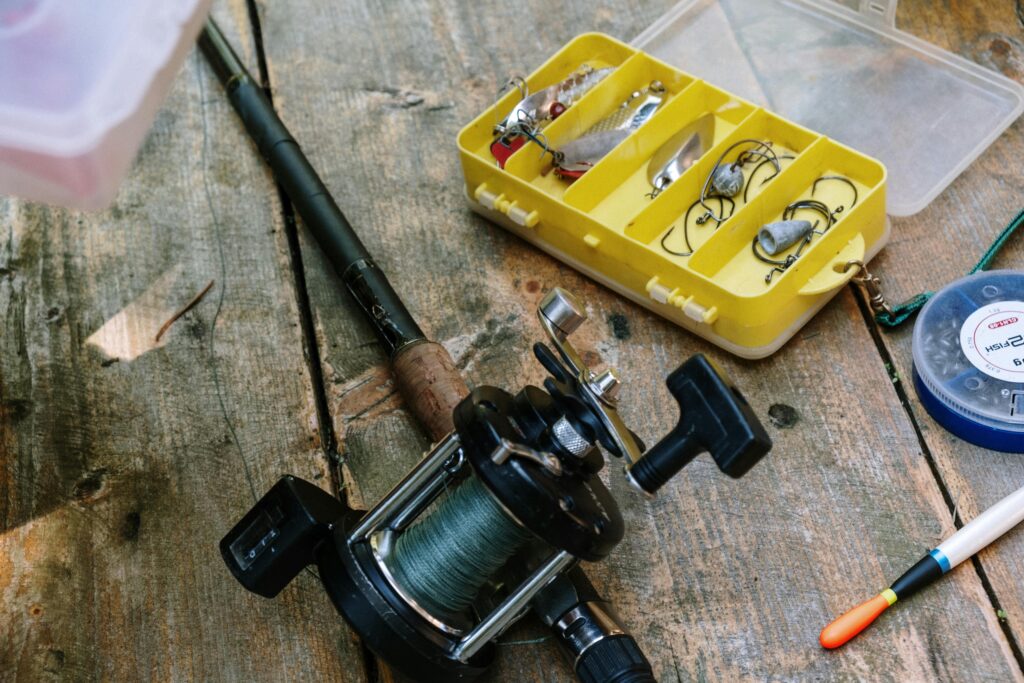
Most fishing rods are designed for finesse. They’re optimized to feel small bites, load smoothly on light lures, and handle fish measured in inches. Catfishing on the Mississippi River requires the opposite of most of that. You need a rod that can move heavy terminal tackle through current, handle a sustained fight from a fish that doesn’t quit, and detect a bite through a taut line in moving water. That’s a specific set of demands, and a general-purpose rod built for bass or walleye will fail at least one of them.
Rod Power and Action for River Cats
Rod power refers to how much force is needed to bend the rod. For Mississippi River catfishing, medium-heavy to heavy power is the practical range. Light-power rods don’t have the backbone to drive a circle hook home on a big flathead. Heavy-power rods are often too stiff for channel cats, where you want a little more tip flex to let the fish commit before the hook sets. Medium-heavy is the sweet spot for most Mississippi River channel and blue cat work. Bump to heavy if you’re specifically targeting big flatheads in Pool 5 or the deep timber of Pool 8.
Action refers to where the rod bends under load. Fast action rods bend near the tip. Moderate action rods bend deeper into the blank. For catfishing with circle hooks which is what the Minnesota DNR recommends for catch-and-release catfishing moderate to moderate-fast action is the better choice. Circle hooks need to slide into the corner of the mouth as the fish turns and moves away. A fast-action rod that you yank on the instant you feel weight will tear the hook out before the fish is properly pinned. That’s a lesson most Midwest catfishers learn the hard way once.
Length and Leverage on Moving Water
Rod length affects casting distance, bite detection, and fish-fighting leverage. Most experienced Mississippi River catfishers settle on 7 to 8.5 feet as the practical range for boat fishing, with longer rods up to 10 feet used for bank fishing where you need to cast farther and keep your line off the water. According to the Minnesota DNR’s catfishing resource guide, seven feet is a widely used starting point for rod length on big rivers, providing a good balance of casting leverage and sensitivity in moving water. Most of the rods reviewed here fall in the 7-to-8.5-foot range, which covers the majority of Midwest river catfishing situations.
Blank Material Matters
E-Glass (fiberglass) blanks dominate budget and mid-range catfish rods for a reason. Fiberglass handles shock loads well those moments when a big flathead turns and runs and the rod loads hard and fast. It’s forgiving in a way that matters when fish are over 20 pounds. Graphite blanks are lighter and more sensitive but can be brittle under sudden heavy loads if the blank modulus is too high. The best catfish rods for big rivers tend to combine graphite and fiberglass, or use fiberglass with enough quality in the construction to compensate for the weight. The American Sportfishing Association notes that blank construction is one of the primary factors consumers should evaluate when selecting fishing rods for specific applications, and that’s doubly true when you’re targeting multi-species catfishing in variable current.
Why Cheap Catfish Rods Fail on the Mississippi
The guides tell the story. Budget catfish rods under $30 typically use aluminum oxide guides with thin frames that corrode fast in river conditions and deform under heavy braided line load. Braid cuts guide inserts over time, and cheap single-foot guide frames flex rather than transferring energy efficiently along the blank. Reel seats on budget rods often use plastic locking rings that loosen mid-fight a problem when a flathead is running and you need your reel anchored. The Eagle Claw Catclaw reviewed below is about as cheap as you can go while avoiding these failure points, and there’s a reason it’s outlasted $80 rods in the field for some Mississippi River regulars.
The 4 Best Catfishing Rods For The Mississippi River
1. Eagle Claw Catclaw — Best Budget Rod | $57.99
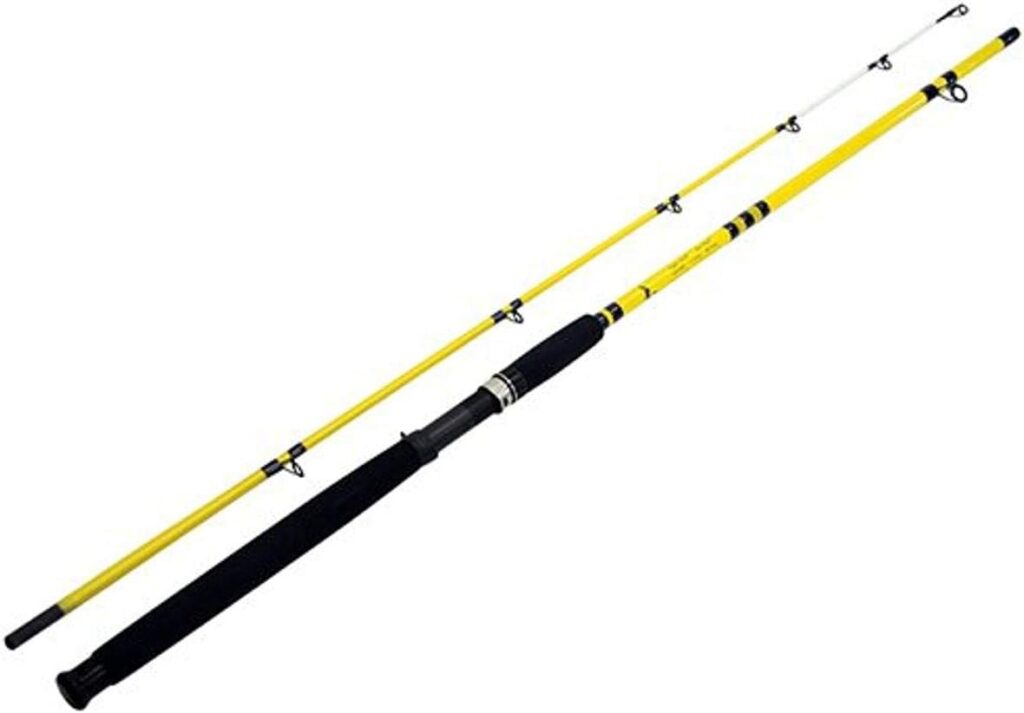
The Eagle Claw Catclaw is what you hand a kid on their first catfishing trip down at the river, and it’s also what experienced Mississippi River catfishers keep as a backup rod in the boat without any embarrassment. It’s the most unapologetically utilitarian rod on this list. There’s no carbon fiber, no precision-machined components, no marketing story. It’s E-Glass, aluminum oxide guides, and a graphite reel seat on a yellow stick that’s been catching Midwest catfish for decades.
The construction is straightforward and honest: two-piece E-Glass blank, medium-heavy power, 8 feet of length that gives you real casting leverage on big river water. Line weight runs 12-30 pounds, which covers the practical range for Mississippi River channels and blues. The 6+1 guide configuration might be one fewer guide than premium rods, but the aluminum oxide ceramic inserts handle braid without cutting, and the guide frames are substantial enough to resist deformation under load.
What makes this rod a legitimate pick for Midwest river fishing is the blank behavior. E-Glass handles shock loads differently than graphite. When a 15-pound channel cat picks up your rig at 2 AM and starts walking with it before you even get your hands on the rod, a fiberglass blank absorbs the initial load in a way that keeps the hook in place. Anglers who’ve fished Catclaw rods on the Mississippi pools consistently report that the rod lasts — 10-year-old Catclaws are still in active rotation, which is an honest field test that no lab can replicate.
The compromise is sensitivity. The E-Glass blank doesn’t telegraph subtle bites the way graphite does, so if you’re fishing tight-lining for channels in slack water, you may miss soft takes you’d feel on a graphite or composite rod. The two-piece design is convenient for transport but introduces a potential weak point at the ferrule — epoxy it if this becomes a problem. At $57.99, the Catclaw wins the cost-per-fish calculation for most Minnesota and Wisconsin river catfishers who want proven, replaceable gear without stress.
Best for: Shore fishing, first-time catfishers, anglers who want reliable gear they can abuse. Excellent for bank fishing the lock-and-dam tailwaters from Red Wing to Winona.
2. Ugly Stik GX2 — Best All-Around Workhorse | $84.95
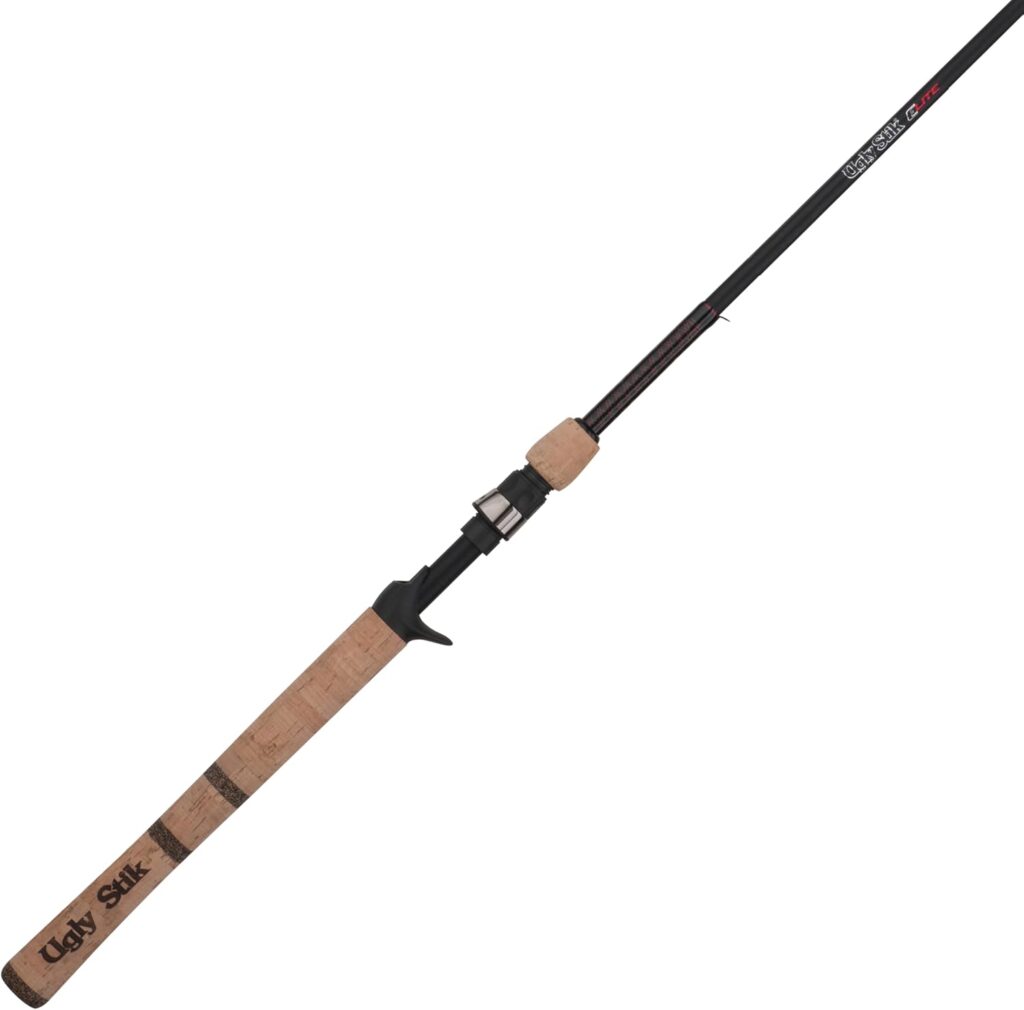
The Ugly Stik GX2 is one of the most fished rods on Midwest water, period. You’ll find it in boats from Lake Pepin clear down through the Iowa stretch of the Mississippi, usually in the 7-foot medium-heavy configuration that works equally well for channel cats, smaller flatheads, and the walleye and sauger fishing that shares the same water. If there’s a rod that every Midwest angler recognizes on sight, this is it.
The GX2 uses what Ugly Stik calls “Ugly Tech” construction a combination of graphite and fiberglass in a single blank that delivers a better balance of sensitivity and durability than pure fiberglass at a similar price point. The graphite content gives the rod enough sensitivity to detect a catfish mouthing bait in moderate current. The fiberglass backbone provides the forgiveness you need when a fish runs hard and the rod loads suddenly. It’s not the most sensitive rod made and it’s not the toughest rod made, but it occupies a genuinely useful middle ground.
The Ugly Tuff one-piece stainless steel guides with PVD coating are one of the GX2’s best features in practice. Insert pop-outs are a common failure point on budget catfish rods when fishing braid, and the GX2 eliminates that problem entirely with the single-piece guide construction. The ergonomic reel seat exposes the blank for improved feel and locks down solidly no mid-fight loosening under heavy load. EVA foam handles provide excellent grip even with wet, slimed-up hands after landing a few good fish.
One honest note: Ugly Stik made a guide quality change between the 2024 and 2025-2026 production runs, switching from double-seated to single-seated guides in some configurations while raising prices. If you’re buying new, the rod still performs well, but it’s worth knowing that the earlier production runs are slightly more durable in the guide department. At $84.95, the GX2 is the rod I’d recommend to any angler building their first serious Mississippi River catfish setup. It handles the full range of river work, pairs well with a baitcaster or a heavy spinning reel, and it simply doesn’t break under normal use.
Best for: All-around Mississippi River catfishing, anglers who target multiple species on the same water, first serious catfish rod purchase. The 7-foot medium-heavy configuration is the most versatile for Midwest conditions.
3. B’n’M Silver Cat — Best Dedicated Catfish Rod | $79.99
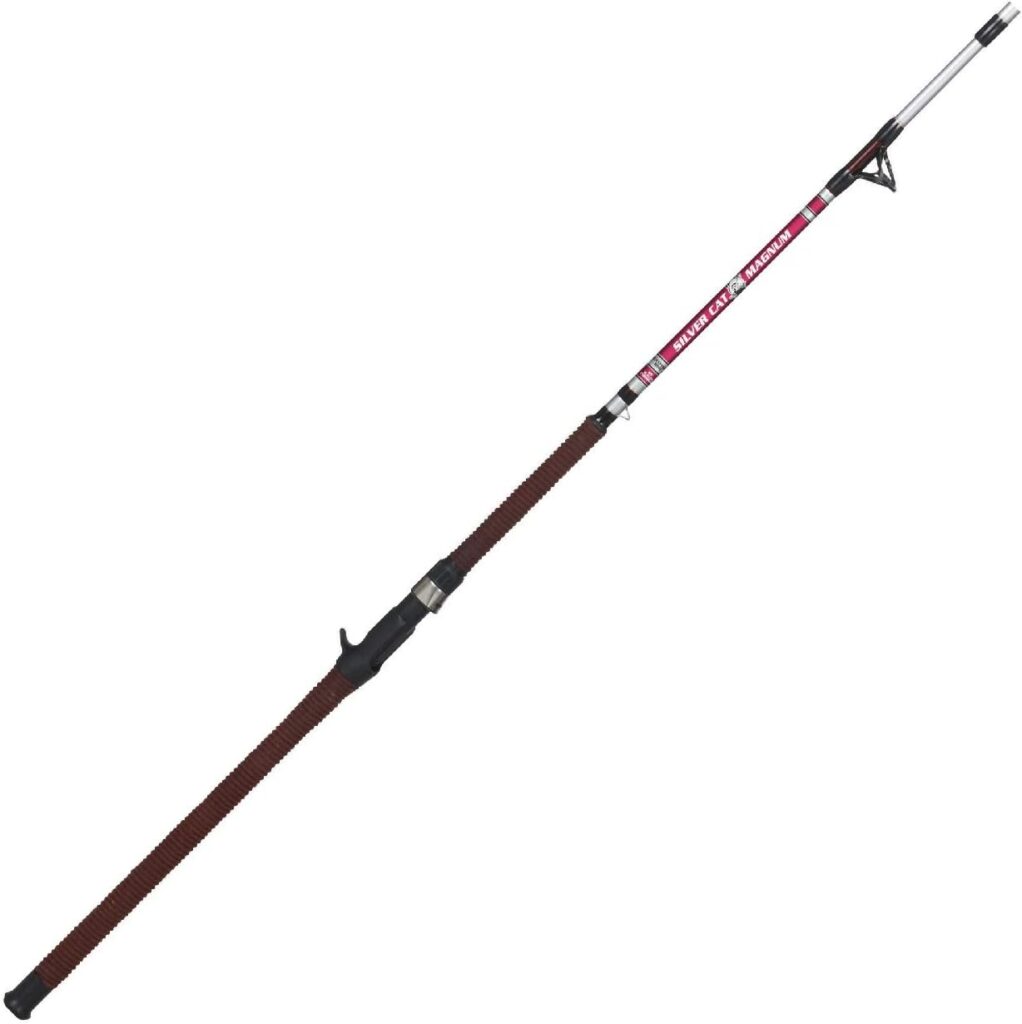
B’n’M has been building crappie poles longer than most tackle companies have been in business, and when they crossed over into catfish rods they brought that same obsession with material quality and blank sensitivity. The Silver Cat is their purpose-built catfishing rod, and it fills a gap that neither the budget Catclaw nor the versatile GX2 fully covers: a true dedicated catfish rod with genuine engineering behind it, at a price that doesn’t require explanation.
The blank is 100% fiberglass not graphite-fiberglass composite, not “enhanced” anything, straight E-glass built specifically for the demands of catfishing. Fiberglass behaves differently from graphite under heavy load and sudden shock, absorbing energy rather than transferring it. When a big Mississippi River flathead picks up your rig in 20 feet of water and moves hard, that shock absorption is what keeps the hook in place and the line from snapping. The non-parabolic action design is worth understanding: B’n’M built this blank to be stiff through the lower two-thirds and transition to a faster, more sensitive tip section. That gives you the backbone to handle heavy current and large fish while maintaining enough tip sensitivity to see subtle channel cat bites clearly. The glow-in-the-dark tip is a genuinely practical detail on a rod designed for nighttime use if you’ve ever watched three dark rod tips at midnight on the Mississippi, you understand immediately.
Hardware quality exceeds what you’d expect at this price. The graphite reel seat keeps the reel tight to the blank for maximum sensitivity transfer, and it doesn’t loosen over a season of hard use the way plastic-nut reel seats do on cheaper rods. The ceramic guide inserts with aluminum oxide alloy frames handle heavy braid without cutting. The nylon cord grip is polarizing some anglers prefer cork or EVA foam, and B’n’M will acknowledge you can rewrap it but functionally it performs, staying non-slip even with slimed-up hands after landing multiple fish.
Field reports from anglers running these on the Missouri River and the lower Mississippi which fish similarly in terms of current and fish size to upper Mississippi pools include blues and flatheads up to 80 pounds on standard production Silver Cat rods. That’s not marketing copy, that’s forum posts from guys running these rods five days a week in heavy current. The rod won’t fail before the fish does, which is the only real test that matters. At $79.99, it sits between the Catclaw and the GX2 in price while being more purpose-specific than either.
Best for: Anglers who want a dedicated catfish rod built specifically for the application. Bank fishers targeting flatheads and big channels on the upper Mississippi pools at night. The glow tip and fiberglass backbone make this the most catfish-optimized rod on the list.
4. St. Croix Bass X Casting Rod — Best Premium Pick | $145

St. Croix builds their rods in Park Falls, Wisconsin about four hours north of the Mississippi River pools where I spend most of my summer fishing time. There’s something fitting about that. The Bass X is their value-tier casting rod, and while it’s not marketed as a catfish rod, the 7’1″ medium-heavy fast-action version is one of the sharpest-performing rods you can put in your hands for river catfishing at this price point. I say that knowing it’ll raise some eyebrows from folks who swear you need a dedicated cat rod.
The SCII carbon fiber blank is the foundation here. It’s a mid-modulus graphite that splits the difference between sensitivity and durability better than most rods in its price range. You feel bites. Not just big runs you feel the subtle resistance changes when a channel cat picks up your rig and sits with it, the kind of feedback that tells you when to start slowly taking up slack before the fish commits. On a rod with a pure fiberglass blank, you’re waiting for the rod tip to load. On the Bass X, you’re reading a more complete picture of what’s happening at the business end of your line.
The stainless steel guides with aluminum oxide inserts handle braided line well, and the cork and EVA foam split-grip handle is genuinely comfortable during extended fishing sessions — better than the shrink-tube and foam you find on most dedicated catfish rods in this price range. The 5-year warranty with a modest transfer fee is one of the better commitments you’ll find in this price bracket. St. Croix stands behind their rods, and the Park Falls warranty service is responsive.
Where the Bass X earns its premium designation is versatility. This rod is genuinely excellent for walleye on the Mississippi, which is the primary target for most Midwest anglers working these pools. When catfish are running well which they do every summer in Lake Pepin and the tailwaters below Pools 6 through 9 this rod transitions without any compromise. The 12-20 pound line rating and the fast action suit braid-to-leader setups with circle hooks. It’s also significantly lighter than any fiberglass catfish rod on this list, which reduces arm fatigue during long river sessions.
The one honest caution: the fast action tip is sensitive in a way that requires discipline on the hook set. If you’re used to hammering on every take, you’ll occasionally pop the hook out of a fish’s mouth before it’s properly set on a circle hook. Let the rod load. Let the fish move. The Bass X rewards patience, and the anglers who fish it correctly catch more catfish than those who fight the rod’s design. At $145, this is the rod to buy when you want a single casting rod that handles everything the upper Mississippi throws at you.
Best for: Experienced Midwest anglers who target multiple river species, walleye anglers who also catfish seriously, anyone who wants a premium-tier casting rod that handles big catfish without being limited to catfish duty.
Quick Comparison Table
| Rod | Price | Power | Action | Length | Blank | Best Use |
|---|---|---|---|---|---|---|
| Eagle Claw Catclaw | $57.99 | Medium-Heavy | Moderate | 8′ | E-Glass | Budget workhorse, shore fishing |
| Ugly Stik GX2 | $84.95 | Medium-Heavy | Moderate-Fast | 7′ | Graphite/Glass | All-around river catfishing |
| B’n’M Silver Cat | $79.99 | Medium-Heavy | Non-Parabolic | 7′ | 100% Fiberglass | Dedicated catfish, night fishing |
| St. Croix Bass X | $145 | Medium-Heavy | Fast | 7’1″ | SCII Graphite | Premium multi-species, precision |
How to Choose the Right Catfishing Rod for Midwest Rivers
Match the Rod to the Catfish Species
The three catfish species in the Mississippi River fish differently, and that influences rod selection. Channel catfish are the most common target in the upper Midwest pools and respond well to moderate-action rods in the medium-heavy power range. They often take bait with a slow pickup before moving, which means the rod should have enough tip flex to avoid alerting the fish before it commits. Flatheads are ambush predators that typically hit hard and move fast heavy power, heavier line, and a faster action that can drive a large circle hook home quickly. Blue catfish in the upper Mississippi River are less common than in the southern stretch of the river but do appear in the lower Iowa and Illinois sections; they fish similarly to channels, though they tend toward heavier current lines that demand more backbone in the rod.
Fishing Style Determines Everything
Bank fishing with multiple rods in rod holders is the most common Midwest catfishing approach. For this style, you want moderate action rods that allow the fish to pick up the bait and move before the rod loads the Catclaw, GX2, and Silver Cat all excel here, with the Silver Cat’s glow tip giving it a practical edge for night sessions. Boat fishing with active presentations working cut bait along current seams, dropping bait into tailwater chutes, casting to wing dams benefits from a more sensitive rod like the Bass X. Drift fishing on the main river channel, where you’re managing bait position constantly in moving water, calls for the GX2’s combination of sensitivity and durability.
Line Weight and Terminal Tackle Matching
The American Fishing Tackle Manufacturers Association guidelines recommend matching your rod’s line weight rating to your actual fishing line to maintain blank performance and avoid overstressing the rod under load. For most Mississippi River channel and blue cat work, 20-30 pound monofilament or 40-65 pound braid with a 20-30 pound fluorocarbon leader is the practical range. The Catclaw, GX2, and Bass X all handle this setup well. If you’re fishing the heavier end with 50+ pound braid for flatheads, the Catclaw’s E-Glass construction handles the shock load most forgivingly.
When to Spend More vs. Save Money
Spend more when you’re targeting multiple species on the same water and need one rod that handles everything. The Bass X at $145 is worth every dollar if it’s replacing two or three single-purpose rods. Save money when you’re building a multi-rod bank fishing setup where rods will sit in holders for hours overnight in that situation, four $58 Catclaw rods work better than one $200 custom. The GX2 at $84.95 is the honest middle ground: spend this once, treat it reasonably well, and it’ll outlast several budget alternatives.
Mississippi River Catfishing Midwest-Specific Considerations
The Upper Pools Are Different
If you’ve never catfished Pool 4 near Red Wing or Pool 8 near La Crosse, understand that the upper Mississippi River produces flathead catfish that regularly push 50 pounds and channel catfish averaging well over 5 pounds in prime areas. These aren’t pond channels. The current in the main channel during spring runoff tests even quality rods. Anglers who routinely fish the Wisconsin-Minnesota border section of the river report that current management meaning how well the rod loads at anchor with a heavy sinker keeping bait in place matters as much as bite sensitivity.
Night Fishing and Rod Tip Visibility
Most serious catfish bites on the upper Mississippi happen after dark, particularly for flatheads. The Eagle Claw Catclaw’s yellow blank is easier to see in low light than darker-blanked rods a practical advantage that sounds trivial until you’re on the water at 11 PM watching three rod tips for movement. The B’n’M Silver Cat one-ups both with a purpose-built glow-in-the-dark tip that shows even subtle channel cat pickups in total darkness without needing a clip-on light. If you fish nights regularly on the Mississippi, that Silver Cat tip is not a gimmick it’s one of the more useful design decisions on any catfish rod at this price.
Cold Water and Late Season Fishing
Minnesota’s catfish season runs through October, and water temperatures below 55°F change catfish behavior significantly. The Minnesota DNR catfishing guidelines note that channel catfish seek deep water and protection from current in cold conditions, moving to 25- to 40-foot holes in the main channel. This late-season fishing rewards longer rods that can keep your line tight at steep angles to deep structure another argument for the 8-foot Catclaw over a shorter rod when fishing October pools.
Regulations and Species Considerations
Wisconsin and Minnesota both maintain catfish regulations that vary by water body and section of the Mississippi River. Before you target flatheads specifically in the upper pools, verify current size and bag limits through the Wisconsin DNR and Minnesota DNR regulation summaries. Lake Pepin the wide pool stretching from Red Wing to Wabasha falls under specific regulations for some species, and understanding them before you fish saves you from an uncomfortable conversation with a conservation officer.
Looking For More Fishing Gear Coverage
This article focused on catfishing rods for the Mississippi River. As we build out our fishing gear coverage at MidwestOutdoorLife, we’ll be reviewing everything from catfish reels and line to the best setups for walleye on the same water. Check our Fishing Gear category for the latest content as it publishes.
Bottom Line
Best budget pick: Eagle Claw Catclaw at $57.99. Proven, durable, and honest. If you want to fish multiple rods on the bank without stress over gear cost, this is the answer.
Best all-around pick: Ugly Stik GX2 at $84.95. The rod that fits most Mississippi River catfishers’ actual needs, handles every technique you’ll use on the water, and lasts long enough to justify the price several times over.
Best dedicated catfish pick: B’n’M Silver Cat at $79.99. The most catfish-specific rod on this list. Built for the application, glow tip for night use, fiberglass backbone for shock absorption if you’re exclusively targeting cats and want a rod engineered for nothing else, this is it.
Best premium pick: St. Croix Bass X at $145. Buy this when you want one casting rod that handles walleye, bass, and catfish on the same river without compromise. It’s the most versatile rod on this list and the one I’d reach for if I could only bring one rod to the upper Mississippi.
FAQs
For boat fishing on the upper Mississippi River pools, 7 to 8.5 feet covers most situations well. Shorter rods in the 7-foot range like the Ugly Stik GX2 provide good leverage for fighting fish in a boat and work fine when you’re actively managing your presentation. Longer rods in the 8- to 8.5-foot range give you additional casting distance and keep your line at a better angle when anchored in strong current. Bank fishing setups, where you need to cast past current lines and keep your line off the water, benefit from rods in the 9- to 10-foot range. The Eagle Claw Catclaw’s 8-foot length hits a useful middle ground that works reasonably well in both boat and bank fishing situations.
Both work, and experienced Mississippi River catfishers use both depending on technique. Baitcasting reels specifically the Abu Garcia 6500 and 7000 series that are ubiquitous on the upper river offer the line capacity, drag power, and clicker feature that suits heavy catfish rigs in current. Spinning setups are more accessible for anglers who didn’t grow up baitcasting, and a quality medium-heavy spinning rod like the GX2 handles channel cat fishing at all experience levels. The primary practical advantage of baitcasting gear for Mississippi River catfishing is the bait-clicker feature, which allows a fish to take line without feeling resistance before you engage the reel. That’s a meaningful advantage when you’re letting fish run before setting up on a circle hook.
Moderate to moderate-fast action is the answer, and this matters more than most gear reviews acknowledge. Circle hooks need the fish to move away and load the rod naturally for the hook to slide into the corner of the jaw. A rod with a very fast tip where most of the bend happens in the top 20% of the blank will resist the fish prematurely. A moderate action rod flexes deeper into the blank, keeping the hook in contact with the fish as it turns and moves. Both the Eagle Claw Catclaw and the Ugly Stik GX2 have moderate action characteristics that suit circle hook fishing well. The St. Croix Bass X is fast action, which is excellent for sensitivity but requires discipline on the hook set resist the urge to swing, and let the rod do the work.
Not if you’re fishing the upper Mississippi River. The St. Croix Bass X was designed for bass fishing, but its specifications SCII graphite blank, medium-heavy power in the 7’1″ fast action configuration, 12-20 pound line rating translate directly to channel cat and medium-sized flathead fishing. What the Bass X adds over a dedicated catfish rod is blank sensitivity. On a river like the Mississippi, where current noise makes it hard to distinguish between a catfish picking up bait and a riffle bouncing your sinker on the bottom, that sensitivity translates to more fish detected and more fish hooked. The 5-year warranty from a Wisconsin-based rod builder is also a genuine value add at $145. If you’re primarily targeting 40-plus pound flatheads on 50-pound braid, the Bass X isn’t the right tool. For the realistic range of upper Mississippi River catfishing, it’s an excellent rod that happens to be labeled for bass.
A well-maintained rod in the $60-$90 price range should last 5-7 years with regular use on the river. Premium rods like the Bass X often outlast that significantly, especially with the warranty backing repairs or replacement. The most common failure points are guide damage from abrasion and dropped rods, and the reel seat on cheaper rods loosening over time. The Eagle Claw Catclaw’s reputation for longevity in the field 10-year-old rods still fishing is legitimate and driven by the E-Glass blank’s resilience. Rinse your rods after every river session, store them in a rod tube or sleeve when transporting, and inspect guides periodically for grooves or cracks from braided line. A rod that’s properly cared for at any price point will outlast one that gets thrown loose in the boat every trip.

Leave a Reply