

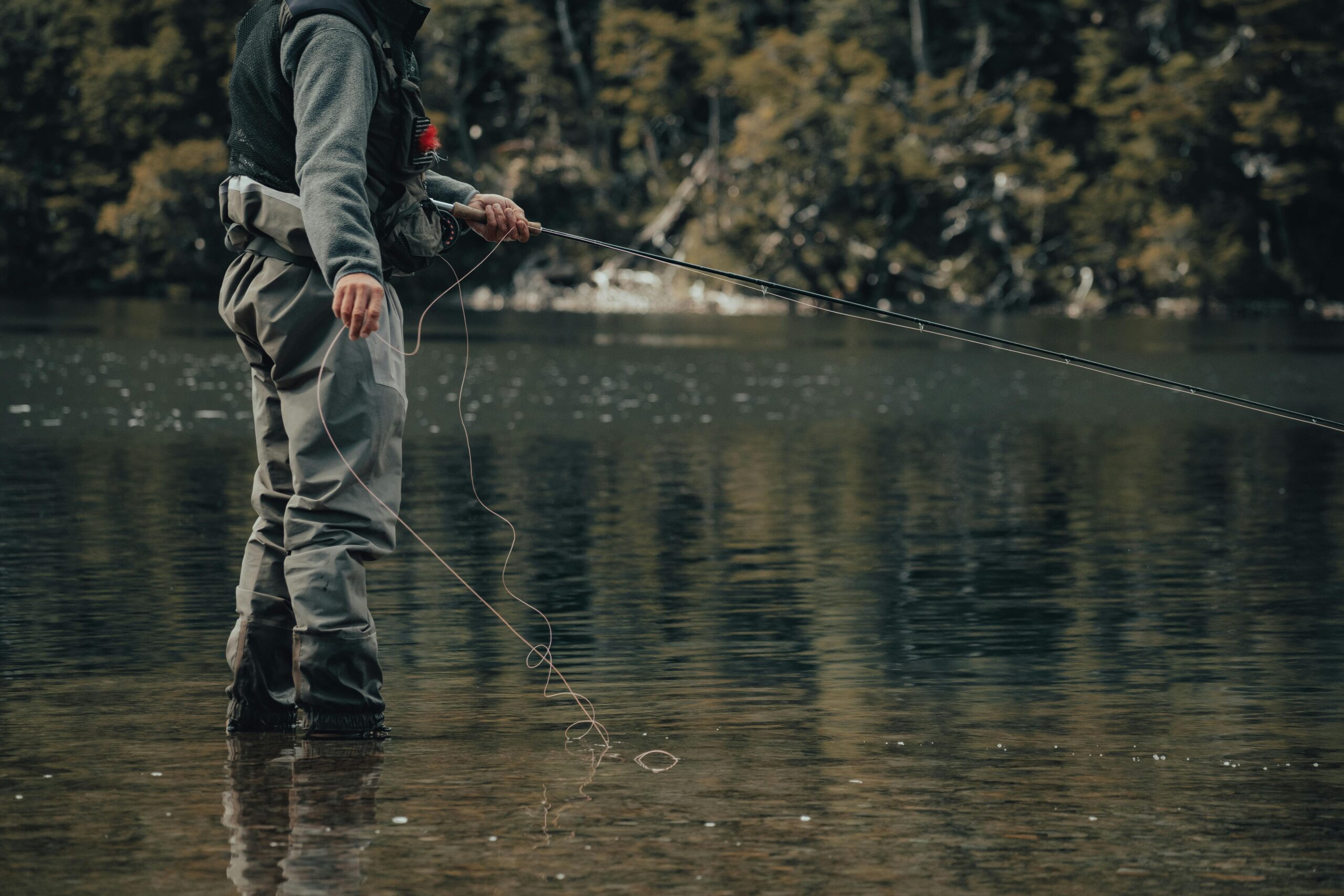
Buying a fly rod based on a YouTube review filmed on a Montana spring creek is a reliable way to show up on the Root River in SE Minnesota and spend your first hour fighting your own equipment. The gear advice that dominates the internet assumes open casting lanes, mild spring water, and fish that haven’t seen 200 anglers in the last two weeks. That is not the Driftless Area. The Driftless is tag alders leaning into the water, nine-foot casts through a two-foot gap in the brush, and trout that have seen every soft-hackle in the catalog. A rod built to excel on those conditions looks nothing like a rod optimized for wide-open tailwater.
The problem is that most fly rod reviews are written for a national audience or worse, for an imagined audience of aspirational anglers who fish western big water once a year. The reviews cover fast-action rods that cast 70 feet effortlessly and ignore the fact that 70-foot casts are nearly useless on SE Minnesota spring creeks where the stream is 18 feet wide and your back is against a hillside. The result is thousands of anglers owning rods that technically perform well under conditions they’ll never fish in.
I’ve waded the Root River, the Whitewater, and the Kinnickinnic for the better part of 15 years, fished a dry fly under a tag alder on a 50°F April afternoon when the sulphurs were popping and I could feel every twitch of the current through a good rod and I’ve felt none of it through a bad one. I’ve nymphed heavy water in November when the temperature dropped to 38°F and my guides were icing up. I’ve tested rods across budget, mid-range, and specialty tiers
This article breaks down five fly rods across five price points and five different applications from a classic moderate-action dry-fly rod at $199 to a two-handed trout spey tool that changes how you mend on larger Driftless runs. Each one has been evaluated against the specific demands of Midwest trout fishing: tight casting lanes, cold spring water, freeze-thaw temperature swings, and technical presentations to spooky fish. By the end you will know which rod earns its price tag and which ones save you money without costing you fish.
What Makes a Fly Rod Matter for Midwest Trout Conditions
Rod Action: Fast Is Not Always Better on Small Water
Rod action describes where along the blank the rod bends during a cast. A fast-action rod bends primarily in the top quarter. A moderate or moderate-fast action bends through the top half of the blank. Most marketing copy pushes fast-action rods as the performance choice and for open-water distance casting that is true. On a Driftless Area stream where your average presentation is 25 feet and precision matters more than power, a rod that loads and unloads in the tip can actually work against you. It is harder to feel the load on a short cast, which means more missed timing, which means more tailing loops and blown presentations. The best rods for technical small-stream fishing have enough backbone for distance when you need it and enough mid-section feel to load cleanly at 20 feet. The Redington Classic Trout’s true mid-flex design was built specifically around that principle.
Line Weight and Length: The 5-Weight Standard and When to Break It
A 9-foot 5-weight is the standard recommendation for Midwest trout, and it is the right call for most anglers most of the time. It handles dry flies size 12 through 20 without difficulty, carries a nymph rig with a tungsten bead head in moderate current, and makes a decent streamer presentation when the fish are moving. The most common mistake I see newer Midwest anglers make is buying a 4-weight because someone told them it was more “delicate.” A 4-weight is appropriate for glass rods and very light dry-fly work in calm conditions. In April wind on the Root River, a 4-weight becomes a liability. The exception to the 9-foot 5-weight standard is the trout spey category longer rods at lighter line weights that enable extended mending on runs where a single-hand rod can’t cover the water. The Greys Wing Trout Spey exists specifically for that scenario on larger Driftless water.
The Misconception About Temperature and Rod Performance
Carbon fiber rod blanks do not degrade significantly in cold temperatures the rod that performed well in September performs the same in November. What changes is you. Cold hands lose feel. Cold hands grip tighter, which transmits unwanted vibration and deadens the feedback loop between the rod tip and your casting hand. This is why rod swing weight matters even more in late-season Driftless fishing: a lighter swing weight reduces fatigue and keeps your grip relaxed over a full day of fishing 38°F water. According to the American Fly Fishing Trade Association’s rod design resources, swing weight not static weight is the primary driver of casting fatigue over long fishing days. A rod that weighs 3.1 oz on a scale can feel heavier than one that weighs 3.4 oz if the balance point sits too far forward in the blank. That gap becomes significant after four hours of nymphing on the Whitewater in October.
The 5 Best Fly Fishing Rods for Midwest Trout
1. Sage Classic R8 386-4 — Best Premium Pick for Driftless Spring Creeks
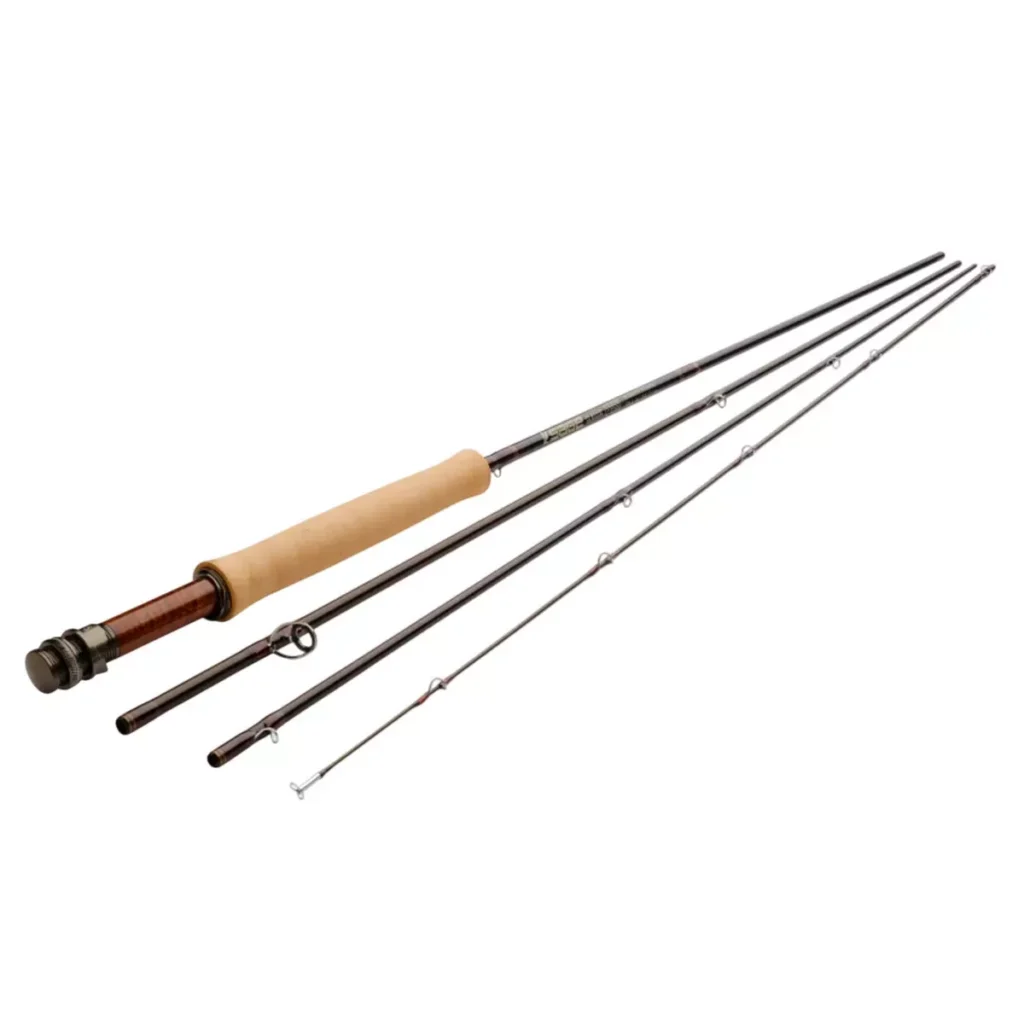
The Sage Classic R8 386-4 is what happens when the best graphite technology available meets a moderate action designed specifically for the kind of fishing that exposes every weakness in a fast-action blank. This is an 8’6″ 3-weight built on Sage’s Revolution 8 graphite the same material platform as their flagship R8 Core series but tuned to a deep-loading moderate action that Sage’s designers call “Fish Slow, Feel More.” On the Root River in May when the sulphurs are coming off and you are making 22-foot presentations to a brown that has refused three other anglers that morning, this rod does something a fast-action blank cannot: it tells you exactly what is happening at the fly end of the cast. The load communicates through the full blank, into the cork, into your hand. You know when the cast is right before the fly lands.
The R8 technology is what separates this from older moderate-action rods. Sage’s Revolution 8 graphite naturally loads deep while maintaining fast recovery speeds a combination that was not achievable before this material generation. The practical result is a rod that bends like a classic medium-action blank but snaps back with enough speed to maintain loop control at distances up to 45 feet. You get the feel of a softer rod without paying the accuracy penalty that slow-recovery blanks impose. The hardware matches the blank: a custom aluminum up-locking reel seat with an extra-figured walnut insert, Super-Plus Grade snub-nose half-wells cork, SiC stripper guide, and chrome snake guides throughout. It comes with a black rod bag and aluminum rod tube. The torsional stability of the blank how little it moves side-to-side during the stroke is exceptional for a moderate-action rod. That means your loops track true even when you are making tight casts through a two-foot gap in the alders.
For Driftless Area fishing specifically, the 8’6″ length is a meaningful advantage over a 9-foot rod. The Oregon Fly Fishing Blog review of the full Classic R8 series put it plainly: this or the 486 are the rods they’d bring to the Driftless or another area with small spring creeks. Shorter rods stay out of the overhead brush. On the tight Whitewater tributaries in SE Minnesota where your back cast might have 18 inches of clearance above the tag alders, that six inches of length difference is real. The moderate action also makes this rod exceptional for tippet protection when you are fishing 6X or 7X to spooked fish in clear spring-creek water the deep-loading blank absorbs head shakes in a way that a stiff fast-action rod simply cannot buffer.
The compromise is price, wind performance, and nymph applicability. At $1,100, the Classic R8 386-4 costs five times the Redington Classic Trout. It earns that premium in blank quality, hardware, and feel but it earns it for a specific type of angler making a specific type of presentation. In 20 mph April wind on the open pasture sections of the Root River, a 3-weight in any configuration is a harder tool to manage than a 5-weight. This rod is not a windy-day nymphing rod. Anglers who spend most of their time Euro nymphing or throwing weighted rigs in heavy current will get more value from a medium-fast 5-weight. The Classic R8 386-4 is built for the angler who prioritizes dry-fly presentation above everything else and wants to feel every inch of the cast and every move of the fish.
Best For: Experienced dry-fly anglers targeting technical Driftless spring creeks who want the best-performing moderate-action 3-weight available and are willing to pay for it.
Current Price: ~$1,100 | ➡️ Check Price at Scheels
2. Redington Classic Trout — Best Overall for Driftless Dry-Fly
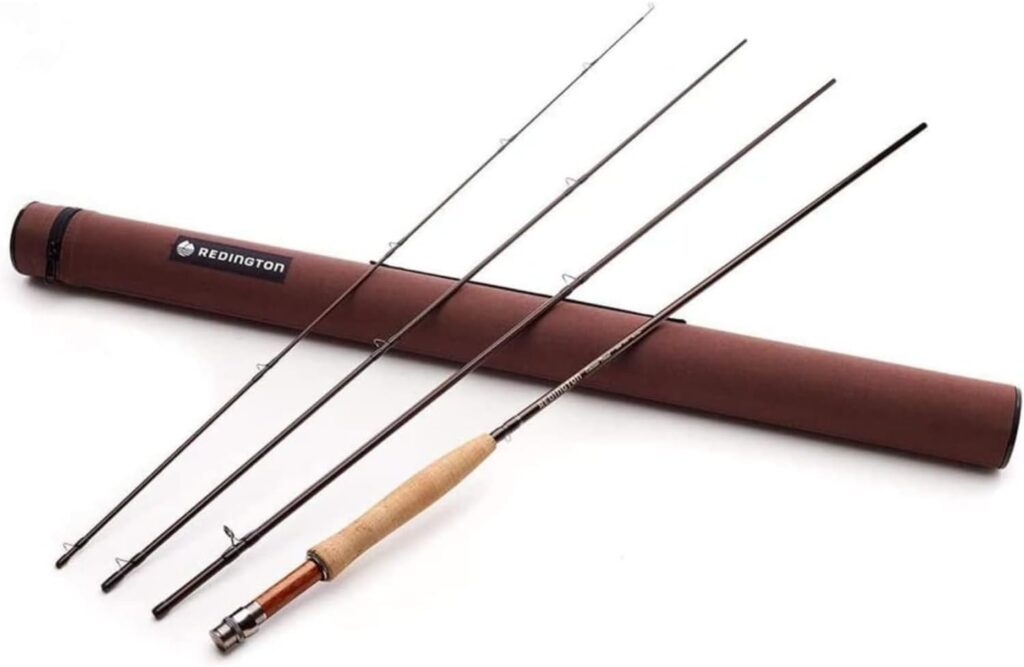
The Redington Classic Trout is the answer to a question most Driftless Area anglers eventually ask after getting tired of fast-action rods that feel mechanical at 25 feet: is there a moderately priced rod that actually communicates what is happening at the fly end of a short cast? After two seasons fishing the Root River and the Whitewater with the Classic Trout, the answer is yes and the Yellow Dog Fly Fishing 5-Weight Invitational confirmed it independently, placing this rod second overall out of 27 rods tested, above rods from Orvis, Scott, Hardy, and Winston at two and three times its price.
The Classic Trout runs on a 100% Toray Japanese-graphite blank with true mid-flex technology. The flex runs nearly all the way down to the cork handle, which means the rod communicates load at 20 feet in a way that fast-action blanks simply cannot. The practical result on a Driftless stream: your timing improves, your presentations land softer, and your dry flies sit on the water correctly more often. At 2.9 oz for the 5-weight, the static weight is at the low end of the category. Titanium oxide stripping guides allow clean line shoot, and the reversed half-wells cork handle fits most anglers comfortably through a full day on the water.
The compromise is distance, swing weight, and components. The Yellow Dog Invitational review that gave this rod its second-place finish specifically noted a heavier swing weight and some tip-to-butt flex separation as limitations. Past 50 feet the mid-flex action also requires a smooth, controlled stroke or the tip will shock under load. This is not a distance-casting rod and it doesn’t pretend to be. The reel seat hardware is functional but basic noticeably less solid than machined hardware on the Douglas LRS at similar prices. Several long-term owners noted the cork handle runs slightly bulky from the factory and benefits from light sanding if you have average or smaller hands. None of those limitations affect the rod’s core job: accurate, delicate presentations at typical Driftless distances.
Best For: Dry-fly anglers who fish technical spring creeks and small-to-medium Driftless streams at typical casting distances under 45 feet.
Current Price: ~$199 | ➡️ Check Price on Amazon
3. Greys Wing Trout Spey — Best Specialist Pick for Larger Driftless Water
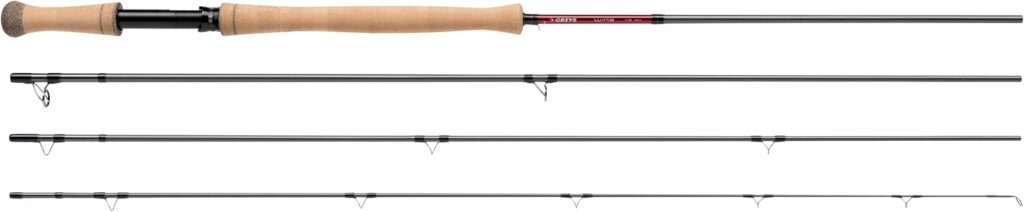
The Greys Wing Trout Spey is not a replacement for your 5-weight single-hand rod. It is a tool for a specific problem: larger Driftless runs where a 9-foot rod runs out of mending reach and fish are feeding across currents you cannot control with a standard line. The Wing Trout Spey runs 10’10” to 11’2″ depending on the model, built on Greys’ proprietary Powerlux carbon blank a low-profile, purpose-designed construction that keeps the blank lighter and thinner than standard carbon while maintaining the stiffness needed to load at both single-hand and two-handed distances. The medium-fast action loads for single-handed casting at normal trout distances and unlocks two-handed spey and roll casting capability when you need it.
The practical advantage on Driftless water is mending range. On the open pasture sections of the Root River or the deeper runs of the South Fork of the Whitewater, currents run at multiple speeds across the stream width. A 45-foot mend with a 9-foot rod is a partial solution. An 11-foot rod with a two-handed handle extension reaches water a single-hand rod simply cannot manage. The Wing Trout Spey handles Skagit, Scandi, and standard weight-forward lines, which means you can run a Skagit head with a sink tip for swinging wet flies in the fall and switch to a WF floating line for dry-fly work in the same outing. The rod is fitted with an AAA Grade Cork handle featuring a two-handed Spey (TPSF) butt section, which is what unlocks the efficient spey and roll casting range without requiring a full two-handed salmon-style setup.
The compromise is versatility and learning curve. This is a specialized tool. On tight brushy water the majority of SE Minnesota spring creek mileage an 11-foot rod is a liability, not an advantage. Overhanging tag alders and hillside brush eliminate the back-cast room that a trout spey requires. Long-term reviews consistently note that the Wing Trout Spey rewards anglers who commit time to learning the spey casting stroke; anglers who pick it up expecting to cast it like a single-hand rod will struggle. If 80 percent of your Driftless fishing happens on streams narrower than 30 feet, this rod spends most of its time in the tube.
Best For: Experienced anglers who fish larger, open Driftless runs and want two-handed mending capability and the option to swing wet flies in fall.
Current Price: ~$550 | ➡️ Check Price on Amazon
4. Moonshine Rod Co. Rambler — Best Crossover Pick
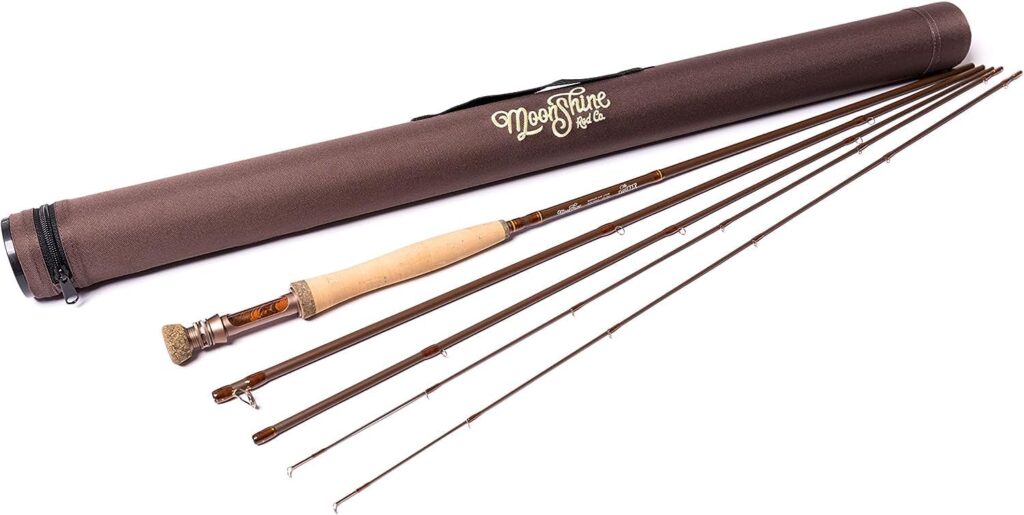
The Moonshine Rambler occupies territory that no other rod on this list touches: it is a multi-section, travel-packable rod designed to function as both a conventional spinning rod and a fly-casting tool, packed in a protective canvas rod tube with a spare tip section included. That combination makes the Rambler the honest answer to a question a certain type of Midwest angler asks: what do I bring on a BWCA portage trip when I might throw spinners in the morning and want a fly rod in the afternoon, and I have exactly one rod slot available in the canoe pack? The Rambler’s 2-piece graphite construction, American Tackle micro guides, Fuji reel seat, and split AAA cork handle with hand-turned burled wood inserts produce a rod that looks and feels like real equipment rather than a compromise toy.
On Driftless streams, the Rambler’s ultralight and medium-light options work competently for dry-fly and light nymph presentations at typical creek distances. The action is faster than the Redington Classic Trout, which means it is less forgiving at close range but more capable in the wind. Multiple owner reviews confirm the rod catches trout reliably and offers sensitivity to light takes that you do not expect from a crossover design. The included spare tip and embroidered canvas rod tube are standard Moonshine features the spare tip alone makes this worth consideration for any trip where rod repair is not available.
The compromise is ceiling and durability under heavy load. One Amazon owner review described tip and first-section failure on the first large fish encountered a steelhead on Lake Erie. The Rambler’s design optimizes for a wide range of light-to-medium freshwater applications, not for fighting heavy fish. For Driftless trout up to 18 inches, that limitation is essentially irrelevant. For anglers targeting large fall browns on heavy streamers, the Rambler is the wrong tool. The conventional-fly combo nature also means it carries the limitations of both formats rather than the mastery of either which is an honest trade-off for everything else it enables.
Best For: BWCA trippers, backpack anglers, and Midwest multi-species fishermen who want one packable rod that handles light trout work and conventional fishing in the same outing.
Current Price: ~$130 | ➡️ Check Price on Amazon
5. Douglas LRS — Best Mid-Range All-Arounder
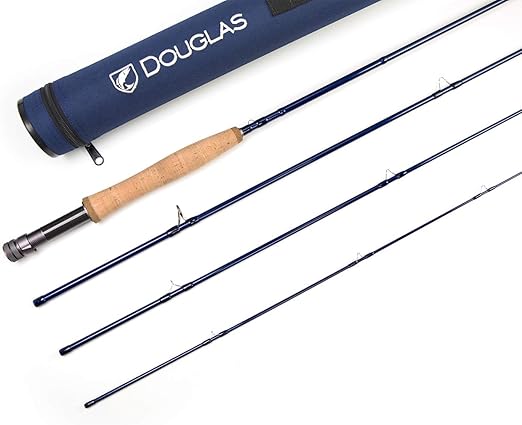
The Douglas LRS is the rod that keeps showing up in comparisons above its price because it earns it. At $269–$299, it sits at the upper end of the entry-level tier and competes directly with rods from Orvis and Redington at similar or higher prices and multiple independent reviewers place the LRS ahead of those options for close-range casting feel. Head Rod Designer Fred Contaoi built the LRS around a multi-modulus graphite blank finished in a distinctive deep blue. The multi-modulus construction combines blank tapers optimized separately for lighter and heavier line weights: lower models prioritize presentation sensitivity, heavier models prioritize power and distance. The 9-foot 5-weight sits in the sweet spot for most Driftless fishing.
The LRS action is medium-fast, placing it between the Redington Classic Trout’s moderate flex and a pure fast-action competition rod. That positioning is where most Midwest trout fishing actually lives: a rod that loads cleanly at 20 feet for dry-fly work and has enough backbone to turn over a weighted nymph rig or a small streamer without collapsing. The LRS shines specifically at close-to-mid range one detailed review called it “better fishing within 20 feet than the Orvis Clearwater” which maps directly to the low-overhead, tight-lane presentations that Driftless streams demand. Nickel-finished stainless stripping guide, hard chrome snake guides, quality cork grip, and a carbon reel seat with double uplocking rings round out hardware that is meaningfully better than its price point suggests.
The compromise is swing weight and customer service. Several owners noted the LRS runs a heavier swing weight than expected from a rod in this price tier not a deal-breaker at $269, but noticeable over a long day of casting. The more significant concern is a pattern in recent owner reviews flagging slow or absent Douglas customer service responses on warranty claims. One detailed review described paying the warranty fee for a replacement tip and receiving no product or response after multiple follow-up calls. A warranty is only useful when the company honors it, and that uncertainty is real enough to flag here.
Best For: Intermediate anglers who want a true all-around Driftless rod dry flies, nymphs, light streamers at a price that leaves budget for the rest of the kit.
Current Price: ~$269 | ➡️ Check Price on Amazon
6. Orvis Clearwater — Best Warranty-Backed All-Arounder
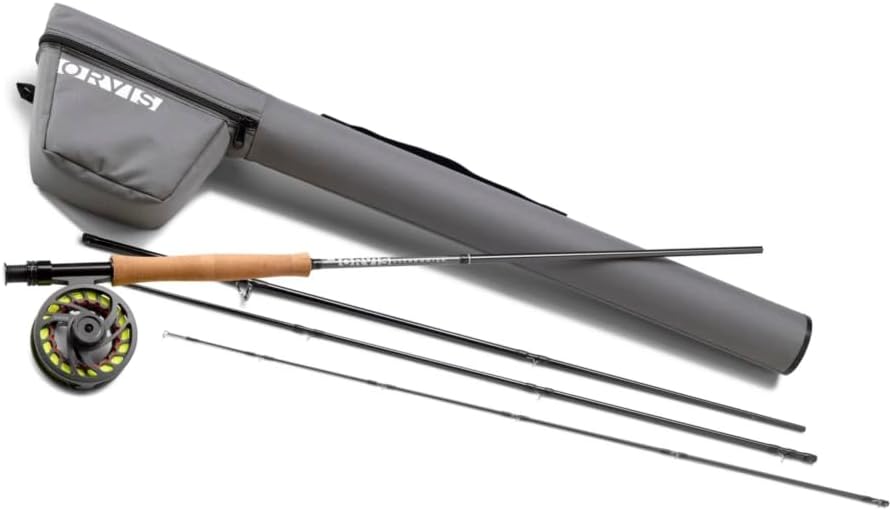
The Orvis Clearwater at $479 is a harder sell than it used to be, and I am not going to pretend otherwise. The mid-fast action graphite blank, nickel aluminum reel seat, and solid Orvis build quality are all real this is a well-made rod. But the Redington Classic Trout finished second out of 27 rods in a blind casting test that included Orvis rods, and it costs $280 less. The honest question at $479 is not whether the Clearwater is a good rod. It is whether what Orvis adds at that price over the Redington is worth the gap. For some anglers it is and the reason comes down almost entirely to one thing: the Orvis 25-year guarantee.
Orvis covers accidental breakage for the life of the rod, not just manufacturing defects. Carbon fiber blanks break in ways that are entirely the angler’s fault a branch you didn’t see, a truck door, a boot on the blank while wading. With the Clearwater, a broken tip section gets replaced for a service fee, not the cost of a new rod. For an angler who fishes hard through a full Driftless season from April through October, travels with their gear, and doesn’t coddle it, that coverage has real cash value over a 10-year rod life. No other manufacturer on this list matches Orvis’s warranty program in scope or reliability of execution. The rod itself casts cleanly at 20 to 45 feet, handles a standard dry-fly or nymph rig without complaint, and the hardware is tight and well-fitted throughout.
The compromise is value. At $479 you are paying a significant premium over rods that outperform the Clearwater on the blank alone. The LRS review quote “better fishing within 20 feet than the Orvis Clearwater” was written when both rods were closer in price. At the current gap, that comparison lands harder. Two out of five long-term Clearwater owners noted they wanted more sensitivity and loop control after two seasons. If the warranty is your primary concern and you want the backing of Orvis’s service network, the Clearwater earns its price. If you are making a pure performance-per-dollar decision, the math points elsewhere.
Best For: Anglers who prioritize Orvis’s 25-year guarantee and want a reliable mid-fast all-arounder backed by the most dependable accidental-breakage coverage in fly fishing.
Current Price: ~$479 | ➡️ Check Price on Amazon
Comparison: All 5 Rods at a Glance
| Product | Price | Best Use | Key Strength | Key Limitation | Jake’s Verdict |
|---|---|---|---|---|---|
| Redington Classic Trout | ~$199 | Driftless dry-fly presentations | Mid-flex feel at 20–45 ft; beat premium rods in blind testing | Struggles past 50 ft; basic reel seat hardware | Top Pick |
| Greys Wing Trout Spey | ~$550 | Larger open Driftless runs | Two-handed mending; Powerlux blank; versatile line systems | Specialized; useless in tight brushy cover | Specialist Pick |
| Moonshine Rambler | ~$130 | BWCA/backpack multi-species trips | Packable; includes spare tip; fly + conventional crossover | Not built for heavy fish; jack-of-all-trades ceiling | Crossover Pick |
| Douglas LRS | ~$269 | All-around nymph, dry, streamer | Close-range feel exceeds price; medium-fast covers most scenarios | Heavier swing weight; customer service concerns | Mid-Range Pick |
| Orvis Clearwater | ~$479 | Warranty-priority all-arounder | Best accidental-breakage coverage in fly fishing (25-yr guarantee); clean mid-fast action | Poor performance-per-dollar vs. Redington at $280 less | Warranty Pick |
How to Choose: Buying Guide for Midwest Trout Anglers
Start With Honesty About Your Casting
The most expensive rod is not the best rod for every angler. A beginner who buys a premium fast-action rod does not get premium performance they get a rod that amplifies every error in an undeveloped casting stroke. The progression works like this: if you are casting consistently to 30 feet with a smooth stop and a tight loop, you are ready for mid-range rods. If you are casting consistently to 45 feet with controlled loops in wind, you will feel what a better blank gives you. If neither describes your casting yet, the Moonshine Rambler or Douglas LRS will serve you better and let your budget go toward more time on the water.
The Cost-Per-Use Math
A $550 Greys Wing Trout Spey fished 15 specialty days per year for 5 years costs $7.33 per outing reasonable for a rod that opens up water your single-hand rod cannot reach. A $479 Orvis Clearwater fished 30 days per year for 6 years costs $2.66 per outing, and the 25-year guarantee means you are not buying a replacement if you break it. The $199 Redington Classic Trout drops below $1.00 per outing for anglers who fish 20 or more days per year and treat the rod well. The $130 Moonshine Rambler is the clearest budget math on this list it covers BWCA trips, multi-species days, and light Driftless work for less than the cost of a spool of good fly line. Spend more when you can feel the difference. If you cannot yet feel what better sensitivity gives you, wait.
Line Weight and Action Decision Framework
If you fish tight Driftless spring creeks under 30 feet wide with primarily dry flies: the Redington Classic Trout. If you fish larger open Driftless runs and want extended mending range: the Greys Wing Trout Spey. If you want one packable rod for BWCA trips and multi-species use: the Moonshine Rambler. If you want a true all-arounder for nymphs, dries, and light streamers: the Douglas LRS. If warranty coverage and Orvis service are your priority: the Clearwater. Those frameworks cover 90 percent of the questions I get asked.
Sizing and Grip Fit
A fly rod’s cork grip is the one thing you cannot assess from a review you need to hold it. The standard reversed half-wells grip on most 9-foot rods fits the majority of anglers through a full day of fishing. The Redington Classic Trout’s handle runs slightly bulky from the factory and benefits from light sanding for average or smaller-handed anglers. If you are between rod weights, always err light: a 5-weight that runs slightly soft beats a 6-weight that overpowers every presentation and spooks fish in shallow Driftless water.
The Single Most Common Mistake
Anglers buy fast-action rods because that is what gets marketed as “performance.” Then they fish those rods on 25-foot Driftless creek presentations where the rod never fully loads, and they wonder why their casting feels mechanical and their accuracy suffers. Match rod action to your average fishing distance. If your average cast is under 40 feet and for most Driftless anglers it is a purely fast-action rod is working against you, not for you.
Midwest-Specific Considerations
Driftless Area Stream Mechanics
The Driftless Area of SE Minnesota and SW Wisconsin runs cold, clear, and fast over limestone gravel. The MN DNR documents trout stream conditions on Root River tributaries with water temperatures staying below 55°F through most of June conditions that produce excellent trout habitat and brutal wading. The MN DNR also banned felt-sole wading boots on designated trout streams (the full list of affected waters and which rubber-sole alternatives actually grip limestone are covered in my wading boots guide). A fly rod needs to perform for a fisherman who is cold, wading fast water, and making presentations through three feet of air between the water surface and a tag alder branch overhead. The Redington Classic Trout’s moderate action was designed exactly for that scenario.
The Freeze-Thaw Reality
MN and WI experience freeze-thaw cycles through late fall and early spring. April temperatures can drop from 50°F during a midday hatch to 28°F overnight. Hardware guides, reel seats, ferrule connections cycles through thermal stress repeatedly. On cheap rods with poor epoxy work at the guide feet, this produces micro-cracks in the guide wrappings over two or three hard MN winters. All five rods reviewed here handle freeze-thaw cycling without issue based on real-use data. What does matter is your rod tube: a cloth sock in a plastic tube left in a cold truck overnight transfers thermal shock to the blank faster than a padded hard-shell case. Store your rod inside during hard Midwestern freezes.
Wind on Open Driftless Sections
The Driftless is not all tight brushy cover. Open pasture sections of the Root River and the South Fork of the Whitewater expose you to south or northwest winds reaching 20 mph in April and November. In those conditions, loop control matters more than action category. The Greys Wing Trout Spey’s extended reach gives you a physical wind advantage on open sections that a 9-foot rod cannot replicate a longer rod holds more line off the water, enabling mends that a wind-driven drift destroys with a shorter setup. For single-hand casting into a headwind at 50 feet, the Douglas LRS’s medium-fast action holds loop shape better than the Classic Trout’s moderate flex.
Bottom Line Recommendations
Best Premium Pick: Sage Classic R8 386-4. If your Driftless fishing centers on dry-fly presentations to technical fish and you want the best moderate-action 3-weight built on current technology, this is the rod. The R8 blank loads deeper and recovers faster than anything else in its action class.
Best Overall: Redington Classic Trout. The moderate action, the weight, the price, and the blind-test performance history make this the clearest recommendation for most Driftless trout anglers.
Best Budget: Moonshine Rambler. At $130 with a spare tip included and a canvas rod tube, it is the honest answer for BWCA trippers and multi-species anglers who need one rod that does it all.
Best Specialist Pick: Greys Wing Trout Spey. If you fish larger Driftless runs and want two-handed mending reach, nothing else on this list gives you that capability.
Best Warranty Coverage: Orvis Clearwater. At $479 the performance-per-dollar math is hard to ignore, but no manufacturer on this list backs their rod like Orvis does. If breakage coverage matters more than performance gap, this is your rod.
Looking for More
If this article helped you narrow down a rod, the next logical question is usually budget. My Best Fly Fishing Rods Under $300 for Midwest Rivers & Streams guide breaks down the strongest options at the lower end of the price range useful if the Sage or Orvis price tags pushed you toward the shorter list. If you fish rivers beyond the Driftless and want a completely different style of rod for big water and heavy fish, the Best Catfishing Rods for the Mississippi River covers that side of Midwest fishing in the same detail.
FAQs
A 5-weight is the right call for the vast majority of Driftless stream trout fishing in Minnesota and Wisconsin. It handles dry flies from size 10 down to size 20 with room to spare, manages a standard two-nymph rig in moderate current, and turns over a light streamer without difficulty. The 4-weight is often recommended for “delicate presentations,” but on a windy April afternoon on the Root River, a 4-weight becomes a liability it cannot carry line in a crosswind reliably and struggles with heavier nymph rigs in fast water. The 3-weight has legitimate uses on very small, calm Driftless tributaries where 20-foot presentations are the norm. For a single rod that covers 90 percent of what Driftless anglers do, a 9-foot 5-weight is the standard for good reason. The Greys Wing Trout Spey in a lighter line class is the exception its extended length compensates for line weight in ways a short single-hand rod simply cannot.
Spend $130 to $200. The Moonshine Rambler at $130 is the lowest-cost legitimate option on this list a real rod from a real manufacturer that will handle light Driftless trout work and doubles for multi-species use. The Redington Classic Trout at $199 is the step up: a dedicated fly rod with blind-test performance credentials and enough sensitivity to teach you what a well-loaded cast actually feels like. The instinct to buy cheap and upgrade quickly sounds logical, but a genuinely cheap rod ($60–$80) teaches bad habits because the blank doesn’t load predictably. Once you are casting cleanly to 35 feet with controlled loops, you are ready to feel the difference the Douglas LRS provides at $269. The Orvis Clearwater at $479 is not a first-rod purchase you are paying for the 25-year guarantee and Orvis service network, which matters more once you know you will fish the rod hard for years. Skipping straight to the Greys Wing Trout Spey before you can cast a 9-foot rod proficiently wastes both money and time on the water.
Yes, and it matters more than most anglers realize. A purely fast-action rod loads well for dry-fly presentations at distance but is harder to control for short-range nymph drifts where you are managing mends and watching a strike indicator at 20 feet. For dedicated nymphing, a moderate-fast or progressive action gives you better feel through the indicator and more control over micro-mends in complex currents. The Redington Classic Trout’s mid-flex design makes it excellent for light nymph work at close range on SE Minnesota spring creeks. For dry-fly specialists primarily making longer presentations to rising fish on open water, a medium-fast action like the Douglas LRS holds loop shape better in wind. Most Midwest anglers do both in the same day, which puts the Douglas LRS in the most broadly useful position for anglers who have moved past the beginner stage.
It depends on the manufacturer and what the warranty actually covers. Orvis offers a 25-year guarantee that covers accidental breakage not just manufacturing defects. That matters because carbon fiber blanks break in ways that are entirely the angler’s fault: a branch you didn’t see, a vehicle door, a boot on the blank during wading. Redington’s lifetime warranty covers manufacturing defects to the original owner but excludes accidental damage and does not always cover replacement tips based on owner reports. The Douglas LRS warranty offers lifetime coverage for a $35 handling fee, but recent owner reviews flag slow or absent responses from the company on warranty claims. Greys and Moonshine both carry warranty programs with fees for replacement. Before committing to any rod you plan to fish for 10-plus years in hard Midwest conditions, read the warranty terms specifically not just the marketing language describing them.
