

If you work outdoors in the Midwest, you already know that “waterproof” is not a feature, it’s a survival requirement. A February morning in Iowa means frozen slush soaking through the seams of a cheap boot before your first coffee break. A spring job site in Illinois is mud so thick it grabs at your ankles. And then there’s Wisconsin in October, when you’re wading through wet grass at 6 a.m. before the real work even starts. Wet feet in this climate aren’t just uncomfortable, they lead to blisters, fungal infections, loss of focus, and in cold enough temperatures, a real frostbite risk on exposed job sites.
The problem is that the work boot market is flooded with products that market themselves as waterproof without the construction to back it up. Cemented soles fail. Membrane seams degrade. Cheap leather soaks through after a single season. Brands slap “waterproof” on the box because they added a membrane liner to an otherwise mediocre boot, ignoring the fact that waterproofing is only as strong as the weakest seam, the welt joint, and the leather itself. That gap between marketing and reality costs Midwest workers dry feet and real money.
We’ve tested these seven boots across real Midwest conditions: spring mud season on construction sites, utility work in standing water, early morning farm access roads, and long shifts on concrete floors inside industrial buildings. We looked at construction quality, ASTM safety ratings, waterproofing technology, and the honest long-term feedback from tradespeople who wear these boots every day. We did not accept generic claims at face value.
What follows is an honest breakdown of seven of the best waterproof work boots built to handle Midwest conditions in 2026, each with a distinct strength, an honest limitation, and a clear “best for” recommendation. Whether you’re framing houses in Minnesota, running utility lines in Kansas, or doing equipment maintenance on a Nebraska feedlot, there is a boot on this list built for your specific situation.
What Makes Waterproof Construction in Work Boots Actually Matter
Not all waterproofing is created equal, and understanding the difference can save you from wasting $200 on boots that fail in the first wet season.
Membrane vs. Leather vs. Construction
There are three layers of waterproof protection in a quality work boot. First, the membrane, brands like GORE-TEX, KEEN.DRY, and proprietary systems like DRYShield or UltraDry add a breathable inner liner that blocks water while allowing moisture vapor to escape. GORE-TEX in particular has become the industry benchmark for membrane performance, used in everything from military boots to the Danner Bull Run in this guide. According to GORE-TEX’s own technical specs, their membranes contain approximately 9 billion pores per square inch, each about 20,000 times smaller than a water droplet but 700 times larger than a moisture vapor molecule. That’s real engineering, not marketing.
Second is the leather itself. Full-grain leather, particularly oil-tanned full-grain leather, offers natural water resistance far superior to split-grain or nubuck. The Leather Working Group, which certifies leather used by KEEN, Timberland, and Ariat, evaluates tanneries on environmental sustainability but also validates material quality. Barnyard-resistant leather formulations (like KEEN’s), which resist oleic acid, urea, sodium chloride, and ammonium hydroxide, are particularly relevant for agricultural and utility workers in the Midwest.
Third, and most overlooked, is the welt construction. Goodyear welt construction, used by Ariat, KEEN, Wolverine, Thorogood, and Irish Setter in this guide, creates a stitched channel that bonds the upper, welt strip, and outsole. When done with a storm welt, as Thorogood uses on the 1957 Series, the construction adds a full water seal between the upper and midsole. Stitchdown construction, used on the Danner Bull Run, takes a different approach: the leather upper flanges outward and is stitched directly into the outsole, creating a wide stable base and excellent seam water resistance.
ASTM Ratings and Why They Matter for Midwest Work
ASTM F2413, the standard for protective footwear in the United States, defines requirements for impact resistance (I), compression resistance (C), metatarsal protection (Mt), electrical hazard (EH), and more. For Midwest tradespeople, EH certification is particularly important, utility workers, electricians, and anyone working near live circuits needs boots rated to protect against open circuits up to 600 volts in dry conditions. Every boot in this guide meets ASTM F2413 for impact and compression, and all carry EH ratings.
Cold Weather and Composite vs. Steel Toes
Steel toes conduct cold. It’s a physics problem that matters enormously when you’re on a Minnesota job site in January and the temperature is -10°F. A steel toe will pull heat away from your toes faster than composite alternatives. Composite toes, made from carbon fiber, fiberglass, Kevlar, or plastic blends, are non-conductive and generally 15-20% lighter than steel at the same protection rating. Six of the seven boots in this guide feature composite toes for exactly this reason. The Danner Bull Run GTX uses a steel toe, which we discuss honestly in its review.
Midwest-Specific Notes
Illinois road salt will eat untreated leather. The KEEN Cincinnati’s barnyard-resistant leather (which resists sodium chloride) and oil-tanned leathers with regular conditioning hold up dramatically better through Midwest winters than leathers left unprotected. Iowa spring mud season, where clay-heavy soil can pull a poorly-fitted boot right off your foot, rewards a boot with a defined heel and snug ankle fit. And the concrete floors of Midwest manufacturing plants and distribution centers, where many of these boots will spend as much time as outdoor job sites, demand outsoles designed to cushion impact on hard surfaces without the fatigue that builds up over a 10-hour shift.
1. Ariat Stump Jumper BOA Waterproof Composite Toe
Best for: Construction workers, outdoor utility crews, anyone who wants next-level fit
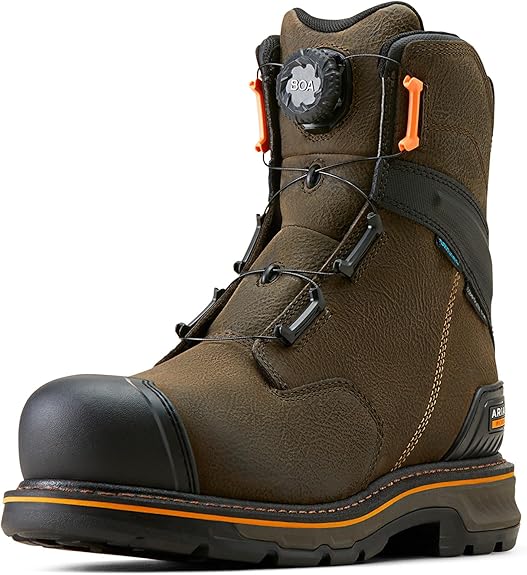
The Ariat Stump Jumper BOA represents where work boot technology is heading, and it’s a bold move that mostly delivers. The signature feature is the BOA Fit System, a dial-and-cable lacing mechanism that replaces traditional laces with a ratcheting twist knob at the top of the shaft. Developed by BOA Technology and used across ski boots, cycling shoes, and now work boots, this system allows micro-adjustable fit tightening throughout the day without stopping to unlace and retie. For workers whose feet swell during long shifts, which is virtually everyone, the ability to adjust tension in seconds while wearing gloves is genuinely useful. On a cold January morning in Minnesota, lacing up frozen traditional boots is miserable; the BOA dial eliminates that entirely.
The waterproofing uses Ariat’s DRYShield system, a breathable waterproof construction that performed well in muddy outdoor testing. The full-grain leather upper is reinforced with ExGuard protection at both the toe and heel, the two highest-wear points on a construction boot, which extends the leather’s life on rocky, abrasive job sites. The ATS Max midsole system combines multiple layers of cushioning and support that adapts to uneven terrain, and the Duratread outsole is oil and slip-resistant with an aggressive debris-releasing tread that handles mud without packing up. Goodyear welt construction means the boot can be resoled when the outsole wears out, making the $270 price tag a longer-term investment than cement-constructed alternatives.
The break-in period is notably short for a Goodyear welt boot, most reviewers report two days of full-day wear before the boot feels fully comfortable. The BOA system is its primary differentiator, but it’s worth noting one consistent user complaint: the dial mechanism can occasionally hang up when releasing cable tension to loosen the boot. It’s a minor issue that rarely affects daily function, but it’s worth being aware of if you’re hard on equipment. Additionally, at $270, the Stump Jumper is the most expensive boot in this guide. For Midwest tradespeople who change conditions rapidly, stepping from concrete plant floors to muddy outdoor sites multiple times daily, the BOA adjustment convenience justifies that premium.
ASTM F2413 M/I/C EH rated with composite toe. Available in D and EE widths, half sizes 7-15.
2. KEEN Utility Cincinnati 6″ Waterproof Composite Toe
Best for: Workers with wide feet, those who need out-of-the-box comfort
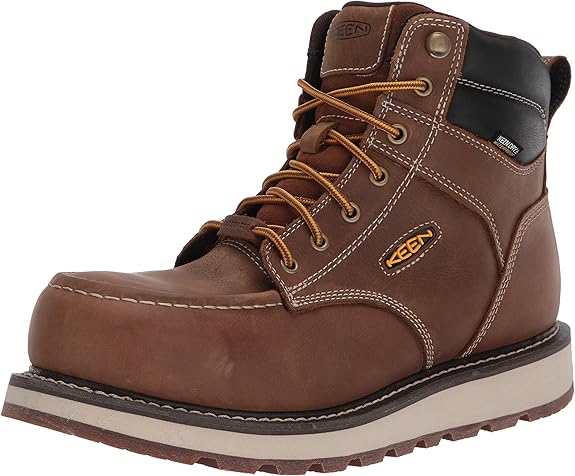
KEEN built its reputation on wide, anatomically shaped toe boxes, and the Cincinnati brings that same roomy fit philosophy to a serious, ASTM-rated work boot. The carbon-fiber composite toe is asymmetrical, meaning it follows the natural shape of the foot rather than a symmetrical dome, which reduces the “cage-around-your-toes” feeling that many workers hate about safety toes. At 15% lighter than steel, the carbon-fiber construction also means less fatigue on long shifts, and KEEN’s wider foot form ensures that most people with medium to wide feet won’t feel their toes pressing against the toe cap.
The KEEN.DRY membrane is the waterproofing backbone here, a system that KEEN has been refining since the early 2000s. The membrane is integrated with a mesh liner that manages moisture from the inside, so your feet stay dry from both external water and internal sweat, a combination that matters enormously during humid Midwest summers when waterproof boots can become steam chambers. The Luftcell midsole is one of KEEN’s most innovative features: air-infused polyurethane that creates a lightweight, almost cloud-like underfoot cushion. Workers who spend 10+ hours per day on concrete, warehouse workers, manufacturing floor workers, road construction crews, consistently rate the Cincinnati among the most comfortable work boots they’ve worn.
The barnyard-resistant leather formulation is particularly relevant for Midwest agricultural and utility workers. The leather resists oleic acid, urea, sodium chloride (road salt), and ammonium hydroxide, a formulation developed for farm environments where manure, fertilizer, and road salt would destroy standard leather in a season. Continuous Goodyear welt construction adds long-term durability and resole capability. One honest limitation: some users report sole separation on earlier versions of the Cincinnati, though KEEN has addressed this in more recent production. KEEN has also been PFAS-free since 2018, making this one of the more environmentally forward choices in the guide.
ASTM F2413-18 M/I/C EH. Weight: 34.6 oz per pair. Available in multiple widths.
3. Wolverine Reforce Composite Toe Waterproof
Best for: Workers who want lightweight protection without sacrificing durability
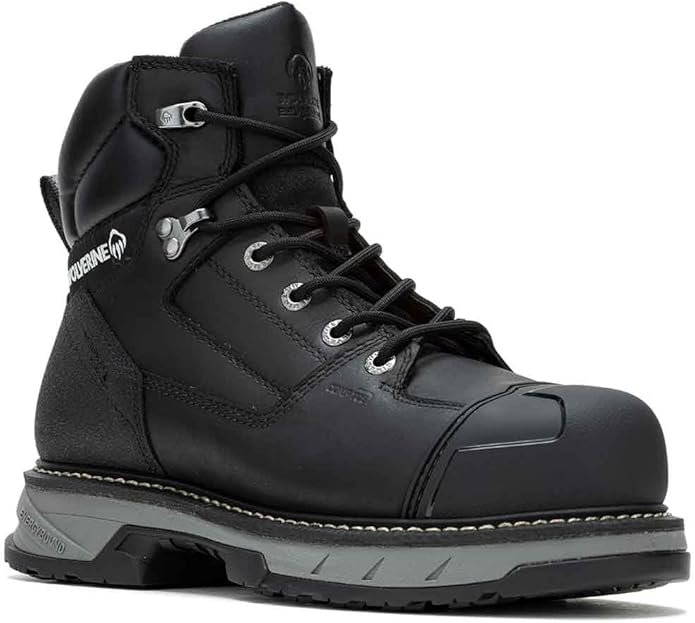
Wolverine claims the Reforce is their “lightest Goodyear welt available,” and at 1.88 lbs per boot, that’s a claim worth taking seriously. Light work boots matter when you’re covering a lot of ground, utility linemen, electricians, and outdoor maintenance workers who walk miles daily feel the difference between a 2 lb boot and a 3 lb boot by hour six of a shift. The Reforce achieves its weight reduction through a combination of the EnergyBound midsole (a reactive foam that returns energy rather than simply absorbing it) and a trim overall profile that doesn’t sacrifice the structural integrity of Goodyear welt construction.
WaterproofPlus technology combines a breathable waterproofing membrane with premium waterproof full-grain leather for a dual-layer moisture defense that performed reliably in wet-ground testing. The DuraShocks dual suspension pads sit at key strike points in the outsole, the heel and the ball of the foot, and reduce impact fatigue on hard surfaces without adding significant weight. The CarbonMax composite toe meets ASTM F2413-18 M/I/C EH requirements and provides impact protection that stays non-conductive in cold Midwest winters where steel toes become a liability.
The Reforce runs slightly narrow in the toe box compared to KEEN or Timberland options, a consistent note from users and Pro Tool Reviews’ hands-on testing. If you have average to narrow feet, this is not an issue and the fit is described as snug and secure. If you have wide feet, ordering the wide version is strongly recommended. At $149.95, the Reforce represents the best value proposition in this guide for workers who want genuine Goodyear welt durability at a price that doesn’t require a second mortgage. Wolverine backs it with a 30-day comfort guarantee, which is a real confidence indicator at this price point. Available in 6″, 8″, and 10″ shaft heights.
ASTM F2413-18 M/I/C EH, CarbonMax composite toe. Available in D and EE widths.
4. Timberland PRO Boondock Ultralight 6″ Waterproof Composite Toe
Best for: Mixed indoor/outdoor workers, no break-in period needed
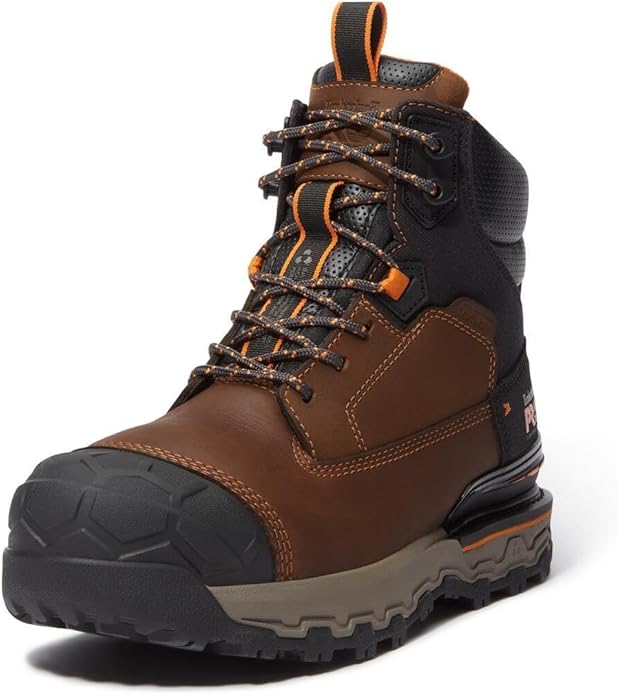
Timberland set its waterproof credentials in 1973 with an injection-molded waterproof leather boot that changed the industry. The Boondock Ultralight is the modern evolution of that legacy applied specifically to workers who need protection without weight penalty. As the lightest version of the best-selling Boondock lineup, the Ultralight re-engineers the original’s platform with HoverSpring foam midsoles and Timberland PRO’s 24/7+ comfort technology, a system designed to reduce foot fatigue by dispersing pressure points and supporting the arch across a full shift.
The entire upper is metal-free and “mutilation-free,” meaning there are no exposed nails or metal eyelets that could be an issue for certain job site safety requirements or for workers passing through metal detectors. The All-Weather TPU outsole resists heat, oil, slip, and abrasion across all climates, a genuine all-season performer that handles August asphalt and February ice with equal competence. The breathable waterproof membrane provides resistance to blood-borne pathogens (ASTM F1671-07 compliant), making this a strong option for emergency services workers, healthcare facility maintenance, and any role where biohazard exposure is possible. Ever-Guard abrasion-resistant leather reinforces the high-wear toe and heel areas.
Perhaps the most notable real-world characteristic of the Boondock is its zero break-in period. The Stridewise review, conducted by a working sheet metal fabricator who wore the boots daily, confirmed that they were comfortable from the first day of full-shift wear. That’s significant for Midwest tradespeople who can’t afford a week of sore feet while a new boot breaks in. The outsole runs wide, which is great for workers with wider feet but worth noting if you’re expecting a trimmer fit. One honest limitation: extended waterproof exposure (several hours of standing water) can eventually compromise the membrane, adequate for normal job site wet conditions but not designed for wading.
ASTM F2413 M/I/C EH, composite safety toe, metal-free construction.
5. Thorogood 1957 Series 8″ Waterproof Work Boots Moc Toe, EH Resistant
Best for: Workers who want Made in USA craftsmanship, electrical trades
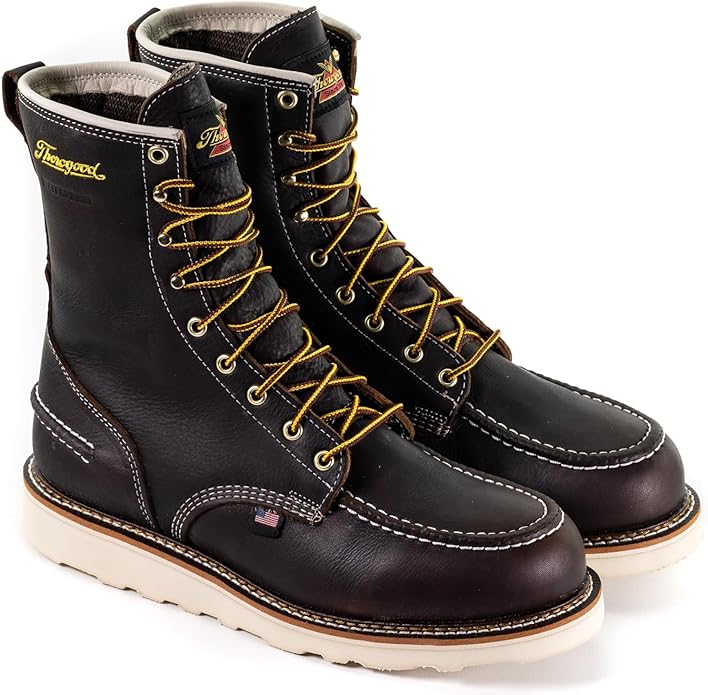
Thorogood has been making boots in Wisconsin since 1892, and the 1957 Series is their tribute to the mid-century American worker. A boot that looks like it belongs on a union job site from 60 years ago but performs like it was engineered today. Made in the USA with domestic and globally sourced components. The 1957 Series carries the kind of domestic craftsmanship that matters to many Midwest workers who prefer to buy American when the quality justifies it. It does here.
The Goodyear Storm Welt construction is what sets the 1957 Series apart from most competitors at this price. A standard Goodyear welt creates a stitched connection between upper, welt, and outsole. The storm welt variation adds a full seal between the upper and the midsole, creating superior moisture resistance at the join point. The most common failure point for waterproofing in welted boots. The X-Stream waterproof construction includes a fully gusseted tongue that keeps water and debris from entering through the lace gap, and the breathable membrane maintains internal moisture management. For Illinois slush season, where boots are submerged in cold brown water for hours at a time, storm welt construction is a meaningful advantage.
The MaxWear 90 outsole was developed in collaboration with workers and safety directors, and Thorogood claims it outlasts competitor outsoles by 30%. The slip-resistant heel profile makes this boot well-suited for ladder work and uneven outdoor terrain. The fiberglass shank gives the 8-inch shaft the structural support needed for long days without fatiguing the arch. The removable dual-density polyurethane footbed concentrates cushioning under the heel and ball strike zone. The areas where repetitive impact fatigue accumulates. The honest compromise here is weight: the 8-inch height and storm welt construction make this a heavier boot than the Wolverine Reforce or Timberland Ultralight. For workers who move a lot of ground daily, that matters. For workers who stand more than walk. Utility workers on elevated platforms. Construction workers on ladder-heavy tasks, the trade-off is worth it.
ASTM F2413-18 safety toe, EH resistant (ASTM F2892-18). Available in D and EE widths.
6. Danner Bull Run GTX Waterproof Steel Toe
Best for: Workers who want premium GORE-TEX waterproofing
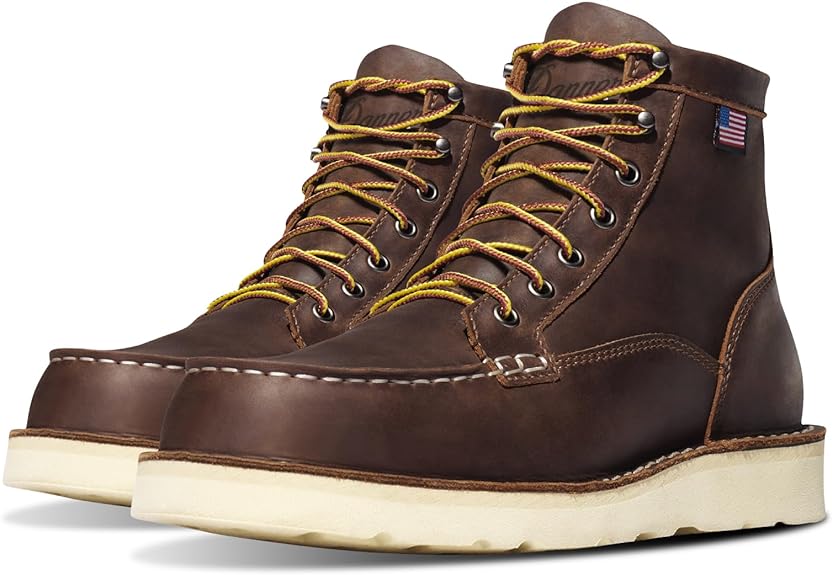
Danner has been making boots in the United States since 1932, originally in Chippewa Falls, Wisconsin, now in Portland, Oregon. The Bull Run GTX is what happens when nearly a century of boot-making experience meets GORE-TEX waterproofing technology.
This is the premium choice in this guide. Built for workers who think in terms of years, not seasons. For those who want the confidence of the most rigorously tested waterproof membrane in the industry behind their feet.
GORE-TEX waterproofing is categorically different from proprietary membrane systems. While KEEN.DRY, DRYShield, and UltraDry are all solid performers. GORE-TEX has been independently tested and validated across military, emergency services, and extreme outdoor applications for decades.
The 100% waterproof and breathable rating is backed by GORE-TEX’s own guarantee, if your feet get wet through the membrane, they’ll replace the boots. For Midwest workers who face sustained wet exposure, road maintenance crews, utility linemen in flooded access areas, irrigation system workers, that guarantee is real money. The GTX version is meaningfully different from the standard Bull Run, which lacks waterproofing and is designed for warm-weather use.
Danner’s stitchdown construction is worth explaining clearly. Unlike Goodyear welt, where a separate welt strip is stitched between the upper and outsole, stitchdown construction flanges the leather upper outward and stitches it directly to the midsole, creating a very wide, stable base.
The resulting footprint is more stable underfoot, excellent for uneven terrain and for workers who carry heavy loads. The OrthoLite 3-density footbed provides layered cushioning that dissipates heat for better air circulation than solid-foam alternatives.
The Danner Wedge outsole is non-marking and optimized for indoor surfaces like concrete and wood, which matters for Midwest manufacturing workers who split time between shop floors and outdoor conditions.
The steel toe is the primary compromise here for Midwest use. Steel conducts cold, and on a January job site in North Dakota or Minnesota, that matters. Danner does make composite toe versions of the Bull Run without the GTX designation, but the GTX waterproof version with safety toe is the steel variant. If you work primarily in cold outdoor conditions, consider this honestly.
ASTM F2413 M/I/C EH, steel safety toe. Built and finished in Portland, Oregon USA.
7. Irish Setter Wingshooter ST Waterproof Safety Toe
Best for: Workers who need all-day concrete comfort, wide toe box
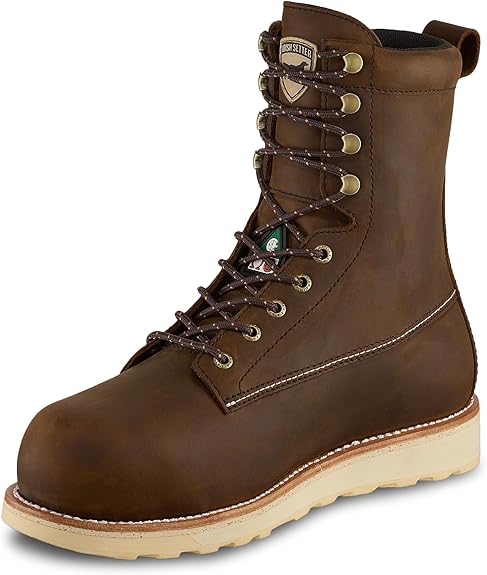
Irish Setter is a brand owned by Red Wing Shoe Company. The Wingshooter ST is the work-site evolution of their flagship hunting boot. A lineage that goes back to the original Red Wing 877 moc toe heritage boots.
The Red Wing connection matters because it means quality standards, last design expertise, and a supply chain that knows how to make boots that survive real work. At $170-195, the Wingshooter ST sits at a price point that delivers Red Wing-caliber construction without the Red Wing premium.
The UltraDry waterproofing system combines a moisture-wicking nylon lining with waterproof components to manage moisture from both directions. Keeping exterior water out while pulling sweat away from the foot. In humid Midwest summers, where waterproof boots can trap heat and moisture inside. The dual-direction management is noticeably better than membrane-only systems. The Traction Tred wedge outsole is a dual-density design: thick EVA foam for shock absorption topped by a rubber traction layer for durability and slip resistance.
Workers who spend long shifts on concrete, and this is the boot’s strongest performance environment, consistently report that the EVA/rubber combination delivers sneaker-like comfort in a safety-rated work boot.
The non-metallic nano composite safety toe is asymmetrical and notably roomy, 4 inches wide in the standard D width, with an EE option for genuinely wide feet. The Stridewise review noted that the safety toe is comfortable enough that the reviewer forgot he was wearing one. Goodyear welt construction means resoleability and long-term durability. The honest limitation to call out: the moc toe stitching at the toe box has been reported as a failure point by some heavy-use workers.
The stitching is extensive and aesthetically distinctive, but if it gets damaged, particularly on abrasive surfaces, the toe box integrity can fail. If you’re rough on boot toes, applying a Tuff Toe protectant from the start is worth the $15 investment. A small number of users also reported waterproofing failure at the safety toe seam specifically. This appears to be quality-control variability rather than a systemic design flaw.
ASTM F2413-18 M/I/75/C/75, EH rated. Available in D and EE widths, 6″ and 8″ heights.
Comparison Table
| Boot | Price | Waterproof System | Toe Type | Welt Construction | Weight (per boot) | Best For |
|---|---|---|---|---|---|---|
| Ariat Stump Jumper BOA | ~$270 | DRYShield membrane | Composite | Goodyear Welt | ~1.9 lbs | Fast fit adjustment, construction |
| KEEN Utility Cincinnati 6″ | ~$185-195 | KEEN.DRY membrane | Carbon Fiber Composite | Continuous Goodyear Welt | ~1.1 lbs | Wide feet, concrete comfort |
| Wolverine Reforce | ~$150 | WaterproofPlus membrane | CarbonMax Composite | Goodyear Welt | 1.88 lbs | Budget value, lightweight |
| Timberland PRO Boondock Ultralight | ~$170-185 | Waterproof membrane (pathogen-resistant) | Composite | Goodyear + cement forefoot | ~1.4 lbs | Zero break-in, all-weather |
| Thorogood 1957 Series 8″ | ~$170-195 | Storm Welt + X-Stream waterproof | Safety Toe (steel or soft) | Goodyear Storm Welt | ~1.7 lbs (est.) | Made in USA, electrical trades |
| Danner Bull Run GTX | ~$265-295 | GORE-TEX | Steel Toe | Stitchdown | ~1.5 lbs (est.) | Premium waterproofing, heritage |
| Irish Setter Wingshooter ST | ~$170-195 | UltraDry membrane | Nano Composite | Goodyear Welt | ~1.75 lbs | All-day concrete comfort, wide fit |
How to Choose: A Practical Buying Guide
What Conditions Are You Actually Working In?
Before comparing features, get honest about your job. Standing in water regularly? Prioritize GORE-TEX (Danner) or Storm Welt construction (Thorogood), these are the two most reliable systems for sustained wet exposure. Walking long distances on mixed terrain? Prioritize lightweight construction (Wolverine Reforce, KEEN Cincinnati). Mostly on concrete indoors with occasional outdoor work? The Irish Setter Wingshooter ST or KEEN Cincinnati will outperform everything else here for that specific use.
Steel Toe vs. Composite Toe in the Midwest
If you work outdoors in the Midwest in winter, composite toe is the right call in most cases. Cold-conducting steel toes are a real discomfort factor at temperatures below 20°F, and all the composite options in this guide meet the same ASTM impact and compression standards as steel.
The only reason to choose steel toe in this lineup is if your employer specifically requires it (some older safety policies still mandate steel), or if you’re concerned about long-term composite durability in crushing environments. The Danner Bull Run GTX is the only steel-toe option here, and it’s a boot that earns its place for different reasons.
Welt Construction: Goodyear vs. Storm Welt vs. Stitchdown
Goodyear welt is the most resoleable and most cobbler-friendly construction. If you want to resole at a local shop when the outsole wears out, all the Goodyear welt options here (Ariat, KEEN, Wolverine, Timberland, Irish Setter) are your best bet.
Thorogood’s Goodyear Storm Welt adds superior waterproof sealing but uses the same resoleable principle. Danner’s stitchdown can be resoled but requires a specialized cobbler or sending back to Danner directly.
Cost Per Use Calculation
At $150 (Wolverine Reforce) resoled once at ~$80, you can get 3-4 years of use for about $230 total. The Ariat Stump Jumper ($270) resoled once, you’re at $350 for 3-4 years, but the BOA convenience and comfort level may justify that gap for your daily use case.
At $290 (Danner Bull Run GTX), the boot’s longevity and 365-day warranty mean a quality pair genuinely lasts years with proper care, making the sticker price less alarming when spread over time.
Sizing Notes
KEEN runs wide, true to size in length but wider in the toe box than most competitors. Timberland Boondock also runs wide. The Danner Bull Run runs true to size in most cases, but some reviewers suggest sizing down a half size. Wolverine Reforce runs slightly narrow in the standard width. Irish Setter Wingshooter ST runs true to size. Ariat Stump Jumper runs true to size. If you’re between sizes, go half a size up and wear thicker socks.
Common Mistakes to Avoid
Don’t buy an uninsulated waterproof boot and expect it to keep your feet warm in -20°F Manitoba cold fronts that push into the Midwest every February. Waterproofing doesn’t equal insulation. If you need warmth, look for insulated versions of these boots (Timberland Boondock has an insulated variant; Thorogood’s American Legacy line has 400g Thinsulate options). Don’t skip leather care, even “waterproof” leather needs conditioning every 60-90 days to maintain waterproof integrity, especially after road salt exposure. And don’t assume a boot is comfortable without wearing it for a full shift. Break-in is real, particularly for Goodyear welt boots.
Midwest-Specific Considerations
Salt Season: November through March
Road salt is the silent killer of work boot leather in the Midwest. Sodium chloride draws moisture into the leather fibers and breaks down the natural oils that give leather its water-resistant properties. After each salt-season day, wipe boots down with a damp cloth and condition with a leather-specific product every 60 days. KEEN’s barnyard-resistant leather has built-in sodium chloride resistance. All other leather boots need proactive conditioning. Apply a quality beeswax-based product (Sno-Seal is widely recommended) for maximum waterproofing reinforcement before January.
Slush and Mud Season: March through May
Iowa, Illinois, and Missouri spring means ankle-deep mud in fields, construction sites, and agricultural access roads. The Ariat Stump Jumper’s debris-releasing outsole tread specifically addresses mud accumulation. The Thorogood’s storm welt adds extra protection for sustained slush exposure. For workers who are frequently in mud deeper than the boot shaft, consider pairing any boot in this guide with waterproof gaiters for over-the-cuff protection.
Summer Heat and Humidity
Waterproof membranes trap heat. This is a real trade-off in July and August in Kansas, Missouri, and Iowa. The KEEN.DRY system and Luftcell midsole perform better in heat than most alternatives. The Irish Setter’s dual-direction moisture management (UltraDry) handles humidity better than basic one-way membranes. If you work in extreme summer heat on paved surfaces, consider a non-waterproof lightweight option for those months and rotate your waterproof boots for wet-weather days only.
Concrete Floors: Plants, Warehouses, Distribution Centers
The Midwest is home to massive manufacturing, food processing, and distribution facilities where workers spend entire shifts on concrete. Concrete is unforgiving on feet, knees, and backs. For primarily indoor-concrete workers, the KEEN Cincinnati’s Luftcell midsole and the Irish Setter Wingshooter’s dual-density wedge outsole are the two best performers here. The Danner Wedge outsole is also specifically engineered for indoor surfaces. The Ariat Stump Jumper’s ATS Max system performs well on concrete, though it’s slightly overkill if you’re never in mud.
Temperature Extremes
Minnesota winters regularly hit -20°F and Iowa cold snaps can hold below zero for a week. None of the boots in this guide are insulated by default (check for insulated variants if winter warmth is your primary concern), but the non-conductive composite toes in six of seven boots significantly outperform steel toes in sustained cold exposure. The GORE-TEX construction in the Danner Bull Run has the most proven performance in extreme cold, having been validated in military and mountaineering applications.
Bottom Line Recommendations
Best Overall: Ariat Stump Jumper BOA. The BOA fit system is genuinely game-changing for day-to-day convenience, the Goodyear welt construction ensures longevity, and the DRYShield waterproofing holds up across Midwest conditions. At $270, it’s an investment, but the short break-in, all-day comfort, and resole capability justify the price for workers who need their boots to perform every single day.
Best for Budget: Wolverine Reforce at $149.95. The lightest Goodyear welt on this list at a price that makes a second pair possible. Real waterproofing, real ASTM ratings, genuine shock absorption — this is not a corner-cut budget option. It’s an honest value.
Best for Wide Feet: KEEN Utility Cincinnati. The barnyard-resistant leather, PFAS-free construction, wide foot form, and out-of-the-box comfort make this the right call for workers with medium-wide to wide feet who spend long hours on their feet.
Best Premium Pick: Danner Bull Run GTX. GORE-TEX waterproofing, USA-made heritage construction, 365-day warranty, and the kind of boot that ages into shape. For workers who want the absolute best waterproofing available without compromise, this is it.
Best for Electrical Trades: Thorogood 1957 Series. Made in Wisconsin, storm welt construction, EH-rated, and built to be resoled repeatedly. For electricians and utility workers who live in these boots and need a long-term relationship with their footwear, Thorogood delivers.
Best All-Around Comfort on Concrete: Irish Setter Wingshooter ST. The dual-density wedge outsole’s EVA/rubber combination delivers sneaker-level cushioning in a safety-rated work boot. For plant floor workers and warehouse maintenance crews, this is the comfort leader.
Looking for More
If you work on farms or agricultural property in the Midwest, check out our guide to the 7 Best Farm Work Boots For Mud, Fields & Chores purpose-built options for feedlot, livestock, and crop operation environments. For those who need serious traction in Midwest wetlands and swampy terrain, our roundup of the 5 Best Boots for Swampy Terrain covers rubber and neoprene options designed specifically for marsh and bog conditions.
FAQs
With proper care, a quality Goodyear welt boot (any of the six welt-constructed options in this guide) should last 2-4 years of daily wear before the outsole needs replacement, and many more years if resoled. The single biggest variable is leather care, boots that get conditioned every 60-90 days and cleaned after salt exposure regularly outlast neglected boots by years. Resoling extends life significantly: a quality cobbler resole costs $60-100 for Goodyear welt boots, far cheaper than a new pair. The Danner Bull Run’s stitchdown requires Danner’s own resoling service at ~$130 but is still economical over the boot’s lifespan given its 365-day warranty and premium construction.
You can, but it’s worth thinking through. Waterproof membranes reduce breathability compared to unlined boots, and in July and August in Missouri or Kansas, that matters. The KEEN Cincinnati’s Luftcell midsole and mesh-integrated KEEN.DRY membrane manage internal heat better than most. The Irish Setter’s UltraDry system was designed for field use in warm weather. If your work is primarily summer-based and rain isn’t a daily reality, consider rotating a non-waterproof leather boot for dry, hot days and saving the waterproof pair for genuinely wet conditions. Your feet will thank you.
Yes, for the purposes of ASTM F2413 certification. Both composite and steel toes are rated to the same impact (75 foot-pounds) and compression (2,500 lbs) standards when they carry the same ASTM designation. Composite toes are non-conductive (major advantage in electrical work and cold weather), about 15-20% lighter, and don’t set off metal detectors. The only scenario where steel toes have an advantage is in extreme puncture or crushing environments beyond ASTM test parameters, which is uncommon in most trade work.
Start by cleaning the boot, use a damp cloth after every salt or mud exposure, not just when the boot looks dirty. Then condition the leather every 60-90 days with a product like Obenauf’s Heavy Duty LP, Bick 4, or Sno-Seal beeswax wax waterproofing. Re-treat after cleaning. For boots with waterproof membranes, the membrane itself doesn’t need treatment, but the leather barrier around it does. Pay special attention to the welt joint and toe seams, these are the first failure points. A boot that looks clean but has dried, cracked leather at the welt will let water in long before the membrane fails.
Most of these specific models are listed as men’s sizing and last shapes. KEEN does offer the Cincinnati in women’s sizing and last, and Irish Setter makes women’s versions of several boots. Ariat has an extensive women’s line. For women in trades who need ASTM-rated waterproof boots, KEEN and Ariat are the most accessible starting points. When shopping men’s sizing women should generally size down 1.5 to 2 full sizes (a women’s 9 typically corresponds to a men’s 7 or 7.5, though this varies by brand).
