


This is your complete guide to work boots for Midwest conditions. Whether you’re in construction, manufacturing, warehouses, or the trades, we’ve reviewed the boots that handle real Midwest work, from subzero mornings to concrete floors to salt-covered job sites. Below you’ll find our top 10 overall picks, followed by links to specialized guides for specific work types, budgets, and features.
When you’re clocking 50-hour weeks on Midwest job sites, concrete floors that radiate cold in January, muddy construction sites that turn into ice rinks by February, warehouse floors that punish your feet for twelve-hour shifts, your boots aren’t just footwear. They’re the difference between finishing strong and limping to your truck.
After talking with electricians, welders, HVAC techs, general contractors, and warehouse workers across Iowa, Illinois, Wisconsin, and Minnesota, plus testing boots ourselves in real-world Midwest conditions, we’ve identified the 10 work boots that actually deliver. These aren’t expensive specialty boots for extreme conditions you’ll never face. They’re proven performers that balance protection, durability, and comfort for the work most Midwest guys actually do, at prices that make sense when you need boots that last, not boots that fail after one season.
What Makes Work Boots Essential for Midwest Jobs
Work boots do three things that regular footwear cannot: protect against impact and compression hazards, provide reliable traction on challenging surfaces, and support your feet during extended periods of standing and movement.
Safety Compliance Matters
According to the Occupational Safety and Health Administration (OSHA), employers must ensure workers exposed to foot hazards use protective footwear. The American Society for Testing and Materials (ASTM) sets the standards, specifically ASTM F2413 that define what protection levels safety toe boots must meet. Steel, composite, and alloy toes all meet these standards but with different characteristics that affect weight, temperature conductivity, and metal detector compatibility.
The Durability Economics
Cheap boots seem budget-friendly until you calculate their actual cost. A $60 boot that fails after three months costs more per day of use than a $150 boot lasting two years. Quality construction methods, Goodyear welt, stitchdown, or direct-attach, determine how long boots survive daily abuse. Midwest conditions accelerate wear through salt corrosion, temperature cycling, and the constant wet-dry cycles that break down inferior materials and construction.
Comfort Isn’t Optional
When you’re on your feet for 10-plus hours, comfort directly impacts productivity and safety. Fatigued workers make mistakes. Painful feet lead to poor posture that cascades into back and knee problems. The best work boots for Midwest conditions balance adequate cushioning with stability, provide arch support without feeling rigid, and manage heat and moisture so feet don’t overheat during summer or freeze during winter.
Understanding Midwest-Specific Boot Requirements
Midwest work environments present challenges that coastal and southern workers don’t face. Our region demands specific boot capabilities.
Temperature Extremes
Midwest job sites experience dramatic temperature swings. A January morning starts at minus-5 degrees, climbs to 25 by afternoon, then drops back to single digits by quitting time. Steel toes conduct cold, making uninsulated boots painful in winter. But heavy insulation causes overheating during active work. The sweet spot sits around 200-400g insulation for winter-specific boots, while non-insulated boots with good moisture management handle warmer seasons.
Concrete and Hard Surfaces
Manufacturing facilities, warehouses, and many construction sites feature concrete floors that punish feet and joints. Hard surfaces require boots with adequate cushioning and shock absorption. The heel strike on concrete creates impact forces that travel up through ankles, knees, and into the lower back. Quality midsoles and footbeds don’t just improve comfort, they prevent cumulative damage from repetitive impact.
Salt and Chemical Exposure
Road salt destroys boots faster than almost anything else. It corrodes leather, degrades stitching, and accelerates material breakdown. Quality leather treated with protective oils resists salt damage better than cheap leather. Boots with triple-stitched seams and quality thread survive longer in salt-heavy environments. Rinse boots after salt exposure and condition leather regularly to extend lifespan.
Slush, Snow, and Wet Conditions
November through April means dealing with wet conditions. Not just snow and rain, but the gray slush mixture that accumulates everywhere from jobsite entrances to loading docks. Waterproof boots keep feet dry during actual work, but breathability matters too. Non-breathable boots trap moisture from sweat, leaving feet clammy and uncomfortable. Quality waterproof-breathable membranes like Gore-Tex or proprietary systems strike the right balance.
The 10 Best Work Boots for Midwest Conditions
1. Timberland PRO Boondock 6-Inch Composite Toe: Premium Protection
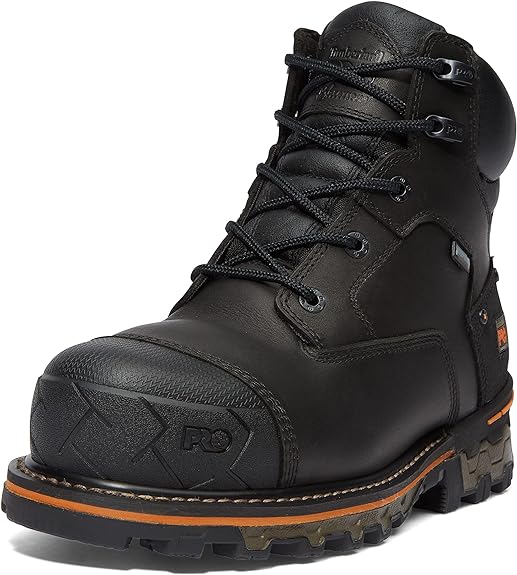
The Timberland PRO Boondock represents what happens when a major boot manufacturer targets serious industrial work. This isn’t a fashion-first boot that happens to have safety features, it’s engineered specifically for manufacturing, construction, and trades where protection matters.
What works: The composite safety toe meets ASTM F2413 standards while remaining lighter than steel and non-conductive in cold weather. Timberland’s Anti-Fatigue Technology footbed actually delivers on its promise, multiple testers report significantly reduced foot fatigue compared to boots with standard insoles. The molded rubber toe protector stands out as genuinely useful, not just decorative, providing a wear layer as thick as most boot outsoles.
The waterproof membrane works. Not “works pretty well” or “mostly waterproof” actually waterproof. Testers who stood in slush puddles for extended periods reported dry feet. The electrical hazard protection provides secondary protection against live electrical circuits up to 600 volts in dry conditions, essential for electricians and maintenance workers.
Midwest-specific performance: The all-weather TPU outsole maintains flexibility in cold temperatures where cheap rubber hardens and loses grip. Oil and slip resistance meets actual workplace needs, not just marketing claims. The boot handles the wet concrete floors of manufacturing plants, the muddy transition areas of construction sites, and ice-covered parking lots with legitimate confidence.
The 400g insulated version provides warmth for outdoor winter work without excessive bulk. The ReBOTL lining made from recycled plastic bottles isn’t just environmental marketing, it wicks moisture effectively while providing antimicrobial protection with Microban technology.
The compromise: These boots cost more than budget options. The composite toe creates a roomier toe box than some workers prefer, while this allows for toe splay and thicker socks, it feels less precise if you’re used to snug-fitting boots. The robust construction means these aren’t the lightest boots, though the composite toe helps keep weight reasonable.
Break-in requires a week of gradual wear. The thick leather and structured design need time to mold to your foot. Some users report the top collar rubbing initially, though this resolves as the leather softens.
Best for: Industrial workers, electricians, and anyone who needs maximum protection with proven quality. Worth the investment for daily wear in demanding environments.
2. Thorogood American Heritage 6″ Moc Toe: Made-in-USA Quality
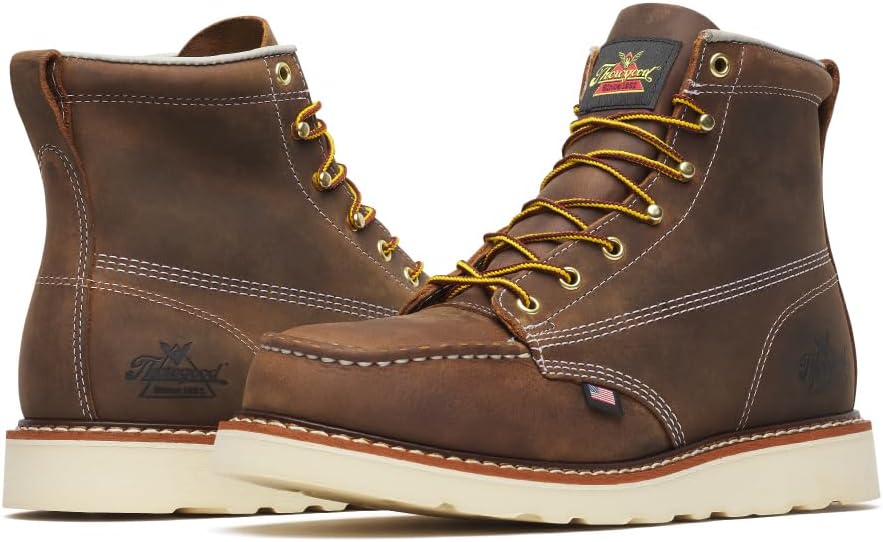
The Thorogood American Heritage has earned its reputation through decades of actual performance. Union workers, tradesmen, and construction crews consistently choose these boots because they deliver honest quality without unnecessary frills.
What works: The full-grain, oil-tanned tobacco leather isn’t just attractive, it’s legitimately tough. Thorogood uses American leather that undergoes rigorous testing for strength, density, and pull resistance. The leather breaks in beautifully, developing character while maintaining durability. The moc toe design provides additional room in the toe box, which matters during long shifts when feet swell.
Goodyear welt construction means these boots can be resoled. When the MAXWear Wedge sole eventually wears out, and it will after thousands of hours of use a cobbler can replace it rather than forcing you to buy new boots. This construction method also creates a wider, more stable platform underfoot.
The removable Ultimate Shock Absorption footbed uses dual-density polyurethane concentrated under high-impact zones. It’s not marketing nonsense, the footbed genuinely cushions feet during extended standing and walking. The shock absorption footbed can be replaced when it compresses, extending boot life further.
Midwest-specific performance: The wedge sole excels on flat, hard surfaces, exactly what Midwest manufacturing and warehouse workers encounter. The oil-and-slip-resistant outsole meets ASTM F3445-21 standards, providing reliable traction on wet floors and oily surfaces. Electrical hazard protection meets ASTM F2892-18 standards.
The unlined leather in non-safety-toe versions allows these boots to breathe exceptionally well during warm weather while molding perfectly to your foot. For cold-weather work, Thorogood offers insulated versions with 400g Thinsulate.
The compromise: The wedge sole, while excellent on hard flat surfaces, doesn’t provide the aggressive traction needed for loose gravel, mud, or outdoor terrain. If your work involves varied surfaces, consider a different sole design. The soft wedge compound wears faster on rough surfaces like asphalt and gravel.
The boots are available in safety toe and soft toe versions. The soft toe version lacks ASTM impact/compression protection but remains popular with workers not requiring safety toes. Make sure you’re ordering the version you need, confusion between versions is the most common user complaint.
Best for: Workers on concrete and smooth surfaces. Manufacturing, assembly, carpentry, and general labor where comfort matters as much as durability. Ideal for anyone who wants a boot that improves with age rather than falling apart.
3. Ariat Stump Jumper BOA: Innovation That Actually Works
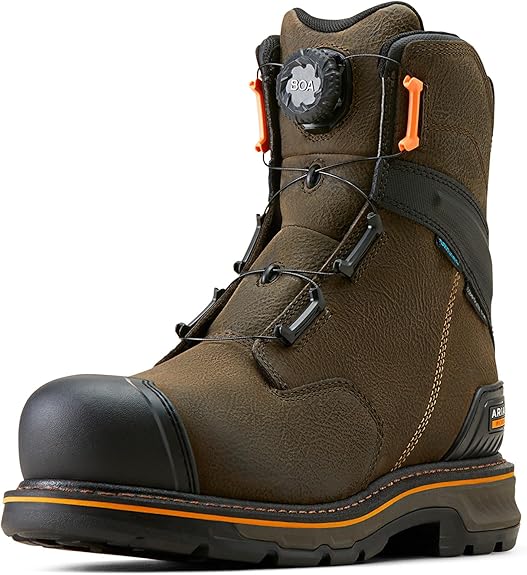
The Ariat Stump Jumper BOA represents what happens when proven boot design meets modern lacing technology. The BOA Fit System isn’t gimmicky, it solves real problems workers face daily.
What works: The BOA system uses steel laces and a dial mechanism that adjusts fit in seconds. Your feet swell during shifts. With traditional laces, adjustment means stopping work, untying, retying, and hoping the tension is right. With BOA, you twist the dial for micro-adjustments without removing gloves. The system is lifetime-guaranteed, if it fails, BOA replaces it free.
Ariat’s ATS (Advanced Torque Stability) technology provides lightweight support that helps feet adapt to uneven surfaces. The combination of ATS support and the FLX Foam midsole creates a boot that feels responsive rather than rigid. The Energy Max anti-fatigue insole reduces foot fatigue during long shifts.
The DRYShield waterproof construction keeps feet dry without the clammy feeling of non-breathable boots. The Duratread outsole provides oil and slip resistance while the aggressive tread pattern releases mud and debris effectively, critical for construction sites where packed treads become slippery.
Goodyear welt construction allows resoling, extending boot life significantly. The composite safety toe meets ASTM F2413 standards while weighing 35% less than steel and remaining non-conductive in cold weather.
Midwest-specific performance: The outdoor traction lugs handle varied surfaces well, from concrete loading docks to muddy jobsites to icy parking lots. The debris-releasing tread pattern prevents snow and mud buildup that turns boots into ice skates. The waterproof construction and insulated versions handle extended exposure to wet conditions.
The composite toe doesn’t conduct cold like steel, making these boots comfortable in winter without requiring thick insulated socks. The BOA system works with gloved hands, practical during cold-weather work.
The compromise: BOA adds cost and weight. While the system is remarkably durable, it represents a potential failure point that traditional laces don’t have. The external dial can catch on equipment or materials, though its recessed design minimizes this risk.
Some users report the boots running slightly large. The BOA system’s micro-adjustability helps compensate, but ordering a half-size down might be necessary. The boots require brief break-in for the leather upper, though less than traditional lace-up boots.
The aggressive sole excels on varied terrain but creates more flex than wedge soles, better for outdoor and mixed conditions, slightly less optimal for extended standing on concrete.
Best for: Construction workers, outdoor tradesmen, and anyone who regularly works on varied surfaces. Excellent for workers who value convenience and need waterproof protection.
4. Keen Utility San Jose: Lightweight Without Compromise
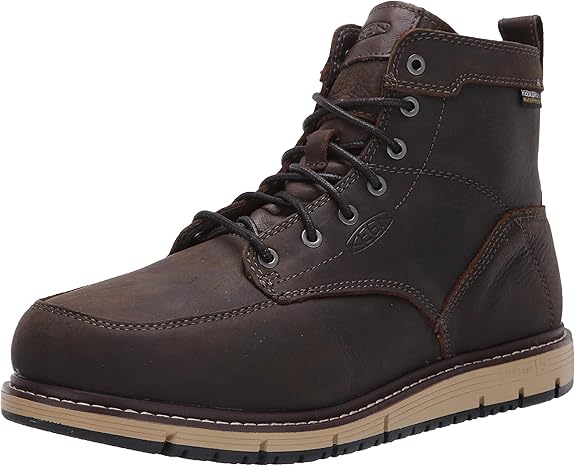
The Keen Utility San Jose challenges the assumption that safety boots must be heavy. This boot delivers protection and durability while weighing approximately 1.7 pounds per boot, significantly lighter than most competitors.
What works: The aluminum safety toe weighs 35% less than steel while meeting the same ASTM F2413 protection standards. The weight difference matters during long shifts, lighter boots reduce leg fatigue significantly. The asymmetrical toe design follows the natural shape of left and right feet, providing a more comfortable fit than symmetrical safety toes.
Keen’s Luftcell PU midsole uses air-infused technology that provides cushioning without added weight or bulk. The midsole maintains its shock-absorbing properties longer than cheaper foam midsoles that compress permanently. The oil-and-slip-resistant outsole meets ASTM F2913 standards despite the wedge design, providing reliable traction on various surfaces.
The KEEN.DRY waterproof membrane keeps water out while allowing moisture vapor to escape. Unlike cheap waterproof boots that trap sweat, these maintain foot comfort during active work. The moisture-wicking lining helps manage perspiration.
The boot comes out of the box ready to wear. Multiple testers report zero break-in period required, rare for work boots with safety toes. The full-grain leather upper uses LWG-certified tanneries (Leather Working Group), meeting environmental standards while delivering durability.
Midwest-specific performance: The lightweight design reduces fatigue during extended standing and walking on concrete, perfect for warehouse workers, assembly workers, and light construction. The wedge sole provides stability on flat surfaces while remaining flexible enough for natural foot movement.
The waterproof construction handles Midwest slush and wet conditions reliably. The boot dries quickly when wet, practical for workers who face wet morning commutes followed by indoor work. The non-metallic construction includes a composite puncture-resistant plate and ESR electrical shock protection.
The compromise: The lightweight construction and wedge sole design mean these boots aren’t built for heavy construction or extremely rugged outdoor work. Workers in heavy manufacturing, logging, or jobs requiring maximum durability might need more robust boots.
The generous toe box accommodates most foot shapes comfortably but can feel roomy for narrow feet. The boot runs slightly large, many users report ordering a half-size down for proper fit. Arch support is adequate but not exceptional; workers with flat feet or high arches might need aftermarket insoles.
The leather, while durable, doesn’t have the thick, armor-like quality of heritage work boots. The boot excels at light-to-medium-duty work rather than extreme abuse.
Best for: Workers prioritizing comfort and reduced fatigue. Warehouse personnel, light construction, facility maintenance, and anyone spending long hours on their feet on relatively clean surfaces.
5. Danner 6″ Bull Run Steel Toe: Classic American Construction
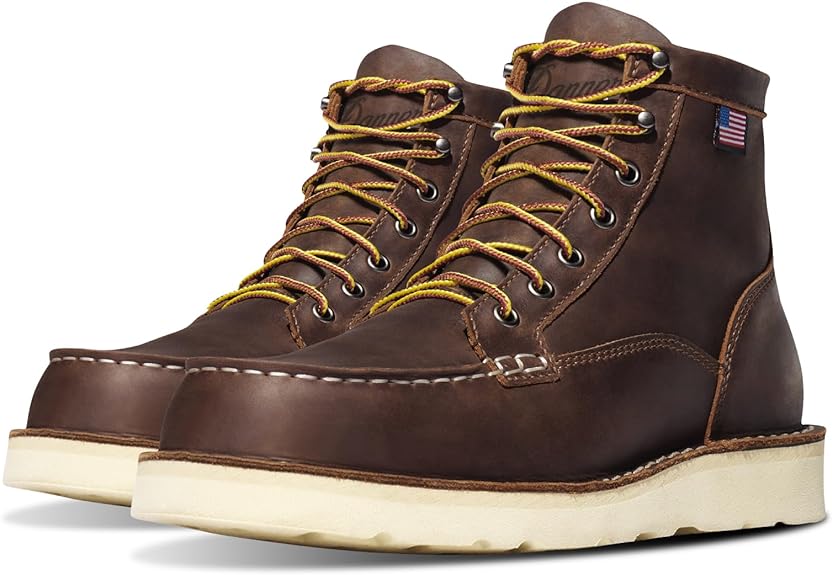
The Danner Bull Run represents old-school American bootmaking adapted for modern workers. Built partially in Portland, Oregon, these boots combine imported components with USA assembly and finishing, delivering quality that justifies their higher price.
What works: The unlined, full-grain, oil-tanned leather breaks in beautifully. Danner tests leather hides through seven different criteria before selection, grading for strength, density, and pull resistance. The leather molds to your foot over time, creating a custom fit that lined boots never achieve. The oil-tanning process provides natural water resistance and durability.
Stitchdown construction creates a wider platform than Goodyear welt while remaining resoleable. Danner’s Portland factory can recraft these boots, replacing worn soles and damaged components. This extends boot life well beyond cheaper construction methods. The hand-finished construction provides quality control that mass production doesn’t achieve.
The three-layer open-cell polyurethane footbed provides cushioning while promoting heat dissipation and air circulation. The design prevents the hot, swampy feeling common in boots with poor ventilation. The Danner Wedge outsole uses a polyurethane compound designed specifically for concrete and wood floors, providing cushioning and traction without marking floors.
The steel toe meets ASTM F2413 standards for impact and compression. Electrical hazard protection meets ASTM F2892 standards in dry conditions. The fiberglass shank provides structural support without excessive weight or stiffness.
Midwest-specific performance: The unlined leather excels in moderate temperatures, providing excellent breathability during warm weather while accommodating thick socks in winter. The wedge sole performs exceptionally on concrete floors, making these ideal for manufacturing, warehouses, and indoor construction.
The oil-and-slip-resistant outsole provides reliable traction in typical Midwest workplace conditions. The soft polyurethane compound cushions feet during extended standing and walking on hard surfaces. However, Danner explicitly states these boots are not recommended for daily use on asphalt—the soft compound wears quickly on abrasive outdoor surfaces.
The compromise: These boots cost significantly more than most alternatives. While the quality justifies the price for workers needing daily-use boots that last years, budget-conscious buyers might struggle with the initial investment. The boots are recraftable, which reduces long-term cost, but resoling costs around $130.
The soft wedge sole provides excellent comfort on indoor surfaces but wears faster on rough terrain. Workers whose jobs involve varied surfaces, indoor and outdoor, concrete and gravel, might find the sole wears unevenly or faster than expected.
Break-in takes time. The thick leather and structured construction need patience. Budget a week of gradually increasing wear time. Some users report ankle rubbing initially, though this resolves as the leather softens.
Best for: Workers who spend most of their time on concrete or wood floors. Manufacturing, warehouse work, carpentry, and facility maintenance. Ideal for anyone who values long-term quality and American craftsmanship.
6. Danner Quarry: Heavy-Duty USA-Made Performance
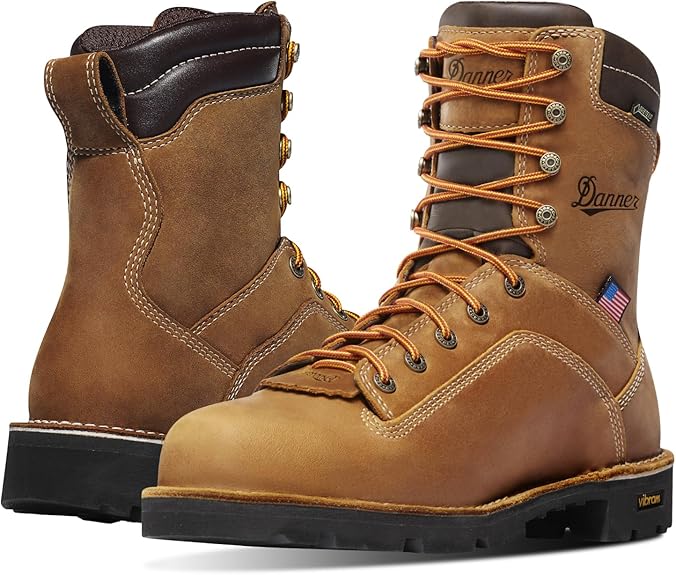
The Danner Quarry handles the work that lighter boots can’t. Originally designed for quarry workers and heavy construction, this boot delivers maximum protection and durability for Midwest industrial work.
What works: Danner brought Quarry manufacturing to Portland, Oregon, using imported components assembled by hand in their USA factory. The quality control exceeds typical mass production. The full-grain leather upper undergoes nine separate quality tests before selection, ensuring consistent strength and durability.
The triple-stitched construction uses hyper-strong thread in critical areas. This isn’t cosmetic, the reinforcement genuinely extends boot life in high-wear zones. The stitchdown construction creates a wide, stable platform while allowing the boots to be recrafted when soles wear out.
The Vibram Quarry outsole features a 90-degree heel and non-linear lug pattern designed for superior traction and debris release. The oil-and-slip-resistant rubber compound maintains flexibility in extreme temperatures, from freezing cold to desert heat. The aggressive tread provides reliable grip on loose gravel, wet concrete, muddy terrain, and slippery surfaces.
The Gore-Tex waterproof lining (in waterproof models) keeps feet dry while allowing moisture vapor to escape. The breathable membrane prevents the clammy feeling of non-breathable waterproof boots. The Fatigue Fighter footbed provides cushioning and support during extended wear. A fiberglass shank adds structural support without excessive weight.
Available with various safety toe options, alloy toe (lighter than steel), composite toe (non-conductive), and insulated versions with up to 400g Thinsulate for winter work.
Midwest-specific performance: The Quarry excels in heavy construction, outdoor industrial work, and jobs requiring maximum protection. The aggressive outsole handles Midwest winter conditions confidently, snow, ice, mud, and slush. The waterproof versions provide reliable protection during extended exposure to wet conditions.
The tall 8-inch shaft provides ankle support and prevents debris from entering boots. The boot’s substantial construction provides protection against impact, abrasion, and sharp objects. The electrical hazard protection meets ASTM standards.
The compromise: These boots are heavy. The robust construction, safety features, and aggressive outsole create a boot weighing more than lighter alternatives. Workers accustomed to lightweight boots will notice the difference, especially during the first weeks of wear.
The price reflects the quality and USA construction. At $300-plus, these boots cost significantly more than imported alternatives. However, the recraftable construction and exceptional durability mean lower long-term costs for workers who need maximum protection.
Break-in requires patience. The thick leather and structured construction need time to soften and conform. Budget at least two weeks of gradual wear. The collar benefits from leather conditioner to speed break-in and prevent rubbing.
Best for: Heavy construction, outdoor industrial work, utility workers, and anyone facing severe working conditions. Ideal for workers who need maximum protection and durability, and are willing to invest in boots that last years rather than months.
7. Wolverine Floorhand Steel Toe 6″: Budget-Friendly Performance

The Wolverine Floorhand delivers legitimate protection and comfort at a price that makes sense for workers who need affordable boots that actually work, not just the cheapest option available.
What works: The waterproof full-grain leather upper provides solid protection against moisture. The breathable waterproof membrane keeps water out while allowing moisture vapor to escape, preventing both wet feet from external water and clammy feet from trapped sweat. The moisture-wicking mesh lining enhances breathability and comfort.
The steel toe meets ASTM F2413-18 standards for impact and compression, providing the same protection level as more expensive boots. Electrical hazard protection meets ASTM standards. The slip-resistant rubber outsole provides reliable traction on various surfaces.
The removable full-cushion footbed molds to your foot over time, providing customized support. The removable design allows replacement with aftermarket insoles for workers needing additional arch support or cushioning. A nylon shank provides structural support and stability.
The lightweight cement construction reduces weight compared to traditional welted boots while maintaining durability. The boots require minimal break-in, most users report comfortable wear within the first few days.
Midwest-specific performance: The waterproof construction handles typical Midwest wet conditions reliably, rain, slush, and wet floors. The insulation-free design works well for warmer months and indoor work where overheating is a concern. The slip-resistant outsole provides adequate traction on concrete floors, wet surfaces, and moderately slippery conditions.
The boots handle light-to-medium-duty work well, warehouse work, light construction, facility maintenance, and general labor. The steel toe provides necessary protection for environments requiring safety footwear without excessive weight or bulk.
The compromise: The cement construction, while reducing weight and cost, doesn’t match the durability of Goodyear welt or stitchdown construction. These boots aren’t resoleable, when the sole wears out, you’ll need new boots. For light-duty daily wear, expect 6-12 months of life. Heavy-duty work shortens this considerably.
The leather, while genuine full-grain, isn’t as thick or robust as premium boots. The boot handles normal work conditions but won’t survive extreme abuse like heavy construction or outdoor industrial work. Some users report the outsole peeling after heavy use, though this varies significantly based on work conditions.
Arch support is adequate but not exceptional. Workers with foot problems might need aftermarket insoles immediately. The toe box can feel cramped for wider feet, the EE width option helps, but sizing carefully matters.
Best for: Budget-conscious workers needing legitimate safety footwear for light-to-medium-duty work. Warehouse personnel, light manufacturing, general labor, and workers who need affordable boots that meet OSHA requirements without premium features.
8. Wolverine Raider DuraShocks: Proven Comfort Technology
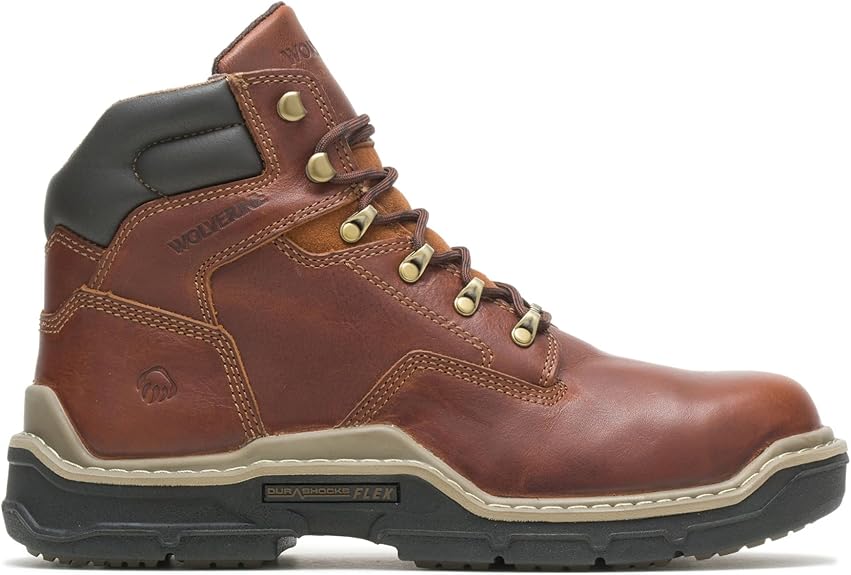
The Wolverine Raider with DuraShocks represents Wolverine’s flagship work boot line, featuring technology that genuinely reduces fatigue during extended wear. This isn’t an entry-level boot with basic features, it’s designed for workers who spend entire shifts on their feet.
What works: The DuraShocks Flex outsole uses individual compression pads throughout the sole that absorb shock with every step and return energy. This isn’t marketing hyperbole, multiple long-term users report noticeably reduced foot and leg fatigue compared to standard boots. The technology matters most during extended standing and walking on hard surfaces.
The premium full-grain leather upper provides durability and develops character with age. The waterproof membrane and moisture-wicking mesh lining keep feet dry from both external water and internal perspiration. The removable dual-density footbed provides cushioning while allowing replacement when it compresses.
ContourWelt construction creates flexibility where boots naturally bend, reducing break-in time and improving comfort. The construction method allows the boot to flex naturally rather than fighting foot movement. A PU midsole provides additional cushioning and support. The nylon shank adds structural stability without excessive stiffness.
Available with CarbonMax composite toe or steel toe options. The composite toe reduces weight significantly while meeting the same ASTM F2413 protection standards. The non-metallic composite toe doesn’t conduct cold or trigger metal detectors. Electrical hazard protection meets ASTM standards.
Midwest-specific performance: The DuraShocks technology particularly benefits workers on concrete, manufacturing, warehouses, assembly plants, and construction. The shock absorption reduces cumulative fatigue and impact stress on joints. The rubber lug outsole with DuraShocks Flex provides oil and slip resistance while maintaining traction on various surfaces.
The waterproof construction handles Midwest wet conditions reliably. The breathable membrane prevents the clammy feeling during active work in warmer temperatures. The boot balances protection with breathability better than cheaper waterproof boots.
The compromise: These boots are heavier than lightweight alternatives. The robust construction, shock-absorbing features, and safety components create a boot that feels substantial. Workers accustomed to lightweight boots will notice the difference, though the comfort features help compensate.
The boots run slightly large. Many users report ordering a half-size down for proper fit. Width options (medium and wide) help achieve proper fit, but careful sizing matters. The boots require brief break-in despite the ContourWelt construction, typically less than a week.
Some users report the boots feel stiff initially, particularly around the ankle collar. Leather conditioner and gradual break-in resolve this, but plan for a brief adjustment period. The removable footbed compresses over time and might need replacement after 6-12 months of heavy use.
Best for: Workers spending long shifts on concrete or hard surfaces. Manufacturing, assembly, warehouse work, and construction where comfort and fatigue reduction matter as much as protection.
9. Carhartt Waterproof Wedge: Practical Value
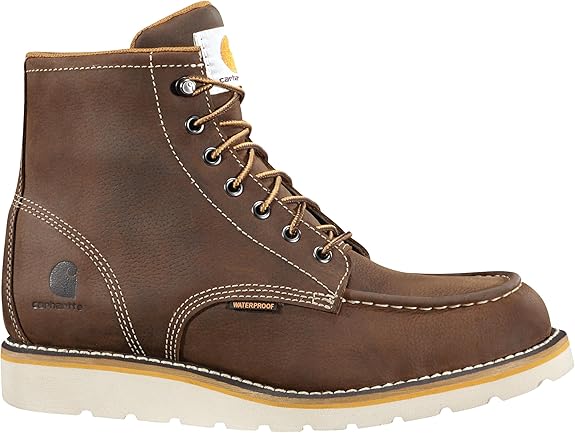
The Carhartt Waterproof Wedge delivers exactly what Carhartt does best: honest, durable gear without unnecessary complexity. This boot targets workers who want reliable protection and comfort at a reasonable price.
What works: The Storm Defender waterproof membrane keeps feet dry while allowing moisture to escape. Carhartt’s waterproofing actually works in real-world conditions, standing in slush, working in rain, walking through wet grass. The FastDry lining wicks away sweat, preventing the clammy feeling that ruins foot comfort.
The oil-tanned leather upper develops a nice patina with use while resisting water naturally. The leather quality exceeds the price point, multiple reviewers comment that the leather feels surprisingly thick and supple. The moc toe design provides extra room in the toe box, accommodating foot swelling during long shifts.
The dual-density rubber wedge outsole provides full ground contact, maximizing traction on flat surfaces. The polyurethane cushion insole provides shock absorption and comfort. A PU Strobel pad adds another layer of cushioning and support. The steel shank provides structural support and stability.
Goodyear welt construction means these boots can be resoled, extending their useful life significantly. The electrical hazard protection meets ASTM F2892-18 standards. Steel toe versions meet ASTM F2413-18 standards for impact and compression.
Midwest-specific performance: The wedge sole excels on concrete and flat surfaces, exactly what most Midwest warehouse, manufacturing, and indoor construction workers encounter. The oil-and-slip-resistant outsole meets ASTM F3445-21 standards, providing reliable traction on wet floors and oily surfaces.
The waterproof construction handles Midwest conditions reliably without excessive bulk or weight. The breathable membrane prevents overheating during warmer months while keeping feet dry in winter slush. The boots work equally well for outdoor and indoor work.
The compromise: The wedge sole, while excellent on flat surfaces, doesn’t provide aggressive traction on loose gravel, mud, or outdoor terrain. Workers whose jobs involve varied surfaces might prefer a lugged outsole. The wedge compound wears faster on rough surfaces like asphalt.
Some users report quality inconsistencies, the cloth liner occasionally comes loose or the insoles require early replacement. While most boots perform well, quality control isn’t as consistent as premium brands. The laces are adequate but not exceptional, consider upgrading to higher-quality laces.
The boots run slightly large and wide. Workers with narrow feet might struggle to achieve a snug fit. The generous sizing works well with thick socks but can feel sloppy with thin socks. Careful sizing matters.
Best for: Workers wanting reliable protection and comfort without premium pricing. Manufacturing, warehouse work, light construction, and general labor. Ideal for workers who value Carhartt’s reputation for honest, durable gear.
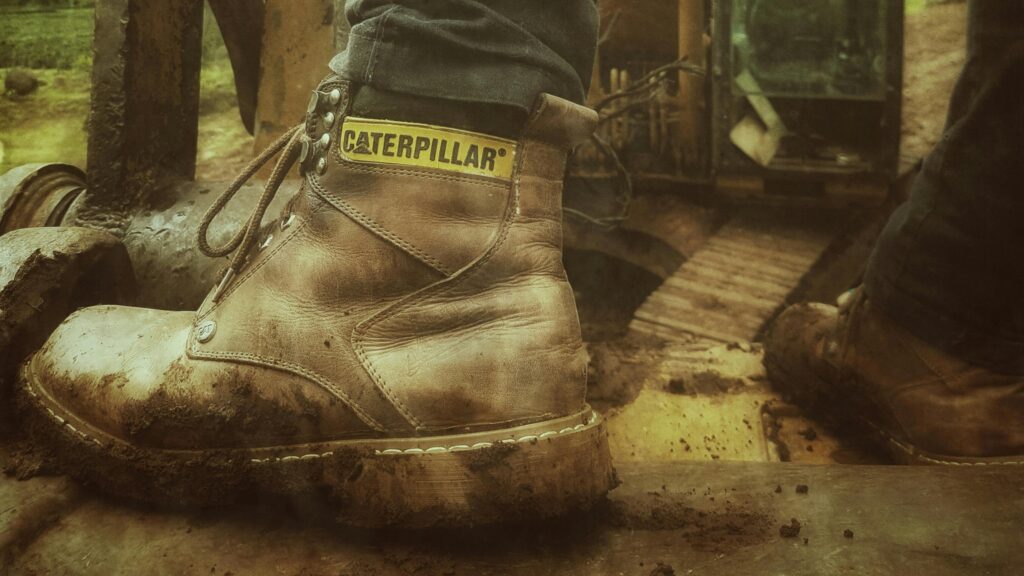
10. CAT Second Shift: Rugged Reliability

The CAT (Caterpillar) Second Shift brings heavy equipment manufacturer credibility to footwear. These boots target workers who need rugged, durable protection without unnecessary features or premium pricing.
What works: The full-grain leather or nubuck upper provides substantial durability. The leather quality is solid, thick enough to resist abrasion and punctures while breaking in to a comfortable fit. The classic 6-inch height provides ankle support without the bulkiness of taller boots.
The Climasphere insole creates a drier, more breathable environment inside the boot. The insole technology helps manage heat and moisture, preventing the hot, swampy feeling that kills foot comfort. The removable PU sock liner provides cushioning and can be replaced with aftermarket insoles for workers needing additional support.
Goodyear welt construction provides durability and allows resoling. The stitched construction creates a connection between upper and sole that survives hard use. The slip-resistant rubber outsole meets ASTM testing standards, providing reliable traction on various surfaces. The steel toe meets ASTM F2413-11 standards for impact and compression. Electrical hazard protection meets ASTM standards.
A steel shank provides structural support and stability. The nylon mesh lining enhances breathability while reducing weight compared to fully-lined boots.
Midwest-specific performance: The rubber outsole provides good traction on concrete, asphalt, and moderately slippery surfaces. The steel toe and electrical hazard protection meet typical Midwest workplace requirements. The boots handle indoor and outdoor work adequately, though they’re not designed for extreme conditions.
The substantial construction provides protection against impact, abrasion, and typical workplace hazards. The boots feel solid and confidence-inspiring rather than delicate. The classic work boot styling works on various job sites without looking out of place.
The compromise: These boots are heavy. The full-grain leather, steel toe, and robust construction create a boot that feels substantial. Workers accustomed to lightweight boots will notice the weight, particularly during the first weeks. The weight adds to stability but also increases fatigue over long shifts.
The Goodyear welt construction requires break-in. Budget at least a week of gradual wear for the leather to soften and the boot to conform to your foot. Some users report the collar rubbing initially, though this resolves with break-in.
The outsole, while slip-resistant, doesn’t excel on wet surfaces compared to specialized traction designs. The tread pattern provides adequate grip but isn’t aggressive. Workers frequently dealing with very slippery conditions might want boots with more advanced traction technology.
Some users report the boots run slightly large. Sizing carefully matters, particularly since the substantial construction leaves less room for fit adjustment. The wide (EE) width helps workers with wider feet, but the standard width can feel roomy on narrower feet.
Best for: Workers wanting solid, no-nonsense protection with brand reliability. Construction, manufacturing, utilities, and general labor. Ideal for workers who value rugged durability over advanced features.
| Boot | Safety Toe | Waterproof | Weight/Comfort | Best For | Price |
|---|---|---|---|---|---|
| Timberland PRO Boondock | Composite | Yes | Medium / Excellent | Industrial work, max protection | $140-180 |
| Thorogood American Heritage | Steel/Soft | No | Medium / Excellent | Indoor flat surfaces, craftsmanship | $170-220 |
| Ariat Stump Jumper BOA | Composite | Yes | Medium / Very Good | Construction, varied terrain | $185-220 |
| Keen Utility San Jose | Aluminum | Yes | Lightweight / Excellent | Warehouse, light construction | $140-180 |
| Danner Bull Run | Steel | No* | Medium / Very Good | Indoor manufacturing, quality seekers | $230-270 |
| Danner Quarry | Alloy/Composite | Yes | Heavy / Good | Heavy construction, max durability | $300-360 |
| Wolverine Floorhand | Steel | Yes | Light / Good | Budget-conscious, light-duty | $85-120 |
| Wolverine Raider DuraShocks | Composite/Steel | Yes | Medium / Excellent | Long shifts on concrete | $150-190 |
| Carhartt Waterproof Wedge | Steel/Soft | Yes | Medium / Very Good | General work, reliable value | $140-170 |
| CAT Second Shift | Steel | No | Heavy / Good | Rugged daily work | $90-130 |
How to Choose Work Boots for Midwest Conditions
Safety Requirements Come First
Before considering comfort or style, determine your workplace safety requirements. OSHA mandates protective footwear in environments with foot hazards. Check your employer’s specific requirements, some require steel toes, others accept composite or alloy. Some jobs require metatarsal guards, puncture-resistant plates, or specific electrical hazard protection.
ASTM F2413 standards define three safety toe protection levels:
- I/75: Impact resistance (75 foot-pounds)
- C/75: Compression resistance (2,500 pounds)
- Mt: Metatarsal protection
Most Midwest construction, manufacturing, and industrial jobs require I/75 and C/75 ratings minimum. Electrical hazard (EH) protection matters for electricians, maintenance workers, and anyone working around electrical equipment.
Understand Safety Toe Options
Steel Toes: Traditional and still widely used. Provide excellent protection, cost less than alternatives, but conduct cold (uncomfortable in winter) and add weight. Trigger metal detectors.
Composite Toes: Made from non-metallic materials (fiberglass, Kevlar, carbon fiber). Lighter than steel (typically 30% less weight), don’t conduct cold or heat, won’t trigger metal detectors. Cost slightly more than steel. Provide identical protection levels.
Alloy Toes: Made from aluminum alloys. Lighter than steel, don’t conduct temperature as much, still trigger metal detectors. Middle ground between steel and composite in price and performance.
Aluminum Toes: Lightweight option used by some manufacturers like Keen. Weigh 35% less than steel while meeting the same protection standards. More expensive than steel but significantly reduce fatigue during long shifts.
For Midwest work, composite or alloy toes often provide the best balance, they don’t conduct cold during winter work, reduce weight for all-day comfort, and meet all necessary protection standards.
Waterproofing vs. Water Resistance
Water-Resistant: Treated leather that repels light moisture. Works for brief exposure to rain or snow. Won’t survive standing in puddles or extended wet exposure. Adequate for indoor work with occasional outdoor exposure.
Waterproof: Sealed membrane (Gore-Tex, proprietary systems) that prevents water entry while allowing moisture vapor to escape. Essential for construction, utilities, landscaping, or any work involving extended wet exposure. The breathable membrane matters, non-breathable waterproof boots trap sweat, leaving feet clammy.
For Midwest conditions, waterproof boots make sense for outdoor work and construction from October through April. Indoor workers might prefer non-waterproof boots for better breathability during summer, switching to waterproof for winter commutes and outdoor tasks.
Insulation Needs
No Insulation: Best for indoor work, warmer months, or situations where overheating is a concern. Provides maximum breathability. Add thick socks for cold-weather protection.
200g Insulation: Light insulation for moderate cold. Good for active outdoor work in temperatures down to 20°F. Prevents cold feet without causing overheating during physical activity.
400g Insulation: Moderate insulation for cold weather. Handles temperatures down to 0°F during moderate activity. Good for outdoor work in typical Midwest winters. Can cause overheating during active work or in heated buildings.
600g+ Insulation: Heavy insulation for extreme cold or stationary work. Handles subzero temperatures during inactive periods. Too warm for most Midwest work situations unless you’re outside and stationary for extended periods.
Most Midwest workers do well with non-insulated boots and appropriate sock choices, or 200g insulation for outdoor winter work. Heavy insulation usually causes more problems (overheating, sweaty feet) than it solves.
Construction Methods Matter
Goodyear Welt: Uppers stitched to a welt (strip of leather or rubber) which is then stitched to the sole. Creates durable, water-resistant boots that can be resoled. The gold standard for quality work boots. More expensive initially but lower long-term cost through resoling.
Stitchdown: Uppers stitched directly to the sole, creating a wide, stable platform. Provides excellent stability underfoot. Can be resoled but fewer cobblers handle stitchdown repairs. Danner’s preferred construction method.
Direct-Attach/Cement: Soles glued and sometimes stitched to uppers. Less expensive and no break-in required. More flexible initially but less durable long-term. Cannot be resoled. Good for budget boots or workers who replace boots frequently anyway.
For workers buying quality boots intended to last years, Goodyear welt or stitchdown construction justifies the higher initial cost through extended life and resoling capability.
Fit Considerations
Work boot fit differs from casual shoe fit. You need room for foot expansion during shifts (feet swell from standing/walking), space for thick socks in winter, and enough toe room to prevent impact against the safety toe.
Length: Stand wearing your typical work socks. You should have 3/8 to 1/2 inch space between your longest toe and the boot’s end. Too much space causes rubbing and blisters. Too little means painful toe jamming.
Width: The boot should feel snug through the midfoot without pinching. Your foot shouldn’t slide side-to-side when walking. If you have wide feet, order wide (EE) width specifically, going up in length doesn’t add width proportionally.
Heel Fit: Your heel should stay in place when walking. Minor heel lift is normal in new boots during break-in, but excessive movement causes blisters. A properly fitted heel locks your foot in place.
Arch Support: Quality boots provide some arch support, but individual needs vary dramatically. Workers with flat feet or high arches often benefit from aftermarket insoles. Buy boots with removable insoles for this flexibility.
Break-In Reality
Quality leather boots require break-in. Budget one to two weeks of gradually increasing wear time. Start with 2-3 hours, then half days, then full shifts. Leather conditioner speeds break-in and prevents cracking. Thick socks cushion pressure points during initial wear.
Boots with direct-attach construction typically require minimal break-in, often comfortable from day one. Goodyear welt and stitchdown boots need patience but reward you with boots that mold perfectly to your feet.
Never break in boots during critical work periods. Blisters and discomfort impact performance and safety. Plan boot purchases with enough time for proper break-in.
Making Work Boots Last
Quality boots represent significant investment. Proper care extends their useful life from months to years.
Daily Maintenance
Clean After Each Use: Wipe boots with a damp cloth after work, removing dirt, salt, and debris. This simple step prevents material degradation and extends boot life significantly. Pay attention to welt stitching and seams where dirt accumulates.
Dry Properly: Never use direct heat (radiators, heaters, hair dryers). Direct heat cracks leather and degrades adhesives. Stuff boots with newspaper to absorb moisture and maintain shape. Allow 24 hours drying time between uses when possible. Rotate between two pairs if your work involves frequent wet exposure.
Remove Insoles: Pull out removable insoles after wet shifts. This allows the interior to dry thoroughly and prevents odor-causing bacteria growth. Hang or lay insoles separately to dry.
Weekly Care
Leather Conditioning: Apply leather conditioner every 1-2 weeks during heavy use. Conditioning maintains leather flexibility, prevents cracking, and helps repel water. Use products designed for work boots, they maintain breathability while conditioning.
Lace Inspection: Check laces for fraying and replace at first signs of wear. Lace failure leads to improper fit and reduces boot support. Quality laces cost a few dollars and significantly improve boot function.
Sole Inspection: Check for uneven wear patterns, cracking, or separation. Address problems early before they worsen. Minor separations can be glued; major damage requires professional repair.
Storage
Off-Season Storage: Clean and condition boots thoroughly before long-term storage. Store in cool, dry locations away from direct sunlight. Use boot trees or stuff with newspaper to maintain shape. Check periodically for mold or material degradation.
Daily Storage: Store boots loosely laced in well-ventilated areas. Avoid leaving wet boots in closed lockers, this encourages mold and odor. If possible, position boots to promote air circulation around all surfaces.
Salt Damage Prevention
Salt accelerates leather degradation faster than almost anything else. Midwest winters mean extended salt exposure.
Immediate Cleaning: Wipe boots after each exposure to road salt or de-icing chemicals. Don’t wait until end-of-day, salt starts corroding immediately.
Salt-Specific Products: Use products designed to neutralize and remove salt deposits. Simple water doesn’t remove all salt residue. Salt-removing products cost a few dollars and dramatically extend boot life in winter.
Protective Treatments: Apply water-repellent treatments before winter. These create a barrier that helps prevent salt from penetrating leather. Reapply every few weeks during heavy salt exposure.
When to Replace
Sole Wear: Replace boots when treads wear smooth, or consider resoling quality boots. Smooth soles become slippery and unsafe. For non-resoleable boots, plan replacement when traction significantly decreases.
Upper Damage: Significant leather cracks, tears, or holes compromise protection and waterproofing. Minor scuffs are cosmetic; structural damage requires replacement.
Interior Degradation: When insoles compress permanently, replace them or the entire boot if the boot’s midsole has collapsed. Reduced cushioning increases fatigue and can cause long-term joint problems.
Safety Toe Damage: Any dent, crack, or structural damage to safety toes requires immediate replacement. Compromised safety toes don’t provide reliable protection.
When to Spend More vs. When to Save
Not every worker needs premium boots. Understanding when investment makes sense helps optimize value.
Invest in Quality When:
Daily Heavy Use: If you wear boots 40-plus hours weekly in demanding conditions, quality pays off. A $200 boot lasting two years costs less per day than a $100 boot lasting six months. Calculate cost-per-wear, not just initial price.
Your Job Depends on It: Professional tradesmen, union workers, and anyone whose livelihood depends on reliable footwear should invest in proven quality. Boot failure causes missed work days and lost income.
Severe Conditions: Heavy construction, outdoor utility work, or jobs with extreme hazards justify premium boots. The additional protection and durability provide essential margins of safety.
Long-Term Cost Savings: Resoleable boots cost more initially but less over their lifetime. A $250 pair of Goodyear-welted boots can be resoled for $100-130, providing years of additional wear. Three $100 boots over five years cost more than one $250 boot resoled once.
Save Money When:
Light-Duty Work: Warehouse jobs on clean floors, light assembly work, or positions requiring safety footwear but not facing extreme conditions can use quality budget boots successfully. The lighter wear doesn’t justify premium pricing.
Short-Term Need: If you need boots for a specific project or temporary job, budget options make sense. No reason to invest in boots you’ll rarely use afterward.
Indoor-Only Work: Indoor environments with climate control and smooth surfaces are less demanding. Quality budget boots survive well in these conditions.
You’re Still Figuring Out Needs: First-time work boot buyers might start with mid-range options while learning what features matter most for their specific work. Experience informs better future purchases.
The False Economy of Cheap Boots
Boots under $60 rarely provide good value. The materials, construction, and quality control necessary for legitimate work boots cost money. Ultra-cheap boots might meet minimum safety standards but fail quickly under real work conditions. They’re often less comfortable, less durable, and ultimately more expensive than quality budget options in the $100-150 range.
Midwest-Specific Considerations
Temperature Management
Midwest weather creates unique challenges. You can’t optimize boots for winter and summer simultaneously. Consider two strategies:
Single-Boot Approach: Choose non-insulated waterproof boots. Use thin socks for warm weather, thick insulated socks for winter. This works best for indoor workers or those with mostly moderate conditions.
Two-Boot System: Own separate summer and winter boots. Uninsulated, breathable boots for April through October. Insulated waterproof boots for November through March. More expensive initially but each pair lasts longer since they’re only used half the year.
Dealing with Slush and Salt
Late winter and early spring mean omnipresent slush mixed with road salt. This combination destroys boots faster than almost anything else.
Daily Maintenance Becomes Critical: The extra five minutes spent cleaning boots after work can double their lifespan. Wipe them down, remove salt deposits, and allow proper drying.
Waterproofing Matters More: Slush finds every weak point in construction. Waterproof boots are essential for outdoor and construction work during slush season. Even indoor workers face slush during commutes and lunch breaks.
Leather Treatment: Apply salt-removal products and leather conditioner more frequently during winter. The protection prevents accelerated degradation.
Concrete and Hard Surface Work
Most Midwest work boots encounter concrete frequently, manufacturing floors, warehouse surfaces, construction slabs, basement floors. Extended time on concrete requires specific considerations:
Cushioning is Essential: Adequate midsole cushioning and quality footbeds prevent cumulative joint damage. The difference matters more over years of work than in individual shifts.
Sole Hardness Balance: Too soft, soles compress quickly losing cushioning. Too hard, every step jars your body. Quality midsoles balance durability with shock absorption.
Fatigue-Reducing Technology: Features like Timberland’s Anti-Fatigue Technology or Wolverine’s DuraShocks genuinely help. They’re not just marketing if they address the specific problem of impact absorption on hard surfaces.
Bottom Line: Best Work Boots for Most Midwest Workers
For the majority of Midwest workers, construction, manufacturing, warehouses, utilities, and trades, three boots represent the best overall value:
Best All-Around: Timberland PRO Boondock 6-Inch Composite Toe
The Boondock delivers premium protection and proven comfort at a price that makes sense for daily users. The composite toe, waterproof construction, and Anti-Fatigue Technology address the specific challenges Midwest workers face. It’s not the cheapest option, but it’s far from the most expensive, and the quality justifies the cost for anyone wearing boots regularly. This is the safe choice, you’re getting proven performance from a reputable manufacturer.
Best Budget Option: Wolverine Floorhand Steel Toe
For workers needing affordable boots that meet OSHA requirements without premium features, the Floorhand delivers surprising value. Yes, you sacrifice long-term durability and advanced comfort features. But for light-to-medium-duty work, these boots provide legitimate protection at a price that won’t wreck your budget. They’re the smart choice for workers who need safety compliance more than maximum durability.
Best Premium Investment: Danner Bull Run or Thorogood American Heritage
For workers wanting boots that improve with age and last years rather than months, both the Danner Bull Run and Thorogood American Heritage justify their higher prices through exceptional quality, resoleable construction, and genuine craftsmanship. The Thorogood costs less and excels on flat surfaces. The Danner costs more but offers slightly more refinement and prestige. Either represents a legitimate investment rather than just a purchase.
Specialized Needs:
- Lightweight Priority: Keen Utility San Jose
- Maximum Protection: Danner Quarry
- Extended Comfort on Concrete: Wolverine Raider DuraShocks
- Modern Convenience: Ariat Stump Jumper BOA
The worst choice is buying cheap boots repeatedly. A single pair of quality boots providing two years of comfortable, reliable wear costs less than three pairs of cheap boots that fail after six months each. Calculate total cost over time, not just the initial price tag.
FAQs
Both steel and composite toes meet the same ASTM F2413 protection standards, they’re equally safe. The difference lies in weight, temperature conductivity, and metal detector compatibility. Steel costs less but weighs more and conducts cold (uncomfortable in winter). Composite weighs 30% less, doesn’t conduct temperature, and won’t trigger metal detectors. For Midwest work, composite often provides better overall value despite slightly higher cost. The reduced weight decreases fatigue during long shifts, and the non-conductive properties matter during winter work. Check your employer’s requirements, some specify steel toe only, but if you have a choice, composite usually wins for daily wear.
Plan to spend $100-180 for quality boots that balance protection, comfort, and durability. Boots under $80 rarely provide good value, they’re often less comfortable and fail faster, making them more expensive long-term. Boots over $200 often include features most workers don’t need or provide marginal improvements not worth the premium for daily use. The sweet spot sits around $140-160 where you get legitimate quality without paying for extreme-condition features or brand prestige. If your work demands maximum protection (heavy construction, outdoor utilities), premium boots ($200-300) justify their cost through superior durability and advanced features. Calculate cost-per-wear over expected lifespan rather than just initial price.
You can, but it’s not optimal. Non-insulated waterproof boots with appropriate sock choices work year-round for indoor workers or those with mixed conditions. Use thin socks in summer, thick insulated socks in winter. However, dedicated summer and winter boots provide better performance for outdoor workers. Summer boots (uninsulated, breathable) prevent overheating during active work. Winter boots (200-400g insulation, waterproof) handle extended cold exposure comfortably. If budget allows, two pairs last longer since each pair only endures half the year’s abuse. They’re also more comfortable since they’re optimized for specific conditions rather than compromising for year-round use.
Quality boots typically last 12-24 months with daily wear in demanding conditions. Light-duty work or indoor conditions might extend this to 2-3 years. Replace boots when tread wears smooth (traction loss is a safety issue), leather develops significant cracks or tears (compromises protection), safety toes show damage (immediate replacement required), or cushioning compresses permanently (increases fatigue and joint stress). Budget boots often need replacement after 6-12 months. Premium resoleable boots can last 4-5+ years with proper care and timely resoling. Monitor your boots’ condition monthly, catching problems early often prevents catastrophic failure and allows planned replacement rather than emergency purchases.
Many workers benefit from aftermarket insoles, especially for extended standing on concrete. Quality work boots include decent footbeds, but individual foot anatomy varies dramatically. Workers with flat feet, high arches, or plantar fasciitis often need specialized support. Even workers without foot problems sometimes find aftermarket insoles reduce fatigue during long shifts on concrete. Look for insoles designed specifically for work boots (not running shoes), they’re built for extended standing rather than forward motion. Popular options include Superfeet, Dr. Scholl’s Work series, and Timberland PRO Anti-Fatigue insoles. Buy boots with removable insoles so you can swap them. Quality aftermarket insoles cost $30-60 but can dramatically improve comfort, making them one of the best investments for workers on concrete all day.
For workers wearing boots daily in demanding conditions, yes, quality boots provide better value long-term. A $200 pair of Goodyear-welted boots can be resoled for $100-130, providing 4-5 years of wear total. That’s $0.15-0.25 per day of use. Three pairs of $100 boots over the same period cost $300 total and provide inferior comfort. The math favors quality. However, expensive doesn’t always mean better. Some premium boots cost more for brand prestige or features most workers don’t need. Focus on construction quality (Goodyear welt, stitchdown), proven durability, and features that address your specific work conditions. A $160 Timberland PRO often provides better value than a $120 budget boot or a $300 fashion-work boot hybrid. Pay for quality and features you’ll use, not for brand names or extreme-condition capabilities you don’t need.
