

When your alarm goes off at 4:30 a.m. and the barn thermometer reads 12 degrees, your boots matter, and when March turns your farmyard into a ankle-deep slush pit that’s half mud, half snowmelt, your boots matter. When you’re hauling 50-pound feed bags in August humidity or chasing down a stubborn heifer through October corn stubble, your boots absolutely matter.
These seven boots represent the best options for different farming scenarios, budgets, and priorities. Whether you need maximum warmth for winter livestock feeding, all-day comfort for equipment operation, or bulletproof waterproofing for dairy work, one of these boots will match your needs.
Quick Picks: Best Farm Work Boots by Category
- Best Overall: Muck Boot Chore Classic Tall – Year-round versatility
- Best Budget: TIDEWE Rubber Work Boot – Solid performance under $100
- Best for Long Hours: Ariat WorkHog Waterproof Boot – All-day comfort
- Best Insulated: Bogs Classic High Waterproof – Extreme cold protection
- Most Durable: Carhartt 11″ Waterproof Steel Toe – Built to last
- Best Support: Georgia Boot AMP LT Logger – Exceptional stability
- Best Hot Weather: Timberland PRO Pull-On – Summer breathability
Understanding Midwest Farm Boot Requirements
Midwest farming presents unique challenges that coastal or southern operations don’t face. Your boots need to handle temperature swings that go from minus-10 to 40 degrees in the same week. They need to grip on ice that’s hidden under fresh snow. They need waterproofing that survives standing in slush puddles all day.
The Midwest Mud Factor
Midwest mud isn’t all the same. Spring thaw creates soupy, clay-heavy mud that suctions boots off your feet. Summer rain produces slick, grassy mud that’s deceptively slippery. Fall harvest mud mixed with corn residue and manure becomes a sticky mess that clogs tread patterns. Winter brings frozen mud ruts that can twist ankles.
Quality farm boots handle all these variations. Look for self-cleaning tread patterns with deep channels that shed mud rather than packing it in. Rubber compounds need to stay flexible in cold temperatures while maintaining grip.
Temperature Extremes Demand Versatility
A boot that works in January often becomes unbearable by July. Most Midwest farmers need either multiple pairs or boots that balance warmth with breathability. Rubber boots with neoprene insulation typically handle temperatures from around minus-20 to 60 degrees. Traditional leather boots with removable liners offer more adaptability.
For dedicated winter chores, feeding livestock, breaking ice on water tanks, insulated boots rated to minus-40 make sense. But these same boots will overheat your feet during barn cleaning in summer.
Salt and Chemical Resistance
Road salt on driveways, chemical fertilizers, livestock treatments, and cleaning agents all accelerate boot degradation. Cheaper rubber compounds crack and split. Poor stitching fails. Untreated leather dries and cracks.
Quality boots use corrosion-resistant hardware, reinforced stitching, and materials that resist chemical damage. This isn’t about appearance, it’s about whether your boots last one season or five.
The 7 Best Farm Work Boots for Midwest Conditions
1. Best Overall: Muck Boot Chore Classic Tall
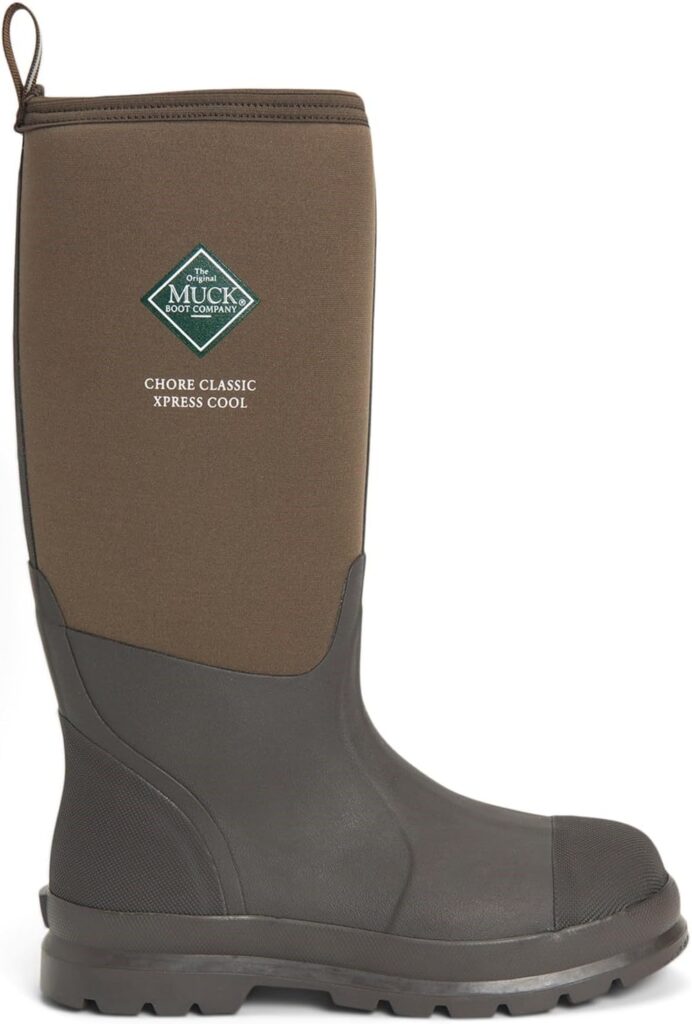
Year after year, the Muck Boot Chore Classic Tall dominates “best farm boot” discussions for good reason. This boot delivers genuine all-season performance at a price that makes sense for working farmers.
The 16-inch shaft keeps slush, mud, and manure out during the messiest work. The 100 percent waterproof construction combines rubber with 5mm neoprene, enough insulation for cold weather without causing overheating during active work. The breathable air mesh lining helps regulate temperature when conditions warm up.
Midwest-Specific Performance: Multiple seasons of testing confirm this boot handles Midwest conditions exceptionally well. The rubber compound stays flexible down to around minus-20 degrees while maintaining traction on icy barn floors. The self-cleaning outsole sheds mud effectively, though heavy clay still requires occasional scraping.
Real-World Durability: Farmers report 2-3 years of heavy daily use before experiencing any waterproofing failure. The reinforced Achilles area, a common failure point on cheaper boots, holds up well. The toe and heel reinforcement protect against the constant abuse of kicking aside equipment and climbing in and out of tractors.
The Trade-Off: These boots run warm. During summer barn work or active field chores in temperatures above 70 degrees, expect your feet to get sweaty. The neoprene that provides cold-weather comfort becomes a liability in heat. Many farmers keep a lighter pair for summer use.
Sizing Guidance: These boots run true to size but accommodate thick socks easily. The generous calf circumference fits over work pants without struggle. Break-in is minimal, expect full comfort within a few days of use.
➡️ Check Current Price on Amazon
Best For: Farmers who want one reliable boot for most conditions and are willing to invest around $120-140 for proven performance.
2. Best Budget Pick: TIDEWE Rubber Work Boot
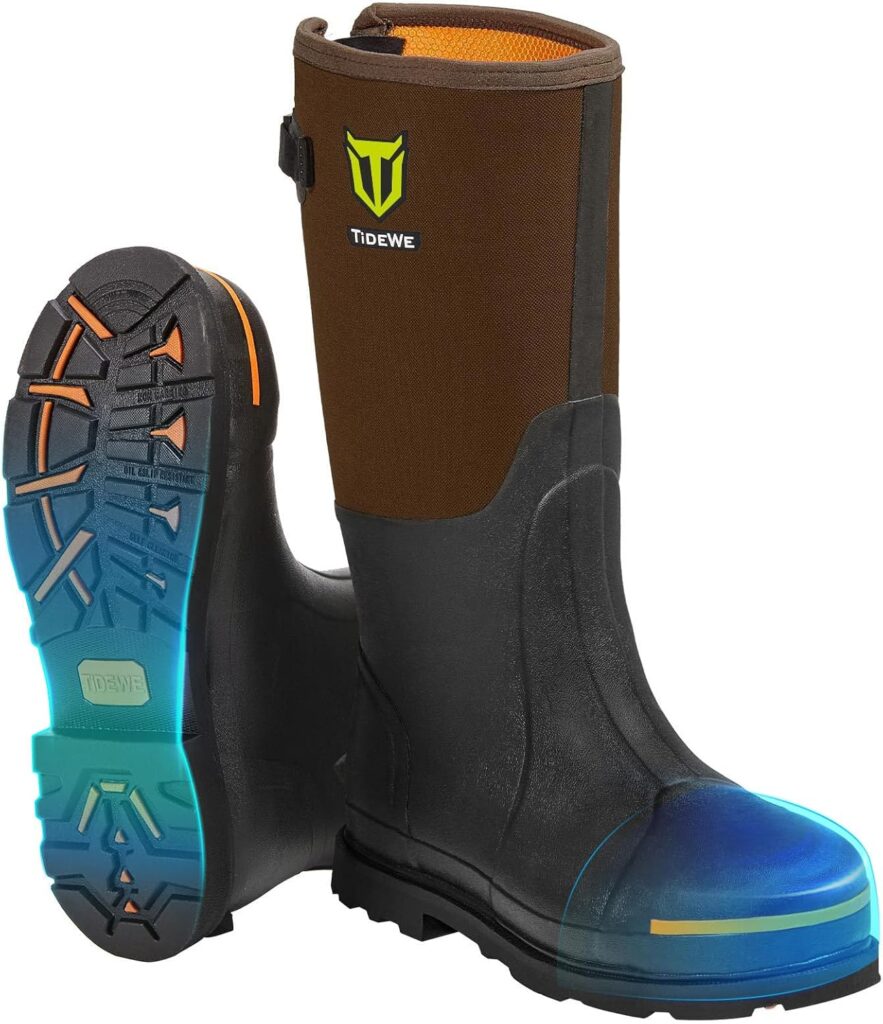
For farmers watching expenses or those needing an extra pair for specific tasks, the TIDEWE Rubber Work Boot delivers legitimate performance well under $100.
The construction mirrors more expensive options: 6mm neoprene with natural rubber overlay, waterproof design, and adequate insulation rated from around minus-4 to 68 degrees Fahrenheit. The 16-inch shaft provides good coverage against mud and slush.
Where It Delivers: Daily chores, livestock feeding, and moderate mud work pose no problems for these boots. The traction pattern handles slick surfaces adequately. The neoprene provides enough insulation for most Midwest fall and spring conditions. Pull tabs make them easy to get on and off, important when you’re in and out of the house constantly.
Where It Compromises: Durability trails premium options noticeably. Heavy daily use typically reveals issues after one season, sole separation being the most common failure. The rubber compound hardens somewhat in extreme cold, reducing flexibility and grip. The shaft material can crack at flex points with extended use.
Strategic Use: These boots make excellent secondary pairs. Keep them for quick barn checks, feeding rounds, or tasks where you know they’ll get trashed. Save your premium boots for all-day wear and the worst conditions. At this price point, seasonal replacement remains cost-effective.
➡️ Check Current Price on Amazon
Best For: Part-time farmers, hobbyists, or anyone needing an affordable backup pair for lighter farm tasks.
3. Best for Long Hours: Ariat WorkHog Waterproof Boot
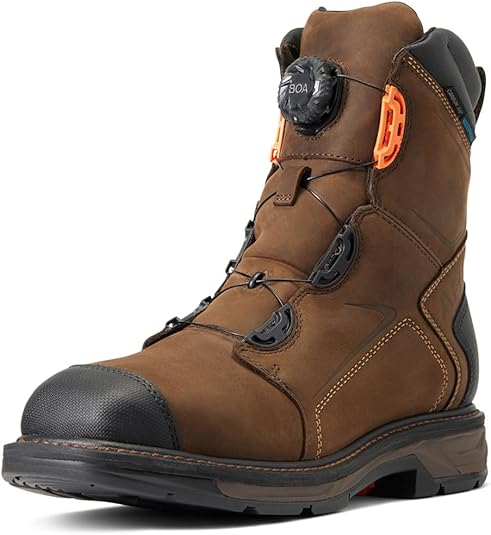
When you’re spending 12-hour days on your feet, comfort becomes critical. The Ariat WorkHog Waterproof Boot provides exceptional all-day wearability that rubber boots simply can’t match.
Ariat’s ATS Max technology delivers real benefits: superior arch support, shock absorption in the heel strike, and stability that reduces foot fatigue significantly. The full-grain leather upper is completely waterproof thanks to Waterproof PRO construction. The Duratread outsole combines oil and slip resistance with impressive durability.
Midwest-Specific Performance: These boots excel at the diverse tasks Midwest farming demands. The 11-inch pull-on design provides enough coverage for mud while allowing easy on and off. The leather upper breathes better than rubber in warm weather while maintaining waterproofing in wet conditions. Traction performs well on various surfaces, barn floors, pasture terrain, equipment steps.
Comfort Advantages: The difference in foot fatigue between these and rubber boots becomes obvious during extended wear. The anatomical support actually reduces lower back strain. The cushioned footbed maintains its shape far longer than standard insoles. Multiple farmers report wearing these comfortably for entire workdays that would leave feet aching in other boots.
Considerations: These boots require legitimate break-in time, expect 1-2 weeks before they feel fully comfortable. The leather construction, while durable, demands more maintenance than rubber. They’re also heavier than neoprene boots, though many find the trade-off worthwhile for the support provided.
➡️ Check Current Price on Amazon
Best For: Farmers who prioritize comfort and support for long working days over quick cleanup and pure waterproof performance.
4. Best Insulated Boot for Winter Chores: Bogs Classic High Waterproof
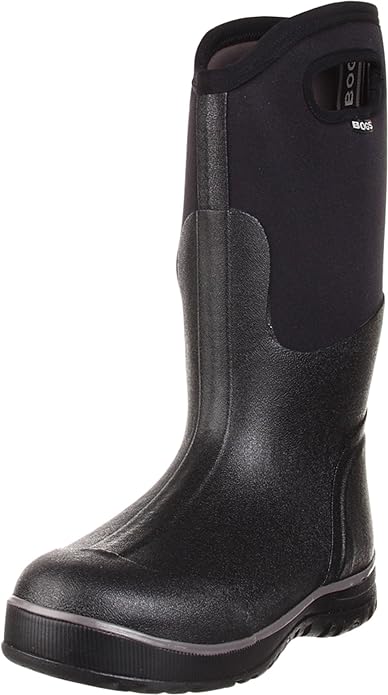
When temperatures drop below zero and you’re facing outdoor chores that require standing still, breaking ice on water tanks, feeding in the pre-dawn cold, the Bogs Classic High Waterproof provides warmth that standard farm boots can’t match.
The comfort rating of minus-40 degrees Fahrenheit isn’t marketing hype. The 7mm neoprene bootie combined with the rubber shell creates genuine cold-weather protection. The 15-inch shaft keeps snow and cold air from entering. The self-cleaning outsole actively sheds mud and snow buildup.
Winter Performance: Testing in sub-zero Midwest conditions confirms these boots deliver on their warmth claims. Feet stay genuinely warm during stationary outdoor work that would freeze toes in lesser boots. The insulation doesn’t compress like cheaper options, maintaining warmth even after months of use.
Year-Round Limitations: The insulation that makes these perfect for winter becomes a serious liability in warmer weather. Wear these above 50 degrees and you’ll quickly regret it. They’re specialist boots for cold conditions, not all-season performers.
Practical Application: Many Midwest farmers keep these specifically for winter feeding rounds and early morning chores in the coldest months. When January temperatures stay below zero for days, having dedicated cold-weather boots prevents frostbite and makes outdoor work bearable.
Durability Notes: The neoprene construction proves quite durable, but the shaft can develop cracks at major flex points after heavy seasonal use. Proper storage, avoiding compression and extreme heat, extends lifespan significantly.
➡️ Check Current Price on Amazon
Best For: Farmers facing serious cold-weather conditions who need dedicated winter boots for outdoor chores.
5. Best for Durability: Carhartt 11″ Waterproof Steel Toe Boot
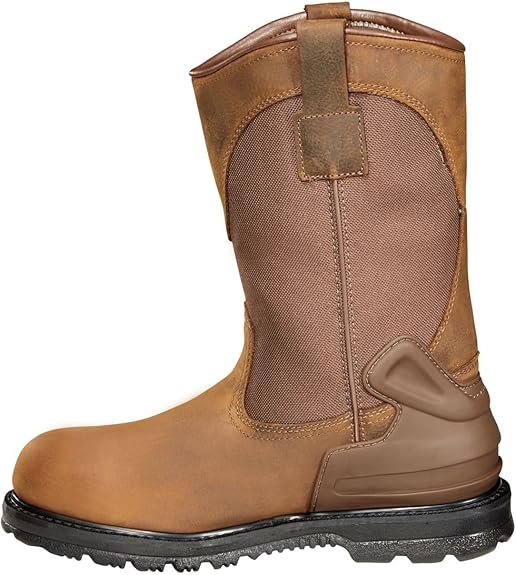
Farm work involves unavoidable hazards: dropped tools, livestock stepping on feet, equipment that doesn’t care about your toes. The Carhartt 11″ Waterproof Steel Toe Boot provides protection that soft-toe boots can’t offer while maintaining the durability Carhartt is known for.
The full-grain leather construction resists abrasion exceptionally well. Storm Defender waterproofing keeps feet dry without the bulk of rubber boots. The steel toe meets ASTM safety standards. Goodyear welt construction means these boots can be resoled, extending their usable life significantly.
Heavy-Duty Applications: Equipment maintenance, barn construction, fence repair, and livestock handling all benefit from steel toe protection. The steel toe meets ASTM F2413 safety standards for impact and compression resistance, protecting against impacts up to 75 foot-pounds. The reinforced construction handles dropped tools, kicked machinery, and livestock accidents that would injure unprotected feet.
Comfort Evolution: New out of the box, these boots feel stiff and require patience. The leather needs time to break in and conform to your feet, plan on 2-3 weeks of gradual wear. But once broken in, they become genuinely comfortable for all-day wear. The EVA midsole provides shock absorption that reduces fatigue.
Maintenance Requirements: Leather boots demand more care than rubber. Regular cleaning, conditioning, and waterproofing treatment prevent premature degradation. Given proper care, these boots often last 3-5 years of heavy use, exceptional longevity that justifies the higher initial cost.
Weight Consideration: The steel toe and substantial leather construction make these noticeably heavier than other options. For purely walking-intensive work, lighter boots might make more sense. For work involving machinery and livestock, the protection is worth the weight.
➡️ Check Current Price on Amazon
Best For: Farmers who need toe protection for equipment work and value boots that can be repaired rather than replaced.
6. Best for Comfort & Support: Georgia Boot AMP LT Logger
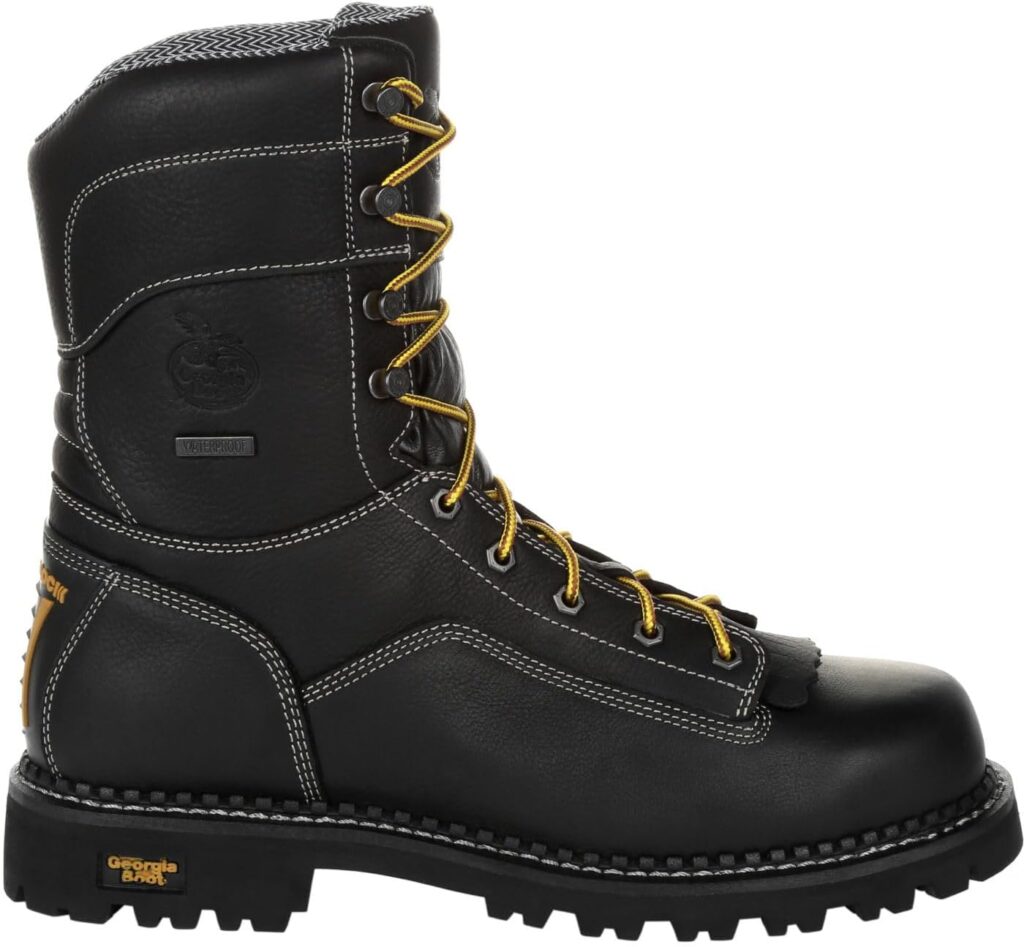
Uneven terrain, constant bending and squatting, hours standing on hard surfaces, farm work punishes feet in multiple ways. The Georgia Boot AMP LT Logger addresses these challenges with exceptional support and comfort technology.
The AMP LT memory foam insole provides customized cushioning that forms to your foot over time. The high ankle design offers stability on uneven ground that low-cut boots can’t match. The aggressive lugged outsole delivers traction on mud, grass, and gravel. Goodyear welt construction ensures long-term durability.
Support Benefits: The combination of memory foam cushioning and structured ankle support significantly reduces foot and leg fatigue. Farmers working on rocky pastures, hillside operations, or constantly climbing equipment steps find the stability particularly valuable. The full-grain SPR leather upper provides both flexibility and protection.
Traction Excellence: The deep, multi-directional lug pattern excels at gripping various surfaces. Testing on wet grass, muddy slopes, and loose gravel confirms superior traction compared to standard work boot soles. The self-cleaning design prevents mud from packing in and creating a slick surface.
Break-In and Maintenance: Like most quality leather boots, these require break-in time. The ankle height and substantial construction feel restrictive initially but provide excellent support once the leather softens. Regular leather conditioning maintains flexibility and waterproofing.
Weight and Bulk: These are substantial boots. The logger design, high ankle, and quality construction add weight. For pure mud work where you’re frequently pulling your feet free, lighter boots might be preferable. For work requiring stability and support, the weight is worthwhile.
➡️ Check Current Price on Amazon
Best For: Farmers working on uneven terrain who need maximum support and stability for long working days.
7. Best for Hot Weather: Timberland PRO Pull-On Work Boot
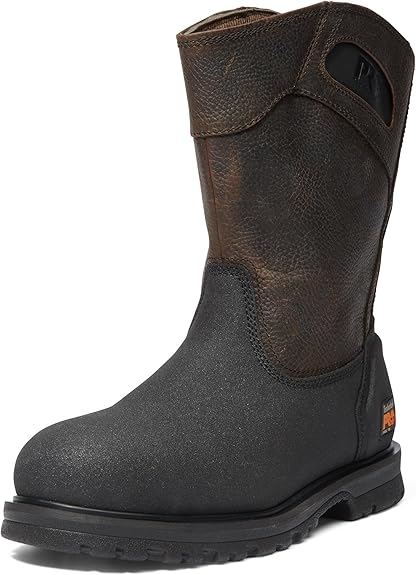
Midwest summers bring heat and humidity that make insulated or fully waterproof boots miserable. The Timberland PRO Pull-On Work Boot provides durability and protection while allowing your feet to breathe.
The full-grain leather upper is treated for water resistance, not full waterproofing, but adequate for dry conditions and light moisture. The moisture-wicking mesh lining actively moves sweat away from your feet. The shock-absorbing polyurethane midsole reduces impact fatigue. The slip-resistant outsole handles dry and moderately wet surfaces well.
Summer Performance: During June through August field work, barn maintenance, and equipment operation, these boots deliver comfort that waterproof options can’t match. Your feet stay noticeably drier and cooler. The pull-on design makes them quick to get on and off when ducking inside for water breaks.
Clear Limitations: These are NOT waterproof. Heavy dew, puddles, or rain will wet your feet. For purely dry-condition summer work, they excel. For wet weather or water exposure, choose waterproof options. The lack of insulation also limits their usefulness once temperatures drop below 40 degrees.
Practical Strategy: Many Midwest farmers maintain both waterproof cold-weather boots and breathable warm-weather boots. The Timberland PRO fills the warm-weather role effectively, providing comfort during months when waterproofing isn’t critical.
Durability: The leather construction and quality stitching hold up well to summer abuse. Proper cleaning and conditioning extend their life considerably. Expect 2-3 seasons of summer use with appropriate care.
➡️ Check Current Price on Amazon
Best For: Farmers who need comfortable, breathable boots for warm-weather work in mostly dry conditions.
Comparing Your Options: Quick Reference
| Boot Model | Best For | Waterproof | Temp Range | Price Range |
|---|---|---|---|---|
| Muck Chore Classic | All-season versatility | Yes | -20°F to 60°F | $120-140 |
| TIDEWE Rubber | Budget/backup pair | Yes | -4°F to 68°F | $80-95 |
| Ariat WorkHog | All-day comfort | Yes | 20°F to 80°F | $135-150 |
| Bogs Classic High | Extreme cold | Yes | -40°F to 50°F | $130-145 |
| Carhartt Steel Toe | Durability/safety | Yes | 15°F to 75°F | $140-165 |
| Georgia Logger | Uneven terrain | Yes | 20°F to 75°F | $145-160 |
| Timberland PRO | Hot weather | Water-resistant | 40°F to 95°F | $115-135 |
How to Choose the Right Farm Boot
Rubber vs. Leather: Making the Right Choice
Choose Rubber Boots When:
- You primarily work in wet, muddy conditions
- Quick cleanup is important (hosing off at day’s end)
- Temperature insulation matters (cold weather chores)
- You want maximum waterproofing
- Budget is tight (rubber boots generally cost less)
Choose Leather Boots When:
- You need all-day comfort for extended wear
- Your work involves varied terrain and tasks
- Foot and ankle support is priority
- You’re willing to invest in maintenance
- You want boots that can be resoled and repaired
Understanding Sole Types and Traction
Farm boots typically feature one of three sole designs:
Aggressive Lug Soles (like Georgia Logger, Ariat WorkHog): Deep, multi-directional tread pattern provides maximum traction on mud, grass, and uneven terrain. Best for field work and outdoor chores. Self-cleaning design prevents mud buildup.
Standard Work Boot Tread (like Timberland PRO): Moderate tread depth balances traction with easier cleaning. Works well on dry surfaces, barn floors, and light mud. Debris shakes off more easily than deep lugs.
Smooth Rubber Outsoles (like Muck Boots, TIDEWE): Relatively flat with wide channels. Excellent for wet conditions and mud. Not ideal for dry, hard surfaces where deep tread would grip better.
Insulation Needs by Season
No Insulation (Summer Boots): Use when temperatures stay above 60°F and you’re doing active work. Breathability prevents overheating.
Light Insulation (200-400g): Ideal for spring and fall when temperatures range from 30-60°F. Provides warmth without overheating during active work.
Heavy Insulation (600g+): Necessary for winter work below 20°F, especially stationary tasks. Prevents frostbite during extended cold exposure.
Proper Fit for Farm Boots
Farm boots fit differently than street shoes. Follow these guidelines:
Length: Should have about 1/4 to 1/2 inch of space at the toe when wearing your typical work socks. Too much room allows your foot to slide, creating blisters. Too tight restricts circulation.
Width: Toes should spread naturally. Pinched toes reduce warmth (restricted blood flow) and cause discomfort. Many work boots run wider than dress shoes, this is intentional.
Calf Fit (for tall boots): The shaft should be snug enough to prevent debris from entering but not so tight it restricts movement or circulation. You should be able to tuck work pants into the boot comfortably.
Break-In Expectations: Rubber boots require minimal break-in. Leather boots need 1-3 weeks of gradual wear to soften and conform to your feet.
Making Your Farm Boots Last: Maintenance Guide
Quality farm boots represent a significant investment. Proper care extends their lifespan from one season to multiple years.
Daily Maintenance
After Each Use:
- Knock off heavy mud and debris immediately
- Hose down rubber boots and let air dry
- For rubber/neoprene boots, Muck Boot recommends conditioning the rubber with wax polish or Armor All to keep it supple and prevent cracking
- Wipe down leather boots with damp cloth
- Remove insoles to dry separately when boots get wet
- Store in well-ventilated area away from direct heat
Weekly Maintenance for Leather Boots
Cleaning:
- Use saddle soap or leather cleaner to remove embedded dirt
- Pay special attention to flex points where dirt accumulates
- Clean stitching with a soft brush to prevent rot
- Remove salt residue immediately, it accelerates leather degradation
Conditioning:
- Apply leather conditioner every 2-3 weeks of heavy use
- Focus on high-flex areas (ankle, toe box)
- Use waterproofing treatment monthly during wet seasons
- According to Ariat’s official boot care guide, non-oil-based conditioners with a creamy texture work best for farm boots
- Buff with clean cloth after conditioning dries
Seasonal Storage
Off-Season Preparation:
- Clean thoroughly before storage
- Apply heavy coat of leather conditioner
- Stuff with newspaper to maintain shape
- Store in cool, dry location away from direct sunlight
- Keep away from heating vents and dehumidifiers
Repair vs. Replace
Worth Repairing:
- Worn outsoles (resoling extends life significantly)
- Loose stitching (before it fails completely)
- Minor leather cracks (conditioning can restore)
- Broken laces or hardware
Time to Replace:
- Waterproofing failure in rubber boots
- Sole separation from upper
- Extensive leather cracking
- Interior insulation breakdown
- Boot shaft cracking or splitting
Understanding Midwest-Specific Boot Challenges
Spring Mud Management
Midwest spring creates uniquely challenging mud conditions, clay-heavy soil that’s half-frozen underneath with soupy surface layers. This mud suctions boots off feet and packs into tread patterns.
Boot Strategies:
- Choose boots with self-cleaning tread designs
- Higher shaft heights prevent mud from entering
- Lighter boots reduce fatigue when pulling free repeatedly
- Keep a boot scraper and brush near high-traffic areas
Salt Damage Prevention
Road salt, ice melt products, and chemical fertilizers all accelerate boot deterioration. The salt draws moisture, corrodes stitching, and dries out leather.
Protection Methods:
- Rinse boots immediately after exposure to salt
- Apply waterproofing treatment weekly during winter
- Use leather conditioner to replace oils salt removes
- Consider dedicated winter boots to isolate salt damage
Temperature Transition Periods
Fall and spring bring 40-degree temperature swings in single days. Boots that work at sunrise become uncomfortable by afternoon.
Adaptive Solutions:
- Layer socks, start thick, remove layers as day warms
- Choose moderately insulated boots rather than extremes
- Keep multiple pairs for different temperature ranges
- Use removable insoles to adjust warmth level
Looking for More Midwest Boot Guides?
If you’re still comparing options or want boots built for different outdoor conditions, check out our main hub covering everyday winter wear, ice traction, and extreme cold picks for the Midwest:
7 Best Winter Boots for the Midwest (2026 Guide)
The Bottom Line: Choosing Your Best Farm Boot
Farm work demands boots that perform day after day in conditions that destroy inferior footwear. The right choice depends on your specific work, climate priorities, and budget.
For most Midwest farmers doing diverse work year-round, the Muck Boot Chore Classic Tall represents the best single-boot investment. It handles the majority of conditions well, provides reliable waterproofing, and delivers years of service. The $120-140 cost pays for itself through longevity and prevented injuries.
Budget-conscious farmers or those needing backup boots find excellent value in the TIDEWE Rubber Work Boot. At under $100, it provides legitimate waterproof protection for lighter use, though don’t expect multi-year durability.
Farmers prioritizing all-day comfort should invest in the Ariat WorkHog or Georgia Logger. The superior support and reduced fatigue justify the higher price for anyone spending long hours on their feet.
For dedicated winter chores in extreme cold, nothing beats the Bogs Classic High. The warmth protection prevents frostbite and makes outdoor work bearable when temperatures plummet.
Remember: your boots are safety equipment, not just footwear. Wet feet in winter risk frostbite. Poor traction on icy barn floors can mean serious injury. Boots that don’t support your feet properly lead to chronic pain and reduced productivity.
Invest in quality boots appropriate to your work. Maintain them properly. Replace them before failure puts you at risk. Your feet, and your farm operation, will benefit from making the right choice.
FAQS
With proper care, rubber boots like Muck typically last 2-3 years of heavy daily use. Quality leather boots like Ariat or Georgia can last 3-5 years and can be resoled to extend their life further. Budget options usually show wear after 1-2 seasons.
For Midwest farming, most people need both. Insulated boots (400g+) for winter outdoor work, lighter or uninsulated boots for spring through fall. If buying only one pair, 200-400g insulation provides the best year-round compromise.
Pull-on boots offer convenience for constant on-off wear and prevent lace snagging on equipment. Lace-up boots provide better ankle support and customized fit. For mostly barn and livestock work, pull-on. For field work and uneven terrain, lace-up.
Quality leather boots with Goodyear welt construction can be resoled, making repair worthwhile. Rubber boots generally can’t be economically repaired, replace when waterproofing fails. Minor stitching repairs on leather boots are usually worthwhile.
