

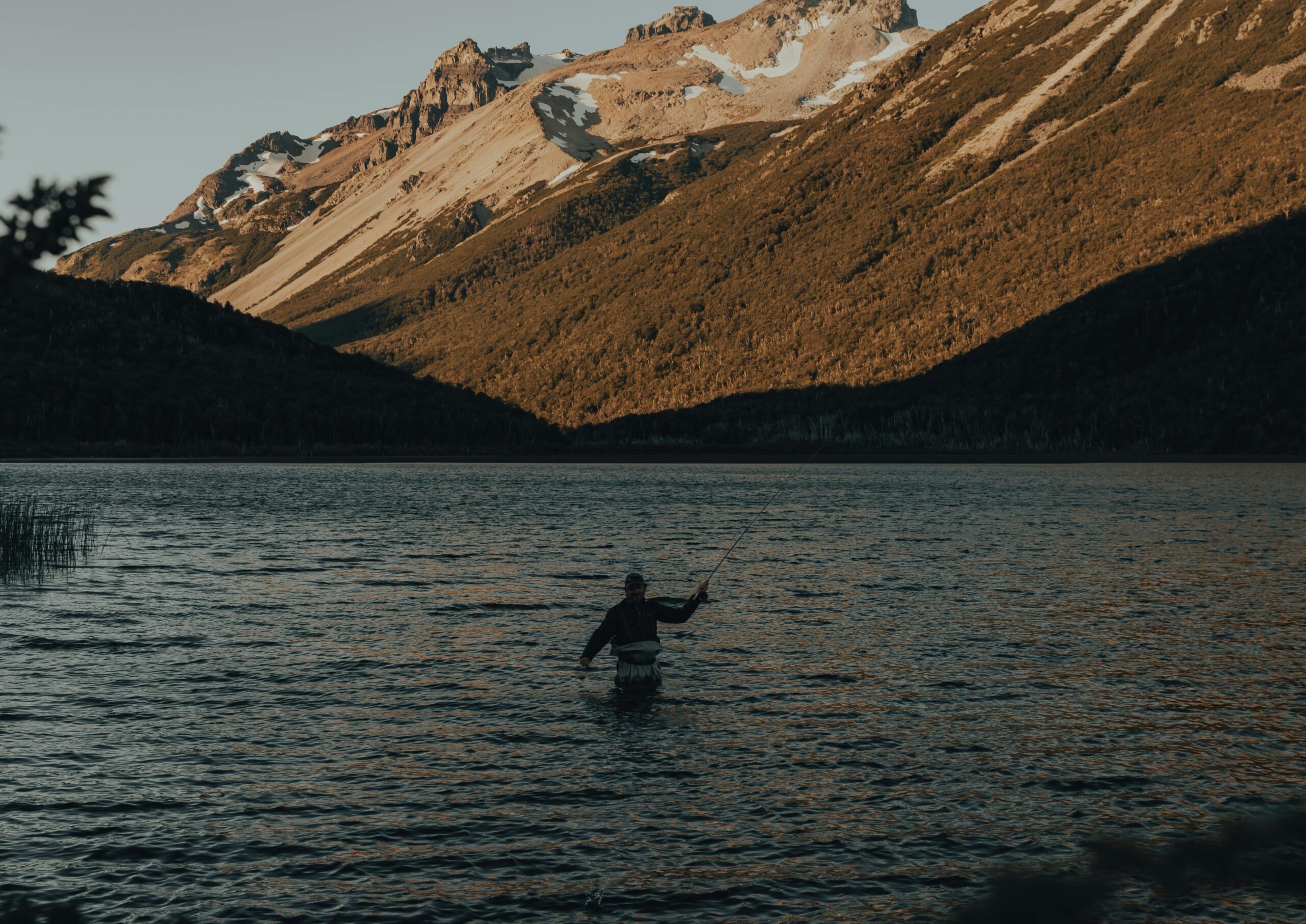
Here is the problem I keep running into: most fly rod buying guides get written by people who fish the Gallatin in July or wade the Green River with a guide carrying their stuff. They’re not out here on a 40-degree April morning on a SE Minnesota spring creek, trying to make a soft presentation through a tunnel of budding willows to a brown trout rising in an eddy the size of a hubcap. Those are different problems. And the rod that solves them is not always the rod getting pushed in the outdoor media.
I’ve been fishing the Driftless streams of southeastern Minnesota for longer than I care to calculate. Root River tributaries. Straight River stretches most people don’t bother hiking to. Small limestone spring creeks where the water stays 50 degrees year-round and the fish have seen every fly in the catalog. I’ve also fished the bigger Midwest stuff the Mississippi backwaters for carp and bass on the fly, larger walleye rivers when the smallmouth are stacked, and the UP of Michigan when the schedule allows. None of those environments need a $900 rod. They need a rod that casts well, loads where you need it to load, and doesn’t destroy your confidence every time you miss a mend.
The sub-$300 fly rod market has genuinely gotten good. That wasn’t always true. Ten years ago, anything under $200 was a compromise you accepted with gritted teeth. Now, brands like Echo, Redington, TFO, and Orvis are building rods in this price range that hold up to rods costing twice as much not in cosmetics or exotic materials, but in actual on-water performance. The blanks are better. The warranties are real. The actions are designed for specific types of fishing instead of being generic marketing specs.
I’m going to walk you through four of the best options in this price range, all of which I’d put in a friend’s hands without apologizing. One is a full outfit rod, reel, line, backing, leader so if you’re just getting started, there’s a direct path to the water here. The others are rods you pair with your own reel. All four are under $300. All four make sense for the kind of Midwest fishing most of us actually do.
Why Rod Choice Matters More Than Most Anglers Think
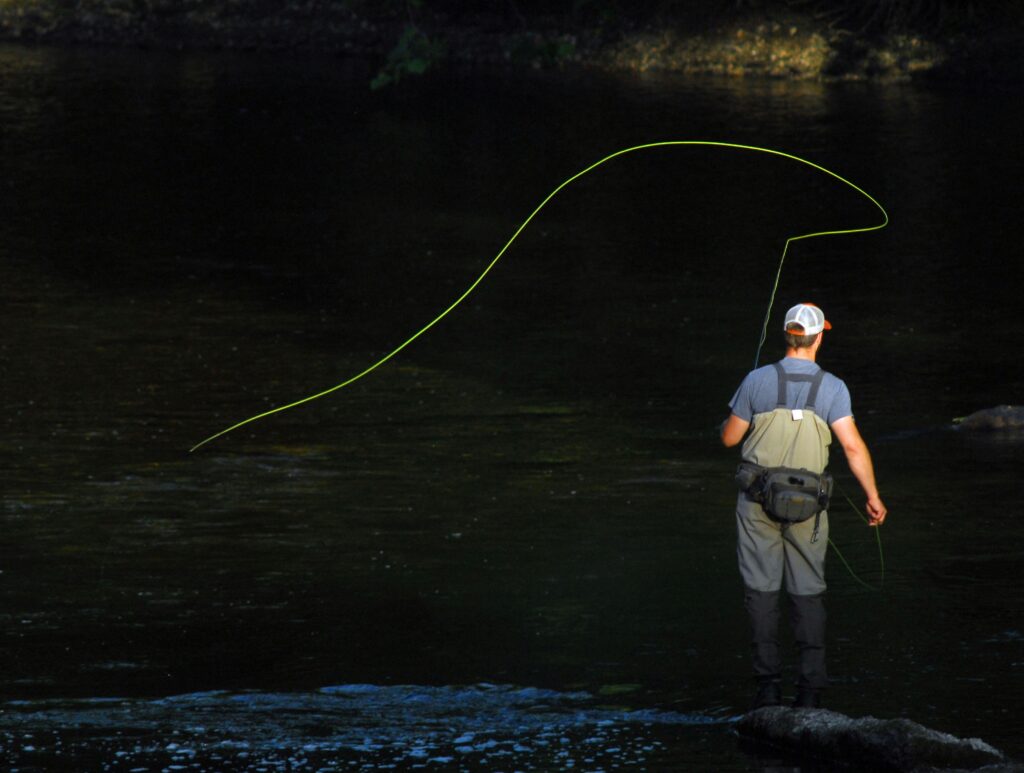
Most beginners and honestly, a lot of intermediate anglers treat rod selection like it doesn’t matter much. Buy something with a good brand name and figure out the rest as you go. That works until you’re trying to throw a size 18 Sulphur to a rising brown across a spring creek and the rod in your hand is way too stiff to make a soft presentation, or too slow to punch a cast into even a light headwind.
Rod action how a rod bends and recovers determines what it does well and what it struggles with. A fast-action rod loads in the tip, generates tight loops, handles wind, and throws heavy flies well. It’s harder to cast at close distances and unforgiving with sloppy technique. A slow or moderate-action rod bends deeper into the blank, loads easily at short distances, casts smaller flies with more delicacy, and is generally more forgiving for anglers still developing their stroke. Medium-fast action sits in between easier to cast than true fast, capable of more performance than true slow.
The American Fly Fishing Trade Association (AFFTA) maintains the standards for line weight designation, which directly affects how a rod is designed to load. Understanding line weight matching your rod’s rating to the appropriate fly line is one of the most important decisions in assembling a functional fly fishing setup. Most Midwest trout fishing gets done with 4-weight and 5-weight rods. A 4-weight is ideal for technical small stream work with small flies. A 5-weight covers more water and handles larger flies, indicator rigs, and light streamers without much trouble.
Midwest-Specific Considerations
Southeastern Minnesota’s Driftless Area streams present specific challenges that generic buying advice ignores. These are tight, technical waters. Vegetation hangs close. Pools are short. Presentations need to be accurate at 20 to 40 feet, not 60 to 70. Trout Unlimited’s work in the Driftless region has highlighted how critical spring creek habitat is in this part of the country, and the angling pressure on these streams reflects that. Fish are educated. Soft presentations matter.
That means fast-action rods, the kind that dominate guide boats on big western rivers, are often overkill and harder to fish on tight Driftless water. A moderate or medium-fast action rod that loads easily at 25 feet, protects a 6X tippet on the hookset, and casts a dry fly without slapping it on the surface is what you want on your home water.
On the other hand, if you’re fishing the St. Croix or Mississippi backwaters for bass and carp, or throwing streamers on larger coldwater rivers, a medium-fast to fast rod with a 5- or 6-weight line makes more sense. The right rod depends on the water you actually fish.
Fly Line: The Part Everyone Underestimates
Here is something worth saying plainly: the fly line matters as much as the rod. You can take a $150 rod, put a quality weight-forward floating line on it, and outfish someone throwing the same rod with a bargain bin line. The Federation of Fly Fishers emphasizes casting mechanics in their certification programs, and casting instructors consistently point to fly line quality as the most impactful upgrade an angler can make. If you’re shopping rods in the sub-$300 range, seriously consider putting another $50 into a quality fly line. Rio Gold, Scientific Anglers Trout, or Orvis Clearwater lines are regularly available for $50–$75 and make a real difference.
One more thing worth understanding before we get to the reviews: a good fly rod in this price range will not become obsolete the moment you improve as a caster. These are rods experienced anglers fish by choice, not just by budget. The Redington Classic Trout, for example, sits in fly shops alongside rods that cost three times as much and regularly outperforms them in technical dry fly situations. Spending more doesn’t always mean getting more.
The 4 Best Fly Fishing Rods Under $300 for Midwest Trout Water
1. Redington Classic Trout Fly Rod — Best for Technical Dry Fly Fishing
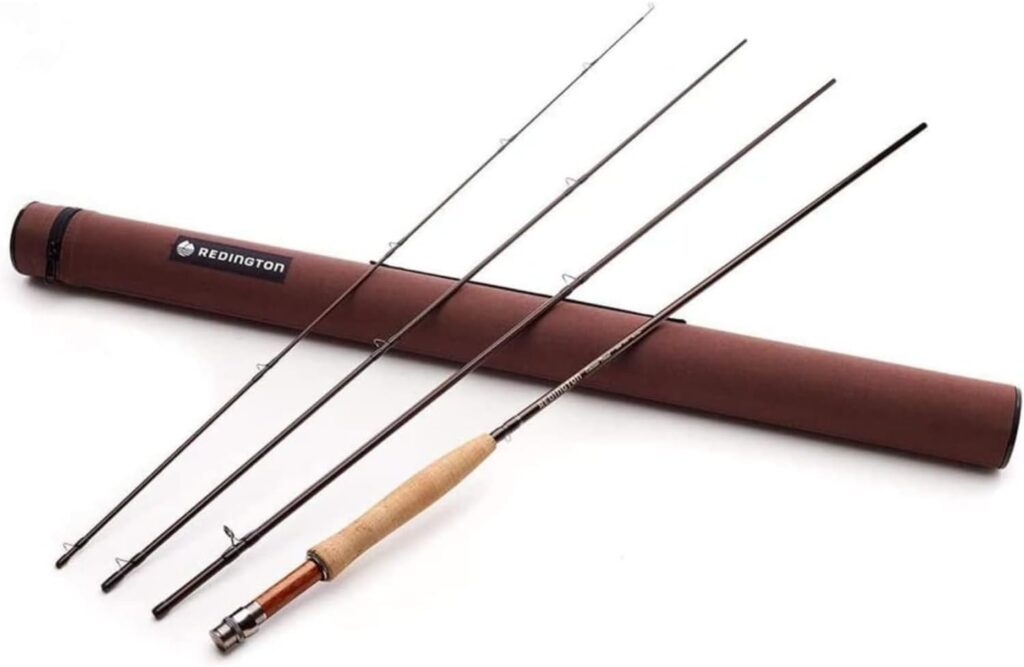
If you fish SE Minnesota spring creeks, Driftless Area tributaries, or any tight, clear water where presentations need to be precise and delicate, the Redington Classic Trout is the rod I’d hand you without hesitation. This is the rod I recommend to my friends who want a dry fly weapon that won’t cost them a month’s paycheck, and it’s a rod that surprises a lot of experienced anglers who pick it up expecting a budget compromise and get something that performs like it costs twice as much.
What Works
The Classic Trout builds on 100% Toray Japanese graphite blanks, which is the same material specification you find on rods costing considerably more. The action is moderate it bends well into the mid-section of the blank, loads easily at short and medium distances, and protects light tippets on the hookset. Titanium oxide stripping guides let line shoot cleanly. The machined aluminum reel seat with a rosewood insert looks and functions well at this price point. The whole thing weighs 2.9 ounces in the 9-foot 5-weight configuration, which is lighter than some premium rods.
The performance at real fishing distances 20 to 50 feet is excellent. It delivers dry flies with a soft, accurate touch. Roll casts come easily. Mending line on moving water is comfortable because the rod bends where you need it to bend. This is not a rod designed for 70-foot bombing casts on a western tailwater. It’s a rod designed for fishing, which is what most of us actually do.
Midwest-Specific Performance
On the Driftless spring creeks I know best, this rod does everything right. It lands small flies gently, protects 6X tippet when fish run, works around low-hanging vegetation because its manageable action doesn’t require a long, aggressive casting stroke. In a heavy sulfur hatch when fish are feeding selectively and every presentation needs to be clean, this rod gives you the feedback and delicacy the situation demands. It also handles indicator rigs and light nymph setups competently, which matters when the dry fly bite isn’t on.
The Compromise
The moderate action becomes a liability when wind picks up or when you need to cover water at distance. Past 50 feet, you have to slow down your stroke and be smooth if you push it, the tip shocks. It also won’t throw large streamers or heavy nymph rigs with much authority. If most of your fishing is on bigger water or in windy conditions, look at the Echo or TFO options below.
The cork grip runs slightly bulkier than some anglers prefer, and the reel seat hardware, while functional, doesn’t have the solid click of premium components. Minor complaints on a rod this affordable.
Best for: Experienced and beginner dry fly anglers fishing spring creeks, small to medium Midwest streams, and technical trout water where presentation matters more than distance.
Price: ~$199
2. Orvis Encounter Outfit — Best Complete Outfit for Getting Started
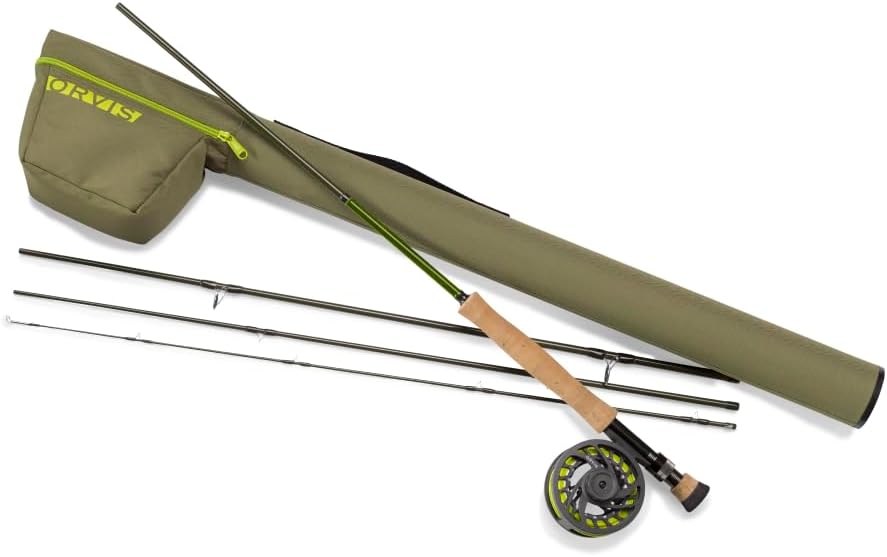
The Orvis Encounter is the answer to the question beginners ask most often: “What do I need to buy to just go fishing?” The answer here is one item. This outfit includes the rod, a large-arbor reel, weight-forward floating fly line, backing, and a tapered leader all matched and ready to fish. You add flies and a license and you’re on the water. For someone who doesn’t have a reel or line yet, that convenience has real value.
What Works
The rod itself carries a medium-fast action, which sits in a sweet spot for beginner development. It loads at moderate distances without requiring textbook technique, teaches you to feel the rod bend and load, and doesn’t require aggressive high-speed casting strokes. The four-piece design travels well, and the graphite blank delivers smooth, crisp performance that feels more refined than the price implies.
The included Encounter reel is a large-arbor design with a positive click drag. It’s not a premium reel, but it functions reliably and handles the line cleanly. The pre-spooled weight-forward floating line is a genuine workhorse line that casts well and doesn’t pick up memory the way cheap lines do. The full wells grip is comfortable in hand. The 5-year warranty from Orvis is the real deal they stand behind their gear.
Midwest-Specific Performance
The 9-foot, 5-weight Encounter is well-suited to the varied trout fishing across the Midwest. It handles the Driftless streams competently, though it won’t be as delicate as the Redington Classic Trout in tight technical situations. On wider rivers the Root River’s main stems, the Namekagon, the Bois Brule it reaches well and handles nymph rigs and streamer work without drama. The medium-fast action holds up better than a pure moderate rod when Midwest spring winds start blowing, which matters from April through June when hatches are heaviest and the wind cooperates least.
The Compromise
The reel included with the outfit is functional but represents the most significant quality step-down in the package. An angler who continues to develop will likely upgrade the reel within a season or two. The rod, in contrast, can serve as a reliable backup or specialized tool for years. The 5-year warranty also trails behind Echo and Redington’s lifetime warranties though Orvis’s warranty service is genuinely responsive, which counts for something.
The medium-fast action, while beginner-friendly, lacks the dry fly delicacy of the Redington Classic Trout at one end of the spectrum and the windy-day performance of the TFO Blue Ribbon at the other. It’s the most versatile of the four rods here without being the best at any one thing.
Best for: Anglers just getting started who want a matched outfit without sourcing components separately. Also a legitimate option as a backup rod for experienced anglers who want an inexpensive spare for travel or loaning to friends.
Price: ~$298 (complete outfit with reel, line, backing, leader)
3. Echo Carbon XL — Best All-Around Versatile Rod

Echo builds rods that are designed by people who actually fish, and the Carbon XL is the clearest expression of that. Tim Rajeff, who designed this series, spent over a year dialing in an action that would work for anglers of different skill levels across a wide range of fishing applications. The result is a rod that does everything competently dry flies, nymphs, indicators, light streamers without requiring you to be a pro caster to get the best out of it.
What Works
The Carbon XL’s medium-fast action hits a different balance point than the Redington Classic Trout. It has more zip in the tip enough to handle light wind and throw indicators without the stroke slowing down awkwardly while still loading at close distances and communicating well through the cast. The blank is lighter than average for this price range, and the rosewood-colored finish with matching thread wraps genuinely looks good, like a rod that should cost twice what it does.
The anodized aluminum reel seat with carbon insert is solid and rattle-free. Lightweight single-foot guides reduce swing weight. The rod comes with a fabric-covered rod case and individual sock. Echo’s lifetime warranty in effect since August 2022 for all new rods is legitimate and backed by a company with a strong track record of warranty support.
Midwest-Specific Performance
The 9-foot 5-weight Carbon XL is the rod I’d reach for if I needed one rod to fish every Midwest scenario in a single day. Morning on a tight Driftless spring creek throwing size 16 Elk Hair Caddis? Works. Afternoon on a wider stretch throwing a Pheasant Tail under a thingamabobber? Works. Evening throwing a small streamer along a cut bank? Works. The medium-fast action is versatile enough to shift between techniques without feeling like a compromise on any of them.
On the bigger Mississippi-influenced waters where walleye and smallmouth rivers broaden out and wind is a regular factor, the Carbon XL holds up better than the Redington Classic Trout. It generates enough line speed to beat a light headwind without requiring technique adjustments.
The Compromise
The Carbon XL is the jack-of-all-trades in this group, which means it’s not the best at any single job. On the most technical dry fly water very small flies, very careful fish, very close presentations the Redington Classic Trout’s moderate action is more forgiving and more precise. On genuinely windy days or in situations that demand maximum line speed and tight loops, the TFO Blue Ribbon has more authority. If your fishing falls cleanly into one of those categories, consider the specialist. If it spans multiple conditions, the Carbon XL makes sense.
Some users note the cork grip has visible filler on certain production runs acceptable at this price point but worth noting.
Best for: Anglers who want one rod that covers the broadest range of Midwest trout fishing scenarios. Ideal for anglers who fish multiple stream types, use different techniques, and want a single tool they can rely on across all of them.
Price: ~$170–$290 depending on model/retailer
4. Temple Fork Outfitters Blue Ribbon — Best for Covering Water and Fast-Action Performance
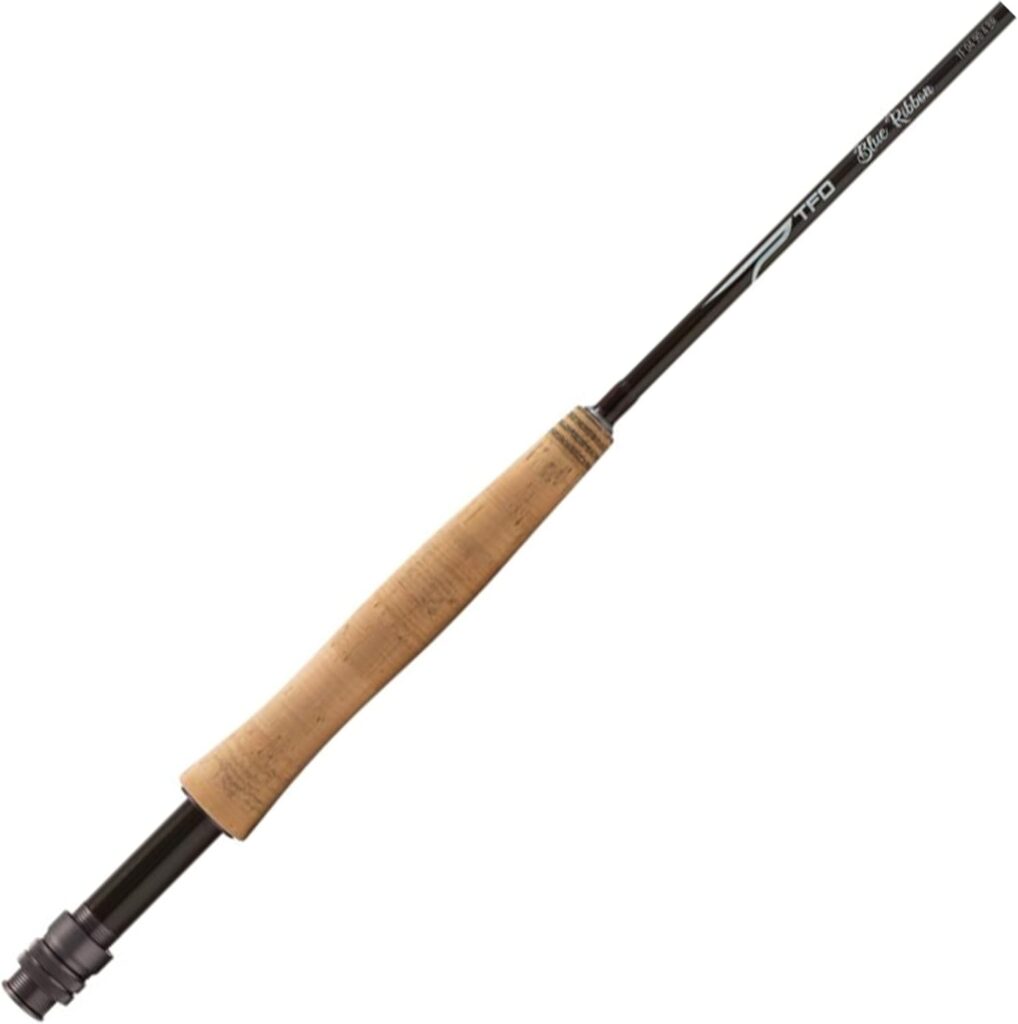
TFO doesn’t spend money on marketing the way the big-name fly fishing brands do. That’s part of why their rods are where they are in the price range. The Blue Ribbon represents TFO’s freshwater trout-specific series 11 configurations from 2-weight to 7-weight, all designed around the idea of efficient, repeatable casting with minimal angler fatigue. It’s a working rod, built for the angler who covers a lot of water and wants a tool that keeps up.
What Works
The Blue Ribbon builds on intermediate modulus carbon fiber, finished in a chestnut brown blank with premium cork grips that feel genuinely good in hand not just acceptable for the price, but actually good. The brushed aluminum reel seat features carbon fiber inserts and an integrated hook keeper. SiC stripping guides and ultra-lightweight chromium-impregnated stainless snake guides keep line shooting smoothly and stay corrosion-resistant through the kind of wet, cold Midwest fishing days that rust cheaper components.
TFO’s no-fault lifetime warranty is the best warranty in fly fishing at any price. No-fault means they cover breakage even when you do something dumb step on it, slam it in a car door, break a tip section on a tree branch. That warranty alone justifies a premium compared to rods with limited or time-restricted coverage, and it’s a real program backed by years of TFO standing behind it.
The fast action is designed for efficiency the rod loads quickly and shoots line with authority. For anglers running multi-nymph rigs, indicator setups with heavy weight, or covering broad stretches of a larger river with repeated casts all day, the fast action reduces casting fatigue compared to slower rods that require more effort to generate the same line speed.
Midwest-Specific Performance
On bigger Midwest trout water the main stem of the Root River, the larger Bois Brule stretches, Upper Midwest spring runoff sections where water is fast and you’re throwing weighted nymph rigs the Blue Ribbon earns its keep. The fast action cuts through spring headwinds that beat you up on smaller, more open rivers. It drives indicator rigs forward with authority and sets hooks cleanly at distance. It handles hoppers, large caddis patterns, and moderate streamers without the rod feeling overloaded.
Coming in at $299.95, it’s also the top of this budget range, and the build quality reflects the price step. The fit and finish on the Blue Ribbon is noticeably a cut above the Echo and Redington at their respective price points.
The Compromise
Fast action rods are harder to cast at close distances and less forgiving with sloppy technique. On the tight spring creeks where the Redington Classic Trout shines short presentations, delicate drops, soft loops at 20 to 30 feet the Blue Ribbon requires more precision and can feel like too much rod. Beginners will find it less forgiving than the Orvis or Echo. The fast action also means it’s less ideal for protecting light tippet on small hooks; the hookset can break 6X with an aggressive strike on a feeding fish.
The $260 price point means you’re spending significantly more than the Redington or Orvis options. If your fishing is primarily technical dry fly on small streams, that extra spend gets you a faster rod than you need. But if you cover big water and appreciate the no-fault warranty, the premium is justified.
Best for: Intermediate to experienced anglers fishing larger Midwest rivers, throwing indicator rigs in faster water, or dealing with the windy spring days that define fishing in Minnesota, Wisconsin, and Iowa from April through June.
Price: ~$299.95
Quick Comparison Table
| Rod | Action | Best Use | Price | Warranty | Outfit Included? |
|---|---|---|---|---|---|
| Redington Classic Trout | Moderate | Technical dry fly, small streams | ~$199.99 | Lifetime | Rod only |
| Orvis Encounter Outfit | Medium-Fast | Beginners, all-around | ~$298 | 5 years | Yes (reel + line) |
| Echo Carbon XL | Medium-Fast | All-around versatility | ~$170–$290 | Lifetime | Rod only |
| TFO Blue Ribbon | Fast | Big water, indicators, wind | ~$299.95 | No-fault lifetime | Rod only |
How to Choose the Right Rod for Your Midwest Fishing
Start With Your Home Water
Before you decide on rod action or price, figure out where you’ll fish 80% of the time. Midwest fly fishing breaks into two broad categories: tight, technical streams (Driftless spring creeks, small limestone tributaries, clear-water brook trout streams in the UP) and bigger, more open water (main river systems, larger trout rivers, bass and carp water on warmwater rivers).
If you fish tight, clear water with educated fish and size 14–20 flies, buy a moderate or medium-fast rod in a 3-weight, 4-weight, or 5-weight. The Redington Classic Trout or Echo Carbon XL both make sense here. If you fish broader water with heavier rigs, bigger flies, or windy conditions as the norm, lean toward the TFO Blue Ribbon’s faster action.
Match Line Weight to Fish and Fly Size
For SE Minnesota Driftless streams where you’re throwing sulfurs and caddis to 12-to-16-inch browns and brookies, a 4-weight is ideal and a 5-weight works fine. On larger rivers where you’re throwing larger flies or need to fight more current, a 5-weight is the standard choice. A 6-weight enters the picture for bass and streamer-heavy fishing.
Resist the temptation to overline your rod to make it “feel better.” Some anglers go up one line weight to make a moderate rod load more easily, and sometimes it helps in specific situations but it creates problems with delicate presentations. Learn to cast the rod on the correct line weight.
Budget Considerations
These four rods range from about $199 to $300. Here’s how to think about the spend:
The Orvis Encounter Outfit at $298 complete is the best value if you own no gear. You’re getting everything for less than $300, which you cannot do buying components separately from quality brands. If you already own a reel and quality fly line, that value equation changes now you’re comparing just rods, and the Redington Classic Trout at $199 starts looking smarter for the money.
The TFO Blue Ribbon costs the most of the four options and is also the most capable in specific conditions big water, wind, heavy rigs. But you’re not getting a dramatic overall performance gain over the Echo Carbon XL for the price difference. What you’re getting is a specialized fast-action tool and the best warranty available. If you fish big water regularly and expect to use this rod for ten-plus years, the no-fault warranty alone is worth the difference.
Sizing and Fit
Most 9-foot rods feel right for the majority of adult anglers. The 9-foot length is the industry standard for a reason it provides a good balance of reach for mending, overhead clearance for most conditions, and manageable weight throughout the day.
If you fish primarily very small streams with heavy vegetation where a 9-foot rod is constantly hitting branches, consider going down to 8 feet or 8’6″. The Redington Classic Trout comes in shorter configurations. If you want longer reach for nymphing or the ability to keep more line off the water on a wide river, a 9’6″ or 10-foot option exists in some of these series.
Common Mistakes to Avoid
Don’t buy a fast-action rod because you think it will make you a better caster. Fast-action rods are harder for developing anglers to load correctly and less forgiving of timing errors. Start with medium or medium-fast action and develop your stroke before moving to faster rods.
Don’t skip the fly line upgrade. A $60 quality line on a $150 rod will outperform a cheap line on a $300 rod. The fly line is what you’re casting the rod is the tool that delivers it.
Don’t assume you need all four rods. One well-chosen rod in a 4-weight or 5-weight covers 95% of what most Midwest trout anglers do. Buy the right one, fish it until you understand it completely, and let your actual needs tell you what to buy next.
Rod Care for Midwest Conditions
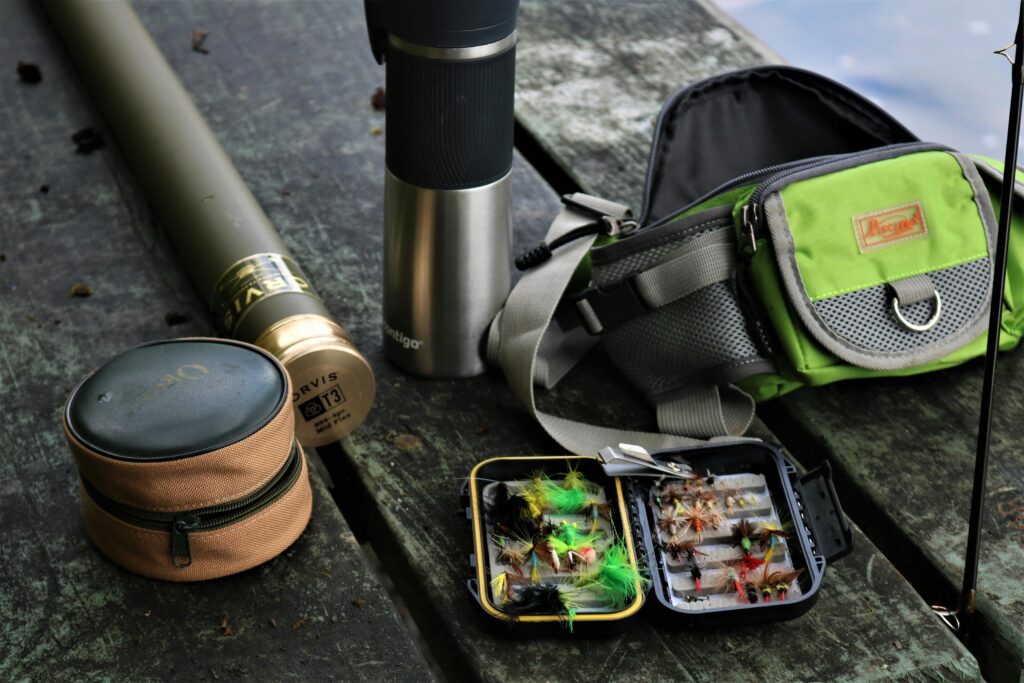
Midwest fishing puts rods through conditions that accelerate wear if you’re not thoughtful about it.
After every outing, wipe down the rod blank and guides with a dry cloth. Moisture trapped under guide feet during storage leads to oxidation. Rinse everything down after fishing rivers with any silt or clay content SE Minnesota spring creeks run clear, but some Midwest streams stain after rain and carry fine sediment that accumulates around guide feet.
Check your ferrules regularly. Midwest temperature swings from a 40-degree April morning to a warm afternoon can cause ferrules to loosen slightly. Seat the rod sections firmly and check them throughout a day of fishing. A loose ferrule causes casting problems and can damage the blank.
Store rods horizontally or in a rod tube. Rods stored leaning against a wall for extended periods can develop a slight bend over time. The tubes included with all four rods reviewed here protect adequately for transport and storage. If you’re serious about protecting a rod, invest in a hard rod case for travel.
Looking for More Fly Fishing and Outdoor Gear on the Site
If this is your first time here, MidwestOutdoorLife.com is built specifically for Midwest hunters and anglers not generic outdoor content written for everywhere and therefore nowhere.
If you’re setting up for a season on the ice, check out our Best Insulated Boots for Ice Fishing guide another piece written for the specific conditions that matter in Minnesota and Wisconsin winters. For everything else we cover, start at the homepage and browse by category.
Bottom Line Recommendations
Buy the Redington Classic Trout if you primarily fish small to medium Midwest trout streams and dry fly fishing is your main technique. It’s the best rod at this price for what most Driftless Area and spring creek anglers actually need.
Buy the Orvis Encounter Outfit if you’re starting from zero gear and want to be fishing without sourcing components separately. The matched setup works, and the Orvis name means you’ll have support.
Buy the Echo Carbon XL if you want one rod that covers the broadest range of Midwest fishing scenarios without compromise. It’s the most versatile option in the group.
Buy the TFO Blue Ribbon if you fish larger water, deal with regular wind, run indicator rigs often, and want the best warranty available on any fly rod at any price.
None of these are wrong choices. All four will put fish in the net on Midwest water. The difference is matching the right tool to the fishing you actually do.
FAQs
Yes and the answer isn’t even close. The rods in this guide, all priced under $300, are genuine performance tools that experienced anglers fish by choice. The Redington Classic Trout, for example, regularly outperforms rods costing two or three times as much in the specific dry fly conditions it’s designed for. What you give up in the sub-$300 range compared to premium rods is mostly cosmetics, exotic materials, and marginal weight savings. The actual fishing performance gap is much smaller than the price gap suggests. A serious angler with good technique on a $169 Redington Classic Trout will outfish a mediocre caster on a $900 rod every time.
For most Midwest trout fishing Driftless spring creeks, Wisconsin limestone streams, UP brook trout streams a 4-weight or 5-weight is the right choice. A 5-weight is the most versatile option: it handles everything from small dry flies to indicator rigs to light streamers without being dramatically overbuilt or underbuilt for any of them. If you know you’ll primarily fish small, tight streams with tiny flies, a 4-weight is more fun. If you fish varied water types or expect to do any bass or bigger-river fishing, start with a 5-weight. Avoid 3-weights as your first rod they’re specialty tools that punish anglers who are still developing their casting.
Both approaches work, but they make sense for different situations. A complete outfit like the Orvis Encounter makes sense if you’re starting with no gear and want to get on the water quickly with a matched, functional setup. The math usually works out to less than purchasing rod, reel, and line separately from quality brands. If you already own a reel and fly line or if you have specific preferences for either buy the rod separately and build from there. An angler who already owns a quality 5-weight reel and a good fly line doesn’t need to pay for the included reel in the Encounter outfit. They’re better served buying the Redington or Echo rod and adding it to their existing gear.
All four rods in this guide, if cared for properly, will outlast most anglers’ interest in owning them. The frames of reference here: the Redington Classic Trout has been in production for over a decade and the blanks have not meaningfully changed because they don’t need to. TFO’s no-fault lifetime warranty is meaningful precisely because they expect these rods to last a lifetime and are confident enough to back that claim with a repair-or-replace guarantee. The practical lifespan of a well-maintained graphite fly rod runs 20 to 30 years in normal use. Rods break when they’re sat on, slammed in doors, or stored improperly not from casting. Buy a quality rod tube, use it, and the rod will outlast whatever fishing phases you go through.
The Echo Carbon XL is the rod I’d put in a beginning angler’s hands if they want something they won’t outgrow quickly. It’s forgiving enough for a developing caster it loads at moderate distances and communicates through the cast but it’s capable enough that an intermediate or experienced angler can use it effectively. Its medium-fast action teaches proper casting timing without being as demanding as a fast-action rod. The Orvis Encounter Outfit is a better choice if the beginner is starting with zero gear, because the matched equipment removes the guesswork from assembling a functional setup. Once they’ve developed their casting and want to upgrade the reel, the Encounter rod itself remains useful as a backup or loan rod.
The 5-weight and 6-weight versions of these rods handle smallmouth bass competently. The Echo Carbon XL and TFO Blue Ribbon, with their faster actions, perform better for bass fishing than the Redington Classic Trout’s moderate action they throw larger, more wind-resistant flies more easily. A 5-weight works for small to medium bass flies on rivers and lakes. A 6-weight is more appropriate if you’re throwing large poppers or foam flies or fishing water where bass run large. For Midwest carp on the fly, a 6-weight or heavier is necessary both for the flies typically used and for the fish fighting ability required. None of these rods are appropriate for pike or muskie, which require 8-weight or heavier setups.

Leave a Reply