

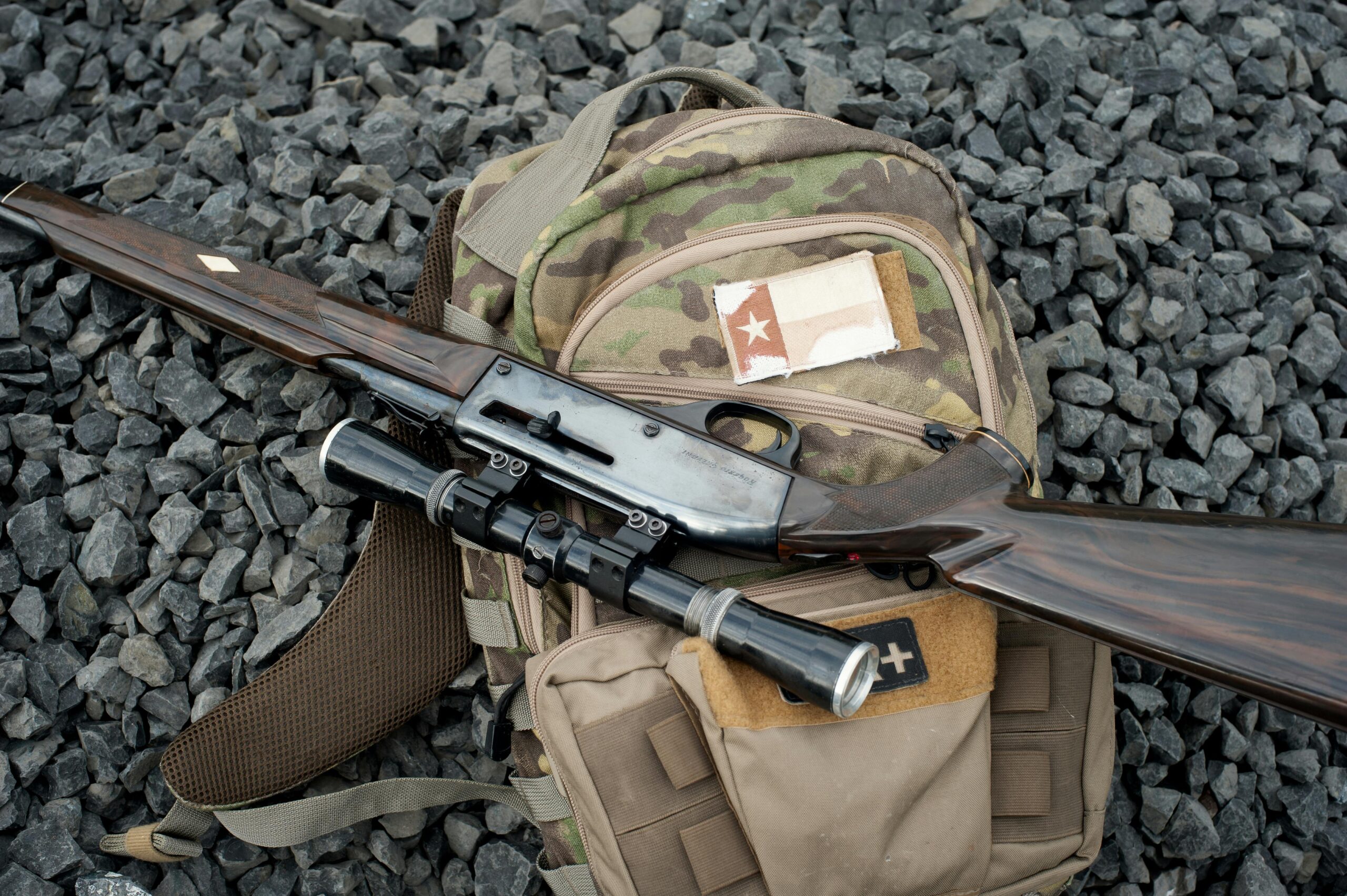
Here in Minnesota, shooting light is a fleeting thing. You’ve got maybe 15 minutes at first light and another 15 at last light, and that’s exactly when mature bucks move. If your scope can’t keep up in those conditions if it goes dark on you in the gray half-light of a November morning you’ve wasted your season. I learned that the hard way a few years back with a cheap scope that fogged up internally during a cold snap. Missed a shooter I’d been after for two years because the sight picture turned to mush at 6:50 a.m. I still think about that deer every time the cold front rolls through. Never again.
The problem is that the rifle scope market is flooded with options, and most of the reviews you find online were written by people who tested scopes at a shooting range on a sunny afternoon. They’re not sitting in a stand at zero-dark-thirty in 12-degree weather watching a buck materialize out of a cedar thicket 40 yards away. They’re not dealing with the fog rolling off a Minnesota river bottom, or the sleet that coats your objective lens during a late November sit, or the temperature swings that take you from a warm truck cab to brutal cold in 30 seconds. I am. That’s what this article is built on.
I’ve hunted whitetail in Minnesota long enough to have run scopes across every price bracket cheap 3-9x40s on old bolt guns, mid-range workhorses, and premium glass that costs more than some rifles. I’ve seen what fails and what holds up when things get ugly. The five scopes in this article represent the best options at different price points and different hunting styles. Whether you’re sitting a tight timber stand where a shot past 80 yards is rare, or hunting cut corn across a 300-yard draw in southern Minnesota or Iowa, there’s a scope on this list built for your hunt.
I’ll tell you exactly what each scope does well, where it falls short, and what type of hunter it actually fits. No marketing fluff, no hedging, no affiliate-first rankings. Just honest breakdowns from someone who hunts the same Midwest country you do.
What Makes a Rifle Scope Right for Midwest Deer Hunting
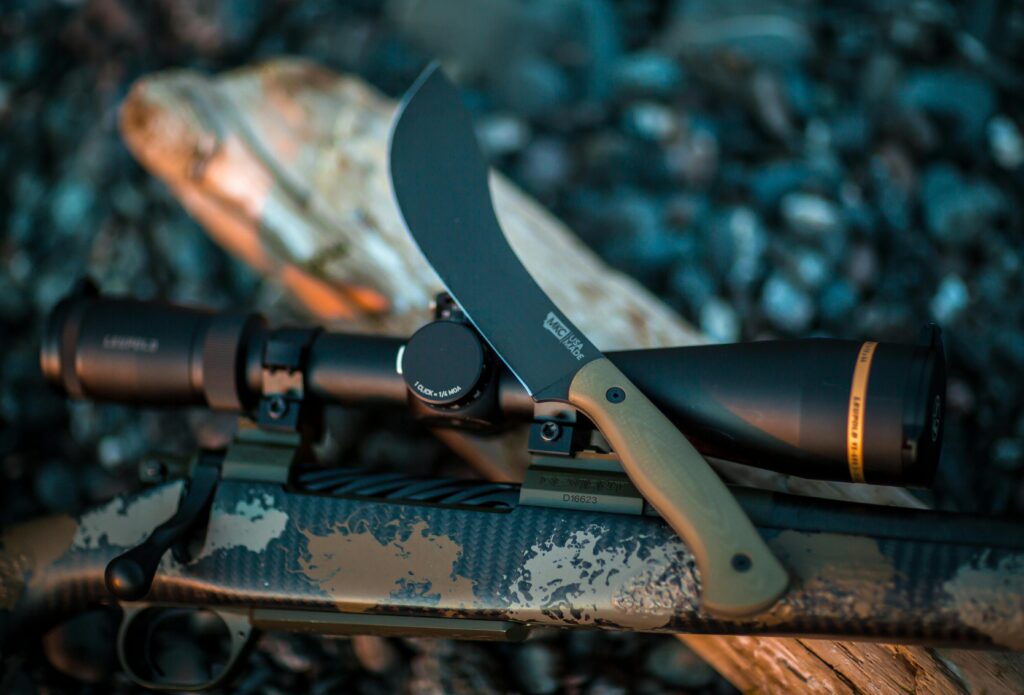
Not all hunting scopes are built for the same job. The variables that matter for Midwest whitetail are specific, and if you don’t understand what problem you’re solving for, you’ll buy the wrong tool.
Low-Light Performance Is the Priority
The National Deer Association consistently reports that the majority of mature bucks are harvested during the first and last light windows of the day. That’s not coincidence, it’s whitetail behavior, especially after October when hunting pressure pushes older bucks to move later in the morning and earlier in the evening. It means your scope has to gather and transmit light efficiently during those short windows.
The metric that matters is exit pupil, calculated by dividing objective lens diameter by magnification. A 3-9×40 at 3x produces a 13.3mm exit pupil, more than enough in dim light. At 9x that same scope drops to 4.4mm. The human eye dilates to roughly 7mm in darkness, so a larger exit pupil translates directly to a brighter sight picture when it matters most. But glass quality drives the rest of the equation. Fully multi-coated lenses increase light transmission significantly over lesser coating systems. Premium glass with XR Plus or similar fully multi-coated systems transmits 90% or more of available light. Cheap glass, regardless of objective size, produces a muddy sight picture the moment conditions get difficult. This is where budget scopes fail: not on the bench at noon, but in the field at dawn.
Magnification Range for Midwest Terrain
Midwest deer hunting covers a wide range of terrain and shot distances. Harvest data compiled by the National Deer Association consistently shows that most whitetail are taken inside 200 yards, with the average shot much shorter than that. In heavy timber, river bottoms, and CRP fields, 100 yards is a long shot. In cut corn and open agricultural ground, you might stretch to 250 or 300 yards. A scope with a 3x to 15x range handles all of it comfortably.
For hunters who spend most of their time in dense cover, hunting river thickets, pushing deer through brush, or sitting tight stands where encounters happen fast, a 1-6x or 1-10x low-power variable optic (LPVO) makes real sense. At true 1x, you get close to a red-dot experience with both eyes open. Dialed up to 6x or 10x, you make a precise shot at distance. The versatility is genuine.
Durability in Real Midwest Conditions
Midwest deer season runs from early October through late January in some cases, across a temperature range from the 60s down to well below zero. Scopes get knocked against treestands, subjected to recoil from magnum cartridges, exposed to freezing rain and sleet, and pulled from warm trucks into frigid air multiple times per season. According to the American Meteorological Society, rapid temperature changes create internal pressure differentials in sealed systems exactly why nitrogen or argon purging matters in a scope. These inert gases displace oxygen and moisture so condensation cannot form on internal lenses when temperatures shift suddenly.
Armortek lens coatings, aircraft-grade aluminum construction, and O-ring sealing are not optional upgrades on a deer hunting scope. They’re baseline requirements for the Midwest. A scope that holds zero through a summer of range work but fails you on the first cold, foggy morning of November deer season has failed entirely.
Reticle Design for Hunting Applications
Most deer hunters don’t need a first focal plane scope with a complex Christmas-tree reticle. They need a clean sight picture with a reticle that doesn’t cover the target. Simple duplex crosshairs, illuminated center dots, and BDC reticles calibrated to common deer cartridges all work well inside 300 yards. If you plan to dial turrets for distance, ranging bucks across a bean field and making elevation corrections then an exposed elevation turret with a zero stop becomes genuinely useful. Otherwise, capped turrets are simpler and harder to accidentally bump.
The National Shooting Sports Foundation notes that the fastest-growing segment of the hunting optics market is the 1-6x and 1-10x LPVO category, driven by hunters who want a single optic handling both close-range brush encounters and longer field shots. For a general-purpose deer rifle, an LPVO is a serious option that deserves consideration.
The 5 Best Rifle Scopes for Midwest Deer Hunting
1. Leupold VX-Freedom 3-9×40 — The Proven Workhorse
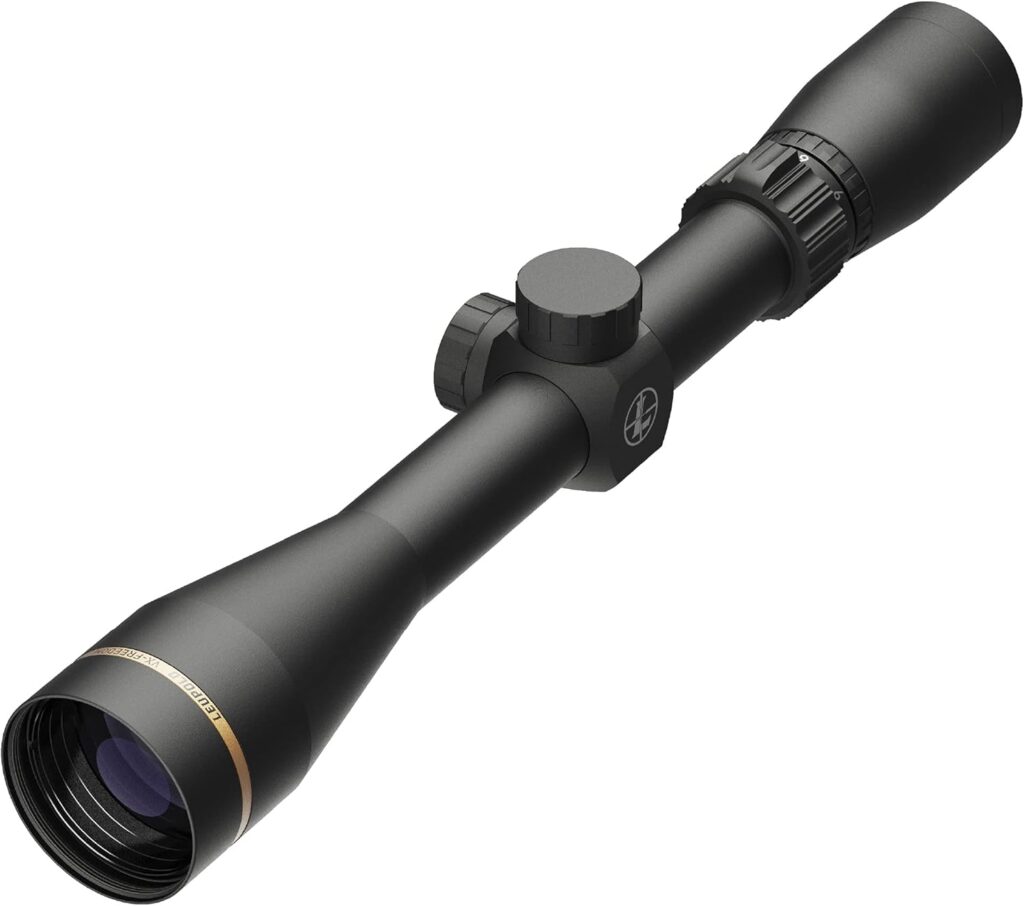
The Leupold VX-Freedom 3-9×40 is the scope that belongs on 80% of deer rifles in the Midwest, and most hunters who spend more than this end up getting less performance where it actually counts. Leupold introduced the VX-Freedom line in 2018 to replace the discontinued VX-1 and VX-2 series, and the result is a scope that delivers honest hunting performance at a price that makes sense for a dedicated deer rifle.
What works: The Twilight Light Management System is the standout feature, and unlike most marketing copy on optics, it delivers in the field. Reviewers who’ve hunted with this scope consistently report usable sight pictures well into the dusk period, meaningful extra minutes compared to cheaper competitors at the same price point. The 40mm objective collects enough light to pair well with the 3x low-end, producing a generous exit pupil when bucks are moving in dim conditions. The glass is legitimately clear with minimal edge distortion at typical hunting magnifications. The capped turrets are exactly right for a hunting scope, set your zero in August and don’t touch them again until next season. The 1-inch tube keeps the scope lightweight and compatible with a wide range of ring systems, and the entire package tips the scales at around 9.3 ounces. That matters when you’re hauling a rifle through timber for hours.
Midwest-specific performance: This is the classic Minnesota stand-hunting scope. At 3x, you acquire a deer quickly at 30 yards without magnification fighting you. At 9x, you make a precise shot across a 250-yard soybean field. The scope handles Minnesota winters without complaint. I’ve left one in an unheated blind overnight at -10°F and it cleared immediately when I picked it up the next morning. Waterproofing is solid in real hunting conditions, not just a spec sheet claim. Leupold backs this scope with their Full Lifetime Guarantee, which is as good as any warranty in the industry.
The compromise: Fixed parallax set at 100 yards means shots significantly closer or farther may have slight parallax error, though for most deer hunting this is irrelevant. There is no illuminated reticle option in the standard VX-Freedom line, which matters if you regularly shoot in pre-dawn or post-dusk legal shooting light. If you hunt the last five minutes of shooting light every evening, the dark crosshair can disappear against a dark background. That’s the one legitimate knock on an otherwise capable scope.
Best for: Hunters who want a reliable, lightweight, no-nonsense optic for a dedicated deer rifle. If you hunt inside 250 yards in mixed Midwest terrain, which describes the majority of whitetail hunting in this region, this is genuinely all you need.
Price: ~$377 on Amazon | ~$399.99 at Scheels
➡️ Check Price on Amazon | ➡️ Check Price at Scheels
2. Vortex Venom 1-6×24 — Best Budget LPVO for Brush Hunters
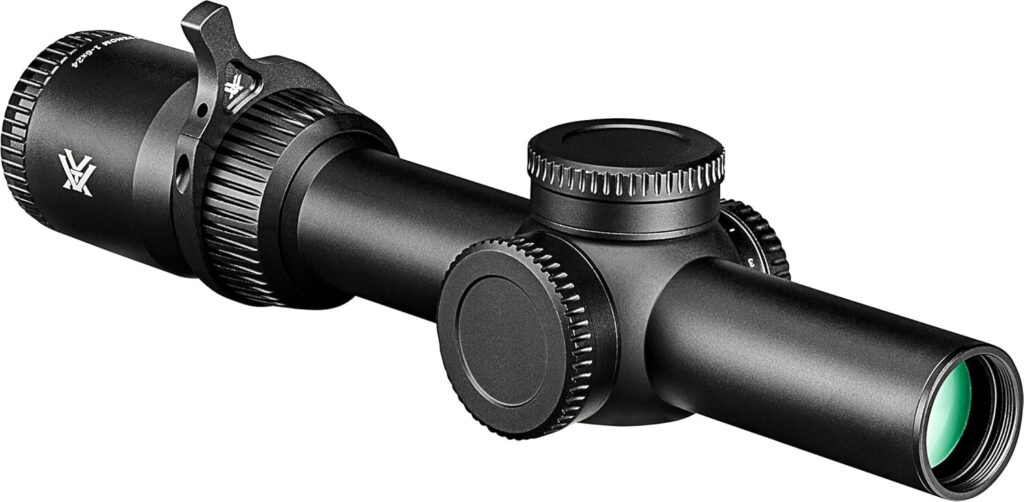
The Vortex Venom 1-6×24 is a 2024 release that landed in a category previously dominated by $400-500 optics and immediately made them look overpriced. At $299, it delivers true 1x magnification, a 30mm tube, clear XD glass, and Vortex’s VIP lifetime warranty, which is as close to a no-risk purchase as you’ll find anywhere in the optics market. If you’ve been hunting timber with a fixed-power scope and wondering why your shots always feel rushed, this scope is the answer.
What works: True 1x magnification is not a marketing claim you should overlook. On the lowest setting, the Venom lets you shoot with both eyes open, tracking a deer through cedar brush the same way you’d track it with a quality red dot. When a buck steps out at 25 yards and you have a half-second to get on him before he quarters away, this advantage is real and decisive. The illuminated AR-BDC3 reticle provides an illuminated center dot that’s daylight-bright on higher settings and genuinely useful in the dim first-light window that matters most for whitetail hunting. The throw lever is included in the box, a thoughtful touch at this price. Glass clarity is honest at hunting magnifications. This isn’t a scope that looks sharp on the shelf and disappoints in the field. At 6x you can put precise shots on target inside 200 yards without fighting image quality.
Midwest-specific performance: Hunting the thick river bottoms of western Wisconsin or the dense bedding cover of central Illinois CRP requires fast target acquisition. This scope handles it better than any fixed-power or standard variable scope at this price point. At 6x you can still make a clean 150-yard shot on a field edge. The scope holds zero through recoil from .308-class cartridges without complaint. Vortex’s VIP warranty means if anything goes wrong, ever, for any reason, they make it right. That policy has zero asterisks.
The compromise: The 24mm objective and 6x top end limit this scope to inside-200-yard hunting scenarios. If you regularly shoot deer at 250-plus yards across open agricultural ground, a common late-season Iowa or southern Minnesota situation, this scope isn’t built for that job. The AR-BDC3 reticle’s holdover marks are calibrated for 5.56 loads and are not directly applicable to deer cartridges unless you verify them at your specific zero and load. The eye relief is workable but less forgiving than traditional hunting scopes, which matters on rifles with stout recoil.
Best for: Hunters running lever-actions, ARs in deer cartridges, or bolt guns on ground setups and close-range timber stands where most shots come inside 150 yards. Also a strong pick for hunters who patrol field edges and need the 1x for jump shots and the 6x for deliberate field shots.
Price: ~$299 on Amazon | ~$299.99 at Scheels
➡️ Check Price on Amazon | ➡️ Check Price at Scheels
3. Vortex Razor HD LHT 3-15×42 — Best All-Around Premium Hunting Scope
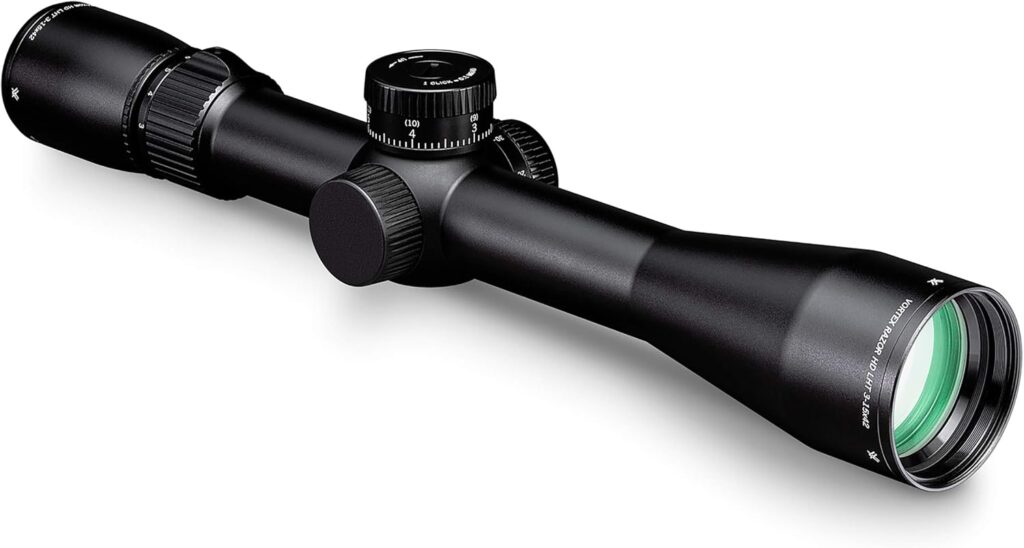
LHT stands for Light Hunter Tactical, and the name tells you exactly what Vortex built: a precision scope with tactical features scaled into a package that doesn’t punish you for carrying it all day. The LHT line uses a 30mm tube instead of the 34mm found on the full Razor line, keeping weight down without compromising the optical system in ways that actually matter for hunting. This scope is made in Japan and backed by Vortex’s VIP lifetime warranty, and it competes with optics at significantly higher prices.
What works: The HD glass in this scope is exceptional. Vortex uses XR Plus fully multi-coated optics with an APO color correction system to reduce chromatic aberration, the color fringing you sometimes see around high-contrast objects in lesser glass. In real-world hunting, this produces a crisp, true-color sight picture that makes identifying rack points and choosing precise shot placement easier in the moment. The RevStop Zero System is the mechanical highlight. Set your zero, install the zero stop ring, and the elevation turret won’t rotate below your zero, meaning you can dial for distance corrections and return to zero without counting clicks or second-guessing yourself. That’s a real advantage for hunters who range deer before shooting and dial corrections. The push-button illumination on the HSR-5i reticle is intuitive. The illuminated center dot fires up without hunting through a menu or fiddling with a dial, which matters with cold fingers at 6:30 a.m.
Midwest-specific performance: The 3x low end works well for close encounters in timber, while 15x gives you the magnification to stretch across a 400-yard agricultural draw and put your reticle precisely on the shoulder. Aircraft-grade aluminum construction with Armortek coatings means this scope handles the temperature cycling, moisture exposure, and occasional abuse that Midwest deer season delivers. The exposed elevation turret is practical for hunters who range deer and dial corrections, range the buck, dial the adjustment, take the shot. The scope’s second focal plane design means the HSR-5i reticle stays the same size across all magnification settings, making it easy to see at 3x without being overwhelming at 15x.
The compromise: The price is real. At $1,299, this is a significant investment that needs honest justification. The HSR-5i reticle is SFP, meaning its holdover subtensions are only accurate at maximum magnification (15x). If you plan to use the reticle marks for ranging or holdovers at lower power settings, understand this limitation before buying. The scope also weighs around 17.2 ounces, light for this feature set, but heavier than a simple hunting scope like the VX-Freedom.
Best for: Serious whitetail hunters who scout hard, range deer before shooting, and want a precision optic capable of reaching 400 yards without compromise. Also a strong pick for hunters who use the same rifle across multiple species or scenarios and need the full magnification range and turret system.
Price: ~$1,299 on Amazon | ~$1,299 at Scheels
➡️ Check Price on Amazon | ➡️ Check Price at Scheels
4. Leupold VX-5HD 3-15×44 Gen 2 — Best Premium US-Made Scope for Whitetail
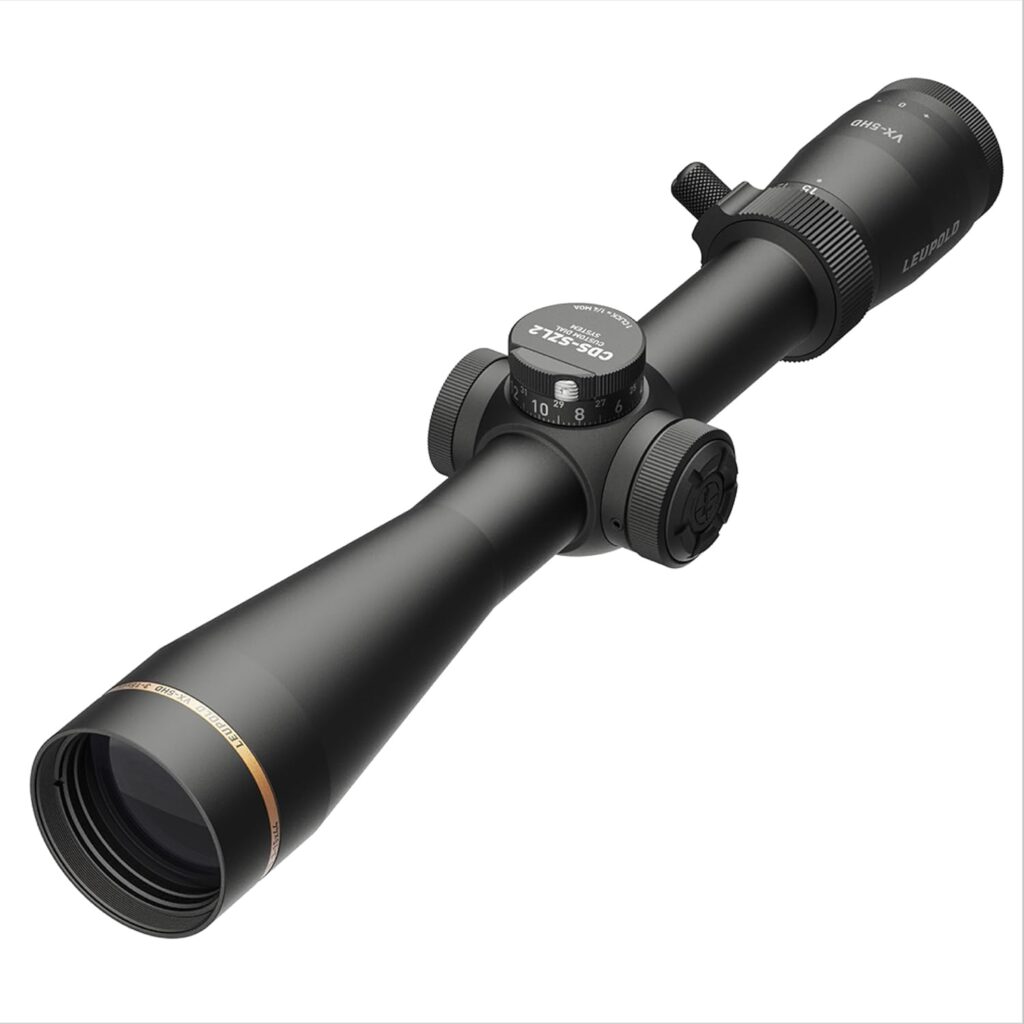
If you’ve hunted behind Leupold glass for any length of time, you know the name means something specific: consistent quality, a warranty that’s backed without hassle, and optics built in Beaverton, Oregon by people who’ve been making precision glass since 1947. The VX-5HD Gen 2 is Leupold’s current peak in the mid-range hunting lineup, and for Midwest deer hunters who want a premium US-made optic, it’s the one to beat. The Gen 2 update improved on an already well-regarded scope with better coatings and a refined mechanical system.
What works: Leupold’s Professional-Grade Optical System delivers edge-to-edge clarity that reviewers at American Hunter called impressive for a scope of its dimensions. The 44mm objective and premium lens coatings produce a bright, sharp sight picture that stays useful well into the low-light window. The FireDot Duplex reticle is the correct choice for this scope: an illuminated center dot that gives you a precise aiming point against a dark background without cluttering the field of view. That dot is the difference between a confident shot and a hesitant one at 6:45 a.m. when a buck is standing in shadow. The Guard-ion coating on exterior lenses sheds water and resists smearing, which matters during the freezing drizzle that rolls across the Midwest every late October.
The CDS-ZL2 turret system sets this scope apart. Custom Dial System means you send Leupold your specific load data, ballistic coefficient, muzzle velocity, zero distance, and they laser-engrave a custom turret marked in actual yards rather than MOA. You range a deer at 340 yards and dial to “340” on the turret rather than converting MOA corrections in your head while a buck is standing broadside. The zero-lock feature prevents the turret from rotating accidentally in the field. This is a practical system for hunters who take long shots and want to verify their holds, not just for precision shooters.
Midwest-specific performance: The 3x to 15x range handles every Midwest deer hunting scenario, tight cedar thickets in northern Minnesota at 3x, and wide-open late-season soybean fields in Iowa at 12x-15x. The scope is built and assembled in the USA under Leupold’s Full Lifetime Guarantee. Their service is genuinely excellent. Hunters who’ve carried this scope for five-plus seasons on elk and mule deer hunts in demanding western terrain report zero issues, it is, by any measure, overbuilt for Midwest whitetail, which is exactly how it should be.
The compromise: Price requires honest consideration. At $1,399-$1,499 depending on the retailer and configuration, this is a premium commitment. The standard version without the FireDot illuminated reticle costs less but surrenders the low-light advantage that most hunters buying a scope at this price are chasing. Confirm that you’re ordering the specific configuration, CDS turret, FireDot illuminated reticle, side-focus parallax, that fits your actual hunting use case. Buying the wrong configuration at this price is a frustrating mistake.
Best for: Committed whitetail hunters who want the best US-made optic in this magnification class and value Leupold’s service reputation. Strong choice for hunters who also use their deer rifle on western hunts where the CDS system earns its keep.
Price: ~$1,499.99 on Amazon | ~$1,399.99 at Scheels
➡️ Check Price on Amazon | ➡️ Check Price at Scheels
5. EOTECH Vudu 1-10×28 — Best Premium LPVO for Versatile Hunters
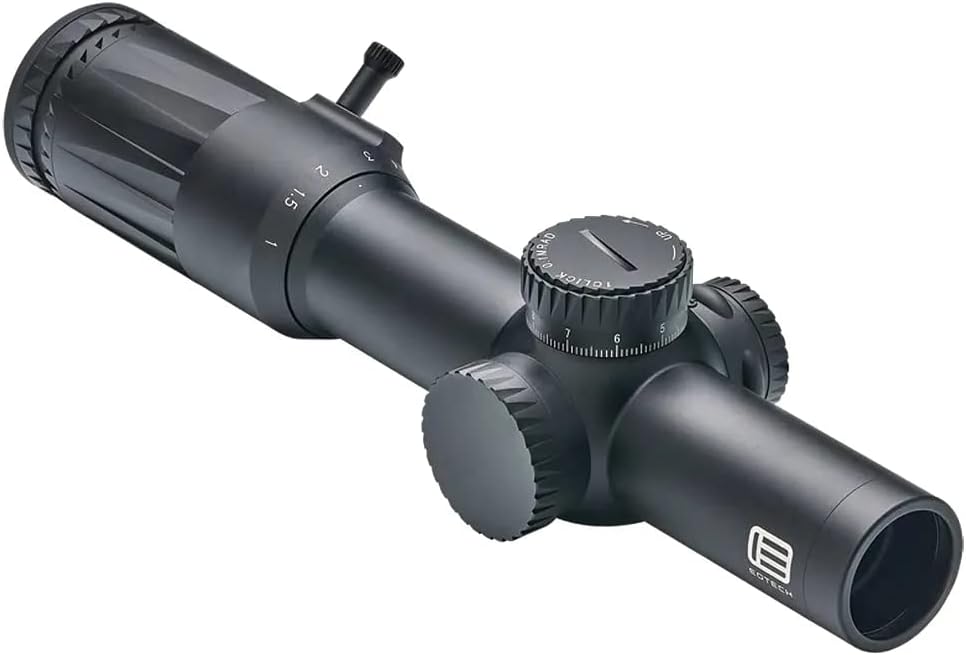
EOTECH built its reputation on the battlefield with holographic sights, and the Vudu line brings that engineering discipline into a hunting-viable LPVO platform. The 1-10×28 is the most capable scope in the Vudu lineup, stretching the useful range of an LPVO well past what most competitors offer. If you’ve wanted the close-range speed of a 1x optic combined with enough top-end magnification to confidently shoot past 300 yards on a deer, this is the scope that delivers it.
What works: The 10x top-end magnification is the primary differentiator in this class. Most LPVOs top out at 6x, which handles shots inside 250 yards well but starts feeling limited when deer open up across a wide Minnesota bean field in late November. At 10x, the Vudu gives you real long-range capability, enough magnification to confidently place a precise shot at 350 yards with a well-zeroed rifle. The 34mm tube is robust and houses a first focal plane (FFP) reticle, which means the SR-4, SR-5, or LE-5 reticle subtensions scale with magnification. Every holdover mark is accurate at every power setting, not just at maximum, which is the limitation of SFP scopes. The push/pull locking elevation turret prevents accidental movement in the field. The capped windage turret keeps your zero clean. EOTECH’s glass quality is legitimately impressive at this price point. The illuminated center aiming point stays visible in low-light conditions and the construction, aircraft-grade aluminum, single-piece tube, nitrogen purged, is built for field abuse.
Midwest-specific performance: The 1x low setting means this scope handles the same close-range brush situations as any quality LPVO: both eyes open, fast target acquisition, no magnification fighting you on a 30-yard shot. But the 10x top-end means you don’t have to compromise when the deer opens up at distance. For hunters who run a single rifle across varied property, timber one morning, ag fields the next afternoon, the Vudu 1-10×28 is the most versatile optic on this list. The FFP reticle design makes holdover marks usable at any magnification setting, which is practical for hunters who hunt both close cover and open fields and don’t always have time to dial to maximum power before shooting.
The compromise: The 34mm tube requires 34mm rings, which are slightly more expensive and less common than 30mm rings, factor that into the total budget. At 21.3 ounces, this is the heaviest scope on this list, which accumulates when you carry a rifle through timber for several hours. The 28mm objective, compared to the 42-44mm objectives on traditional hunting scopes, produces a smaller exit pupil at higher magnification, at 10x, that’s 2.8mm, which is adequate in good light but noticeably dimmer than a 40mm scope at 9x during the low-light window. If peak low-light performance in that narrow dawn and dusk window is your top priority, a traditional 3-9×40 or 3-15×44 with a larger objective gathers more light. The Vudu trades some low-light margin for LPVO versatility, and that’s an honest tradeoff worth understanding before you buy.
Best for: Hunters who want maximum versatility from a single optic and are willing to invest in premium glass. Strong fit for hunters who run the same rifle across multiple hunting scenarios, dense timber to wide-open agricultural fields, and don’t want to compromise on either end.
Price: ~$1,567 on Amazon
Quick Comparison: Which Scope Fits Your Hunt?
| Scope | Price | Magnification | Tube | Focal Plane | Illuminated | Low-Light Rating | Best Use Case |
|---|---|---|---|---|---|---|---|
| Leupold VX-Freedom 3-9×40 | ~$377 | 3-9x | 1″ | SFP | No | Very Good | Budget deer rifle, inside 250 yards |
| Vortex Venom 1-6×24 | ~$299 | 1-6x | 30mm | SFP | Yes | Good | Brush hunting, fast shots, timber stands |
| Vortex Razor HD LHT 3-15×42 | ~$1,299 | 3-15x | 30mm | SFP | Yes | Excellent | All-around premium, 400-yard capability |
| Leupold VX-5HD 3-15×44 Gen 2 | ~$1,399–$1,499 | 3-15x | 30mm | SFP | Yes (FireDot) | Excellent | Premium US-made, CDS turret system |
| EOTECH Vudu 1-10×28 | ~$1,395 | 1-10x | 34mm | FFP | Yes | Good | Versatile LPVO, close to long range |
How to Choose the Right Deer Hunting Scope for Midwest Conditions
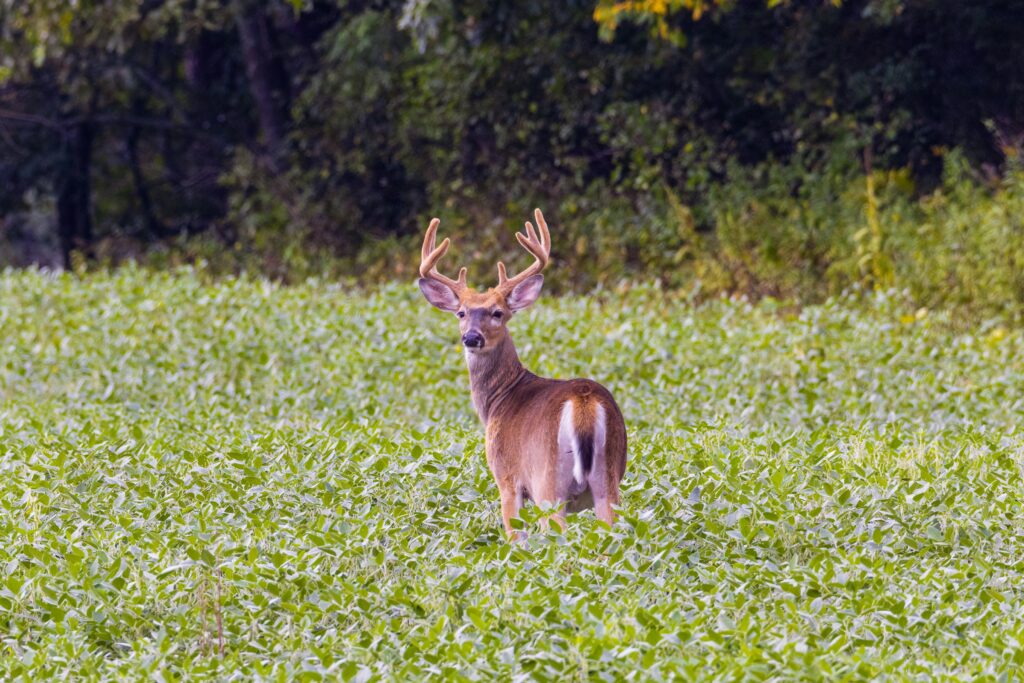
Start With How You Actually Hunt
The single most important question isn’t about the scope, it’s about your specific hunting situation. If you hunt tight timber river bottoms in western Wisconsin where 80% of your shots come inside 100 yards and deer appear for two seconds before disappearing into brush, you don’t need a 15x scope. You need a fast, wide-field optic with an aggressive low-end setting. If you hunt the open row-crop country of southern Minnesota, where you might watch a buck work a field edge for 30 minutes before deciding on a shot, magnification matters more than speed.
Think through the three or four most likely shot scenarios in your actual hunting areas this season. If most shots are inside 150 yards in varying light conditions, the typical Midwest setup, the VX-Freedom or the Venom 1-6x covers everything you’ll face. If you regularly find yourself looking at deer at 250 yards across a draw, needing to identify points and pick a shoulder crease, a 3-15x scope with quality glass becomes the right tool. Buy for the hunt you’re actually going on, not the one you might go on someday.
Match Magnification to Your Terrain
A practical framework for Midwest deer hunting: the more open your terrain, the more magnification you want at the top end. For thick timber and brush setups, northern Minnesota jack pine country, river-bottom cottonwood stands, central Illinois CRP, start at a 1-6x or 3-9x with a low end of 3x or less. For agricultural fields, prairie edges, and open hardwoods, southern Minnesota farming country, Iowa row-crop ground, a 3-15x gives you the reach to make precise shots when bucks are across a draw.
Don’t over-magnify your setup. A 6-24x scope on a Midwest deer rifle is a solution looking for a problem that doesn’t exist here. High magnification narrows your field of view dramatically and makes fast shots on moving deer nearly impossible. More than 15x on a deer rifle is almost never justified in the Midwest.
Low-Light Performance: What It Actually Means
Every scope manufacturer claims exceptional low-light performance. Here’s how to evaluate it honestly. Look at the objective lens diameter, the coating system, and the glass quality, in that order. A 40mm objective with fully multi-coated lenses will outperform a 50mm objective with basic coatings in actual hunting conditions. Exit pupil math (objective lens diameter ÷ magnification) gives you a starting point, but coating quality determines how much of that optical potential you actually capture.
If low-light performance in that 15-minute window at dawn and dusk is a genuine priority, and for mature buck hunters, it should be, budget $350 or more and make sure you’re getting fully multi-coated lenses. Below that price threshold, you’re accepting compromises that show up exactly when you need the scope most.
Budget Realities: When to Spend More, When to Save
The Leupold VX-Freedom at $377 punches above its price class on every metric that matters for deer hunting inside 250 yards. It’s the honest best-value pick for most Midwest hunters. You don’t need to spend $1,299 to get a reliable, capable deer hunting scope that will serve you for years.
That said, the gap between the VX-Freedom and the Razor HD LHT or VX-5HD isn’t just marketing. The glass quality improvement is real and visible in the field. In the half-hour after legal shooting light begins and the half-hour before it ends, when mature bucks move, premium glass delivers a noticeably better sight picture that can make the difference between a confident shot and a hesitant one.
Spend more when you consistently hunt during the first and last 20 minutes of legal shooting light, regularly take shots past 200 yards, hunt multiple species with the same rifle, or want a scope that outlasts several rifle upgrades. Save money when most of your shots come in reasonable light inside 200 yards, you’re mounting this scope on a rifle that gets hard use in rough conditions, or you’re still building the hunting experience to know exactly what you need from an optic.
Common Mistakes to Avoid
Don’t buy a scope with turret caps you have to unscrew and potentially lose in cold weather just because it was cheap. Don’t mount a 4-16x scope on a treestand rifle where 40 yards is a long shot. Don’t skip the scope budget to spend more on the rifle, a mediocre scope on a quality rifle is a worse combination than quality glass on an average rifle. And don’t buy without understanding whether you’re buying a first focal plane or second focal plane scope and what that means for how you’ll use the reticle in the field.
First Focal Plane vs. Second Focal Plane: What Matters for Deer Hunting
This debate fills hunting forums every fall, and the answer is simpler than most people make it.
First focal plane (FFP) means the reticle scales with magnification. The subtension marks are accurate at every magnification setting. This matters if you use your reticle for ranging, holdovers at varied distances, or wind calls on the fly. The EOTECH Vudu 1-10×28 runs FFP for exactly this reason, at any magnification the SR-series reticle is fully functional and accurate.
Second focal plane (SFP) means the reticle stays the same size regardless of magnification. Subtension marks are only accurate at one specific magnification, usually maximum power. The Leupold VX-Freedom, VX-5HD, and Vortex Razor HD LHT all run SFP. For deer hunting, where the vast majority of hunters aren’t using mil subtensions for ranging or making complex holdover calculations in the field, SFP is often the better choice. The reticle stays clean, visible, and appropriately sized across all magnification settings.
The practical answer: if you plan to dial turrets for distance corrections or use holdover marks at varying magnifications, FFP makes the system more intuitive. If you set a zero and hold on the target, which is what most deer hunters do, SFP is fine and usually preferred for a clean sight picture.
Looking for More Midwest Gear Guides?
If you’re hunting wet ground, marsh edges, river bottoms, early-season CRP, our 5 Best Boots for Swampy Terrain covers rubber and hybrid boots that handle the exact conditions Midwest deer hunters face on scouting trips and field setups.
And if you ice fish between deer seasons, which, if you’re in Minnesota or Wisconsin, you probably do, check out our 7 Best Insulated Boots for Ice Fishing. Same brutal cold, same demand for gear that actually works.
FAQs
For most Midwest deer hunting, a 3-9x or 3-15x variable gives you everything you need. The low end of that range handles close shots in timber and brush, common in river-bottom and CRP ground across Minnesota, Wisconsin, and Illinois, while the high end reaches across agricultural fields where Midwest hunting often shifts in late season. If your hunting is primarily in heavy cover where most shots happen inside 100 yards, a 1-6x LPVO offers faster target acquisition than a traditional variable scope. The worst mistake is over-magnifying your setup. A 9x scope in a tight timber stand creates a narrow field of view that makes fast shots on moving deer very difficult. Start at 3-4x for most Midwest setups and dial up only when you need precision at distance. For general-purpose whitetail hunting across mixed Midwest terrain, the 3-9×40 configuration has been solving this problem for 50 years and continues to work well.
Both are legitimate, proven brands that make quality hunting optics. The real answer depends on what you’re buying and at what price. Leupold’s VX-Freedom is a clearer value in the $350-400 range than anything Vortex offers at that price point, the Twilight system and glass quality are hard to match. Vortex’s Razor HD LHT at $1,299 competes directly with the Leupold VX-5HD at similar money, and some reviewers prefer the Razor glass while others prefer Leupold’s Made-in-USA construction and service model. What genuinely separates them is the warranty and service experience. Vortex’s VIP warranty is unconditional, anything goes wrong, they fix or replace it with no questions asked. Leupold’s Full Lifetime Guarantee is excellent but more traditional in how it’s administered. Both brands make reliable scopes at this price tier. Choose based on which reticle system, turret configuration, and physical specs best match your hunting setup, not brand loyalty.
If you regularly hunt at first and last legal light, and most serious whitetail hunters do, an illuminated reticle is genuinely useful, not just a premium feature. In the gray half-light of a November morning in Minnesota, a standard black crosshair can disappear against a dark background. An illuminated center dot gives you a precise aiming point that stands out against any background. That said, the underlying glass quality matters more than the illumination feature itself. A bright illuminated reticle on mediocre glass is still mediocre glass. The Leupold VX-5HD’s FireDot and the Vortex Razor HD LHT’s illuminated center dot are both on premium glass, that combination is where illuminated reticles actually earn their keep. On a budget scope, illumination is less likely to perform well in the exact conditions where you most need it. If you can only afford an illuminated reticle by sacrificing glass quality, the plain-glass scope with better optics is usually the better hunting choice.
The Leupold VX-Freedom at $377 is the honest answer for most Midwest hunters, it handles everything inside 250 yards in real field conditions and carries Leupold’s full warranty. That covers the vast majority of deer hunting scenarios in this region. If you’re specifically hunting mature bucks in the low-light windows that define their peak movement, spending $1,200-$1,500 on a premium scope with better glass quality gives you a real and measurable advantage in those critical minutes. The cost-per-use math on premium scopes also works out better than it looks: a $1,299 scope that lasts 20 years costs about $65 per season. A $200 scope that fails after three years cost $67 per season and left you without a scope during deer season. Quality optics are long-term investments, and the best ones outlast multiple rifles.
The main practical differences are magnification range, turret design, reticle complexity, and weight. Tactical scopes tend to run high magnification with exposed, dialable turrets and complex reticles designed for precise distance and wind corrections under field conditions. Hunting scopes prioritize lower minimum magnification, lighter weight, cleaner reticles, and often capped turrets that hold a set zero without being touched. For Midwest deer hunting, most tactical features don’t provide practical benefit. The exception is an exposed zero-stop elevation turret, which is useful for hunters who range deer before shooting and dial a correction. The Vortex Razor HD LHT bridges this gap well, it has a tactical-style exposed turret with a zero stop, but stays light and clean enough for pure hunting use. The Leupold VX-5HD Gen 2 with the CDS turret takes a similar approach with a more hunter-friendly dial system.
Yes, and for specific Midwest hunting scenarios, an LPVO is the better choice over a traditional variable scope. Hunters who pursue deer in dense timber, run still-hunting setups through creek bottoms, hunt from the ground, or need a fast-handling brush rifle benefit from the 1x low setting that provides red-dot-like target acquisition. The Vortex Venom 1-6×24 at $299 is the entry point for this category and delivers real performance at a price that’s hard to argue with. The EOTECH Vudu 1-10×28 is the premium pick, pushing the capable range of an LPVO out to 350-plus yards. The practical limitation of LPVOs for deer hunting is that 24-28mm objectives produce smaller exit pupils than 40-44mm hunting scopes, meaning they’re noticeably dimmer in the low-light window. At 6x, a 24mm objective gives you a 4mm exit pupil, adequate, but not the 5-7mm you get from a quality 3-9×40 at lower magnification. For daylight hunting, this difference doesn’t matter. For the last five minutes of shooting light in November, a traditional hunting scope with a larger objective gathers more light.
Every scope on this list is nitrogen purged, which is the baseline solution for internal fogging. Inert gas fills the interior and prevents oxygen and moisture from condensing on internal lenses when temperatures shift. External lens fogging is the more common issue for Midwest hunters, it happens when a cold scope is brought into warm air or when condensation forms on the objective from cold, humid air. The practical approach: keep your scope in the same temperature environment as your hunting conditions during transport when possible. Let a warm scope cool down gradually rather than stepping straight from a 70-degree truck into -10°F air. The Guard-ion coating on the Leupold VX-5HD specifically resists surface moisture and smearing. For all scopes, carry a clean microfiber cloth in a breast pocket where it stays warm, and wipe the objective before bringing the gun to your shoulder. Never blow on cold lenses with warm breath, it deposits moisture and accelerates fogging.
