

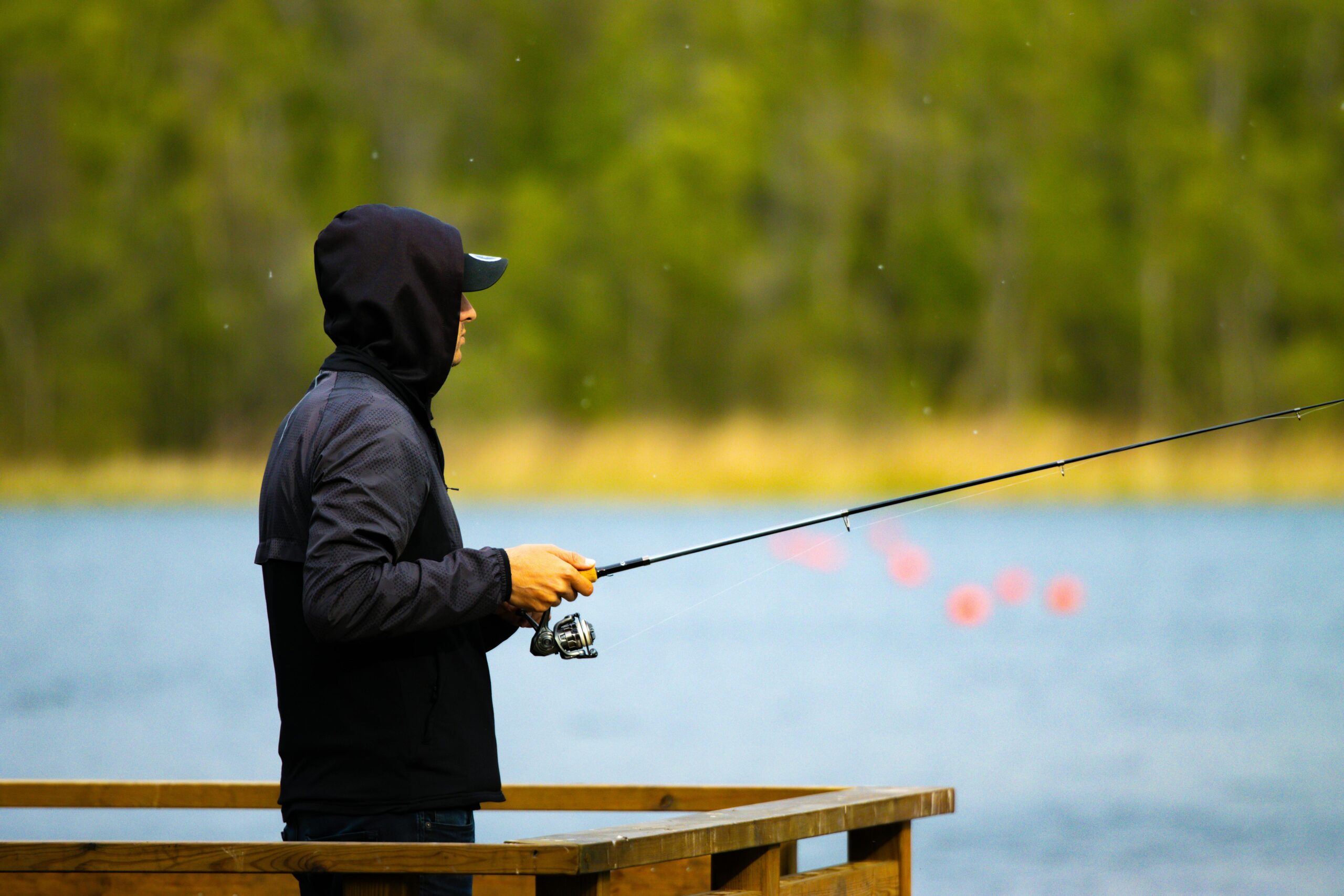
Most Midwest anglers don’t buy pre-packaged combos past their first season. They buy a rod they want and a reel they want and pair them. The problem is most of that pairing advice is scattered across forums, YouTube comments, and tackle shop conversations. Nobody’s sitting down and explaining why these specific rods and reels belong together what the blank material does for you, why the reel’s brake system earns its place on a windy Minnesota lake, and what you’re actually giving up when you buy one tier down. That’s what this article is.
I’ve been fishing Minnesota lakes and Driftless trout streams for more years than I care to admit. My dad had me on the water before I could read. Bass fishing is the main obsession, but I’ve spent enough time chasing walleye on Mille Lacs and crappie on every flooded brush pile in the state to know how different those demands are. I’ve put good money into bad setups and bad money into setups that turned out to be great. What I know is that rod-and-reel compatibility is real a mismatched setup costs you bites you never feel and fish you never land.
The five combos below are matched on purpose. Every spec you see has been verified against manufacturer pages and retailer listings. Every real user complaint I mention came from actual Tackle Warehouse reviews, Wired2Fish coverage, or Shimano/St. Croix product pages. Nothing here is a guess or a filler stat I made up to sound authoritative.
Quick Reference — Find Your Combo Fast
| Combo | Best For | Price Range | Skill Level |
|---|---|---|---|
| Abu Garcia Vengeance + Max5 Pro | Learning baitcasting, budget bass setup | $150–$180 | Beginner–Intermediate |
| Dobyns Colt + Shimano Caius 150 | Bottom-contact sensitivity, cold-water bass | $160–$200 | Intermediate |
| St. Croix Bass X + SEVIIN GF | All-around Midwest bass, multi-species | $230–$260 | Intermediate–Advanced |
| Ugly Stik Elite + Shimano Curado K | Heavy cover, durability-first anglers | $250–$280 | Intermediate–Advanced |
| Fenwick Eagle + Shimano Nasci FD | Walleye, crappie, finesse spinning | $190–$230 | All levels |
What Makes a Rod and Reel Pairing Actually Work
Before we get to the combos, it helps to understand why pairing matters in the first place and why it goes beyond matching a reel seat to a reel foot.
Rod Power, Action, and What They Actually Mean
Rod power is how much force it takes to bend the blank. Heavy power rods barely move under normal pressure. Ultralight rods bend on a sneeze. For most Midwest bass fishing, medium-heavy is the workhorse: enough backbone to drive a hook through thick cover or a bass’s tough jaw, but enough sensitivity in the tip to register a walleye picking up a jig. Rod action is where along the blank that bend happens. A fast-action rod bends in the upper third quick hooksets, better sensitivity, more direct feel from lure to hand. A moderate action bends further down and cushions the fight, which helps when you’re running treble hooks on crankbaits or lighter line.
The mistake most anglers make is buying the wrong action for their primary technique. A fast-action finesse rod is frustrating on crankbaits. A moderate cranking rod loses sensitivity on bottom-contact presentations. The pairings on this list specify why each rod action was chosen for each application not just what the specs say.
Gear Ratio: The Most Misunderstood Reel Spec
Gear ratio tells you how many times the spool rotates per handle turn. A 6.6:1 reel retrieves roughly 26–28 inches of line per crank. A 7.4:1 picks up 30–31 inches. An 8.1:1 gets you 34+ inches. Slower ratios give you more torque for power fishing deep crankbaits and working lures that push water. Faster ratios let you burn buzzbaits, stay tight on topwater walk-the-dog baits, and catch up to a bass that swims toward you on the hookset. If you’re buying one baitcasting setup, 7.1:1–7.4:1 is the most versatile middle ground for Midwest bass fishing.
According to the American Sportfishing Association, bass and walleye fishing drive the largest share of rod-and-reel sales in the upper Midwest. The gear that dominates those markets has to cover both slow presentations on deep structure and fast reaction baits on shallow cover which is why the baitcasting combos on this list lean toward the 7:1 range.
Magnetic vs. Centrifugal Brakes — and Why It Matters on Open Midwest Lakes
Baitcasting reels use two types of braking systems to prevent backlash during a cast. Magnetic systems use an external dial to set brake force easier to adjust, more forgiving for anglers still building their casting mechanics. Centrifugal systems use weighted pins that activate through physics during the cast, delivering progressive brake pressure that most experienced casters prefer for distance and wind management. On big open Midwest lakes like Leech Lake, Lake Winnebago, or Lake of the Woods, casting into a northwest headwind on a baitcaster is a real test. Centrifugal systems like Shimano’s VBS in the Caius 150 and SVS Infinity in the Curado K apply peak brake force at the start of the cast when backlash risk is highest. That’s a real advantage in wind.
The Recreational Boating & Fishing Foundation consistently identifies casting accuracy and ease of use as the top reasons anglers switch reel brands. Brake systems are central to both.
Balance, Weight, and What a Full Day of Casting Does to Your Wrist
A top-heavy setup on a long day working Mille Lacs weed edges or pitching dock targets on a Wisconsin lake creates real fatigue. Reel weight relative to rod balance matters more than spec sheets suggest. A heavy reel on a light graphite blank tips the balance point forward toward the guides, making every cast feel like work after a few hours. The combos on this list were chosen in part because the weight pairing is honest rod and reel balance near the grip so you’re not fighting the setup all day.
A note on line: what you run on these combos will amplify or undermine everything. The Minnesota DNR’s fishing regulations are worth reading for season specifics, but for gear performance fluorocarbon and braid reveal sensitivity differences between these setups that monofilament completely masks. Don’t run straight mono on any rod that has sensitivity as a selling point.
The 5 Best Fishing Rod & Reel Combos For The Midwest
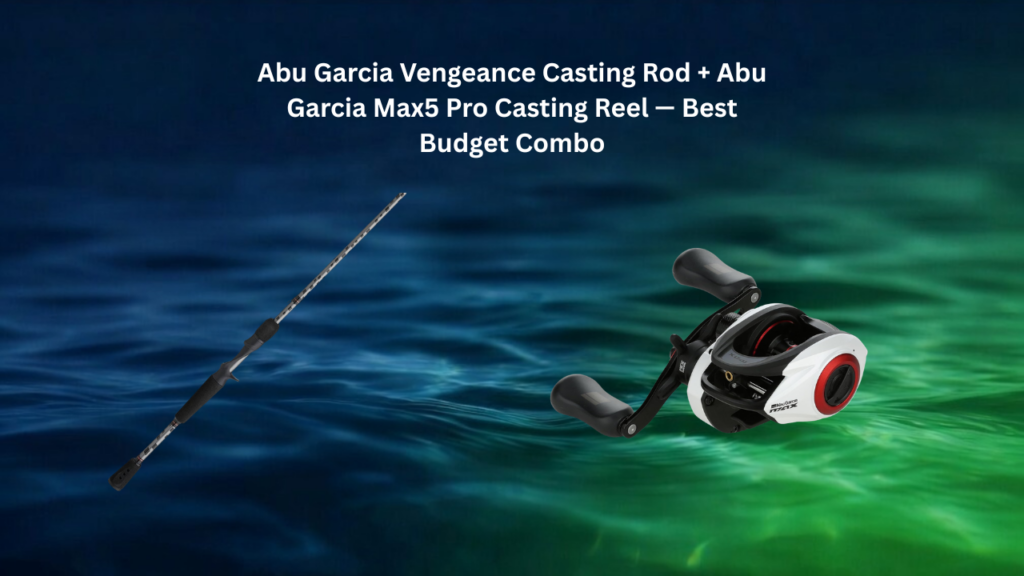
1. Abu Garcia Vengeance Casting Rod + Abu Garcia Max5 Pro Casting Reel — Best Budget Combo
Best for: Beginners getting into baitcasting, anglers who need a reliable backup setup, kids’ first real bass rod. Anyone who needs a functional baitcasting combo without breaking $150.
Not best for: Finesse presentations where you need max sensitivity, or heavy-cover applications where blank stiffness and reel drag quality are critical.
This is the combo I’d hand to someone who wants to learn baitcasting without spending money they aren’t sure they’ll get back. The Abu Garcia Vengeance Casting Rod and Max5 Pro Casting Reel together land in the $150–$180 range and deliver a matched setup that outperforms what that price typically gets you.
The Vengeance is built on a 24-ton intermediate modulus graphite blank with stainless steel guides and aluminum oxide inserts. The medium-heavy, fast-action 7-foot model handles 12–20 lb line and 3/8–1 oz lures that’s the bread-and-butter range for Midwest bass. Texas-rigged plastics, spinnerbaits, medium crankbaits, single-hook moving baits. It covers the techniques most bass anglers actually use most of the time. The split-grip EVA handle holds up through wet conditions and long sessions, and the one-piece construction keeps the blank responsive. What it isn’t is particularly light at this price point the graphite isn’t as refined as mid-tier blanks, and a couple Tackle Warehouse reviewers noted they’d rather spend slightly more for better guide quality. That’s fair. The Vengeance is honest about what it is: a workhorse blank at a workhorse price. Abu Garcia backs it with a 3-year limited warranty.
The Max5 Pro is the stronger half of this pairing. At 8+1 bearings and a 7.1:1 gear ratio, this reel punches well above its price. A Wired2Fish reviewer specifically called out the 7.1:1 ratio as a standout in the under-$100 baitcaster category, where most competitors are stuck at 6.2:1–6.8:1 ratios that make fast presentations like buzzbaits and topwater sluggish to fish. The MagTrax magnetic braking system adjusts with an external dial, which is genuinely useful for a beginner who’s still figuring out how to tune a baitcaster. Start with the brake set higher than you think you need to, practice with heavier lures, and dial it back as your mechanics improve. The 20-pound max drag from the Power Disk system is more than adequate for any bass you’ll find in a Midwest lake, and the Duragear brass gearing holds up through regular seasonal use.
This is also a real matched pairing from the same manufacturer. Both components are calibrated for the same weight class and application range. You won’t find the balance point fighting your hand on a long casting day.
Where it falls short: the Max5 Pro’s graphite frame flexes under sustained heavy loads in a way that an aluminum-bodied reel doesn’t, and multiple user reports note the drag can feel inconsistent when a bigger fish takes a long run. The Vengeance blank, while functional, lacks the sensitivity of rods costing $20–30 more if detecting a light bite on a rocky point matters a lot to your fishing, this rod won’t communicate those signals as clearly as the Dobyns Colt or St. Croix Bass X.
Price Range: $150–$180 for the combo.
➡️ Abu Garcia Vengeance Rod — Check Price on Amazon
➡️ Abu Garcia Max5 Pro Reel — Check Price on Amazon
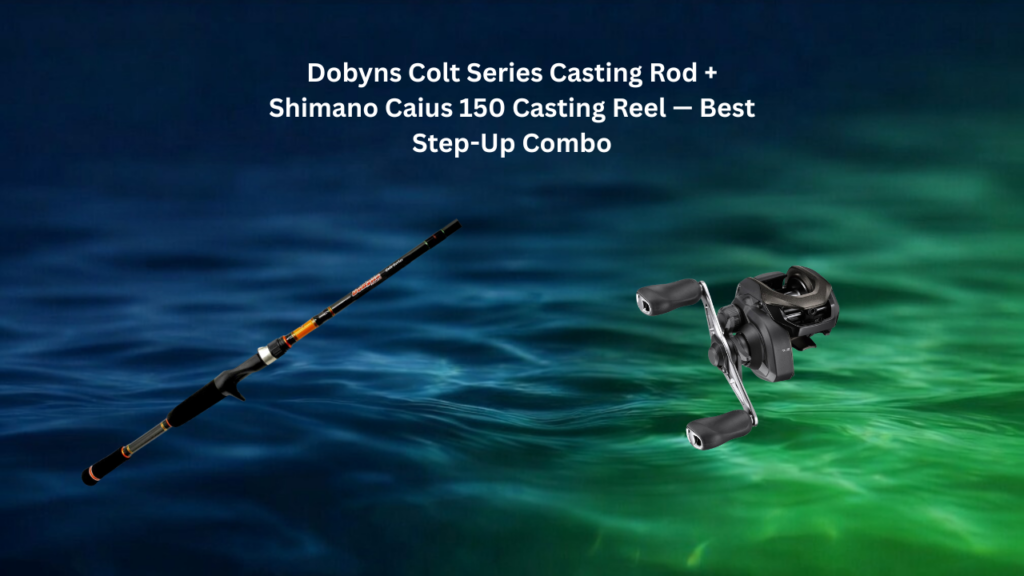
2. Dobyns Colt Series Casting Rod + Shimano Caius 150 Casting Reel — Best Step-Up Combo
Best for: Anglers who’ve outgrown entry-level gear and want real blank sensitivity for bottom-contact techniques. Strong choice for cold-water bass fishing where bites are subtle and reading the bottom matters.
Not best for: Heavy-cover power fishing where you need maximum drag pressure and a rigid metal-frame reel to handle sustained load.
The Dobyns Colt Series and Shimano Caius 150 together hit the $160–$200 range and represent a meaningful jump from budget gear without crossing into premium territory. This pairing delivers two things that matter in the Midwest: rod blank sensitivity for picking up soft bites in cold water, and a reel that casts significantly better than its price suggests.
Gary Dobyns developed the Colt Series specifically because dealers wanted a quality rod around $80. He’s been public about not putting his name on something that embarrasses the Dobyns brand, and the Colt backs that up. Built on high-modulus graphite blanks with Sea Guides and high-density Hypalon handles, the Colt is noticeably lighter and more sensitive than what you get in the Vengeance tier. A Tackle Warehouse reviewer with experience across multiple rod price points said it plainly: the Colt is the only bottom-contact rod under $100 he recommends for sensitivity and proper load-up. That’s not marketing copy it’s a real angler pointing to a real difference. On jigs, Texas rigs, drop-shots, and shakey heads, the Colt transmits information up the blank clearly enough to help you detect bites earlier than a budget graphite blank would. In October water on a Minnesota lake, when bass are sluggish and their strikes barely register, that extra sensitivity translates directly into more fish landed. The Colt carries a 1-year limited warranty with a $30 replacement fee shorter than most, worth knowing upfront.
The Shimano Caius 150 is genuinely impressive for the money. The specs are verified: 3+1 bearings (3 stainless steel + 1 roller bearing), 7.2:1 gear ratio, 11 lb max drag, 6.5–7.4 oz depending on model, XT-7 composite body. On paper that’s modest. In the hand and at the water, it casts better than any other reel at its price. Shimano’s Super Free Spool technology supports the pinion gear on a ball bearing when the clutch disengages, eliminating the shaft friction that limits cast distance on standard reels this is technology borrowed from much more expensive Shimano products. The 6-pin Variable Brake System uses centrifugal force rather than magnets, which casters who have some experience tend to prefer because the brake pressure adjusts progressively through the cast rather than applying a fixed force from start to finish. The thin-walled aluminum S3D spool reduces vibration, and the result is a reel that a Tackle Warehouse reviewer called “inexpensive plastic-bodied but casting really, really well.” A Wired2Fish reviewer who fished the Caius Casting Combo specifically for bladed jigs and spinnerbaits rated it a straight-up workhorse that outperforms its price in its category.
The pairing works because the Colt’s lightweight blank keeps the overall setup balanced against the Caius’s compact body. You’re not fighting forward weight on a long day of pitching. The two-week-of-use learning curve most people experience with centrifugal brakes is worth enduring the Caius rewards anglers who spend time with it.
What to know before you buy: the Caius 150’s 11 lb max drag is adequate for typical Midwest bass but limits you if you’re running heavy braid into thick milfoil or punching pads where you need to hold and crank. One Tackle Warehouse reviewer noted the drag released unexpectedly under full tightening after several months of use. The XT-7 composite body flexes under sustained heavy loads in a way a metal-frame reel doesn’t. If those scenarios are your primary fishing, step up to the Curado K instead.
Price Range: $160–$200 for the combo.
➡️ Dobyns Colt Series Rod — Check Price on Amazon
➡️ Shimano Caius 150 Reel — Check Price on Amazon
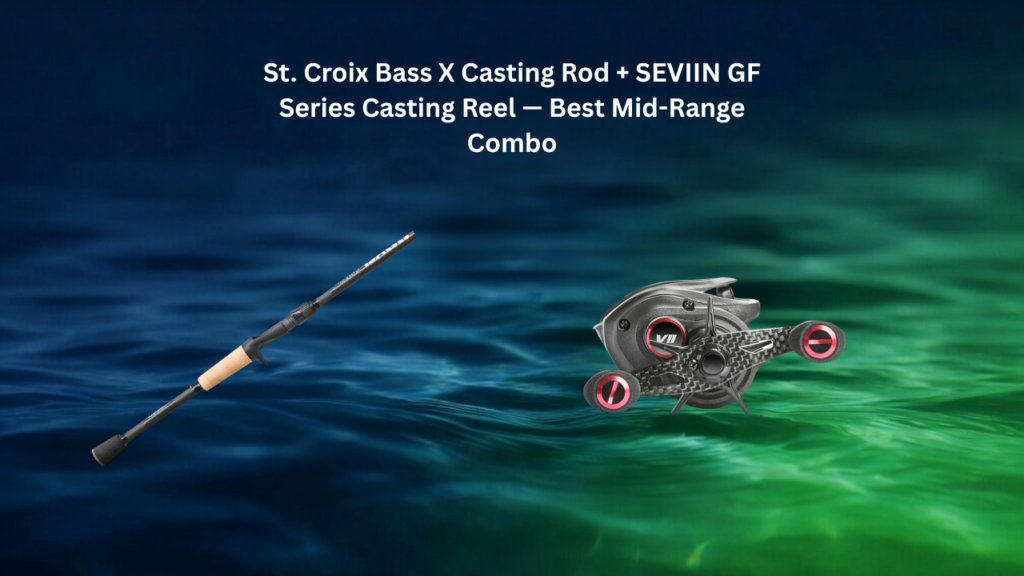
3. St. Croix Bass X Casting Rod + SEVIIN GF Series Casting Reel — Best Mid-Range Combo
Best for: Serious Midwest bass anglers who want one all-around baitcasting setup they’ll still fish in five years. Also handles heavier walleye jigging and multi-species work on baitcasting tackle.
Not best for: Ultra-light finesse presentations under 1/4 oz this is built for power fishing applications.
If I had to pick one combo from this list for a capable Midwest angler who wants quality gear with staying power, this is it. The St. Croix Bass X and SEVIIN GF Series run $230–$260 together, and both components come from the same organization: St. Croix Rod, based in Park Falls, Wisconsin. That’s 70 years of rod-building expertise backing both the blank and the reel.
The Bass X was redesigned for 2024 with newly engineered SCII carbon fiber stronger in flexural strength and lighter than the previous formula combined with St. Croix’s Fortified Resin System. The result is a blank that runs 3.6–4 oz depending on model, noticeably light for its tier. The hybrid guide platform uses SeaGuide Aluminum Oxide guides paired with SeaGuide Atlas Performance stainless steel guides, handling fluoro, mono, and braid cleanly. Six different handle configurations match handle length and design to application rather than using one-size-fits-all ergonomics the 6’6″ medium-heavy fast model runs 12–20 lb line and 3/8–1 oz lures, which is the starting point for most Midwest bass applications. A Dick’s Sporting Goods reviewer who uses the Bass X for bass and walleye said it plainly: light, sturdy, sensitive, and great backbone. St. Croix backs it with a 5-year warranty and their Superstar Service customer support the replacement fee is $60 if you ever need it.
The SEVIIN GF is where this combo gets interesting. SEVIIN is a reel brand conceived, designed, and operated by St. Croix Rod. The GF features a one-piece reinforced composite frame and side covers, a 4+1 stainless steel bearing system with two Japanese stainless steel spool bearings, a 32mm forged aluminum spool holding 110 yards of 12 lb mono, a multi-stack carbon fiber and stainless steel drag, and a micro-adjustable magnetic cast control. Retail price is $120 and it comes in three gear ratios: 6.6:1 (19 lb drag), 7.3:1 (17 lb drag), and 8.1:1 (15 lb drag) all at 7.3 oz. A Wired2Fish reviewer who put the GF through serious use said the drag was smooth and consistent enough to play fish on light line with jerkbaits, and specifically called out the casting distance as exceeding expectations. A northern Wisconsin angler on Tackle Warehouse who fished multiple GF models through four-seasons-in-four-days weather conditions reported no issues across cold, wet, and rough use. One Tackle Warehouse reviewer with a long Shimano background noted the GF feels more similar to Okuma than to premium Shimano options and questioned whether the internals match the price premium that’s an honest data point worth including.
Together, the Bass X and SEVIIN GF cover everything Midwest bass fishing asks for: jigs on rocky structure, spinnerbaits through weed edges, Texas rigs in milfoil, mid-size swimbaits on open-water points. The clicking drag on the GF is practically useful you can adjust pressure on the fly when switching from 12 lb fluoro on a jig to 20 lb braid for a frog without swapping reels. On a full day working a Wisconsin bass lake, this setup doesn’t fatigue your wrist.
Price Range: $230–$260 for the combo.
➡️ St. Croix Bass X Rod — Check Price on Amazon
➡️ SEVIIN GF Series Reel — Check Price on Amazon
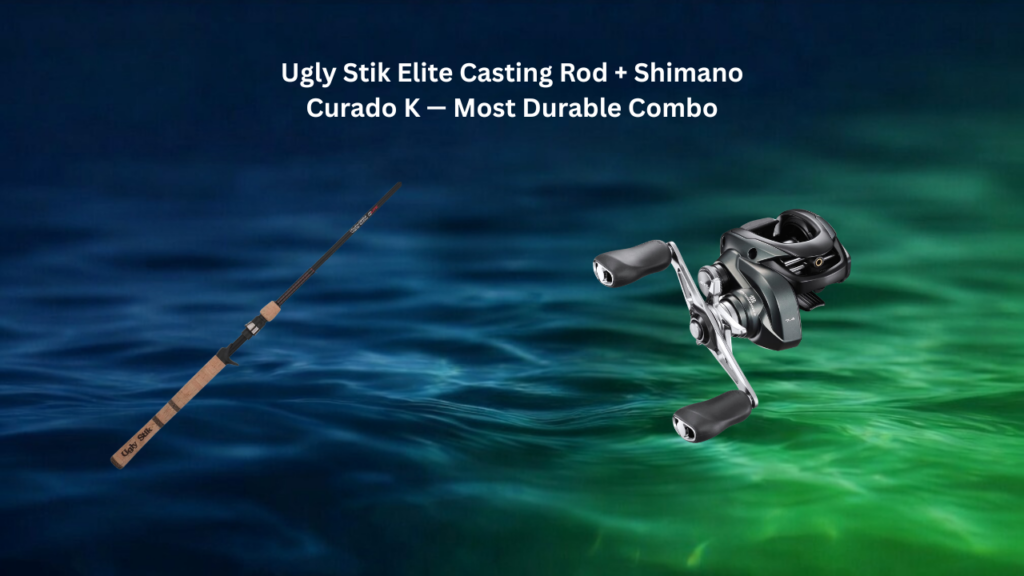
4. Ugly Stik Elite Casting Rod + Shimano Curado K — Most Durable Combo
Best for: Anglers who are hard on gear, fishing around wood or heavy vegetation where rod durability matters, or anyone who wants a premium-tier reel on a rod they won’t worry about.
Not best for: Finesse fishing where blank sensitivity is the priority. If you need to detect subtle bites on light presentations, step to the Dobyns Colt or Fenwick Eagle instead.
This pairing inverts the typical logic. The Ugly Stik Elite is a mid-tier rod built for toughness paired with the Shimano Curado K, one of the most respected baitcasting reels in the industry. Together they run $250–$280 and build a setup where the reel is doing the heavy lifting on performance while the rod does the heavy lifting on durability.
The Ugly Stik Elite uses Ugly Tech construction a graphite-fiberglass composite with 35% more graphite than the original GX2 delivering a blank that’s lighter and more sensitive than older Ugly Stiks while maintaining the toughness the brand is built on. The 10-year warranty from Ugly Stik is the longest in this roundup and reflects real confidence in the construction. PVD-coated Ugly Tuff one-piece stainless steel guides eliminate insert pop-outs that budget guides suffer from over time. The Clear Tip design adds flexible fiberglass just at the tip for added strength right where most rods break. Premium cork grips throughout. For a 7-foot medium-heavy fast model, the Ugly Stik Elite handles 10–20 lb line and 1/4–3/4 oz lures, which covers the core of Midwest bass power fishing. One USAngler review of the Elite noted surprise at how well the PVD guides protected line during hard fights not something you expect at this price, but something that matters after a season of abuse. Is the blank the most sensitive option on this list? No. Is it the toughest? Yes.
Then there’s the Shimano Curado K, which is where this combo earns its place. The Curado has been in the hands of serious bass anglers for nearly 35 years, and the K variant brings a real technology upgrade: HAGANE aluminum body that eliminates frame flex under load, MicroModule gearing with smaller teeth for more contact points and noticeably smoother retrieve, SVS Infinity centrifugal braking with an external adjustment knob, Cross Carbon Drag for a wide and consistent drag range, X-Ship pinion bearing support, and Super Free Spool for friction-free casting. Verified specs: 6+1 bearings, 11 lb max drag, 7.6 oz (6.2:1 model) or 7.8 oz (8.5:1 model), available in three gear ratios. A USAngler long-term review found the Curado K rivals Shimano’s much more expensive Chronarch series on real fishing performance. The fact that it comes in 6.2:1, 7.4:1, and 8.5:1 means you can choose the gear ratio to match your primary technique rather than defaulting to a one-size-fits-all setup.
What this combo does well: heavy-cover fishing where you need a rod that takes punishment and a reel that delivers precise, accurate casts under pressure. Punching milfoil on a Minnesota lake, flipping jigs into dock posts on a windy Iowa reservoir, working riprap on a Mississippi backwater the Ugly Stik handles the abuse and the Curado K turns it into fish. The HAGANE body eliminates the gear flex cheaper reels show when you’re cranking hard on a buried bass. You feel the fish, not the reel fighting itself.
The one limitation to name directly: the Curado K’s 11 lb drag on the standard 150 model is adequate for most Midwest bass but won’t stop a big northern pike in heavy cover. If you’re regularly targeting pike or running 50 lb braid in the thickest possible vegetation, consider the Curado 200K or 300K models for more stopping power.
Price Range: $250–$280 for the combo.
➡️ Ugly Stik Elite Rod — Check Price on Amazon
➡️ Shimano Curado K Reel — Check Price on Amazon
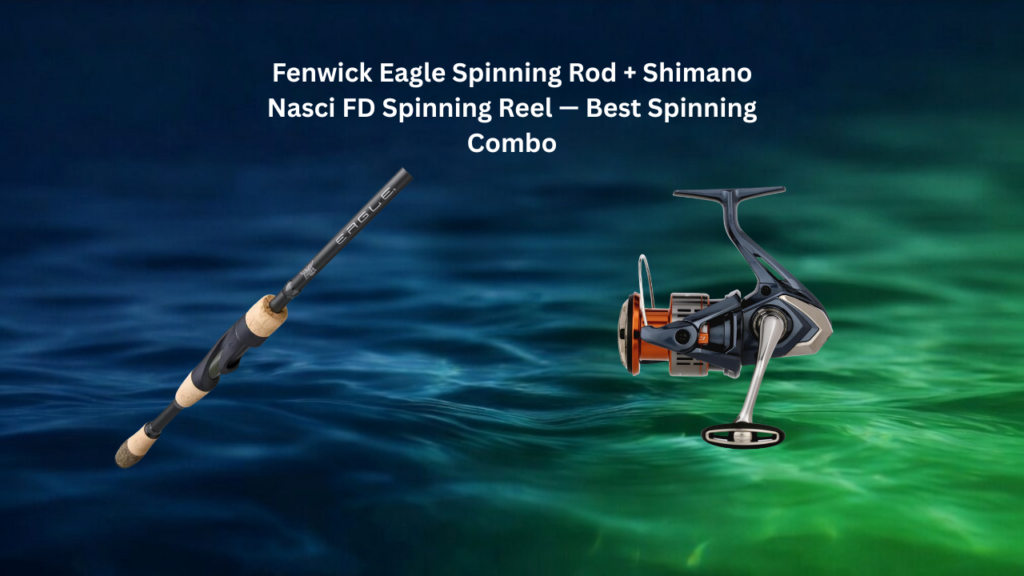
5. Fenwick Eagle Spinning Rod + Shimano Nasci FD Spinning Reel — Best Spinning Combo
Best for: Walleye, crappie, finesse bass, and any light-line multi-species fishing. The spinning setup no serious Midwest angler should be without.
Not best for: Heavy-cover bass fishing or running braid heavier than 20 lb. This is a light-line finesse platform.
Every baitcasting combo article overshadows the fact that most Midwest anglers need a quality spinning setup more than they need a fifth baitcaster. Walleye jigging, crappie on brush piles, finesse bass on post-front days, drop-shotting suspended fish these are spinning techniques, and a baitcaster simply isn’t the right tool for them. The Fenwick Eagle and Shimano Nasci FD together run $190–$230 and deliver a spinning setup that performs significantly above that price.
The Fenwick Eagle was redesigned from the ground up using a blend of 24 and 30-ton intermediate and high-modulus graphite bonded with Fenwick’s proprietary reinforcing resin. The blank is light and sensitive. The defining feature is Fenwick’s soft-touch reel seat their own design, not an industry-standard part which places your hand in direct contact with the blank through the grip area. That puts bite transmission directly into your palm rather than through a layer of reel seat housing. Stainless steel guide frames with thin zirconia inserts handle braid-to-fluoro leader connections cleanly without the line friction issues that aluminum oxide inserts can generate at lighter line weights. A Wired2Fish reviewer who put the Eagle through serious testing alongside higher-tier Fenwick models rated its real-world fishing performance close to rods costing significantly more. Fenwick makes dedicated Eagle Walleye and Eagle Trout & Panfish models with technique-specific actions worth noting if crappie or walleye is your primary species.
One real complaint verified from Tackle Warehouse reviews: the cork reel seat tightener can loosen under the stress of hard hooksets. Multiple users mentioned it. It’s easy to fix tighten it back down throughout a day’s fishing but it’s honest information worth having before you buy. Another Fenwick-specific reviewer noted the guide feet on panfish models can be too small to work with bobber stops on live-bait rigs. For straight jigging and lure fishing, it’s not an issue.
The Shimano Nasci FD is the 2025 update and carries technology Shimano used to reserve for reels costing twice as much. Verified features: HAGANE cold-forged gear (ultra-duralumin, no machining), InfinityDrive for reduced rotational resistance under load by supporting the pinion gear directly against the spool shaft, Anti-Twist Fin to keep line tensioned and reduce wind knots, One-Piece Bail for clean line travel, CoreProtect water resistance, SilentDrive gear tolerances, G-Free Body for improved balance, Cross Carbon Drag, X-Ship, AR-C Spool. The 2500HG model: 8.3 oz, 6.2:1 gear ratio, 20 lb max drag. Tackle Warehouse buyers who’ve run Nasci reels for multiple seasons consistently rate them as some of the smoothest mid-price spinning reels they’ve owned. A Tackle Warehouse customer who bought Nasci reels for creek smallmouth fishing called them smooth, solid, and strong and noted he’d purchased multiple over multiple seasons. The 2500 size is 5 grams lighter than the previous Nasci generation.
This combo is built for the fishing that defines late summer and fall on Midwest walleye lakes 1/4 oz jigs on rock piles on Mille Lacs, small swimbaits for crappie holding on flooded timber, drop-shot presentations for neutral bass after a cold front, slip bobber rigs with small leeches on structure. The Nasci FD’s CoreProtect water resistance handles the sloppy early-spring and late-fall conditions you deal with on big Minnesota lakes. The SilentDrive keeps retrieves quiet through cold-morning sessions when fish are keyed to subtle presentations.
Price Range: $190–$230 for the combo.
➡️ Fenwick Eagle Spinning Rod — Check Price on Amazon
➡️ Shimano Nasci FD Spinning Reel — Check Price on Amazon
Full Comparison Table
| Combo | Rod Blank | Reel Bearings | Gear Ratio | Max Drag | Price Range | Best Species |
|---|---|---|---|---|---|---|
| Abu Garcia Vengeance + Max5 Pro | 24-ton graphite, AO inserts | 8+1 | 7.1:1 | 20 lb | $150–$180 | Bass |
| Dobyns Colt + Shimano Caius 150 | High-mod graphite, Hypalon | 3+1 | 7.2:1 | 11 lb | $160–$200 | Bass, Walleye |
| St. Croix Bass X + SEVIIN GF | SCII carbon fiber, FRS resin | 4+1 | 6.6:1 / 7.3:1 / 8.1:1 | 15–19 lb | $230–$260 | Bass, Multi-species |
| Ugly Stik Elite + Shimano Curado K | Graphite/fiberglass Ugly Tech | 6+1 | 6.2:1 / 7.4:1 / 8.5:1 | 11 lb | $250–$280 | Bass, Pike |
| Fenwick Eagle + Shimano Nasci FD | 24/30-ton graphite blend, zirconia guides | 6+1 | 6.2:1 | 20 lb | $190–$230 | Walleye, Crappie, Bass |
How to Choose the Right Combo for Your Fishing
Start With Your Primary Technique, Not Your Budget
The most common mistake Midwest anglers make is buying a versatile combo and then trying to make it do everything. A 7.4:1 baitcaster is wrong for slow-rolling a deep crankbait. A moderate-action rod with plenty of tip flex is wrong for punching milfoil. Before you buy anything, identify the two or three techniques you use most often and match the combo to those not to a hypothetical future where you’ll try everything.
If you fish jigs and Texas rigs most often on Midwest bass lakes, the Dobyns Colt + Shimano Caius 150 or St. Croix Bass X + SEVIIN GF makes the most sense. If walleye or crappie fishing drives your season, the Fenwick Eagle spinning combo is the right tool and nothing on this baitcasting list is a substitute. If you’re learning baitcasting and want to build mechanics before committing to expensive gear, start with the Abu Garcia Vengeance + Max5 Pro.
The Cost-Per-Use Calculation
A $65 combo that fails after one season cost you $65. A $220 combo that fishes hard for eight seasons cost you $27.50 per year. The quality ceiling on Midwest freshwater fishing setups is genuinely good value over time, especially at the St. Croix Bass X and Shimano Curado K tier where you’re buying components designed to last a decade. If you fish 20 or more days per season, the cost-per-use argument for spending more is strong. If you fish five days a year, the Abu Garcia budget combo is completely honest for your situation.
Spinning vs. Baitcasting for Midwest Conditions
Spinning gear handles light lures, finesse presentations, and headwind conditions better than baitcasting gear. Anything under 3/8 oz becomes difficult to cast on a baitcaster for most anglers. Walleye jigs, crappie jigs, drop-shots, and small swimbaits all belong on spinning gear. Baitcasting gear handles heavier lures, heavy-cover applications, and high-leverage hooksets better. Most serious Midwest anglers run both: a baitcasting setup for bass power fishing and a spinning setup for walleye, crappie, and finesse bass. If you’re limited to one setup, a spinning combo is the more versatile starting point for multi-species fishing. If you’re specifically a bass angler focused on power fishing techniques, a baitcaster covers more of the ground that matters.
When to Spend More on the Rod vs. the Reel
The rod determines sensitivity and how information from your lure travels to your hand. The reel determines casting distance, retrieve smoothness, and drag quality. If sensitivity and bite detection are the priority finesse fishing, cold-water bass, walleye on structure spend more on the rod. If casting performance, drag quality, and long-term durability are the priority power fishing, heavy-cover techniques, big-water situations spend more on the reel. The Ugly Stik Elite + Curado K deliberately inverts the usual logic by pairing a moderate rod with a premium reel, because the Curado K’s casting performance and drag quality justify the investment even on a less-sensitive blank.
Midwest-Specific Fishing Considerations
Cold Water and What It Does to Gear and Fish
Midwest fishing seasons are extreme. You can be burning a buzzbait on topwater in late May and fishing jigs under ice four months later. Cold water changes everything. Fish metabolism slows, bites get softer and harder to detect, and lure action needs to match slower-moving forage. On the gear side, cold temperatures thicken lubricants in reels, slow bearing rotation, and make drag systems feel sticky until they warm up after a few minutes of use. Higher-quality reels with tighter internal tolerances handle cold-weather fishing more predictably than cheaper options. If you’re fishing through early spring or late fall in Minnesota water temperatures in the high 30s to mid-40s reel quality becomes noticeably more important than it is for summer fishing. The Shimano products on this list handle cold-weather performance better than budget alternatives partly because their manufacturing tolerances are tighter at every moving part.
Walleye and Crappie Demand Different Tools
Most Midwest anglers fish multiple species across a season, and walleye and crappie demand light-line, high-sensitivity spinning setups that baitcasting gear simply can’t replicate. A 1/8-oz crappie jig on 6 lb fluorocarbon in 15 feet of water requires a spinning rod and reel with enough sensitivity to detect the gentle uptick that signals a crappie inhaling the jig. A walleye on a 1/4-oz jig bouncing rock structure on Lake Winnibigoshish needs the same light-line presentation. The Fenwick Eagle + Shimano Nasci FD combo is the correct answer for both of those fishing scenarios and if you’re a serious Midwest angler and you don’t own a quality spinning setup, you’re leaving fish on the table every spring and fall.
Wind and Open-Water Casting
The big lakes of Minnesota, Wisconsin, and Iowa aren’t sheltered. Leech Lake, Lake of the Woods, Green Bay, and Rathbun all build real chop in a strong northwest wind. Casting a baitcaster into headwind requires a brake system you trust. The centrifugal systems on the Shimano Caius 150 and Curado K apply peak brake force at the start of the cast exactly when backlash risk is highest in wind and then taper off progressively as the spool slows. Magnetic systems can match this with proper adjustment, but they require more conscious dialing-in as conditions change. If your fishing includes a lot of big open-water baitcasting in Minnesota or Wisconsin wind, the Shimano centrifugal systems have a practical advantage.
Looking for More
If fly fishing is part of your Midwest season and if you fish the SE Minnesota Driftless Area, it absolutely should be check out Best Fly Fishing Rods for Midwest Trout for rod picks tuned to spring creek and small stream conditions.
For anglers targeting catfish on the upper Mississippi or Missouri River, Best Catfishing Rods For The Mississippi River covers heavy-duty rod options for current fishing and large fish.
Bottom Line
If you’re getting into baitcasting or need a functional setup on a tight budget, the Abu Garcia Vengeance + Max5 Pro is the right starting point. The 7.1:1 gear ratio on the Max5 Pro makes it more versatile than most budget reels, and the MagTrax brake is forgiving enough to build real casting mechanics without constant backlash frustration.
If you want noticeably better blank sensitivity without crossing $200, the Dobyns Colt + Shimano Caius 150 is where to go. The Caius casts better than any other reel in its price range, and the Colt is the only bottom-contact rod under $100 most experienced anglers would recommend without qualification.
If you’re buying one serious all-around baitcasting combo that you’ll still be fishing in five years, the St. Croix Bass X + SEVIIN GF is where I’d land. Both components come out of Park Falls, Wisconsin. Both perform above their price. Both come backed by warranties that mean something.
If durability in demanding situations is the priority and you want a benchmark reel on a rod you won’t baby, the Ugly Stik Elite + Shimano Curado K makes its case. The Curado K has earned its reputation over decades, and it hasn’t lost it.
And if you’re a Midwest angler and you don’t yet own a quality spinning setup for walleye and crappie, the Fenwick Eagle + Shimano Nasci FD is the one to fix that. The Nasci FD carries technology that used to cost twice as much. The Eagle blank will tell you more about what’s happening down the line than most anglers expect from a rod in this price range.
Fish what you can afford. But when you can, buy smart and buy once.
FAQs
Yes, with realistic expectations. The learning curve is real most beginners deal with backlash in their first few sessions while they learn how to set the brake and control their thumb pressure during the cast. The Abu Garcia Vengeance + Max5 Pro is the most forgiving baitcasting pairing on this list because the MagTrax magnetic brake system is easy to dial up for extra safety and adjust without pulling the sideplate. Start with the brake set higher than the instructions suggest, practice with 1/2-oz lures before moving to lighter baits, and expect a few backlashes per session for the first couple of trips. It gets cleaner fast. Spinning gear is genuinely easier to learn, but baitcasting opens power fishing techniques flipping, pitching, frogging that spinning tackle doesn’t replicate. The investment in learning is worth it for a Midwest bass angler.
With proper maintenance, quality combos in the $150–$250 range should deliver five to eight years of regular fishing 20 or more days per season. The biggest factors that shorten reel life are fishing in sandy or silty conditions without rinsing afterward, storing reels with dirty gears, and dropping equipment on hard surfaces. The biggest rod killers are tip strikes against boat decks and rod tips getting caught in doors. Rinse reels in fresh water after fishing dirty conditions. Wipe rod guides with a soft cloth to clear grit that will wear line. Store spinning reels with bails open between trips. The Ugly Stik Elite with its 10-year warranty and the St. Croix Bass X with its 5-year warranty are both built with multi-decade fishing in mind. The Shimano Curado K has an established reputation for lasting well past warranty among anglers who maintain it properly.
Absolutely. The pairings here are matched starting points, not rules. Experienced anglers mix components constantly. If you want the Dobyns Colt’s sensitive blank under a Shimano Curado K for better casting performance and drag that’s a smart combo. If you want the St. Croix Bass X under the SEVIIN GF in the 8.1:1 gear ratio for burning reaction baits that’s a legitimate choice. The two factors worth considering when mixing components: reel weight relative to rod blank weight (a heavy reel on a light rod tips the balance forward and causes forearm fatigue on long casting days), and application match between rod action and reel gear ratio.
For the baitcasting setups targeting Midwest bass: 12–17 lb fluorocarbon covers most applications jigs, Texas rigs, spinnerbaits, swimbaits. Fluorocarbon’s low visibility and near-zero stretch make it the standard on clear Midwest lakes where bass can be line-shy. Step up to 30–50 lb braid when punching vegetation, frogging, or flipping heavy cover where stretch is the enemy and lure weight is high. For the Fenwick Eagle spinning combo: 10–15 lb braid as a main line with a 6–10 lb fluorocarbon leader is the standard setup for walleye and finesse bass across Midwest tournament circuits. For crappie, drop to 6–8 lb braid with 4–6 lb fluorocarbon leader. Running straight monofilament on any of these setups wastes the sensitivity built into the blank and reel system. Fluorocarbon or braid.
The Curado K is still a strong buy. It’s been available since 2017 and the underlying technology HAGANE body, MicroModule gearing, SVS Infinity braking, Cross Carbon Drag remains competitive against current reels at significantly higher prices. Shimano released the Curado 150M as a newer addition with an MGL III spool for lighter lure casting, but Tackle Warehouse reviews on the 150M show mixed feedback on braking consistency that the K doesn’t have. For the Midwest bass fishing most anglers do medium-heavy applications, moderately weighted lures, varied cover types the Curado K handles the job without needing the MGL spool’s lighter-lure optimization. When the Curado K goes on sale, the value proposition only gets stronger. Look for deals before major fishing seasons.
