

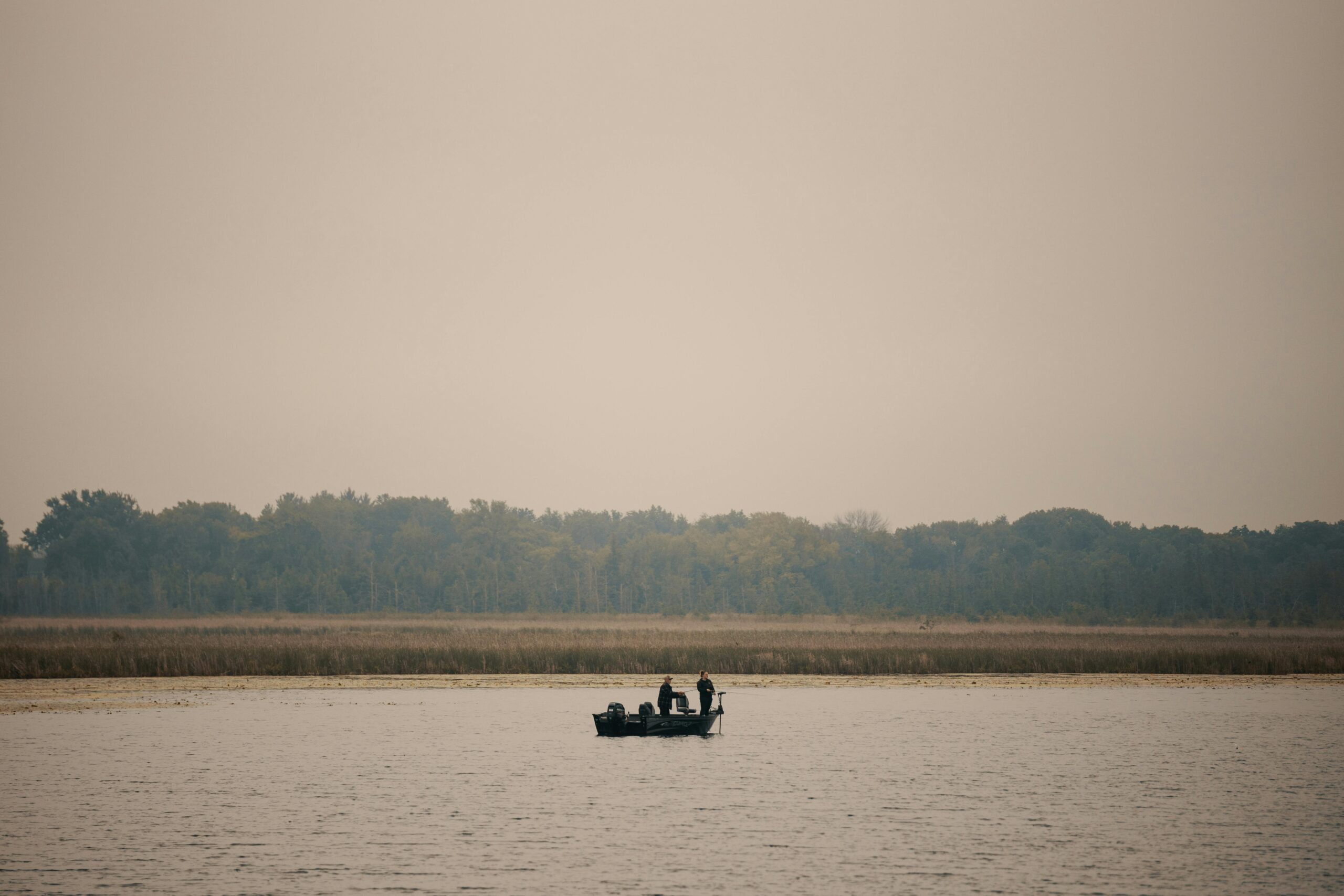
If you’ve ever had a 36-inch northern pike absolutely detonate on a big spoon and then immediately expose every weakness in the rod you’re holding, you understand why this matters. Pike are not polite fish. They don’t tap the bait and wait for you to get ready. They hit hard, run fast, and their bony mouths require real hooksets. A rod that works fine for walleye or largemouth will get exposed in a hurry when you’re throwing five-inch swimbaits across a weed flat at Green Bay or working bucktail spinners on a Minnesota border lake in September.
I’ve been fishing Minnesota lakes my entire life, and pike are my off-season obsession between whitetail seasons. I’ve thrown everything at them from cheap spinning combos I regretted buying to purpose-built musky rods that were overkill for the pike we actually have in most MN lakes. The six rods in this article represent the realistic range of what works for Midwest pike fishing, from the guy who fishes one weekend a month and wants something affordable that holds up, all the way to the angler who’s out every week and wants a rod that won’t let them down when a genuine toothy is on the end of the line.
Every pick here was selected for how it actually handles the conditions Midwest pike anglers deal with heavy weed edges, current on river pike, big-bait requirements, cold-weather grip considerations, and the need to fight a powerful fish without losing the battle because your rod ran out of backbone.
What Actually Makes a Pike Rod Different From a Bass Rod
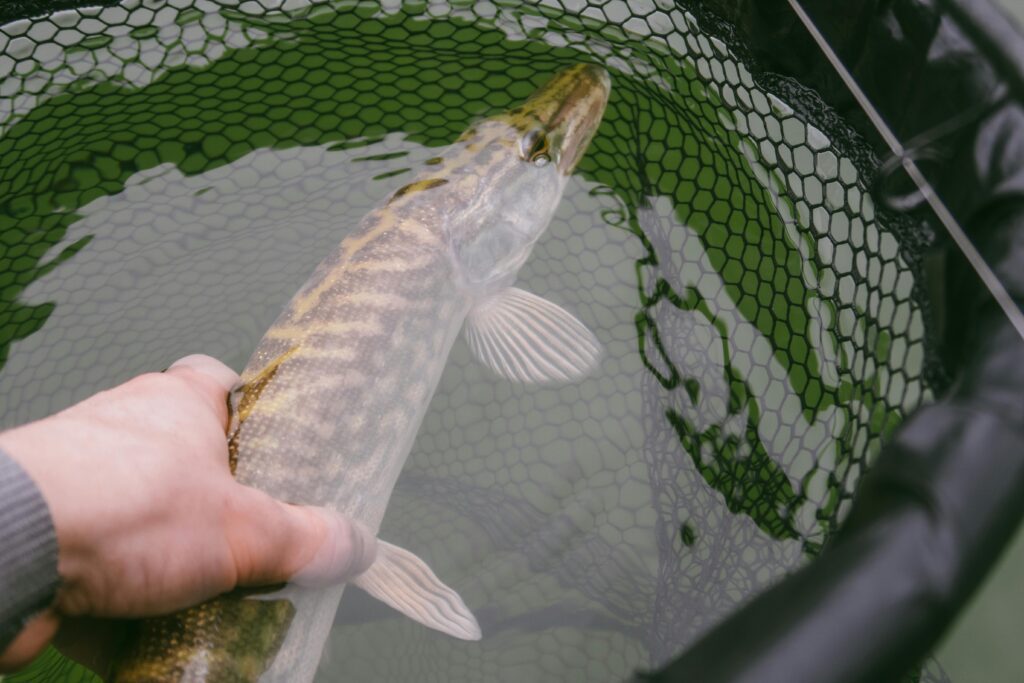
You can catch pike on a bass rod. I’ve done it plenty of times. But there’s a reason serious pike anglers use different gear, and it comes down to three things: power rating, lure weight range, and hook-setting performance.
Power and Action for Pike
Northern pike have some of the hardest, boniest mouths in freshwater fishing. When a pike commits, you need to drive those hooks home and that requires a rod with real backbone in the lower section. Most bass spinning rods in the medium power range just don’t have that lower-third stiffness. A medium-heavy rod with a fast action is the standard starting point for pike fishing, and it’s not a coincidence. The fast tip loads quickly for accurate casts with big lures, and the medium-heavy power gives you the spine to punch hooks through bone on the hookset.
According to the American Sportfishing Association, pike rank among the top five target species for Midwest freshwater anglers and that popularity drives a lot of interest in species-appropriate gear. The issue is that “pike-appropriate” isn’t always obvious on a spec sheet. You’re looking for rods rated for lures in the 3/4- to 3-ounce range. Anything rated below that will struggle with the bigger inline spinners, swimbaits, and spoons that consistently produce pike. Anything rated too far above that range (like dedicated muskie gear) gets heavy fast and fatigues your arm on a full day of casting.
Line Rating and Leader Compatibility
Pike teeth cut through monofilament and fluorocarbon. Most serious pike anglers run 30-50 lb braid as a main line and attach a short wire or heavy fluorocarbon leader. This affects your rod choice. You want guides large enough to handle braid knots smoothly, and a reel seat that holds a larger spinning or casting reel securely. A 7-foot rod with a good set of guides makes this braid-to-leader connection less of a hassle on repeated casts. The International Game Fish Association recognizes northern pike as a primary target in their freshwater records precisely because these are tackle-testing fish, and your gear needs to reflect that.
Length for Midwest Pike Conditions
Seven feet is the sweet spot for most Midwest pike fishing. It gives you enough length for long casts across open weed flats which you need when pike get pressured on popular lakes like Mille Lacs or Red Lake without becoming unmanageable when you’re in a smaller boat working timber structure on a river. Length also helps control big lures through figure-8 patterns at boatside, which any pike angler who’s watched a 40-incher appear from nowhere knows is a critical moment. Rods in the 7’6″ range make more sense when you’re committed to larger baits and musky crossover tactics.
The 6 Best Pike Fishing Rods for Midwest Anglers
1. St. Croix Mojo Bass 7’0″ MH Fast — Best Overall Spinning Rod for Pike
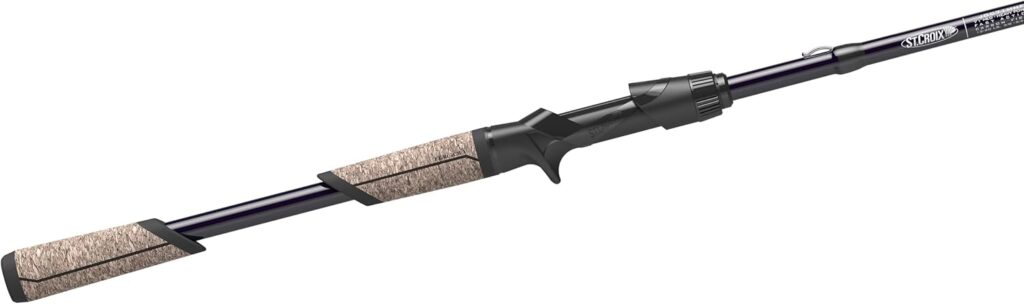
The St. Croix Mojo Bass is a bass rod by name, but a medium-heavy 7-footer with a fast action is one of the most practical pike spinning rod configurations you’ll find and St. Croix’s build quality makes this one earn the top spot. This isn’t accident. When you need a rod that handles 3/4- to 1.5-ounce lures for pike, chucks big swimbaits, and stays light enough to cast all day without your wrist falling off, the Mojo Bass configuration hits that mark cleanly.
The blank is built on St. Croix’s SCIII carbon fiber, processed with their Integrated Poly Curve tooling technology. What that means in practice is a blank with no weak transition points power moves consistently from the handle all the way through the tip, which matters when a pike takes a hard run and you’re fighting it at every angle. The Kigan Master Hand 3D guides with aluminum-oxide rings run line smoothly under the kind of wind tension you get on an exposed Minnesota lake in October. The Fuji DPS reel seat with premium cork split grip is a real differentiator at this price cork handles don’t turn into ice blocks in cold weather the way EVA foam does, and that matters when you’re fishing through cold fronts in September.
For Midwest pike fishing specifically, the 7’0″ MH Fast handles inline spinners in the 5/8- to 1-ounce range superbly. It loads fast enough for accurate pitching to weed openings and has plenty of spine to stop a running pike before it wraps around a cabbage stand. One honest limitation: this is a bass-engineered blank, and if you start throwing baits approaching 2 ounces regularly, you’ll feel the rod working closer to its upper range. For anglers targeting pike in the 24- to 38-inch class which covers most of what you’ll encounter on MN and WI lakes it’s an excellent choice. The 5-year transferable warranty is the best in its price class.
Best for: Spin fishermen targeting pike in the 24–40″ class with spinners, jerkbaits, and mid-size swimbaits. The best choice if you want a one-rod solution that handles northern-focused fishing without going full musky setup.
Price: ~$195 | ➡️ Check Price on Amazon
2. KastKing Perigee II 7’0″ MH Fast — Best Budget Pike Rod
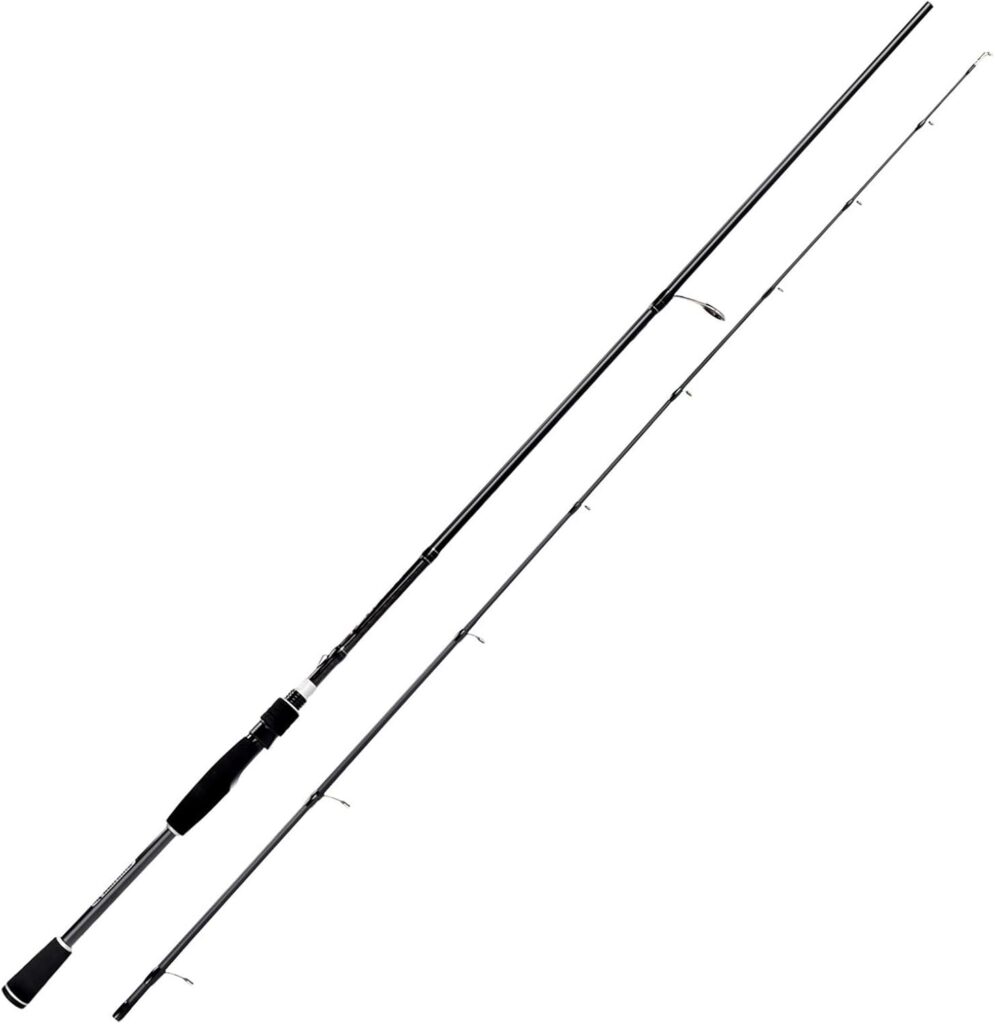
If you need a dedicated pike rod but don’t want to put $150+ into something that might catch a prop or get stepped on in the boat, the KastKing Perigee II is the honest answer. For $55, you get a rod built on Toray 24-ton carbon matrix blank technology, Fuji O-Ring guides, and KastKing’s Power Transition System in their two-piece design which genuinely eliminates the dead spot you feel in cheaper two-piece rods. The twin-tip design is worth noting: this rod ships with two interchangeable tips, giving you a medium and medium-heavy option in one package. That’s a real value add.
The blank is legitimately sensitive for the price. You can feel big inline spinners tracking and blade rotation through the handle, which tells you when your lure has picked up weeds important information when you’re fishing thick cabbage edges for pike. The EVA handles are comfortable for extended casting sessions. KastKing’s high-density EVA stays manageable in cold temperatures, though it doesn’t insulate your hand quite as well as cork in real cold weather. The graphite reel seat is functional but has less tactile feel through the blank compared to exposed-blank designs at higher price points.
The known weakness on this rod and it’s worth saying plainly is durability relative to more expensive options. Some users report guide issues and tip breakage under hard use, particularly if you’re repeatedly hammering big hooksets on fish with heavy wire or thick braid. KastKing’s customer service has a reasonable reputation for warranty work, but “send it back” is a less satisfying answer when pike season is running hot. That said, for a rod you bring as a backup, dedicate to a single lure setup on a multi-rod day, or hand to a fishing partner who doesn’t have their own pike gear, this thing earns its keep every time.
Best for: Budget-conscious anglers just getting into pike fishing, or as a dedicated backup rod for anglers who already have a premium setup. Good starter option for teenagers getting into northern fishing.
Price: ~$55 | ➡️ Check Price on Amazon
3. Ugly Stik Elite 7’0″ Medium Heavy — Most Durable Pike Rod
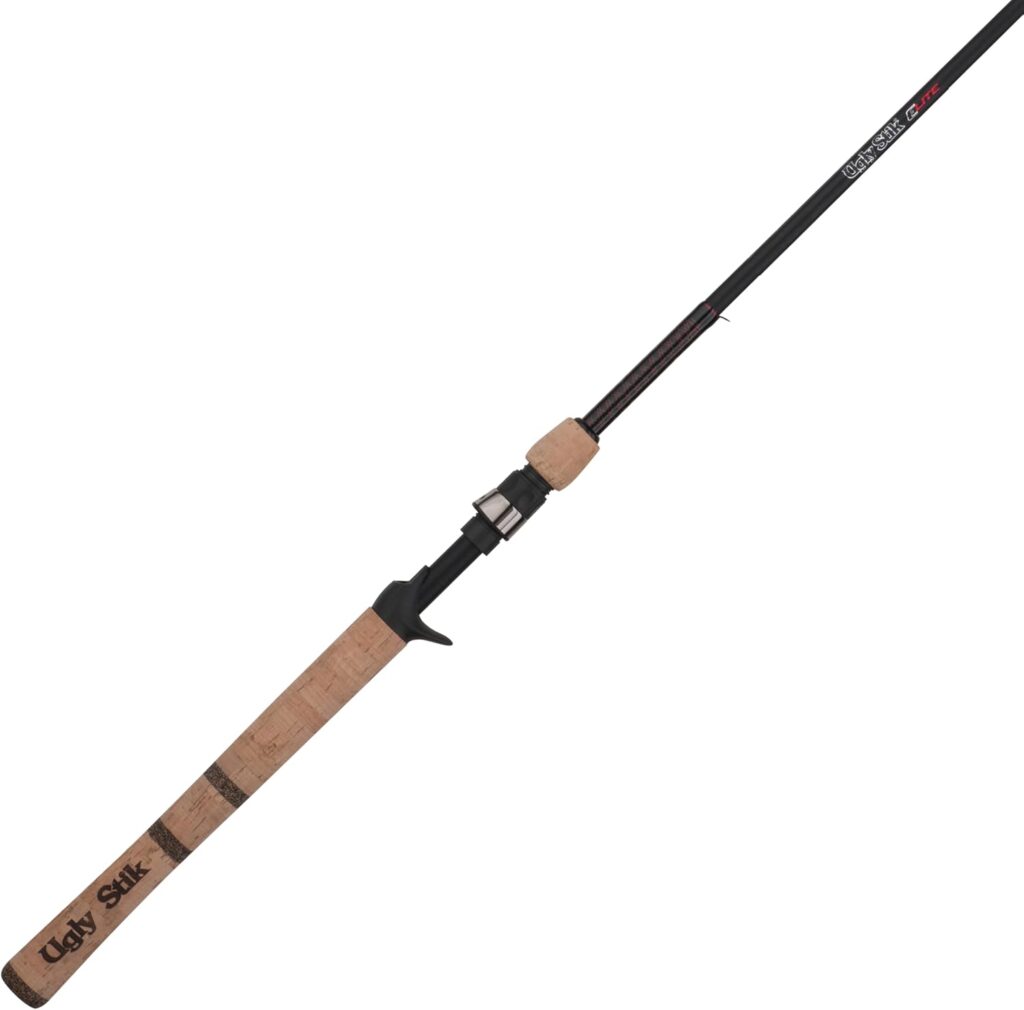
Ugly Stik has built rods since 1976, and the Elite series is the best version of the legendary tough-as-nails formula they’ve ever shipped. The 7-foot medium-heavy model carries an 8–17 lb line rating and extra fast action, which makes it a functional pike rod for anglers who prioritize durability above all else. And honestly, for the kind of abuse that happens on a full day of pike fishing rods hitting gunwales, getting set on seat clips in the rain, being handed off between anglers in a small boat Ugly Stik’s track record here is hard to argue with.
The secret is the Ugly Tech construction: a proprietary combination of graphite and fiberglass that makes these rods genuinely difficult to break. The Clear Tip design reinforces the most vulnerable part of any rod. Ugly Tuff one-piece stainless steel guides don’t have inserts to pop out a real concern with cheaper rods after repeated use with braided line under tension. The premium cork handle is a nice upgrade over the GX2, giving you better grip feel and cold-weather comfort. The 10-year warranty (for the Elite) is legitimately the best in this category and reflects how seriously the brand stands behind the build.
The honest tradeoff is sensitivity. The fiberglass content in the blank makes Ugly Stik Elite rods heavier and less sensitive than pure graphite rods at the same price. You won’t feel subtle bottom composition changes or light blade tick-through on a spinner. For pike fishing specifically, this matters less than it would for, say, walleye jigging pike hits aren’t subtle and you rarely need to read bottom structure through the rod tip. Where this rod excels is on the fight. It’s forgiving on the bend, keeps pressure on running fish without the brittleness that can snap a high-modulus blank during a violent pike headshake, and it won’t fail on you when you’re forcing a big fish away from a weed pile.
Best for: Anglers who are hard on gear, fish frequently in heavy cover, or want a rod that will genuinely outlast several seasons of pike abuse. The go-to for guides who need equipment that holds up under client use.
Price: ~$85 | ➡️ Check Price on Amazon
4. Abu Garcia Veritas 7’0″ MH Fast — Best Value for Serious Anglers
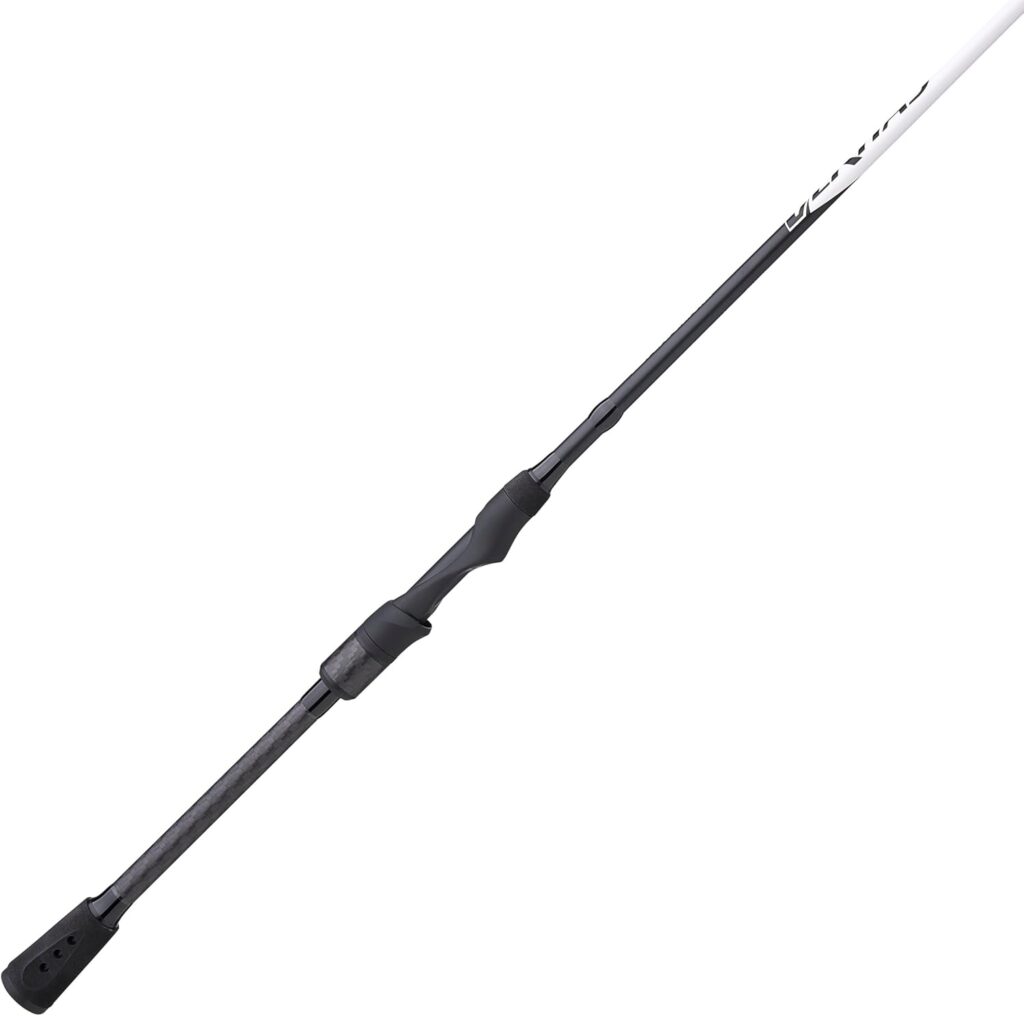
The Abu Garcia Veritas splits the difference between budget and premium in a way that makes it one of the best values in pike fishing rods. The current generation uses Powerlux 100 resin Abu Garcia’s proprietary nano-particle resin system that distributes evenly between carbon fibers to prevent cracks and improve impact resistance. The result is a blank rated 15% stronger and 5% lighter than previous Veritas generations. For a pike rod, that means you’re getting a blank that can handle the lateral stress of a running fish without the weight penalty that slows down your casting pace on long days.
The titanium alloy guides with zirconium inserts are the standout component here. Zirconium rings run smoother than aluminum-oxide under braid line, which reduces the heat buildup friction that can damage line over repeated long casts. On an exposed Lake of the Woods flat where you’re casting 60–70 feet all morning, that matters. The ROCS (Robotically Optimized Casting System) guide train is designed to maximize distance with lighter lures it spaces guides in a way that reduces line flutter on the cast. The Abu Garcia custom reel seat features exposed blank sections that transmit vibration directly to your hand. Coupled with closed-cell EVA split grips, it holds up in cold, wet hands better than cork alternatives during early fall pike season in northern Minnesota.
At $120, this rod is priced just above the impulse-buy range for most anglers, and it feels like it. The EVA handles are comfortable but won’t turn heads the way cork does on a premium rod. The 3-year warranty is shorter than St. Croix’s 5-year offering. But in terms of blank performance and guide quality per dollar spent, the Veritas is genuinely tough to beat at this price. If your budget is $100–$130 and you fish pike more than twice a month, this is where I’d spend the money.
Best for: Serious but cost-conscious pike anglers who fish regularly and want near-premium performance without crossing the $150 threshold. Pairs well with a mid-range spinning reel in the 3000–4000 class.
Price: ~$120 | ➡️ Check Price on Amazon
5. St. Croix Mojo Musky 7’6″ Heavy — Best for Big-Bait Pike Fishing
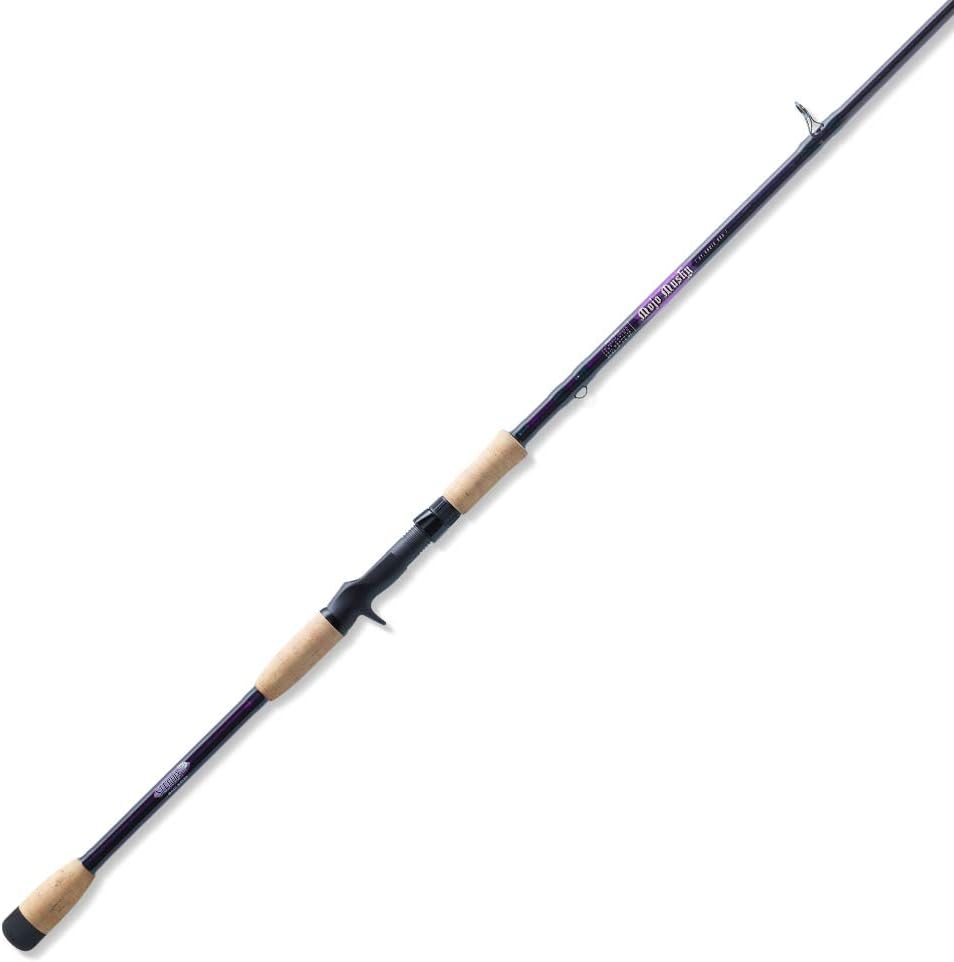
If you’re targeting pike in the 36-plus-inch class, throwing baits in the 2- to 4-ounce range, or fishing Minnesota border lakes and Canadian-adjacent water where genuinely large northern pike exist, this is the rod that makes sense. The St. Croix Mojo Musky is purpose-built for big-bait applications, and its 7’6″ length with heavy power changes the game for anglers who’ve been wrestling oversized lures on rods that were never designed for them.
The Mojo Musky uses St. Croix’s SCIII premium carbon blank processed through IPC (Integrated Poly Curve) mandrel technology the same blank engineering philosophy as the Mojo Bass, applied to a heavier-duty application. The result is a rod that throws big inline spinners, large rubber swimbaits, and glide baits with authority while staying lighter than comparable muskie rods in the $250+ range. Kigan Master Hand 3D guides with aluminum-oxide rings handle the braid-to-leader knot pass-throughs without drama. The Winn split-grip handle in multiple TRIGON handle styles gives you real grip options for different casting styles important when you’re lobbing heavy lures all day.
The extra 6 inches of length over a standard 7-foot rod isn’t just cosmetic. It generates more tip speed on the cast, which matters when you’re heaving 2- to 3-ounce lures across open water. It also gives you more leverage during figure-8 presentations at boatside the moment many trophy pike are lost. This rod earns its $199 price for anglers committed to targeting trophy-class fish on Minnesota’s big pike lakes: Red Lake, Lake of the Woods, Lake Vermilion, and similar water. For casual pike fishing with standard-size lures, it’s more rod than you need.
Best for: Dedicated pike hunters targeting trophy-class northerns, anglers who want a musky-crossover rod without paying $300+, or anyone fishing big open-water pike lakes regularly. The most specialized rod on this list buy it because you fish this way, not as a general-purpose pick.
Price: ~$199 | ➡️ Check Price on Amazon
6. Cadence CR7B 7’0″ MH Fast — Best Baitcasting Option
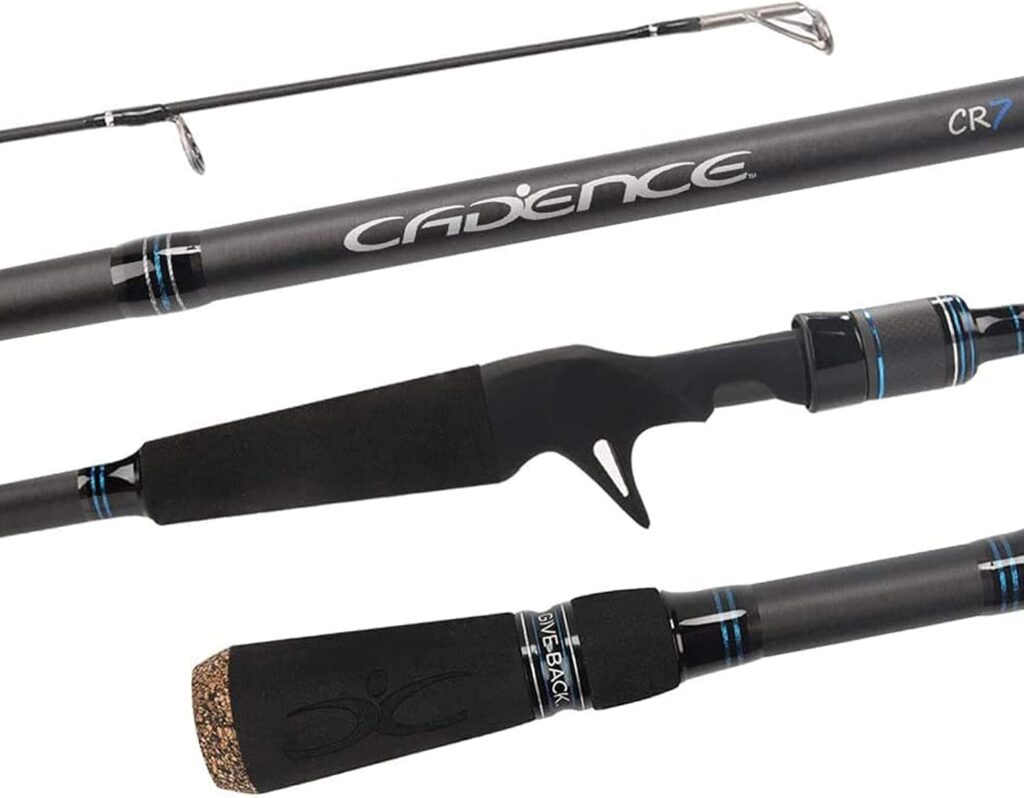
Most pike anglers run spinning gear. But if you prefer a baitcasting setup which gives you more line control on big bait presentations and better accuracy on repeated casts to specific targets the Cadence CR7B is a legitimately good rod at a price that makes sense. Built on a 40-ton graphite blank with an additional carbon wrap reinforcing the lower third, the CR7B delivers the sensitivity of a high-modulus blank with added strength exactly where you need it when fighting a pike that’s decided to bury itself in a weed mat.
The Fuji reel seat is the right call for a baitcasting pike rod it keeps your reel locked solid under the lateral stress that big lures and hard hooksets create. Stainless steel guides with SIC (silicon carbide) inserts run braid smoothly, reduce friction, and don’t degrade with repeated use the way cheaper guides do. The ergonomic EVA handle was clearly designed for all-day casting comfort, which matters on a technique like pike fishing where you’re making hundreds of casts with heavy lures across a day. Cadence’s CR7 line has earned a genuine following among Midwest bass and pike anglers in Wisconsin and Illinois, specifically because the components punch above their price class.
The compromise is that 40-ton graphite, while sensitive and light, can be more brittle than lower-modulus materials when subjected to the kind of impact stress pike fishing produces dropping the rod, banging it on a boat hull, or snapping the hookset on a fish that doesn’t eat. The 2-year warranty is shorter than the competition. Treat it well and it rewards you. Fish it carelessly and it’ll remind you why it’s an $80 rod. One practical note: if you run braided line (which you should for pike), go with 30 lb braid rather than pushing toward 50 lb on this rod.
Best for: Baitcasting anglers who want a solid pike rod without a premium price tag. Also works well for larger walleye applications on the same bodies of water where pike are present, making it a versatile two-target rod.
Price: ~$80 | ➡️ Check Price on Amazon
Pike Fishing Rod Comparison Table
| Rod | Price | Length | Power | Action | Lure Weight | Best For |
|---|---|---|---|---|---|---|
| St. Croix Mojo Bass | ~$195 | 7’0″ | Med-Heavy | Fast | 3/8–3/4 oz | All-around spinning, mid-size pike |
| KastKing Perigee II | ~$55 | 7’0″ | Med-Heavy | Fast | 1/4–1 oz | Budget buyers, beginners |
| Ugly Stik Elite | ~$85 | 7’0″ | Med-Heavy | Extra Fast | 1/4–3/4 oz | Durability, hard use, guides |
| Abu Garcia Veritas | ~$120 | 7’0″ | Med-Heavy | Fast | 1/4–3/4 oz | Value-focused serious anglers |
| St. Croix Mojo Musky | ~$199 | 7’6″ | Heavy | Fast | 1–4 oz | Trophy pike, big baits |
| Cadence CR7B | ~$80 | 7’0″ | Med-Heavy | Fast | 3/8–1 oz | Baitcasting setup |
How to Choose the Right Pike Fishing Rod
Match Power to the Pike You’re Actually Chasing
The pike in a suburban Wisconsin lake that’s averaging 24 inches and eating half-ounce spinnerbaits is not the same target as the 42-inch northern in a Canadian-border Minnesota lake that’s committed to eating a 3-ounce rubber bait. Don’t buy for fish you imagine buy for the fish you actually catch. Medium-heavy spinning rods in the 7-foot range handle the overwhelming majority of Midwest pike fishing. Step up to heavy power and 7’6″+ only when you’re genuinely throwing baits that exceed 1.5 ounces on a regular basis.
Spinning vs. Baitcasting for Pike
Spinning gear wins for most pike anglers because large spinning reels handle braid cleanly, require less tuning than baitcasters, and perform better in cold weather when hands get stiff. A 3000–4000 class spinning reel paired with any of the spinning rods on this list gives you a functional pike setup with minimal fuss.
Baitcasting gear makes sense if you’re making precision casts to specific targets casting pike spoons into timber gaps on river pike, or dropping swimbaits into weed openings with accuracy that requires thumbing the spool. If that describes your fishing, the Cadence CR7B is worth the setup investment.
Don’t Underestimate Cold-Weather Handle Materials
September through freeze-up is prime time for big Midwest pike. Mornings on a northern Minnesota lake in late October run cold air temps in the 30s, wet hands from handling fish, and wind making everything worse. Cork handles hold some warmth and don’t become slick when wet. EVA handles are more durable but transmit cold more readily. If you fish fall pike regularly, the cork-handled rods (Mojo Bass, Ugly Stik Elite) have a real practical advantage.
Wire Leader Compatibility
Any rod you choose for pike should pair with a wire or heavy fluorocarbon leader. The Minnesota DNR records consistently show pike in the 36-inch-plus class on major lakes across the state fish that will cut through 20 lb fluorocarbon without difficulty. Your rod choice doesn’t change this, but your leader setup does. Use rods with guides large enough for braid-to-leader connection knots to pass cleanly. All six rods on this list clear that bar.
When to Spend More vs. Save
Spend more when you fish pike more than once a week, you’re chasing trophy-class fish specifically, or you want a rod that does double duty in other presentations (bass fishing, walleye jigging) without compromise. The St. Croix Mojo Bass and Abu Garcia Veritas sit in the range where you get real performance improvements over budget options.
Save money when pike fishing is occasional a couple of trips per year mixed in with your other fishing or you’re buying a second rod to cover a specific lure presentation while your primary rod handles another. The KastKing Perigee II and Cadence CR7B both deliver honest performance for their price.
Midwest-Specific Pike Fishing Considerations
Wind and Long-Cast Requirements
Minnesota and Wisconsin pike lakes are often exposed. When Green Bay is blowing 15 mph or Red Lake has a building southwest wind, casting accuracy and distance matter. Longer rods (7–7’6″) with fast action generate more tip speed, which cuts through wind better than moderate-action rods. All six rods here are in the 7-foot range for exactly this reason.
Weed-Edge Applications
The majority of Midwest pike fishing happens along cabbage weed edges, milfoil beds, and emerging reed lines. Your rod needs to handle the weight of big lures while giving you the backbone to horse a fish away from cover before it can wrap. Medium-heavy power with a fast tip is ideal the tip loads and casts cleanly, and the lower-section spine stops runs before the fish reaches the weeds.
Ice-Out Timing
Early season pike fishing the two to three weeks right after ice-out is some of the best of the year on Minnesota lakes. Shallow, warming water draws pike to bays and flats. This fishing happens in cold, often wet conditions, and you want a rod that handles gracefully with cold hands and partners well with a larger reel spooled with 30 lb braid. All the spinning rods on this list work well in this context. Pay attention to handle material in cold conditions as noted above, cork outperforms EVA when it’s genuinely cold.
Looking for More
If you’re building out a full pike setup, the 5 Best Fishing Rod & Reel Combos For The Midwest covers matched rod and reel pairings worth considering several of the combos there work directly with the spinning rods in this article.
A few rods on this list, especially the St. Croix Mojo Bass cross over naturally into bass applications. The Best Bass Fishing Rods For Midwest Anglers breaks down how that lineup performs specifically for largemouth and smallmouth on Midwest lakes.
And if you’re fishing the same river systems where big pike hold the Mississippi pools, the St. Croix, the Wisconsin River the Best Catfishing Rods For The Mississippi River is worth a read. A lot of the same rod characteristics that handle big catfish work for serious pike applications too.
Seven feet is the most practical length for the majority of Midwest pike fishing, and it’s what most experienced anglers run. It gives you enough casting reach for open-water presentations which matter on large, exposed lakes where pike are holding on weed edges 60 to 70 feet from the boat while remaining manageable in a smaller fishing boat. If you consistently throw larger lures above 1.5 ounces or want additional leverage for figure-8 presentations at boatside, a 7’6″ rod like the St. Croix Mojo Musky makes sense. Rods under 7 feet put you at a casting distance disadvantage on most Midwest pike water without giving you a meaningful accuracy benefit in return.
You can, and plenty of anglers do. But there are specific limitations worth understanding. Most bass rods are engineered for lures in the 3/8- to 5/8-ounce range with power ratings optimized for bass-size fish. The bigger inline spinners, swimbaits, and spoons that produce Midwest pike consistently fall above that range typically from 3/4 ounce to 2 ounces. Using a bass rod in this range pushes the blank close to or beyond its design limits, which affects casting accuracy, sensitivity during the retrieve, and your ability to generate the hookset force pike require. The St. Croix Mojo Bass on this list is technically a bass rod, but its medium-heavy MH configuration in the 7-foot format happens to align closely with what pike fishing needs which is why it earns the top spot here.
Thirty-pound braided line is the standard starting point for Midwest pike fishing, and it works on all six rods in this article. Braid has virtually zero stretch, which improves sensitivity and makes hooksets more effective when you’re driving treble hooks into a pike’s bony mouth. Pair your braid with a wire leader (12–18 inches of coffee-colored 20 lb wire) or a heavy fluorocarbon leader (30–40 lb). Pike teeth cut through lighter fluorocarbon and monofilament in short order on fish above 30 inches. Don’t skip the leader to save weight you’ll donate lures to the lake. Most anglers use a snap swivel at the leader connection for quick lure changes, which also eliminates line twist from spinning blades.
It depends on how often you fish and how seriously you take it. The honest entry point for a functional, durable pike rod is $80–$85 which is where the Ugly Stik Elite and Cadence CR7B sit. At this price you get real fishable equipment that won’t embarrass you on the water. The value sweet spot is $120–$145, where the Abu Garcia Veritas delivers near-premium blank quality and guides. Above $150, you’re paying for warranty coverage, brand-specific blank technology, and component upgrades that matter to serious anglers who fish frequently. The St. Croix Mojo Bass at $195 justifies its price for anglers who are out multiple times a month. Spending below $55 is where I’d pump the brakes the durability and component quality dropoff below that threshold is real.
Three things cause lost pike: soft hooksets into bony mouths, fish wrapping around weeds before you can turn them, and hook pulls during the aerial headshakes pike throw near the boat. Rod choice addresses the first two directly. A fast-action medium-heavy blank loads quickly for decisive hooksets rather than absorbing the motion in a soft, parabolic blank. The medium-heavy lower section gives you the spine to apply sustained pressure and turn a fish before it reaches cover. For the third problem boatside headshakes a rod with some tip flex helps maintain constant pressure rather than creating a momentary slack that lets trebles pull free. The moderate-to-fast tip designs on most rods in this list balance these two competing needs better than very stiff or very soft extremes.
Rinse your rod with fresh water after every use, especially if you’ve been fishing in water with significant algae or organic content the kind you find in Midwest weedy pike lakes. Check your guides periodically for nicks or cracks in the ring inserts; these damage your line during casts and retrieves, and a cracked guide on a braid setup will cut your line under load. Store rods horizontally or in a vertical rack where tip weight isn’t bending them over time. Transport them in rod tubes if they’re going in the truck bed or being transported loose. The biggest longevity factor is avoiding the tip-section impacts that come from rods rolling around in boats, being stepped on, or getting caught in doors. The Ugly Stik Elite is most forgiving of this kind of abuse. The higher-modulus blanks on the St. Croix and Abu Garcia Veritas are more sensitive but less tolerant of physical impacts.
