

Most anglers I know have a drawer full of busted spinning reels they bought on the cheap. A cracked bail wire here. A drag that started slipping on the third trip out. A handle that wobbles just enough to drive you crazy on a long retrieve. The budget reel market has a reputation, and it earned it the hard way, by putting a lot of junk on the shelf between the few things worth buying.
But the junk isn’t the whole story. The sub-$50 reel category has gotten genuinely good over the last five or six years. Brands that used to reserve real engineering for their $100-and-up models, Daiwa, Shimano, Abu Garcia, started pushing real technology down into their entry-level lines. That shift happened because the competition from direct-to-consumer brands like KastKing forced it. The result is that a $35 reel in 2026 performs closer to what a $75 reel performed a decade ago. That’s good news if you know which ones to trust.
I’ve run these five reels across enough water to give you a straight read on each one, what the specs actually mean for fishing, where each one earns its price, and where each one shows its limits. I’m not going to tell you they’re all great. Some of them are better than others. One of them, I’ve used long enough to call it a genuine recommendation. Here’s the breakdown.
Our Picks at a Glance
| Award | Reel | Price |
|---|---|---|
| Best Overall Budget Pick | Daiwa Crossfire LT | $34.99 |
| Best for Long-Term Durability | Okuma Avenger B Series | $42.94 |
| Best Affordable Highly Reviewed | KastKing Centron | $36.99 |
| My Favorite | Abu Garcia Max X | $39.99 |
| Top Contender | Shimano Sienna FG | $34.99 |
What Makes a Budget Reel Worth Buying — And What Kills Them Fast
Before getting into the picks, it’s worth talking about what actually separates a good budget spinning reel from a bad one. Because “budget” covers a lot of ground, and the failure points are almost always the same regardless of brand.
The Drag Is Everything
The drag system is the single most important mechanism on a spinning reel, and it’s the first place budget manufacturers cut corners. A drag that engages smoothly and releases line at consistent pressure protects your line and keeps fish pinned. A drag that surges, that grabs, slips, then grabs again, loses fish and breaks tippets. When you’re fighting a 5-pound walleye on 8-pound fluorocarbon, a drag spike of even a pound can mean a snapped line.
The Recreational Boating and Fishing Foundation, which tracks participation trends across the country, consistently finds that poor gear experiences are one of the primary reasons new anglers quit fishing after one or two seasons. A reel that works against you in the fight is the fastest way to frustrate a beginning angler out of the sport. That matters to me because most of the people asking about sub-$50 reels are either new anglers or anglers setting up a second or third rod for kids or guests.
Good drag materials at this price point include carbon fiber washers (better) and felt washers (still functional and preferred for finesse applications in many Japanese reel designs). What you want to avoid is a drag that’s built on a single thin washer with no real surface area, those are the ones that start slipping the moment the spool heats up.
Bearings: Count Doesn’t Tell the Full Story
Every budget reel box brags about bearing count. Nine bearings sounds like a lot. But a reel with three quality, well-sealed bearings will outlast and outperform one with nine cheap, corrosion-prone bearings in the real world, especially in Midwest conditions where you’re dealing with temperature swings from early spring through late fall.
What matters is whether the bearings are shielded or sealed, how well the reel body keeps water and debris out, and whether the ball bearings sit on a rigid gear train or one that flexes under load. The International Game Fish Association’s tackle guidelines note that reel durability under sustained load is one of the key factors in consistent performance for competitive and recreational anglers alike. At this price range, that translates simply: look for solid gear bodies and tight tolerances, not just a high bearing count.
Gear Quality and Body Material
The gear train is where the second round of cost-cutting happens. Cheap reels use aluminum-alloy or brass gears that wear quickly under sustained pressure. Better budget reels, and this applies to several picks on this list, use machined cold-forged gears that hold tighter tolerances and last significantly longer under load.
Body material matters for weight and rigidity. Graphite (XT-7 composite, or similar) keeps weight down but flexes slightly under heavy load, which is why graphite-body reels at this price range feel subtly different from aluminum-body reels when you’re grinding a fish. Most sub-$50 reels use graphite bodies. That’s fine for Midwest freshwater use. What you’re watching for is whether the gear box inside that graphite shell is built with enough rigidity to maintain alignment through seasons of use.
The Bail Wire Problem
Budget reels fail at the bail wire more than anywhere else. Thin bail wire bends under pressure, and once it’s even slightly out of round, it introduces line twist on every cast. The American Sportfishing Association recognizes line twist as one of the top angler frustrations leading to tackle abandonment. A thick, stainless bail wire paired with a quality line roller bearing is what you want to see. If a review says the bail feels flimsy out of the box, believe it, it’ll only get worse.
The 5 Best Fishing Reels Under $50 for Midwest Anglers
1. Daiwa Crossfire LT — Best Overall Budget Pick
Price: ~$34.99 | ➡️ Check Price on Amazon
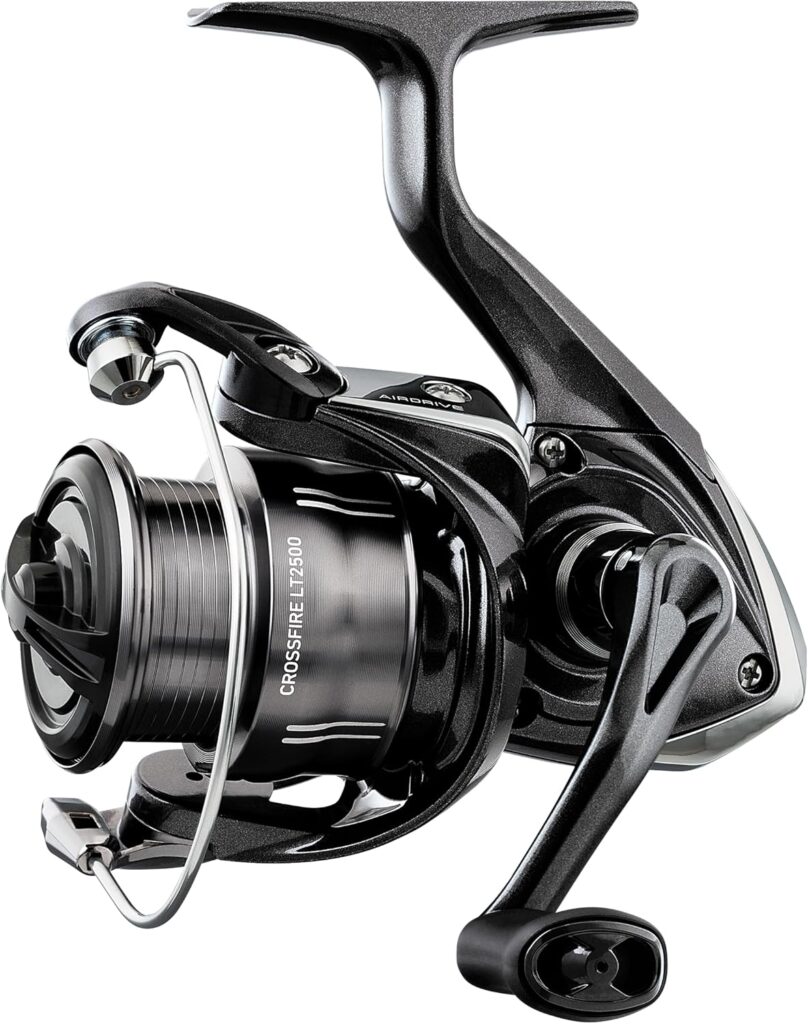
The Daiwa Crossfire LT is the reel I’d point most Midwest anglers toward first, and not because it’s the cheapest option on this list. I’d point you toward it because Daiwa built this reel on the same engineering platform they use in reels that cost three times as much, then figured out where they could trim the budget without gutting performance. The result is a reel that casts better, drags smoother, and handles Midwest freshwater better than anything else at this price point.
The headline feature is Daiwa’s LT (Light but Tough) construction. The Crossfire LT uses ZAION composite in the Airdrive rotor, which cuts weight by up to 20% compared to the previous Crossfire design. On a reel you’re holding all day while working a jigging rod for walleye or running a drop-shot on a bass flat, that weight reduction is real. It doesn’t sound like much until you’re three hours into a slow walleye bite on Leech Lake in June with your arm starting to fatigue.
What works here starts with the ATD (Advanced Tournament Drag) system. Daiwa lubricates this drag with a proprietary grease formula that produces smooth, consistent drag pressure without the grab-and-slip that kills budget reels. The drag on the 2500 and larger models uses carbon fiber washers. The 1000 and 2000 sizes run a single felt washer, but honestly, for light trout and panfish applications, that felt washer is the right choice. It sets drag pressure smoothly and protects light tippets better than a stiffer carbon system. The cold-forged, precision-milled Digigear system is the other standout. Daiwa machines these gears to tighter tolerances than what most competitors put in this price bracket, and it shows in how the reel retrieves under load. There’s no grinding, no wobble, just a clean turn.
The Midwest-specific performance shines in casting distance and line lay. Daiwa’s LT spool design is slightly tapered, with a low-profile lip that reduces friction on the cast. In actual fishing conditions, casting into wind at Mille Lacs, throwing light jigs on MN trout streams, this reel casts measurably farther and with fewer wind knots than the competition. The line lay is tight and even, which means fewer tangles on the retrieve.
The compromise here is a 1+1 bearing count, one main bearing and one roller bearing. That’s genuinely on the low end, and some anglers will feel a slight roughness in the retrieve under sustained load compared to reels with more bearings. The graphite body can also flex slightly when you’re fighting larger fish. For walleye to 6 pounds, bass to 4 pounds, and Driftless trout in any size, this reel handles the job without complaint. If you’re regularly chasing bigger fish on heavier line, size up to the 4000 or 5000 and the frame stiffens up meaningfully.
Best For: Anglers who want genuine engineering at entry-level cost. Trout, walleye, crappie, bass. This is the reel I’d put in a beginner’s hands and feel good about it.
Price: ~$34.99 | ➡️ Check Price on Amazon
2. Okuma Avenger B Series — Best for Long-Term Durability
Price: ~$42.94 | ➡️ Check Price on Amazon
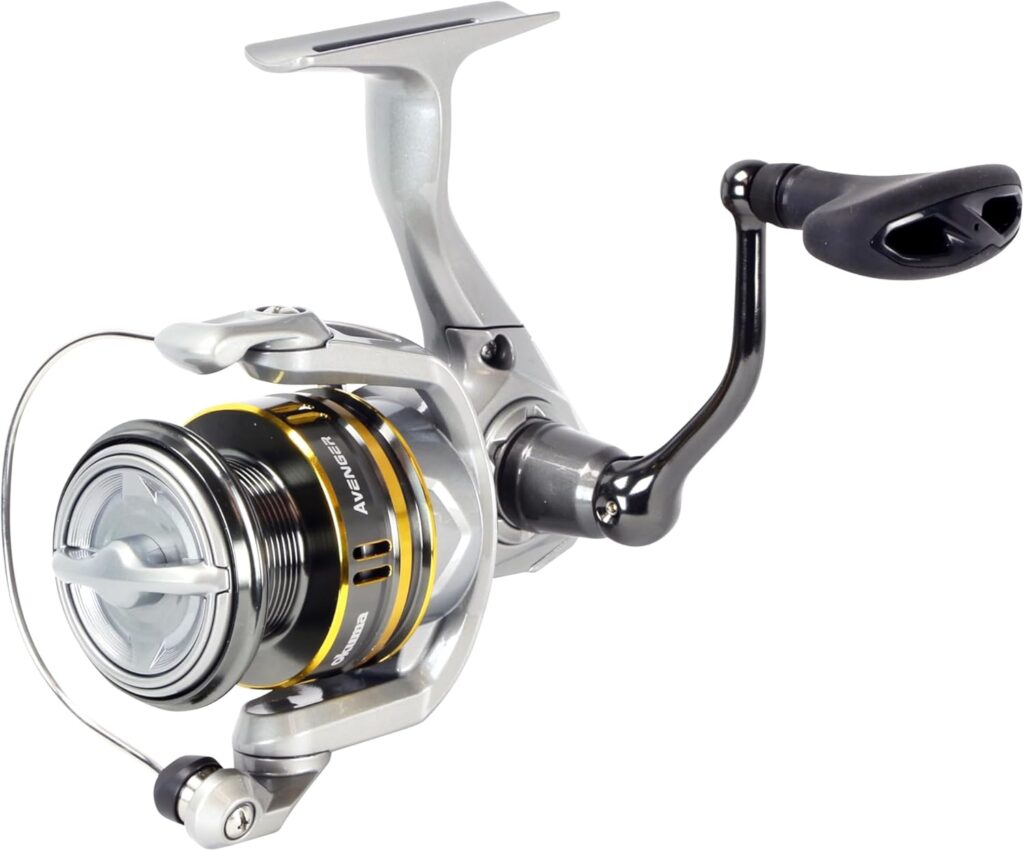
The Okuma Avenger B is the reel that surprises people who buy it based on price and then end up fishing it for five seasons without a complaint. Field & Stream named it the Best Budget spinning reel in their independent test, beating out options from Abu Garcia, Shimano, and Daiwa, and if you spend any time in fishing forums or gear groups, the Avenger consistently shows up as the reel people recommend when the question is “what’s the toughest budget spinning reel you’ve used?” That reputation wasn’t built on marketing. It was built on seasons of abuse.
What works here is the combination of a 7-bearing system and Okuma’s multi-disc, Japanese oil-felt drag. Seven bearings at this price point is not common, and Okuma’s execution is genuinely good, the retrieve feels noticeably smoother than most sub-$50 reels right out of the box. The drag runs up to 22 pounds of pressure on larger models, which is overkill for most Midwest freshwater applications, but it means you’re never even close to maxing out this drag system on a 7-pound walleye or a chunky largemouth. A drag you’re running at 30% capacity stays smooth and consistent. A drag you’re running at 90% capacity is where budget reels start to fail.
The corrosion-resistant body and metal handle arm are the durability advantages that separate this reel from the pack. The Crossfire LT gives you better technology in some areas, but the Avenger B builds in more physical robustness, particularly in the bail assembly and handle connection. Users who run the Avenger B hard, including catfish guys on the Mississippi River and crappie anglers who keep a reel in the boat all season, consistently report multi-year longevity with basic maintenance.
For Midwest-specific conditions, the Avenger B performs reliably in the cold and wet early-season fishing that Minnesota and Wisconsin dish out in April and May. The drag system stays predictable in cold weather when some cheaper reels get notchy. It’s also not a light reel, it runs heavier than the Crossfire LT, so anglers who fish ultralight rigs for stream trout may want to consider the smallest size carefully.
The compromise with the Avenger B is that it’s the heaviest reel on this list and the drag, while smooth overall, has less fine-tuned sensitivity than pricier spinning reels. Field & Stream’s reviewer noted it has fewer drag-knob clicks per adjustment than mid-range to high-end reels, meaning drag adjustments happen in larger increments. For finesse fishing where precise drag settings matter, that can be frustrating. For the majority of Midwest fishing, pitching jigs for walleye, working plastics for bass, drifting for crappie, it’s a non-issue.
Best For: Anglers who fish hard and want gear that lasts. The Avenger B is the right pick if you’re setting up an extra rod for all-season use and want a reel that comes back next spring working exactly the same as it did when you put it away in October.
Price: ~$42.94 | ➡️ Check Price on Amazon
3. KastKing Centron — Best Affordable, Highly Reviewed Option
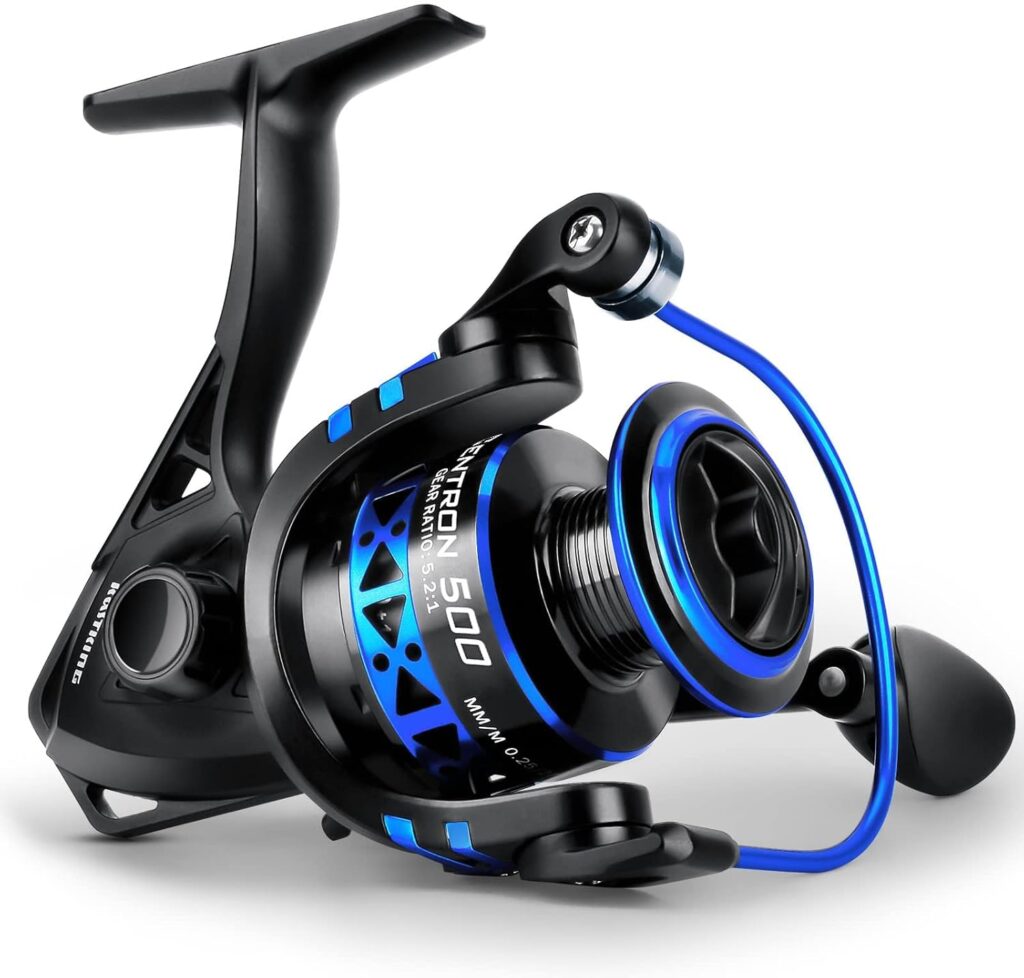
Price: ~$36.99 | ➡️ Check Price on Amazon
The KastKing Centron is the reel that gets the most Amazon reviews in this price bracket, and a lot of those reviews are genuinely positive. It’s not hard to understand why. Out of the box, the Centron is smooth. Nine ball bearings in a sub-$40 reel produces a retrieve that feels punching well above its price class when you first pick it up. The anodized aluminum spool is nicely finished, light, and handles both mono and braid without issue. It casts well. It looks like a real reel.
What works: the 9-bearing system is the headline, and it delivers, the initial smoothness is genuine. The anodized aluminum spool helps line flow off cleanly, which improves casting distance on light setups. KastKing offers the Centron in sizes from 500 (ultralight panfish work) up to 5000 (heavier applications), and the size range makes it easy to match to the rod you’re already running. The machined aluminum handle knob is a step up from the rubber/composite knobs you see on cheaper reels. KastKing also backs the reel with a 12-month warranty and has a reasonably responsive customer service team, which matters when you’re buying budget gear.
For Midwest-specific applications, the Centron performs well for light to medium work, crappie fishing, stream trout, bass with finesse rigs. It’s a capable panfish reel and a solid choice for an angler building out their first few setups on a tight budget.
The compromise here is durability under sustained use. This is where I’ll be straight with you: the KastKing Centron earns its rave reviews from anglers who fish occasionally or who use it primarily for light applications. Anglers who fish heavy schedules, multiple days per week over a full season, start reporting bearing noise and retrieve roughness earlier than the Daiwa or Okuma. One Oregon fishing forum thread summarized it plainly: some daily-use anglers reported needing to keep oil on hand to keep the bearings running smoothly. Nine bearings sounds like a durability advantage, but nine cheap, poorly-sealed bearings degrade faster than three quality sealed ones. The Centron’s drag system, while functional, also lacks the smooth consistency of the Daiwa ATD at heavier drag settings.
If you’re a casual angler, a dock fisherman, or someone setting up a kid’s first outfit, the Centron is an excellent value. If you fish hard, multiple days a week, from ice-out through freeze-up, spend the extra few dollars and step up to the Daiwa or Okuma.
Best For: Casual freshwater anglers, beginners, and panfish/crappie setups where light use and smooth out-of-box performance matter more than long-term durability.
Price: ~$36.99 | ➡️ Check Price on Amazon
4. Abu Garcia Max X — My Favorite
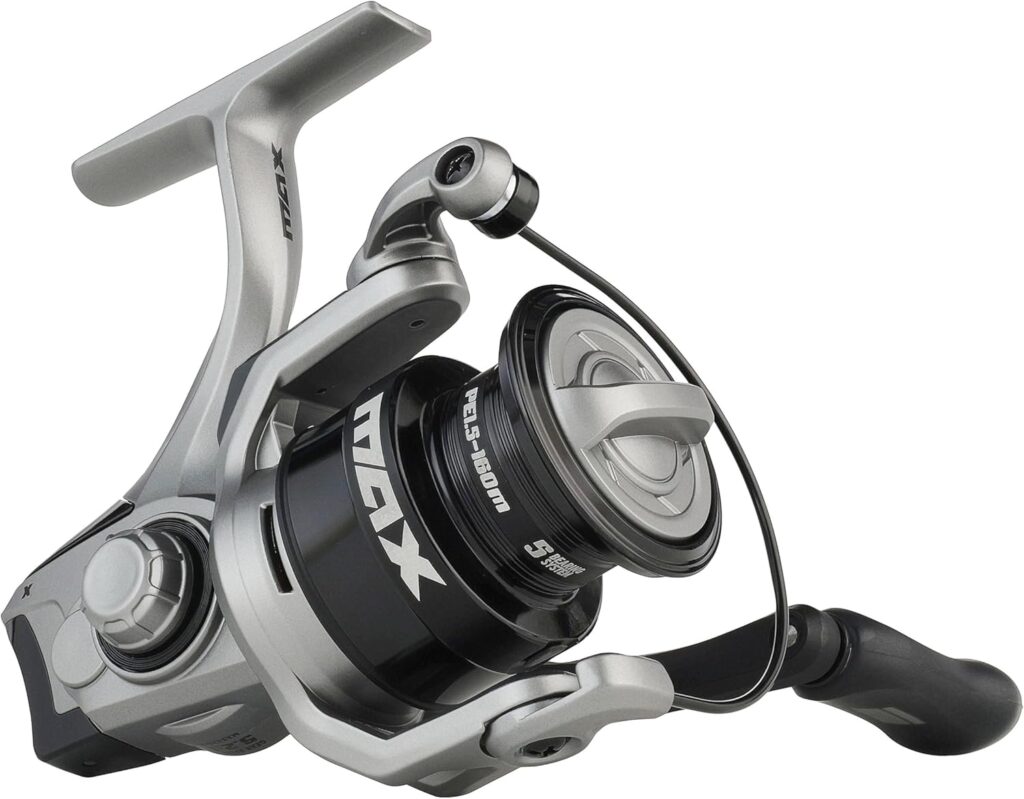
Price: ~$39.99 | ➡️ Check Price on Amazon
Abu Garcia released the Max X as part of a full redesign of their entry-level Max line in 2024, and it brought real technology down from their premium Zenon and Revo lines into a reel that costs less than $40. That’s the honest reason I ended up putting this reel on more of my setups than I expected to. When a brand filters actual engineering down into an entry-level price point rather than just changing the cosmetics, you notice it on the water.
What works: the hybrid V-Spool and hybrid V-Rotor design, borrowed directly from the Zenon series, reduces rotor weight and start-up inertia. Lower start-up inertia means the drag engages immediately and smoothly when a fish runs, there’s no hesitation, no initial surge. For Midwest walleye fishing where a fish can turn and accelerate fast in current, that immediate drag response matters. The Rocket Line Management system and Rocket Spool Lip Design reduce wind knots meaningfully, I’ve run the Max X on 8-pound fluorocarbon for walleye and braid for bass without fighting the kind of wind knots I dealt with on cheaper options. The asymmetric body design gives the reel a slightly more compact feel in hand, which matters on an all-day jigging session.
The machined aluminum, braid-ready spool is a genuine value-add at this price. You can tie braid directly to the spool without backing, a nice touch that removes a step most anglers skip incorrectly anyway, which causes slippage under heavy drag loads.
For Midwest-specific performance, the Max X handles walleye and bass applications well. It’s a smooth, quiet reel that fishes comfortably in the cold. I’ve used it on early-season walleye trips into late April in Minnesota, when water temperatures were still running below 50°F, and the retrieve stayed consistent.
The compromise is the graphite body and rotor. Graphite at this price keeps weight down but means the reel shows wear faster under heavy use compared to the Okuma Avenger’s more robust build. A few user reviews, including one from Abu Garcia’s own site, flagged a handle connection issue on the Max X. It’s not a universal complaint, but it’s worth checking that the handle is fully seated and snug when you first set up the reel. The 4+1 bearing count is also on the lower side compared to the Centron’s 9, though the quality of the Max X’s bearings is meaningfully better.
Best For: Anglers who want real engineering at a budget price, especially for walleye and bass setups. The Max X is my personal go-to on this list when I need a workhorse reel under $40 that doesn’t fight me on the water.
Price: ~$39.99 | ➡️ Check Price on Amazon
5. Shimano Sienna FG — Top Contender
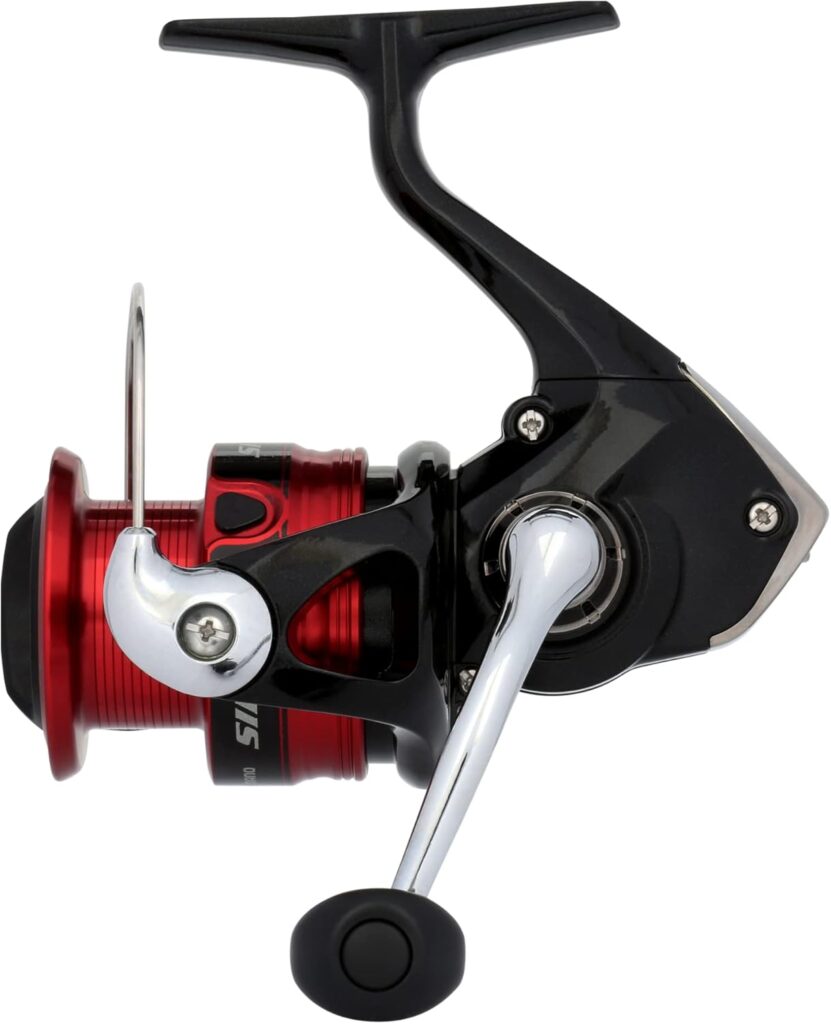
Price: ~$34.99 | ➡️ Check Price on Amazon
Shimano’s name carries weight in fishing, and not without reason. They’ve been refining their manufacturing process and gear technology for over 50 years, and even at the entry level, you can feel the institutional knowledge in how the Sienna FG is built. This reel is the one to put in front of an angler who asks “is there a Shimano in this price range worth using?” The answer is yes, but with the context it deserves.
What works: the Propulsion Line Management System is real. Shimano developed this spool lip design through tens of thousands of casting tests and computer simulations, and it delivers longer casting distances with fewer backlashes and wind knots at this price point. If you’re fishing open-water situations where casting distance matters, throwing spoons on a walleye flat, casting toward structure on a bass lake, the Sienna FG casts farther and more cleanly than reels without this system. The G-Free body shifts the reel’s center of gravity closer to the rod, reducing fatigue on long casting days. Super Stopper II delivers instant anti-reverse with no backplay. The XT-7 graphite body is well-built for its price and size.
The Sienna FG comes in sizes from 500 (genuinely ultralight, a perfect panfish and Driftless stream trout reel) up to 4000. The 500 and 1000 sizes are where this reel makes the most sense: light, smooth, well-balanced on an ultralight rod, delivering that distinctly Shimano feel that gear-heads recognize.
For Midwest-specific conditions, the Sienna FG shines on trout streams, crappie water, and panfish lakes. It handles light lines and light lures with the kind of precision you’d expect from a Japanese-engineered reel. On Driftless Area stream trout in spring or crappie slabs in the shallows, the Sienna FG is a pleasure.
The compromise is that this reel runs only 3+1 bearings, the lowest bearing count on this list, and user reviews reveal a recurring issue in the 1000-series models specifically: some anglers report a stuttering retrieve after a few outings, particularly on the 1000 size. One guide who bought three of the 1000-size models for his clients reported the same stuttering issue across all three. This doesn’t appear to be universal, plenty of users report long, smooth service, but it’s worth knowing before you buy three for the boat. Shimano’s internal plastics also show their cost cuts more clearly than the Daiwa or Abu Garcia options at similar prices.
Best For: Trout and panfish anglers who want a Shimano-engineered reel at entry-level cost. The 500 and 2500 sizes are the most consistently reviewed. A solid choice for an angler who wants the brand credibility and the real casting technology that comes with the Shimano name.
Price: ~$34.99 | ➡️ Check Price on Amazon
Comparison Table
| Reel | Price | Bearings | Drag System | Body Material | Best For | Weight (2500 size) |
|---|---|---|---|---|---|---|
| Daiwa Crossfire LT | $34.99 | 1+1 | ATD (Carbon/Felt) | ZAION composite | Best all-around | 9.0 oz |
| Okuma Avenger B | $42.94 | 7 | Oil-felt multi-disc | Graphite/Metal handle | Durability, heavy use | 9.5 oz |
| KastKing Centron | $36.99 | 9 | Multi-disc | Graphite | Casual/budget | 9.0 oz |
| Abu Garcia Max X | $39.99 | 4+1 | Multi-disc | Graphite | Walleye/bass, tech-forward | 8.5 oz |
| Shimano Sienna FG | $34.99 | 3+1 | Multi-disc | XT-7 Graphite | Trout/panfish, casting | 8.8 oz |
How to Choose a Budget Spinning Reel for Midwest Fishing
Match the Reel Size to the Species — This Is Not Optional
The number one mistake I see Midwest anglers make with spinning reels is running the wrong size for the target species. Reel size affects line capacity, drag power, and the overall balance of the rod and reel setup. Get this wrong and even a quality reel feels awkward.
Here’s the quick guide for Midwest applications:
1000–2000 size: Driftless stream trout, panfish, crappie on light line (4–8 lb). Pairs with ultralight or light-action rods, 6–7 feet. These sizes balance well on a 6’6″ ultralight and give you the line control you need for delicate presentations.
2500–3000 size: This is the Midwest all-around size. Walleye on 8–12 lb mono or fluorocarbon. Bass on 10–15 lb mono or 15–20 lb braid. Runs well with medium-light to medium rods in the 6’6″ to 7′ range. This is the size I have on most of my setups.
3500–4000 size: Larger walleye and bass applications, northern pike on lighter presentations, salmon and steelhead work. Handles heavier braid and stronger drag settings without the body flexing on larger fish.
Gear Ratio: What It Means in Practice
Gear ratio tells you how many times the spool rotates per handle turn. A 5.2:1 ratio means the spool spins 5.2 times per crank. Most reels on this list run in the 5.0:1 to 5.3:1 range, which is a medium speed, ideal for jigging, live bait work, and most finesse applications where you want to slow-roll a presentation and feel what’s happening. In-Fisherman’s gear selection guide breaks down how retrieve speed affects presentation control across different species, and the core takeaway holds here: medium-ratio reels in the 5.0:1–5.3:1 range are the most versatile starting point for Midwest freshwater fishing.
If you’re fishing reaction baits, in-line spinners for pike, fast-rolling crankbaits for early-season walleye, a higher ratio in the 6.0:1 range picks up more line per turn and keeps lures in the zone more efficiently. The Shimano Sienna FG 2500HG runs 6.2:1 specifically for this application. Worth knowing if you fish presentations where retrieve speed matters.
When to Spend More vs. Stay at $50
Stay at $50 or under when you’re setting up an extra rod for guests or kids, building out a multi-rod system on a budget, or targeting lighter species like crappie, panfish, and stream trout where a $35 Daiwa Crossfire LT performs identically to a $150 reel for most practical purposes.
Spend more when you fish multiple days per week throughout the season, you’re targeting species that make long, heavy runs (steelhead, trophy walleye, pike), or you rely heavily on finesse drag control for technical presentations. A Pflueger President, Shimano Sedona, or Daiwa Regal LT in the $60–$90 range represents the next meaningful performance jump. At that price, you get better sealed bearings, tighter gear tolerances, and meaningfully longer service life under hard use.
Maintenance: What Keeps a Budget Reel Alive
Budget reels don’t forgive neglect the way premium reels do. A $200 Shimano Stradic can take a dunking, dry out, and keep fishing for years. A $35 reel that gets submerged and then sits wet in a boat locker all week starts corroding bearings within a season.
After every outing, wipe the reel body, bail, and line roller with a dry cloth. Rinse lightly if you’ve been in particularly sandy or silty conditions, the Root River in spring pushes enough sediment to find its way into any opening. A drop of light reel oil on the line roller bearing and the bail pivot every few outings goes a long way. Store reels with the drag backed off, running drag tension full-time compresses the washers and reduces drag smoothness over time.
Midwest-Specific Reel Considerations

Cold-Weather Performance: What Changes Below 40°F
Every Midwest angler who fishes past October knows the feeling. You’re on the ice in January, or shore fishing the Mississippi River in early March, and your reel is doing things it didn’t do in July. Drag tension that felt right in September feels overly tight in 30°F air. Bail springs that snapped cleanly in August are sluggish and inconsistent now. Line memory on mono becomes almost unmanageable in the cold.
The reels that handle cold Midwest conditions best, from the picks on this list, are the ones with quality drag lubrication (the Daiwa ATD grease stays consistent in cold), robust bail springs that don’t rely on a single weak point, and aluminum spools rather than plastic. Running braided line in cold weather also helps significantly, braid doesn’t develop the stiff memory that mono does, which reduces bail-loading problems on the retrieve. If you’re ice fishing specifically, look at small 1000-size reels and run 4–6 lb mono or braid-to-fluorocarbon leaders. The Daiwa Crossfire LT 1000 and Shimano Sienna 1000 FG are both solid ice fishing companion reels.
Handling Minnesota Slush and Spring Runoff Conditions
There’s a specific problem Midwest anglers face in early spring that coastal-focused gear reviews never address: slush ice and dirty runoff water. When the Root River comes up in April after snowmelt, the water carries silt, debris, and sediment that works into bail lines and line rollers aggressively. The Okuma Avenger B’s more robust construction handles these conditions better than the lighter graphite-body reels over the long haul. Rinse your reel after any outing in high-silt conditions.
Walleye Jigging — The Specific Demands
Walleye jigging on the Mississippi River system, Lake of the Woods, or Mille Lacs puts specific demands on a spinning reel: clean engagement when you let a jig drop free, immediate pickup on the bail, and a drag that releases line at a hair trigger when a walleye surges on the hookset. The Abu Garcia Max X’s low start-up inertia makes it a natural fit for walleye jigging. The Daiwa Crossfire LT’s ATD drag also performs well here. Both deliver immediate, smooth drag response, the thing that keeps you from losing walleye on light line during that initial surge.
Looking for More Fishing Gear Guides
If you’re building out a full walleye or bass setup and not just the reel, we’ve covered the rod side of the equation too:
Best Fishing Rod and Reel Combos for Midwest Anglers If you’re starting from scratch and want a matched rod and reel already paired together, this guide walks through five hand-matched setups for walleye, bass, trout, and panfish across multiple budget levels.
Best Bass Fishing Rods for Midwest Lakes Once you’ve got your reel sorted, pairing it with the right rod makes a real difference. This guide covers what Minnesota and Wisconsin bass fishing actually demands from a rod.
Best Pike Fishing Rods for Midwest Anglers If you’re targeting northern pike and want to know what size reel to put on each of these rod picks, this guide gives the right context for sizing up from the reels above.
Yes, with the right expectations. A Daiwa Crossfire LT 2500 or Abu Garcia Max X 2500 running 8–10 lb fluorocarbon handles the vast majority of Minnesota walleye fishing without complaint. The drag systems on both reels are smooth enough at normal walleye fishing drag weights (2–4 lbs of pressure), and the casting performance is real. Where budget reels show their limits is on larger fish running heavy drag, or after multiple seasons of hard use without maintenance. For a walleye angler who fishes one to two days per week and maintains their gear, a $35–$40 reel absolutely gets the job done. The honest ceiling is multi-day, hard-use applications, if you guide clients or fish 150 days a year, spend $80–$120 on a reel and you’ll come out ahead over time.
For most Midwest bass fishing, pitching plastics, running medium cranks, working topwater in the shallows, a 2500 to 3000 size reel is the right call. That size handles 10–15 lb mono or 15–20 lb braid without capacity issues, and the drag range covers the 3–5 lb walleye bass fishermen encounter most commonly on MN and WI lakes. If you’re fishing heavier presentations, big swimbaits, heavy jigs on 20-plus-pound braid, step up to a 3500 or 4000. The nice thing about the reels on this list is they’re all available in 2500 and 3000 sizes, so you don’t have to compromise on the core performance to get the right size.
A well-maintained budget reel should give you two to four seasons of regular use before performance degrades meaningfully. “Regular use” in the Midwest means fishing approximately once or twice a week through a May–October season. The Okuma Avenger B consistently gets called out in long-term reviews for exceeding that window, some anglers report five-plus years from a well-maintained Avenger. The KastKing Centron on the shorter end. The Daiwa Crossfire LT and Abu Garcia Max X sit in the middle. The most common early failure points are bearing roughness from moisture intrusion, bail wire deformation, and drag washer wear from running drag too tight during storage. Backing the drag off after every outing and keeping the reel dry extends service life meaningfully.
Yes, but with modifications to your approach. The Daiwa Crossfire LT 1000 and Shimano Sienna FG 1000 are both popular ice fishing reels at this price point. The key adjustments: run light braided line (4–6 lb braid or 2–4 lb mono for panfish) because braid doesn’t stiffen up in cold temperatures the way mono does. Back the drag way down before fishing in subzero temps, drag washers compress differently in extreme cold and what felt like 2 lbs of pressure in your basement sets at 3.5 lbs on an ice slab at -10°F. Keep the reel inside your jacket or shelter when you’re not actively fishing to keep it from icing up. A light application of reel oil on the bail and line roller before an ice outing also helps keep things moving.
Braid-ready spools have a textured or rubberized inner surface that prevents braid from slipping on the spool core. Without it, smooth aluminum spools will let braid spin on the spool under heavy drag loads because braid doesn’t grip smooth surfaces. Of the reels on this list, the Abu Garcia Max X explicitly features a machined aluminum braid-ready spool, you can tie braid directly to it. For the others, adding a small layer of monofilament backing before spooling braid solves the grip issue completely and costs nothing extra. This is worth knowing before you spool up, because a reel where the braid slips on the spool core feels exactly like a slipping drag, and people chase that problem in the wrong direction for a long time.
It depends entirely on how you fish. If you target light to medium Midwest species, walleye under 5 pounds, bass, crappie, trout, and you fish a normal recreational schedule of one to two days per week, the reels on this list perform at a level that justifies the price without question. You’re leaving smoothness and longevity on the table compared to a $80–$120 reel, but you’re not leaving fish on the table. If you fish four or more days per week, guide clients, or primarily target larger fish on heavier line, the next step up to a Shimano Sedona, Daiwa Regal LT, or Pflueger President is worth the extra $30–$60. Those reels use better-sealed bearings, tighter gear tolerances, and higher-quality drag materials that translate to a meaningfully longer service life under hard use.
