

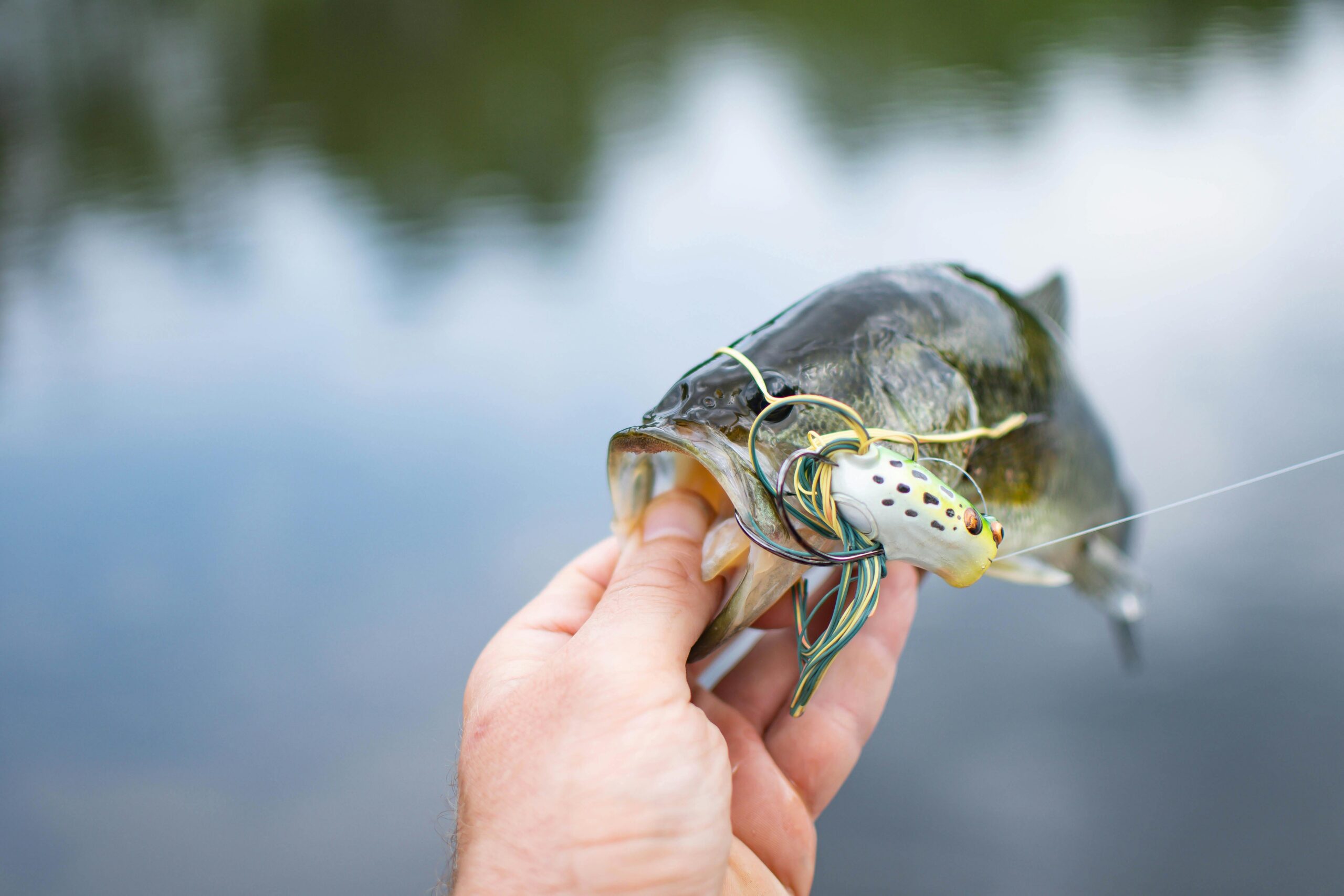
Most bass rod buying guides are written by people fishing 70-degree water in Florida in March. They’re not worrying about fingers so stiff they can barely work a jig. They’re not dealing with a cold front that tanks the bite an hour after they launch. They’re not fishing Minnesota lakes where the water is still 45°F well into May and the bass are lethargic, tight to bottom, and not going to do you any favors.
I’ve spent a lot of time on Minnesota lakes and Mississippi River backwaters chasing bass. It’s different up here. The season is shorter. The fish are pressured on popular lakes and ignored on the overlooked ones. The gear has to handle early-morning cold, wind that will sand-blast your face off a lake in April, and a transition period where the bass aren’t doing what any YouTube video tells you they should be doing. That context matters when I’m recommending a rod.
There’s also something genuinely new for 2026 that every Minnesota bass angler should know about: the Minnesota DNR officially launched a year-round catch-and-release bass season this spring. Effective February 23, 2026, anglers can now target largemouth and smallmouth bass on inland waters outside the traditional harvest season but it’s catch and release only during that period. Every bass goes back immediately. No exceptions. This is a big deal for early spring fishing, and it changes how a lot of us are thinking about our gear for those cold pre-opener trips.
This guide covers five rods that I think represent the best options across a range of budgets and applications for Midwest bass fishing in 2026 from the best all-around casting rod to a travel rod that earns its price tag for BWCA portages and road trips. I’ve researched each one carefully, compared user feedback from anglers fishing real freshwater conditions, and matched them to the specific challenges Minnesota, Wisconsin, and Iowa bass anglers face. Here’s what actually works.
Big News for 2026: Minnesota’s Year-Round Catch-and-Release Bass Season
Before I get into the rods, this is worth a full stop. The Minnesota DNR officially added a catch-and-release bass season for 2026, making largemouth and smallmouth bass fishing open year-round on inland waters. The new rule took effect February 23, 2026, and it means you no longer have to wait for the traditional May fishing opener to get on bass.
The way it works: bass seasons now alternate between harvest and catch-and-release periods with no gap in between. During the catch-and-release window which covers the period before the harvest opener every single bass must be returned to the water immediately. This is not optional. It’s the condition that made this regulation change possible, and it’s what earned the support of tribal partners including the Leech Lake Band and Mille Lacs Band of Ojibwe. Respect the season or you’re putting it at risk for everyone.
According to DNR fisheries supervisor Eric Altena, bass populations across Minnesota have been thriving increased abundance, larger average sizes, broader geographic distribution. There is no biological evidence that catch-and-release fishing before the spawn poses a conservation risk, since Minnesota bass spawning typically peaks in late May. That’s the science behind the change.
For practical purposes: check your zone. Harvest season dates vary slightly by bass management zone Northeast, North-Central, and South. Border water regulations are separate and different. Read the 2026 Minnesota Fishing Regulations before you go. The regulations book is available online and was available at license vendors by March 1.
This new season means more time on the water targeting bass. It also means more cold-weather fishing pre-opener conditions in April and early May in Minnesota are no joke. The right rod matters more in those conditions, and that’s part of what I considered when building this list.
Make sure you always check local regulations!
What Makes a Bass Rod Actually Work in Midwest Conditions
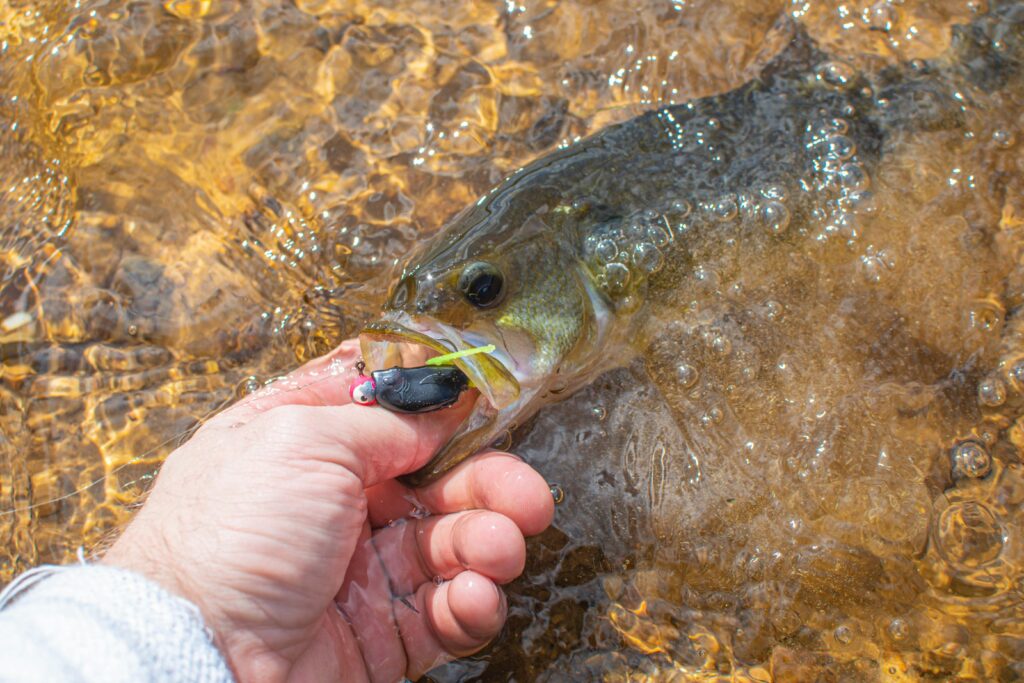
You can buy a rod that tests well in a showroom and falls flat on a cold April morning when your hands are numb and you’re trying to feel a soft bite through 15 feet of water. Midwest bass fishing puts specific demands on a rod that southern or coastal fisheries simply don’t. Understanding what those demands are will help you make a better decision.
Rod Power and Action: Getting the Terms Right
Rod power describes the force required to bend the rod. Heavy power rods handle big baits and heavy line. Medium-heavy is the workhorse for most Midwest bass techniques flipping cover, swimbaits, bigger jigs. Medium handles most everything else crankbaits, spinnerbaits, lighter plastics. Rod action describes where along the blank the rod bends. Fast action bends near the tip and transfers energy quickly for hook-setting power. Moderate action bends deeper and loads better for crankbaits and treble-hook presentations.
For the cold-water bass fishing that defines Midwest early-season fishing, sensitivity becomes even more critical. Bass in 45°F water are sluggish. Bites are subtle. The difference between a rod that telegraphs every tick of a jig and one that doesn’t might be the difference between a productive morning and a blank. The American Sportfishing Association tracks rod performance as one of the top factors in angler satisfaction across all freshwater species, and sensitivity consistently ranks at the top.
Blank Material and What It Means for Cold-Weather Performance
Most modern bass rods use graphite or carbon fiber blanks, sometimes blended with fiberglass. Higher-modulus graphite (IM7, IM8, and beyond) is stiffer and more sensitive but also more brittle. Lower-modulus graphite and fiberglass blends are more forgiving and harder to break. In cold temperatures, graphite can become slightly more brittle, which is worth knowing if you’re the kind of angler who sets the hook hard. For most practical purposes, the difference matters more in extreme conditions ice edge fishing, early spring trips when temps are near freezing.
The guide system matters too. Ceramic and zirconium inserts reduce line friction and prevent the line grooves that cheap guides develop over time. Fuji guides are the benchmark that most good rods aim to meet or exceed. For Midwest fishing where you’re running fluorocarbon, mono, and braid depending on conditions, guide quality affects casting distance and sensitivity.
Spinning vs. Baitcasting for Midwest Bass
Both setups belong in a Midwest bass angler’s boat. Spinning gear handles lighter presentations better finesse jigs, drop shots, small plastics on light fluorocarbon and it’s more forgiving in cold conditions when cold-stiffened hands make thumbing a baitcaster harder. Baitcasting gear gives you more control on heavier presentations, more power for setting hooks in cover, and better line sensitivity with braid. Most serious Midwest bass anglers run both. This list includes options for each, plus a combo that handles both bases for anglers who want one quality setup to start.
The 5 Best Bass Fishing Rods for Midwest Anglers in 2026
1. St. Croix Bass X Casting Rod — The All-Around Workhorse

The St. Croix Bass X Casting Rod is what you hand someone when they ask you what casting rod to get without a ceiling on the advice. It’s not cheap, but it’s not remotely overpriced either. St. Croix builds these at their Park Falls, Wisconsin facility yes, that matters and the quality control shows in a way you notice immediately compared to offshore alternatives.
What works: The SCII carbon fiber blank is the foundation. It’s a high-quality graphite construction finished with two coats of Flex-Coat slow cure, which keeps the blank protected and responsive without adding unnecessary weight. The SeaGuide hybrid guide platform uses stainless steel guides that handle braid, fluoro, and mono equally well. The split rear grip is a real functional improvement over full cork for feel during long fishing sessions you can sense vibration directly from the blank where your hand contacts it. St. Croix offers 15-plus models in the Bass X lineup, so there’s a length and power configuration for nearly every technique from finesse to heavy cover flipping.
Midwest-specific performance: For the fishing most of us do jigging the rock piles on Minnesota lakes, flipping emergent weeds along Wisconsin shorelines, pitching docks on Iowa impoundments the Bass X in 7’1″ or 7’4″ medium-heavy fast action is close to perfect. It’s light enough to fish all day without fatigue, sensitive enough to pick up the tick of a jig on cold pre-front bass, and has enough backbone to drive a hook through a bass’s jaw when you’re fishing in heavy cover. The cold-morning performance is solid. This is a graphite rod, so handle it like one don’t reef on a snag using it as a lever but it handles the practical abuse of real fishing without drama.
The compromise: The hook keeper placement draws consistent complaints from users. It’s positioned in a way that many anglers find inconvenient, and it’s not a small annoyance after a few hours on the water. The previous generation of Bass X had a reel seat issue that has since been corrected, but if you’re buying used, verify the generation. At $135, you’re paying for real quality from an American manufacturer, not a budget rod set expectations accordingly.
Best for: The Midwest angler who wants one high-quality baitcasting rod that covers jigs, Texas-rigged plastics, swimbaits, and everything in between on Minnesota and Wisconsin lakes.
Price: ~$135 ➡️ Check Price on Amazon
2. Abu Garcia Veritas Spinning Reel & Rod Combo — Best All-In-One Setup

The Abu Garcia Veritas Spinning Reel & Rod Combo is the setup I’d put in the hands of a serious angler who doesn’t want to research rod and reel compatibility and just wants something excellent right out of the box. At $350 for the combo, it’s not cheap. But this isn’t a pairing of budget components with a brand name slapped on it. Both the rod and the reel represent genuine performance tier equipment.
What works: The Veritas rod is built on Powerlux 100 Nano resin technology, which Abu Garcia claims results in a 15% stronger and 5% lighter blank compared to previous-generation Veritas rods. In real-world use, what you notice first is the balance this rod is not tip-heavy, which is the complaint you hear about most rods in this price range. Paired with a reel, it sits well in your hand and doesn’t fatigue you during a long session. The ROCS (Robotically Optimized Casting System) guide train is legitimately designed for casting performance with lighter lures important for the finesse presentations that cold-water Midwest bass often demand. The titanium alloy guides with zirconium inserts handle line better than the cheaper ceramic guides found on budget setups. The reel side of the combo brings 10 stainless ball bearings plus a roller bearing, a lightweight aluminum frame, and a drag system that handles the short, hard runs of quality bass. This is a well-matched pairing.
Midwest-specific performance: The Veritas combo shines for drop shotting, ned rigs, and finesse jig presentations exactly the techniques that produce during the cold pre-opener catch-and-release window that Minnesota just opened up. When bass are sluggish in April water that hasn’t cracked 50°F yet, you’re not burning spinnerbaits. You’re dragging a small jig slowly, feeling for a tick, and reacting quickly. This rod’s sensitivity and the reel’s smooth retrieve are well suited to that kind of fishing. The closed-cell EVA grips hold up well in wet conditions, though they do show dirt quickly plan to clean them regularly.
The compromise: Line tangle issues show up in user reviews for the spinning reel at a higher rate than you’d like to see at this price point. Most of these complaints trace back to overfilling the spool or incorrect line choice, but it’s worth knowing. A few users also report the white-colored grip components getting grimy fast. These are minor complaints relative to the overall performance, but they’re real.
Best for: The angler who wants a complete, matched spinning setup for finesse bass presentations and doesn’t want to research reel-to-rod pairings. Excellent for the new year-round Minnesota C&R season where lighter presentations dominate.
Price: ~$350 ➡️ Check Price on Amazon
3. Ugly Stik GX2 — The Indestructible Budget Rod That Earns It

The Ugly Stik GX2 has earned a place on every bass rod list I’ll ever write. Not because it’s a precision instrument it isn’t. Because it does what it says it does at a price that makes sense for beginning anglers, backup rods, and situations where you don’t want to risk an expensive rod. At $90, it’s the rod I’d strap to a canoe pack for a BWCA bass trip where gear gets wet, banged around, and generally abused.
What works: The Ugly Tech Construction blank blends graphite and fiberglass in a ratio that prioritizes strength over pure sensitivity. The result is a rod that you can genuinely abuse. Reviewers consistently note that Ugly Stik’s marketing claim about near-indestructibility isn’t exaggerated the hoop strength on these blanks is remarkable. The Clear Tip design, a fiberglass tip section distinct from the main blank, is the key to this. It’s flexible and strong in a way that pure graphite tips aren’t. The Ugly Tuff one-piece stainless steel guides with PVD coating resist the line grooving that kills cheap guide inserts. The 10-year warranty backs all of this up, which matters when you’re buying a rod for hard use.
Midwest-specific performance: For bass fishing on smaller Minnesota lakes, river backwaters, or farm ponds in Iowa and Illinois, the GX2 handles spinnerbaits, crankbaits, lighter plastics, and topwater lures without any real limitation. It’s not the rod for a heavy cover flipping setup the graphite/fiberglass blend gives up sensitivity to pure graphite in that application. But for casual bass fishing, shoreline exploration, and situations where you want a rod that’s going to be fine even if it gets thrown in the back of a truck, the GX2 delivers. The grips are rubberized shrink tube rather than cork, which is a practical choice they hold up to water, fish slime, and years of actual use better than cork does.
The compromise: The GX2 gives up meaningful sensitivity to higher-end graphite rods. Cold-water bass that bite softly and tentatively are harder to detect on this blank. It’s not a finesse rod. The combo version’s reel gets genuinely poor reviews multiple users report mechanical failures early in the reel’s life. Buy the rod solo and pair it with a better reel. The rod itself is worth the money. The combo reel is not.
Best for: Beginners, young anglers, backup rods, canoe trips, and anyone who wants an honest-performing bass rod that they don’t have to baby.
Price: ~$90 ➡️ Check Price on Amazon
4. KastKing Royale Legend Pro — The Budget Rod That Punches Up
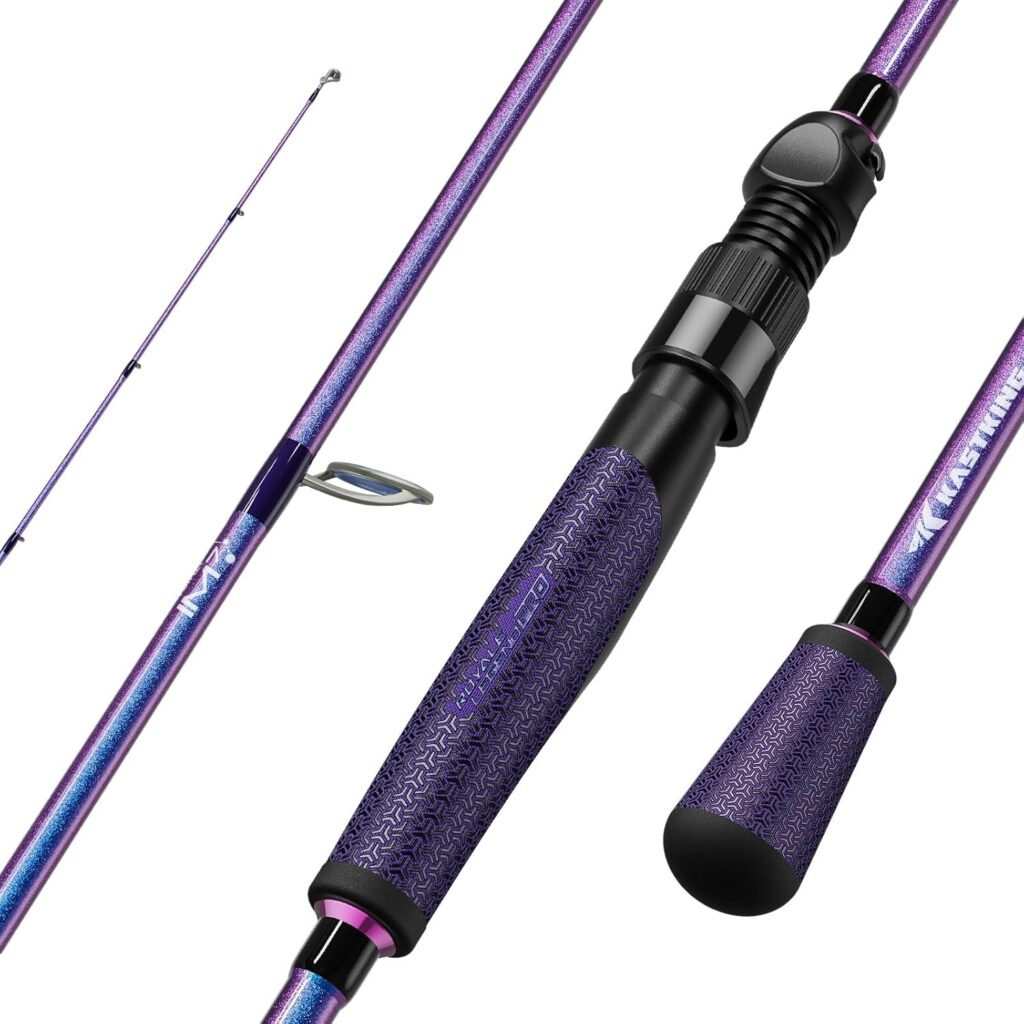
The KastKing Royale Legend Pro is the rod that makes people uncomfortable when they recommend it because they feel like they’re supposed to apologize for it not being an American-made rod from a legendary brand. I’m not going to do that. This rod performs well for the money, and KastKing’s components selection is genuinely thoughtful.
What works: The IM7 graphite blank built under high pressure with Nano resins is the highlight of this rod. IM7 is a high-modulus graphite that delivers real sensitivity the kind you expect from rods costing significantly more. The standout feature is the guide system: Fuji Stainless Steel K-Frame guides with FazLite inserts. These are not budget guides. Fuji is the industry benchmark for guide quality, and having them on a $95 rod is legitimately unusual. FazLite inserts have a slightly forward ring angle that helps self-start tangle releases, which reduces frustration with braided line. The SlipLock Technology handles use a silicone texture with deep grooves for wet grip a practical design decision for a rod that’s going to be fished in early spring rain or from a wet kayak. KastKing offers 15 technique-specific models in the Royale Legend Pro lineup, including jig/worm, topwater, crankbait, bladed jig, and swimbait configurations each one tuned to its application rather than being a generic “bass rod.”
Midwest-specific performance: The technique-specific approach matters more than it might seem. Fishing a slow-rolled swimbait along a deep weed edge on a Minnesota lake in early May during the catch-and-release window calls for a different rod action than burning a topwater across the shallows in July. The moderate-fast action crankbait model handles treble hook lures correctly deep enough into the blank to let fish take the bait without the stiff tip tearing hooks out. The jig/worm fast-heavy model has the backbone to drive a hook through tough spots. Users consistently report the sensitivity as impressive for the price, which is the most important thing for cold-water Midwest fishing where bites are subtle.
The compromise: Long-term durability is the honest question mark with any budget rod at this price point. Most users report solid performance through a season or two, and KastKing’s warranty support gets positive reviews they replace broken rods without making it difficult. The fit and finish doesn’t match what you get on a St. Croix or Abu Garcia at twice the price. The cosmetics are flashy the celestial-inspired color scheme is either appealing or something you’ll tolerate depending on your taste. Focus on the performance specs, which are legitimately good.
Best for: Anglers who want technique-specific bass rods at budget pricing, and anglers building out a rod collection without wanting to spend $130+ per rod.
Price: ~$95 ➡️ Check Price on Amazon
5. St. Croix Triumph Travel Spinning Rod — Best for BWCA Trips and the Road Angler

The St. Croix Triumph Travel Spinning Rod is for a specific type of angler: the one who misses bass fishing every single time they travel because they didn’t bring a rod. Or the BWCA paddler who needs a quality rod that fits inside a pack canoe or checked bag. I waited way too long to own one of these. Once you have it, you wonder why you ever showed up somewhere without a rod.
What works: The Triumph Travel is a 4-piece design that collapses to 24 inches including its padded nylon case carry-on legal, fitting under an airplane seat, fitting in a duffel bag on a canoe portage. The blank is premium SCII carbon fiber the same material in St. Croix’s Triumph single-piece spinning rods with two coats of Flex-Coat slow cure finish. This is not a watered-down travel version of a real rod. It is a real rod that comes apart. The Sea Guide Atlas Performance stainless steel guides are quality components, and the premium cork handle is the kind of grip that makes a rod feel like it was worth the money. It assembles quickly with alignment markings on each section that prevent you from putting guides out of plane. The padded nylon case handles real travel not gentle travel.
Midwest-specific performance: For BWCA canoe trips where portaging limits what you can carry, this rod makes bass fishing on remote lakes a realistic option without sacrificing much. The 6’6″ to 7′ models in medium or medium-light handle most of the bass applications you’d encounter lightly weighted plastics, small jigs, topwater lures on clear lakes where stealth matters. Reviewers who have used this rod for extended periods including one who reported seven years of use with zero complaints consistently note that it doesn’t fish like a travel rod. It fishes like a real rod that happens to break down into four pieces. For the angler who drives through bass country and wants a rod in the truck at all times, this is the right answer.
The compromise: At $185, this is a premium price for a travel rod, and it’s worth understanding what you’re paying for. You’re paying for St. Croix’s Wisconsin build quality, their warranty support (5-year limited warranty, $60 service fee), and a rod that performs like a full-length rod rather than a compromise travel stick. If you just need something cheap to throw in a bag, the GX2 makes a 4-piece version too. The Triumph Travel is for the angler who wants to travel with quality gear, not just something that qualifies as a rod. One legitimate complaint from multiple users: the guide-to-guide connections can get slightly skewed and require realignment after repeated assembly. Check alignment every time you put it together.
Best for: BWCA canoe anglers, road trip fishers, anyone who wants a quality pack rod that doesn’t compromise performance for portability.
Price: ~$185 ➡️ Check Price on Amazon
Comparison Table
| Rod | Type | Rod Material | Price | Best For | Midwest Rating |
|---|---|---|---|---|---|
| St. Croix Bass X | Casting | SCII Carbon | ~$135 | All-around baitcasting | ⭐⭐⭐⭐⭐ |
| Abu Garcia Veritas Combo | Spinning Combo | Powerlux 100 | ~$350 | Finesse + ready-to-fish | ⭐⭐⭐⭐⭐ |
| Ugly Stik GX2 | Spinning | Graphite/Fiberglass | ~$90 | Budget/backup/beginners | ⭐⭐⭐⭐ |
| KastKing Royale Legend Pro | Casting/Spinning | IM7 Graphite | ~$95 | Technique-specific, budget | ⭐⭐⭐⭐ |
| St. Croix Triumph Travel | Spinning (4-pc) | SCII Carbon | ~$185 | BWCA/travel anglers | ⭐⭐⭐⭐⭐ |
How to Choose a Bass Rod for Midwest Conditions
Start with How You Actually Fish
The most common mistake Midwest bass anglers make when buying a rod is buying what someone else uses rather than what their actual fishing demands. Before you look at any specs, answer these questions honestly. Do you mostly fish from a boat or from shore? Do you primarily use spinning or baitcasting gear? What are your most-used techniques jigs, crankbaits, topwater, finesse plastics, swimbaits? What water are you fishing shallow weedy lakes, clear deep lakes, river backwaters, farm ponds?
If you primarily fish shore-bound on smaller Minnesota lakes throwing a range of lures, a 7-foot medium spinning setup covers most of it. If you’re a boat angler who flips cover and throws heavy swimbaits, you want a 7’4″ heavy or medium-heavy baitcasting setup with a fast action. Don’t buy a crankbait rod and try to flip with it, and don’t buy a flipping stick and try to drop shot with it. The technique-specific options available from KastKing and St. Croix exist for a reason.
Power and Action for Common Midwest Techniques
For jig fishing and Texas-rigged plastics the dominant cold-water technique you want medium-heavy or heavy power with fast action. The sensitivity telegraphs subtle bites, and the power drives the hook. For crankbaits and lipless cranks effective on Minnesota and Wisconsin lakes throughout the catch-and-release window moderate action is better. It loads into the mid-blank during the fight, which keeps treble hooks pinned. For finesse presentations drop shots, ned rigs, small worms medium or medium-light power with fast action gives you sensitivity without over-powering light tackle.
Budget vs. Performance: Where the Line Actually Falls
Below $80, you’re getting a rod that works but makes compromises you’ll feel. The blank is lower modulus, the guides are cheaper, and the fit and finish is rough. These rods catch fish. They just don’t help you as much as a better rod would. From $90 to $135, you’re in a range where real performance is available the Ugly Stik GX2 and KastKing Royale Legend Pro both live here, and both perform legitimately well. From $135 to $200, you’re getting premium-tier rods from proven American manufacturers like St. Croix. Above $200, you’re paying for premium materials, higher-end components, or brand prestige real improvements, but incremental ones.
The Recreational Boating & Fishing Foundation has tracked equipment satisfaction among freshwater anglers for years, and the consistent finding is that rod quality correlates strongly with angler success rate not because better rods catch more fish on their own, but because they help anglers detect bites and execute presentations more effectively. In cold Midwest water where bites are subtle, that correlation matters.
Spinning or Baitcasting for Midwest Bass?
For anglers new to bass fishing: start with spinning gear. It’s more forgiving, easier to learn, handles lighter lures better, and works for the finesse presentations that dominate cold-water Midwest fishing. As your skills develop and you start fishing heavier cover or throwing bigger lures, a baitcasting setup becomes worth adding.
For experienced anglers: run both. A 7-foot medium spinning setup for finesse and a 7’1″ or 7’4″ medium-heavy baitcasting setup for everything else covers nearly all situations you’ll encounter from Minnesota to southern Missouri.
Common Mistakes to Avoid
Buying the wrong action for your most-used technique is the most expensive mistake, because you’ll either catch fewer fish or end up buying another rod anyway. Buying combo deals where the reel is poor quality undermines the whole investment the Ugly Stik GX2 is a good example of a rod whose reputation is partly hurt by being sold with a reel that doesn’t match its quality. Ignoring rod length is another mistake: a 6’6″ rod and a 7’4″ rod in the same power and action are genuinely different tools, and longer rods cast farther and give you more leverage on fish.
Midwest-Specific Considerations for Bass Fishing
Cold-Water Bass Behavior and What It Means for Your Rod
Minnesota and Wisconsin bass anglers deal with a reality that southern fishing content almost never addresses: bass in water below 55°F don’t act like the fish you see in tournament coverage. They’re slower. Their bites are lighter. They commit to a lure less aggressively. Getting those fish to eat requires either a more deliberate presentation or finding the fish that are more active and feeling the difference between a bite and a bump on a cold morning requires a sensitive rod.
This is one reason the Veritas combo’s direct-blank-contact reel seat is meaningful for early-spring Midwest fishing. You feel things through a more sensitive setup that you’d miss on a stiffer, less responsive rod. When you’re fishing the catch-and-release window in April and the water is still cold from ice-out, sensitivity isn’t a luxury feature. It’s the thing that determines whether your morning was productive.
Early-Season C&R Fishing in Minnesota: What to Expect
With the new year-round catch-and-release bass season, Minnesota anglers can now target bass in late February, March, April, and early May before the harvest opener. A few practical realities about fishing this window: bass will be tight to structure, often deeper than they’ll be in summer, and very slow to commit. Finesse presentations dominate small jigs, drop shots, light plastics on 6- to 10-pound fluorocarbon. Spinning gear is better suited to this than heavy baitcasting setups. Water temperatures near ice-out can be brutal on your hands. Gloves that let you feel the rod matter. And again every fish goes back immediately. This is catch-and-release only during this period.
Lake Types and Rod Selection Across the Midwest
Minnesota’s lakes range from shallow, weedy natural lakes in the southern part of the state to deep, clear glacial lakes further north. Wisconsin’s bass lakes have their own character. Iowa and Illinois anglers deal with more impoundment fishing, river systems, and farm ponds. Each setting calls for slightly different gear.
On shallow weedy lakes in southern Minnesota the classic bass habitat a medium-heavy baitcasting setup handles most situations: pitching and flipping into emergent vegetation, working the hard weed edges, burning a spinnerbait through openings. On clearer, deeper glacial lakes, finesse presentations on spinning gear often outperform. On river backwaters like the pools and sloughs of the upper Mississippi, the bass often respond to moderate-sized swimbaits and jigs fished around current seams and timber. Match the rod to the water type, not just the species.
Portaging and Travel: BWCA Bass Fishing
The Boundary Waters Canoe Area Wilderness is one of the best bass fisheries in North America, and it’s right in our backyard. Smallmouth bass in particular are abundant across BWCA lakes and absolutely eat topwater lures and jigs in the evening. The limitation for most anglers is portaging you can’t carry a full rod locker through five portages. This is where a quality travel rod like the St. Croix Triumph earns its price. One rod, compact enough for any gear configuration, that doesn’t make you feel like you sacrificed performance to bring it.
Looking for More
If bass fishing is your focus, this article is your starting point. But bass rods don’t exist in isolation if you’re serious about Midwest fishing, check out these related guides on the site:
For anglers who also target catfish on the Mississippi River, our guide to the Best Catfishing Rods for the Mississippi River covers the rod power, action, and length needed for serious channel cat and flathead work across the upper Mississippi pools.
If your Midwest fishing extends to trout on southeastern Minnesota spring creeks or Driftless Area streams, our guide to the Best Fly Fishing Rods for Midwest Trout covers five rod options tuned specifically to tight, technical SE Minnesota water the Root River, the Whitewater, and the limestone spring creeks most people drive past.
FAQs
Yes as of February 23, 2026, Minnesota has a year-round catch-and-release bass season on inland waters. This means you can legally target largemouth and smallmouth bass outside the traditional harvest season, but every fish must be returned to the water immediately. You cannot keep bass during the catch-and-release window under any circumstances. The harvest season dates themselves remain unchanged typically opening in late May, varying slightly by zone. Border waters like Lake of the Woods and waters shared with Wisconsin have separate regulations, so check those before fishing. The 2026 Minnesota Fishing Regulations book is available online at the DNR website and at license vendors. Read it. This is a new regulation that not every angler knows about yet, and enforcement will be active.
Medium to medium-heavy power covers most cold-water bass fishing scenarios in the Midwest. The key is pairing power with the right action for the finesse presentations that work best when water temperatures are below 55°F, a medium power fast action spinning setup gives you the sensitivity to detect subtle bites without overdoing it on the power side. For jig fishing in cold water, medium-heavy fast action is the practical choice. You don’t need heavy power for cold-water bass the way you do for heavy cover summer fishing. The fish are slower and more lethargic, which means the fight doesn’t demand maximum power the way a summer bass in thick vegetation might.
It depends on what you’re asking of it. The Ugly Stik GX2 and KastKing Royale Legend Pro are legitimate rods at that price point they catch fish, they hold up with reasonable care, and they’re a significant step above the throwaway rods sold at discount retailers. For casual bass fishing, bank fishing, or a first serious rod, either is a smart choice. If you’re fishing frequently, fishing tournaments, or demanding the most out of your presentations particularly in cold Midwest water where sensitivity matters most spending $130-185 on a St. Croix gets you a noticeable performance improvement. The gap between $90 and $135 is real in terms of blank quality and component quality. The gap between $135 and $300 is smaller and more incremental.
Eventually, yes. Start with one if you’re building your first setup spinning gear is more beginner-friendly and handles the finesse presentations that often work best in cold Midwest water. As your fishing develops, a baitcasting setup for heavier presentations becomes genuinely useful, not just gear accumulation. Most experienced Midwest bass anglers run a 7-foot medium spinning rod and a 7’1″ to 7’4″ medium-heavy baitcasting rod as their core two-rod setup. That combination covers about 80% of situations you’ll encounter from early catch-and-release season through the summer and into fall. The technique-specific rods matter more if you’re fishing tournaments or targeting specific presentations with real precision.
The St. Croix Triumph Travel is the answer here, and it’s not particularly close. Quality 4-piece rods that fit in a pack and fish like a full-length rod are rare, and the Triumph Travel is one of the best at any price point. For the BWCA specifically, a 6’6″ to 7-foot medium-light or medium action covers smallmouth bass on jigs, topwater lures, and small swimbaits without limitation. Smallmouth in the Boundary Waters aren’t usually big fish by Minnesota standards they’re just numerous, aggressive, and willing so you don’t need heavy power or a baitcasting setup. Pair the Triumph Travel with a quality size 2500 spinning reel, load it with 6- to 8-pound fluorocarbon or 10-pound braid with a fluoro leader, and you’re set for a week in the backcountry.
Rinse the guides after any trip that involves contact with lake water algae and mineral buildup accumulate over time in guides and can affect line performance and wear. Inspect guides periodically for cracks or rough spots by running a cotton swab through them; a rough guide destroys line. For cork handles, clean with a mild soap solution and condition periodically to prevent drying and cracking. Graphite blanks are durable but not indestructible avoid propping the rod against a car door, and don’t use it as a lever to free a snagged lure. Store rods in a dry location, not in a damp garage or car trunk through a Minnesota winter. Extreme temperature swings won’t damage a quality rod, but prolonged moisture exposure in storage can compromise guide wraps and epoxy over time.
