

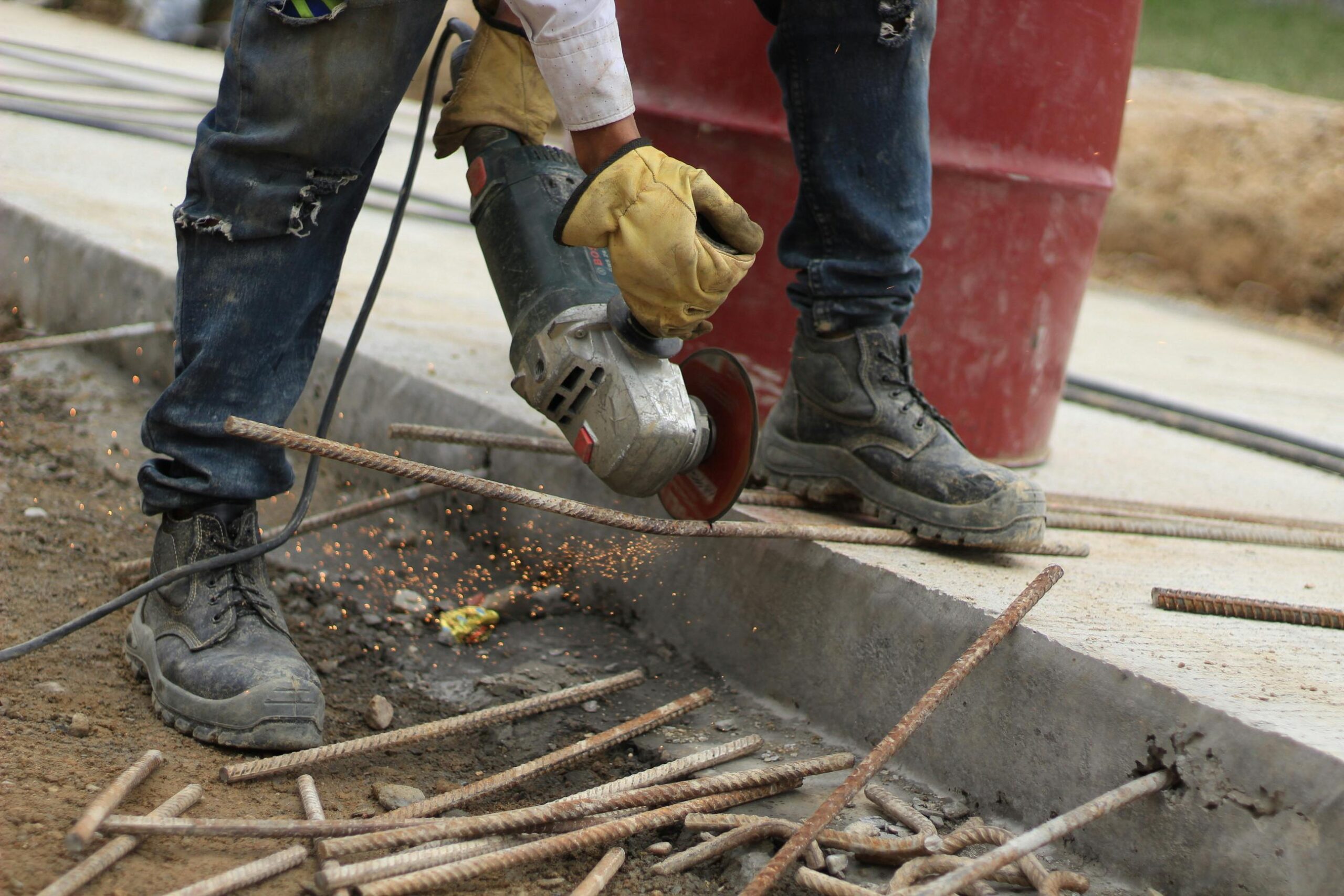
Construction work destroys boots faster than almost any other profession. Concrete dust that acts like sandpaper on leather. Rebar that tears through cheap materials. Nails and screws that penetrate inadequate soles. Temperature extremes from minus-10 degree mornings to midday sun beating off black asphalt. Mud that turns to ice overnight. Salt that corrodes stitching within weeks.
Most construction workers burn through three to four pairs of boots annually, not because boots should fail that quickly, but because they’re buying boots designed for warehouse floors and office-adjacent work, not actual construction sites.
After working with framers, concrete finishers, electricians, plumbers, roofers, and general laborers across Midwest construction sites, winter foundation pours in Wisconsin, summer framing in Iowa, year-round remodeling in Illinois, we’ve identified the five work boots that actually survive construction abuse. These aren’t just boots with safety toes. They’re boots engineered for the specific punishment construction workers deliver daily, with materials and construction methods that outlast the budget options most guys settle for.
What Construction Work Demands From Boots
Construction work creates challenges that warehouse and manufacturing jobs simply don’t face. Understanding these demands explains why construction-specific boots cost more, and why they’re worth it.
Aggressive Outsole Requirements
Construction sites feature terrain that changes hourly. Fresh concrete in the morning. Muddy excavation by afternoon. Icy scaffold platforms by quitting time. OSHA regulations require protective footwear, but they don’t specify traction standards for varied terrain.
Quality construction boots use aggressive lug patterns that provide multi-directional grip while shedding mud and debris. The rubber compound must stay flexible in cold temperatures, cheap rubber hardens below freezing, turning boots into ice skates. The tread depth needs to survive months of abrasive surfaces rather than wearing smooth after weeks.
Puncture Protection Beyond Safety Toes
Steel toes protect against falling 2x4s and dropped tools. But construction sites feature hazards that attack from below, roofing nails, wood screws, rebar ends, broken glass, metal shavings. Quality construction boots include puncture-resistant plates or midsoles that prevent penetration without creating stiff, unbendable soles.
Waterproofing That Actually Works
Construction happens regardless of weather. Foundation work continues during rain. Site preparation proceeds despite snow. Morning dew soaks work areas before they dry by afternoon. Construction workers need waterproof boots that handle extended wet exposure, not just light rain resistance.
The waterproofing must remain breathable, non-breathable boots trap sweat, leaving feet as wet from inside as outside. Goodyear welt construction provides inherent water resistance while maintaining breathability better than sealed rubber boots.
Durability Against Abrasion
Concrete dust, sawdust, and construction debris act like sandpaper against boot materials. Kneeling on rough subflooring wears through cheap leather. Climbing ladders abrades heels and toes. Shuffling through gravel degrades outsoles.
Construction boots need thick, high-quality leather that resists abrasion rather than wearing through after months. The stitching must use heavy-duty thread in critical areas. The construction method must create connections that survive daily flexing and stress.
All-Day Comfort on Uneven Surfaces
Construction workers rarely stand on flat concrete all day. They’re on ladders, crawling through attics, balancing on roof trusses, navigating muddy slopes. Boots need stability on uneven surfaces while maintaining enough flexibility for natural movement.
The midsole must provide cushioning without excessive softness that reduces stability. The shank needs to support the arch during ladder work without creating uncomfortable stiffness. The heel counter must lock the foot in place when climbing or descending slopes.
The 5 Best Construction Work Boots for Midwest Job Sites
1. Danner Steel Yard: Premium Construction Performance
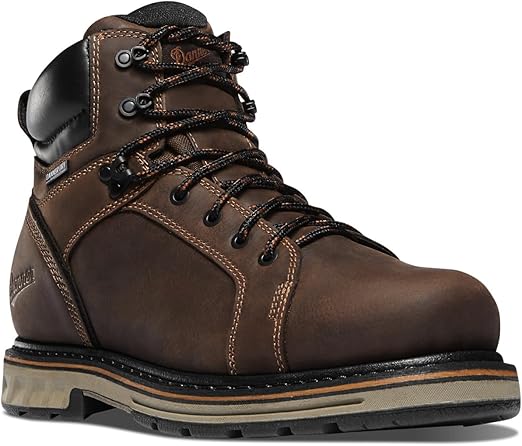
The Danner Steel Yard represents what happens when a legendary bootmaker targets construction workers specifically. Built in Danner’s Portland, Oregon facility, these boots deliver genuine quality for job site abuse.
What works: The full-grain leather upper undergoes six separate quality tests before Danner accepts it. This testing ensures consistent strength, density, and pull resistance, the leather won’t develop weak spots that fail prematurely. The thick leather provides genuine protection against abrasion, impact, and the daily punishment construction delivers.
Goodyear welt construction creates a stitched connection between upper and outsole that survives hard use. Unlike glued cement construction, the Goodyear welt can be resoled when worn, extending boot life significantly. While Danner doesn’t offer their full recraft service on Steel Yard boots, local cobblers can replace worn soles for $80-120.
The Danner Comfort System includes a patent-pending dual-density footbed with underfoot venting. The footbed provides genuine cushioning while maintaining support, not the soft, mushy feel that compresses permanently. The polyurethane midsole rebounds energy with each step rather than just absorbing it, reducing fatigue during long days.
The oil-and-slip-resistant rubber outsole features angled lugs and a defined 90-degree heel. This design provides versatile traction on varied surfaces while the heel design makes ladder climbing secure and confident. The aggressive tread sheds mud and debris rather than packing solid.
Midwest-specific performance: The waterproof Danner Dry membrane (in waterproof models) keeps feet dry during extended wet exposure while allowing moisture vapor to escape. Construction workers report these boots handle November-through-April slush, rain-soaked job sites, and standing water without leaking.
The steel toe meets ASTM F2413 standards for impact and compression. Electrical hazard protection meets ASTM standards, critical for electricians and workers around power tools. The 610 last provides Danner’s most universal fit, working for various foot shapes while maintaining snug heel fit and ample toe room.
Multiple construction workers report these boots require break-in, the thick leather and structured construction feel stiff initially. But after one to two weeks of wear, the leather molds perfectly to your foot, creating custom fit that gets better over time. The break-in period rewards patience with boots that genuinely improve as they age.
The compromise: At $160-180, these boots cost more than budget alternatives. The price reflects USA assembly, quality materials, and construction methods that extend life, but budget-conscious workers might struggle with the upfront investment. The resoleable construction and durability provide better long-term value, but you need to afford the initial purchase.
The boots weigh approximately 2 pounds each. The robust construction and materials create substantial boots that feel heavier than lightweight alternatives. Construction workers accustomed to lightweight boots notice the difference initially, though most report the weight becomes unnoticeable after the first weeks.
The Steel Yard isn’t officially recraftable through Danner’s recraft service, unlike their higher-end boots. While local cobblers can resole them, you won’t get full Danner factory service. For some construction workers, this matters; for others, local resoling provides adequate service.
Best for: Construction workers wanting premium quality that lasts multiple seasons. Framers, concrete workers, general contractors. Anyone willing to invest more upfront for boots that provide better long-term value through durability and resoling.
2. Timberland PRO Pit Boss: Proven Job Site Reliability
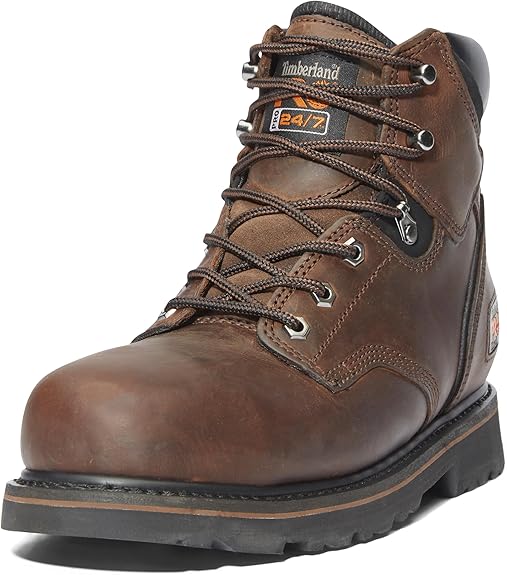
The Timberland PRO Pit Boss has survived in Timberland’s lineup for years because it delivers honest construction performance at accessible pricing. This isn’t a budget boot trying to perform above its class, it’s a mid-range boot that knows its role and executes it well.
What works: The Timberland PRO 24/7 Comfort Suspension System provides genuine fatigue reduction through suspension technology that supports the arch and cushions every step. Construction workers consistently report noticeably less foot and leg fatigue compared to boots without this system, particularly beneficial during 10-12 hour days on job sites.
The asymmetrical steel safety toe meets ASTM F2412-11 and ASTM F2413-11 standards while providing a roomier toe box than symmetrical designs. Construction work causes foot swelling—the extra toe room accommodates this while reducing the cramping that makes late-day hours painful.
Premium Timberland nubuck leather provides durability while breaking in faster than smooth full-grain leather. The padded top collar adds comfort without creating bulk. The dual-purpose hardware allows quick lacing customization, important when you’re pulling boots on at 6 AM and want them off immediately after work.
The heat-, oil-, slip-, and abrasion-resistant rubber outsole maintains traction on varied construction surfaces. The tread pattern provides multi-directional grip while the rubber compound stays flexible in cold temperatures. Electrical hazard protection meets ASTM F2892-11 standards.
Midwest-specific performance: The slip-resistant outsole handles wet concrete, muddy excavations, and icy platforms. Multiple construction workers report confident traction during winter work, critical for scaffold safety and ladder climbing when temperatures drop.
The cement construction provides immediate flexibility without extensive break-in. Most users report comfortable wear from day one, allowing productive work immediately rather than suffering through painful break-in weeks. For construction workers who need boots working today, this matters.
The ReBOTL lining (50% recycled plastic) wicks moisture effectively while Microban antimicrobial treatment controls odor. Construction workers dealing with sweaty feet during active work appreciate the moisture management.
The compromise: The cement construction doesn’t match Goodyear welt durability. These boots aren’t resoleable, when soles wear out after 12-18 months of daily construction use, you’re buying new boots. Construction workers who destroy boots quickly anyway might not care, but guys wanting multi-year boots need different options.
At approximately 2 pounds per boot, these feel heavier than lightweight alternatives. The weight provides stability but increases fatigue for some construction workers. The aggressive tread collects mud and debris, excellent for traction, annoying when tracking into finished spaces.
The nubuck leather requires more maintenance than smooth leather. Without proper care, nubuck develops uneven staining and loses its appearance. Busy construction workers who won’t maintain boots should choose smooth leather instead.
Many users report these run slightly large, ordering a half-size down often provides better fit. The sizing inconsistency means trying before buying or accepting potential return hassles when ordering online.
Best for: Construction workers wanting proven Timberland quality without premium pricing. Framing, general labor, residential construction. Anyone needing immediate comfort without break-in and accepting 12-18 month replacement cycles.
3. KEEN Utility San Jose Alloy Toe: Lightweight Construction Capability
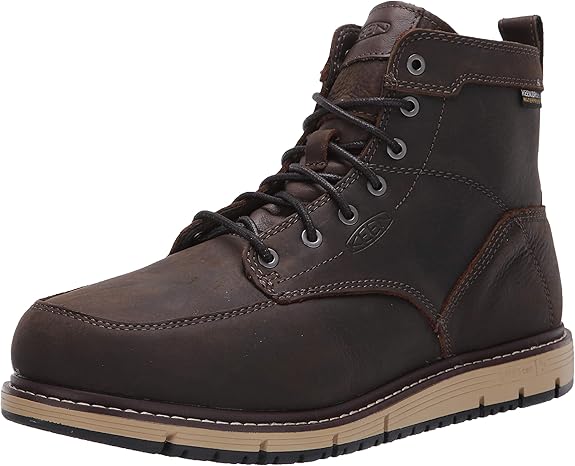
The KEEN Utility San Jose Alloy Toe challenges the assumption that construction boots must be heavy. Lightweight doesn’t mean weak, it means strategic material choices that reduce weight without compromising protection.
What works: The aluminum safety toe weighs 35% less than steel while meeting identical ASTM F2413 protection standards. At approximately 1.7 pounds per boot, these weigh significantly less than traditional steel toe construction boots. For construction workers climbing ladders repeatedly, moving between floors, or walking job sites extensively, the reduced weight compounds, substantially less leg fatigue over long days.
The asymmetrical toe design follows natural foot contours rather than forcing feet into symmetrical shapes. This creates more interior volume where toes actually sit, reducing cramping and improving circulation. Construction workers with wider forefeet particularly appreciate the extra room.
KEEN’s Luftcell PU midsole uses air-infused technology providing cushioning without bulk. The midsole maintains shock-absorbing properties longer than cheaper foam that compresses permanently after months. The oil-and-slip-resistant outsole meets ASTM F2913 standards despite the wedge design.
The KEEN.DRY waterproof membrane keeps water out while allowing moisture vapor to escape. Construction workers report these boots handle wet job sites reliably while preventing the swampy feeling of non-breathable waterproof boots. The moisture-wicking lining enhances breathability during active work.
Midwest-specific performance: The waterproof construction handles Midwest construction reality, morning dew, afternoon rain, slush-covered sites. The breathable membrane prevents overheating during active construction work, even in heated buildings or summer conditions.
The aluminum toe doesn’t conduct temperature extremes. Construction workers report these boots stay more comfortable during winter (toes don’t freeze) and summer (toes don’t cook) compared to steel toe alternatives. For year-round Midwest construction work, this matters significantly.
The full-grain leather from Leather Working Group-certified tanneries provides durability while the boot comes ready to wear, zero break-in required. Construction workers report comfortable wear from day one.
The compromise: The lightweight construction and wedge sole mean these boots aren’t built for the absolute heaviest construction abuse. The materials target light-to-medium-duty construction work, residential framing, finish work, light commercial. Heavy concrete work, heavy industrial construction, or extremely demanding applications might require more robust boots.
The generous toe box accommodates most foot shapes comfortably but can feel roomy for narrow-footed construction workers. Many users report ordering a half-size down for proper fit. The moderate arch support works for average arches but might not satisfy workers with very flat or very high arches, aftermarket insoles might be necessary.
The wedge sole excels on flat surfaces and provides excellent comfort but doesn’t offer the aggressive traction of lugged soles. Construction workers whose sites involve significant mud, loose gravel, or extremely varied terrain might prefer more aggressive tread patterns.
Best for: Construction workers prioritizing lightweight comfort and reduced fatigue. Residential construction, finish work, carpentry, electrical work. Anyone walking significant distances on job sites or climbing ladders repeatedly.
4. Wolverine Floorhand Steel Toe: Budget Construction Value

The Wolverine Floorhand Steel Toe represents the floor for legitimate construction boots, the minimum you should spend if you want boots that actually work on job sites without completely falling apart.
What works: The waterproof membrane delivers genuine protection during wet conditions. Construction workers report these boots handle rain-soaked job sites, slush, and standing water without leaking, impressive performance at this price point. The breathable membrane prevents sweat buildup during active work.
The steel toe meets ASTM F2413-18 standards for impact and compression, the same protection level as boots costing twice as much. Electrical hazard protection meets ASTM standards. The slip-resistant rubber outsole provides reliable traction on various construction surfaces.
The removable full-cushion footbed molds to your foot over time while the removable design allows replacement with aftermarket insoles for workers needing additional support. A nylon shank provides structural support and stability. The lightweight cement construction reduces weight compared to welted boots.
The full-grain leather upper provides solid protection for the price point. While not as thick or extensively tested as premium leather, it handles normal construction use adequately, resisting abrasion and impact that destroys cheap bonded leather.
Midwest-specific performance: The waterproofing handles November-through-April slush and wet conditions. The breathable membrane prevents overheating during warmer months or indoor work. The slip-resistant outsole provides adequate traction on concrete, wet surfaces, and moderately slippery job sites.
The boots handle light-to-medium-duty construction well, residential framing, light commercial work, finish carpentry, general labor. The lightweight design reduces fatigue during all-day wear.
The compromise: The cement construction doesn’t match welted boot durability. These boots aren’t resoleable, when soles wear out, you’re buying new boots. For light-duty daily construction use, expect 6-12 months of life. Heavy-duty construction work shortens this considerably, some construction workers report needing replacement after just 4-6 months.
The leather, while genuine full-grain, isn’t as thick or robust as premium boots. Some users report the outsole separating after heavy use, quality control inconsistencies occur at this price point. The steel toe conducts cold, uncomfortable during outdoor winter construction without thick insulated socks.
Arch support is adequate but not exceptional. Construction workers with foot problems typically need aftermarket insoles immediately. The toe box can feel cramped for wider feet, the EE width option helps, but sizing carefully matters.
Multiple users report fit inconsistencies, boots from different production batches sometimes fit differently despite identical sizing. This quality control variability comes with budget pricing.
Best for: Budget-conscious construction workers needing waterproof boots for light-to-medium-duty work. Residential construction, general labor, workers who replace boots frequently anyway. Anyone needing affordable boots meeting OSHA requirements without premium features.
5. Thorogood American Heritage: Craftsmanship That Lasts
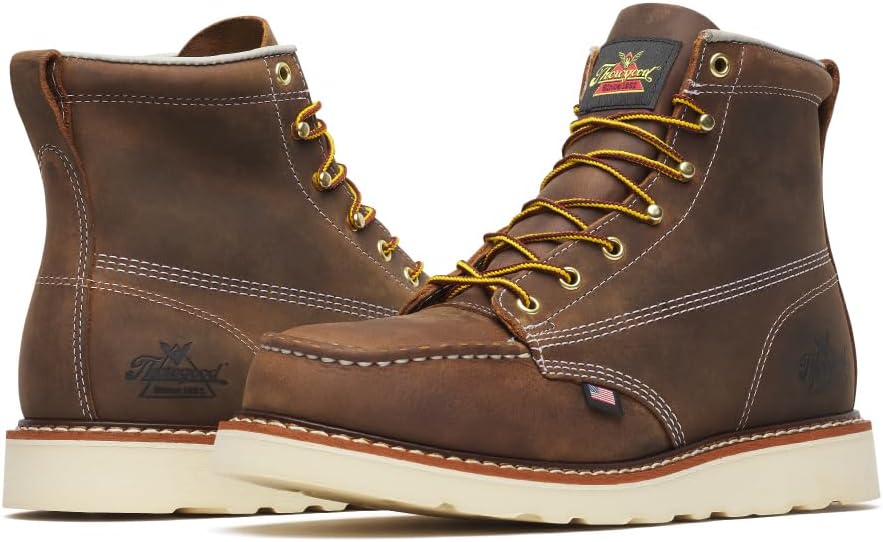
The Thorogood American Heritage proves American-made quality doesn’t always require $300 price tags. Union-made in the USA, these boots deliver genuine craftsmanship for construction workers who value boots that improve with age.
What works: The full-grain, oil-tanned American leather undergoes rigorous testing for strength, density, and aging characteristics. The leather quality is immediately apparent, thick, substantial, and built to survive years rather than months. The oil-tanning process provides natural water resistance and durability while creating leather that develops character with use.
Goodyear welt construction creates a stitched connection between upper and sole that survives construction abuse. When the MAXWear Wedge sole wears out after thousands of hours, a cobbler can resole for $80-120, extending boot life by years. This construction also creates a wider, more stable platform beneficial for construction work on uneven surfaces.
The removable Ultimate Shock Absorption footbed uses dual-density polyurethane with extra cushioning under high-impact zones. Construction workers consistently report this footbed genuinely reduces fatigue during extended standing and walking. When it eventually compresses (typically after 12-18 months of heavy use), replacement footbeds cost $30-40.
The moc toe design provides additional room in the toe box, beneficial during long construction days when feet swell. The unlined leather breathes exceptionally well during warm weather while accommodating thick socks in winter.
Midwest-specific performance: The wedge sole excels on hard surfaces, concrete slabs, wood subflooring, asphalt. The oil-and-slip-resistant rubber meets ASTM F3445-21 standards. Electrical hazard protection meets ASTM F2892-18 standards.
The unlined leather’s breathability matters during summer construction work, these boots don’t turn into sweat factories during hot days. During winter, the leather accommodates thick wool socks without feeling cramped. For construction workers working year-round in varying temperatures, this versatility matters.
The boots are available in safety toe and soft toe versions. Construction workers in environments not requiring safety toes appreciate the soft toe option, all the quality and durability without the extra weight and temperature conductivity of steel toes.
The compromise: The wedge sole, while excellent on flat hard surfaces, doesn’t provide aggressive traction on loose gravel, mud, or varied outdoor terrain. Construction workers whose sites involve significant mud or loose material should consider lugged soles. The soft wedge compound wears faster on rough surfaces like gravel.
Break-in requires patience. The thick leather and structured construction need two weeks of gradual wear. Some construction workers report the ankle collar rubbing initially, though leather conditioner speeds break-in and prevents stiffness.
These boots cost significantly more than budget options. The quality and resoleable construction justify the cost long-term, but budget-conscious workers might struggle with the upfront investment.
The boots run true to size for most construction workers. The moc toe provides generous toe box room, but workers with very narrow feet might find them roomy. The boots are available in medium width only, no wide or narrow options.
Best for: Construction workers valuing American craftsmanship and long-term quality. Concrete work, framing, carpentry, general contracting. Anyone wanting boots that improve with age and can be resoled rather than replaced.
Comparison Table
| Boot | Safety Toe | Waterproof | Resoleable | Weight | Best Construction Use | Price |
|---|---|---|---|---|---|---|
| Danner Steel Yard | Steel | Yes | Yes* | Heavy | All-around premium, varied terrain | $160-180 |
| Timberland PRO Pit Boss | Steel | No | No | Medium-Heavy | Immediate comfort, general construction | $110-140 |
| KEEN San Jose Steel Toe | Aluminum | Yes | No | Lightweight | Residential, lightweight work | $140-180 |
| Wolverine Floorhand | Steel | Yes | No | Light | Budget option, light-medium duty | $85-120 |
| Thorogood American Heritage | Steel/Soft | No | Yes | Medium | Flat surfaces, American quality | $170-220 |
How to Choose Construction Work Boots
Match Boot to Your Primary Construction Work
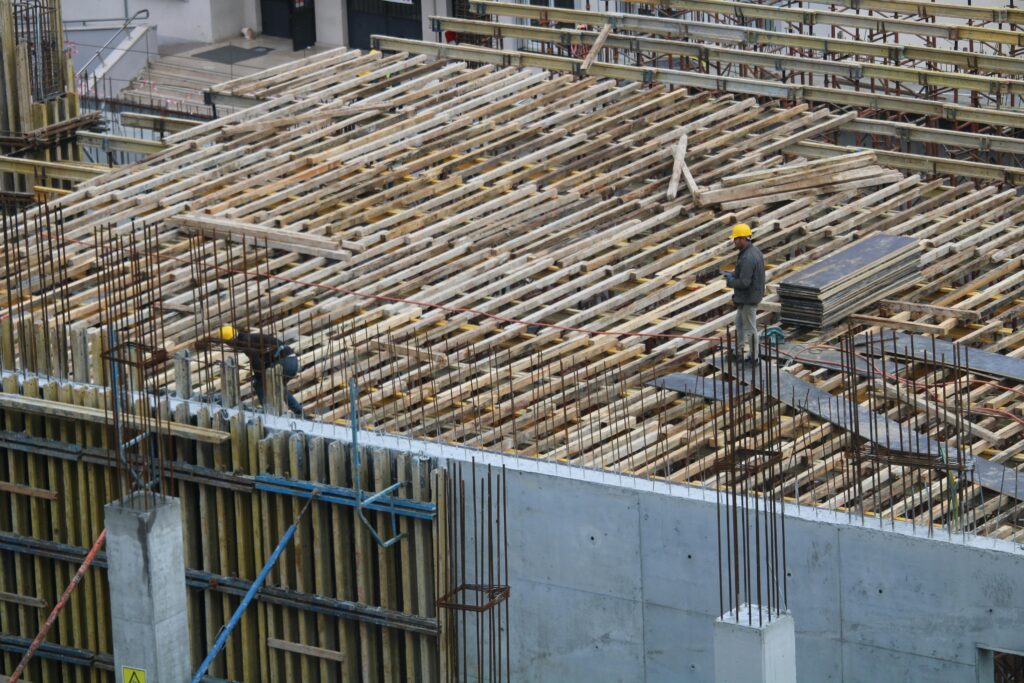
Not all construction work is equal. Foundation work in mud differs from finish carpentry on clean sites. Your primary work determines boot requirements:
Heavy Construction (foundation, concrete, excavation): Waterproof boots with aggressive lug soles, robust leather, and resoleable construction. Danner Steel Yard or Thorogood American Heritage.
Framing/General Construction (residential, light commercial): Balance of protection, comfort, and value. Timberland PRO Pit Boss or KEEN San Jose Steel Toe.
Finish Work/Carpentry (interior, clean sites): Clean-sole options that won’t track debris, lighter weight for extended wear. KEEN San Jose or Thorogood wedge sole.
Mixed Construction (varying site conditions): Versatile boots with good traction, waterproofing, and durability. Danner Steel Yard.
Budget-Conscious (replacing boots frequently anyway): Adequate protection at minimum cost. Wolverine Floorhand.
Consider Your Boot Destruction Rate
Some construction workers destroy boots within 6-8 months regardless of quality, extreme abuse, harsh conditions, or rough treatment. Others carefully maintain boots and get years from quality options.
Fast Destroyers: If you consistently burn through boots in 6-8 months, expensive resoleable boots don’t make sense. The boots won’t last long enough to resole. Buy adequate mid-range boots ($110-140) and replace frequently rather than investing in premium boots you’ll destroy before they pay off.
Normal Wear: Most construction workers get 10-18 months from quality boots with normal care. Resoleable Goodyear welt construction makes sense, initial $170-220 investment plus $100 resole provides 24-30 months of use for $270-320 total cost. Better economics than buying three $120 boots over the same period.
Careful Maintainers: Workers who clean boots daily, condition leather weekly, and address minor repairs immediately can get 18-24 months before resoling, then another 18-24 months after resole. Premium resoleable boots provide exceptional value for these workers.
Understand Traction Requirements
Construction sites feature varied terrain that changes throughout projects:
Mud/Loose Material: Deep, widely-spaced lugs that shed material rather than packing. Avoid wedge soles, they pack solid and become slippery. Danner Steel Yard or Timberland PRO Pit Boss.
Concrete/Hard Surfaces: Wedge soles provide stability and comfort without tracking debris. Thorogood American Heritage or KEEN San Jose.
Mixed Terrain: Moderate lug patterns that balance debris shedding with traction. Most construction boots use this compromise. Danner Steel Yard, Timberland PRO Pit Boss.
Ladder Work: 90-degree heels that catch securely on ladder rungs. Avoid fully flat wedge soles for heavy ladder work. Danner Steel Yard excels here.
Calculate True Ownership Cost
Initial price doesn’t equal total cost. Calculate cost over expected life:
$180 Danner Steel Yard lasting 18 months = $10/month. Resole for $100, another 18 months = $5.55/month over 36 months total. Average: $7.77/month.
$120 Timberland Pit Boss lasting 14 months = $8.57/month. Not resoleable, must replace. Buy again, lasts 14 months = $8.57/month.
$95 Wolverine Floorhand lasting 7 months = $13.57/month. Not resoleable. Buy again, lasts 7 months = $13.57/month.
The “cheapest” boot costs most per month of use. Factor in your expected usage intensity and maintenance habits when comparing true costs.
Making Construction Boots Last
Construction work destroys boots, but proper care extends lifespan significantly:
Daily Maintenance (5 minutes)
Remove Construction Debris: Brush off sawdust, concrete dust, and debris after each shift. These materials act like sandpaper, accelerating wear. Use a stiff brush, 30 seconds per boot.
Wipe Clean: Remove mud, salt, and contamination with damp cloth. Accumulated grime holds moisture against leather, causing degradation and rot. Pay attention to welt stitching where debris accumulates.
Dry Properly: Never use direct heat. Stuff boots with newspaper to absorb moisture and maintain shape. Allow 24 hours drying time between uses when possible, rotate between two pairs if working in consistently wet conditions.
Weekly Care (15-20 minutes)
Leather Conditioning: Apply leather conditioner or oil weekly during heavy construction use. Maintains flexibility, prevents cracking, helps repel water. Use products designed for work boots, Sno-Seal, Obenauf’s, mink oil. Avoid products that over-soften leather or clog pores.
Lace Replacement: Construction work stresses laces heavily. Check weekly for fraying and replace at first signs of wear. Quality laces ($5-10) prevent the 5 AM frustration of broken laces.
Sole Inspection: Check for separation, uneven wear, or damage. Catching minor sole separation early allows quick glue repair. Ignoring it leads to complete failure requiring replacement or professional repair.
Construction-Specific Protection
Concrete Dust Management: Concrete dust is extremely abrasive. Brush it off immediately, don’t let it accumulate. The longer it sits grinding against leather during movement, the faster it wears through materials.
Mud Removal: Mud holds moisture and debris against leather. Remove it completely before it dries. Once dried, mud becomes much harder to remove and has already done damage.
Salt Prevention: Midwest winter construction means road salt and ice melt exposure. Wipe boots after each salt exposure, salt starts corroding immediately. Use salt-neutralizing products weekly during winter.
When to Repair vs. Replace
Repair Immediately If:
- Minor sole separation (glue it now before it spreads)
- Worn-through heel (cobbler can rebuild for $30-40)
- Loose stitching (address before it fails completely)
- Compressed insoles (replace for $20-40)
Plan Resoling When:
- Tread depth decreases noticeably (before completely smooth)
- Sole shows cracking but upper remains good
- Approaching 12-18 months of use (proactive resoling)
Replace Immediately If:
- Safety toe shows any damage (compromised protection)
- Sole is completely smooth (safety issue)
- Upper leather has significant cracks or holes
- Interior has collapsed completely
Common Construction Boot Mistakes
Buying Based on Initial Cost Only
The $90 boot that fails after 6 months costs more per day than the $170 boot lasting 24 months with one resole. Construction workers who focus exclusively on initial price often spend more annually while dealing with worse boots.
Ignoring Traction Requirements
Construction sites aren’t smooth warehouse floors. Boots without adequate traction cause slips, falls, and injuries, particularly on ladders and scaffolding. Wedge soles work great on concrete slabs but become dangerous on mud or loose gravel.
Skipping Break-In for Quality Boots
Quality leather construction boots require break-in. Wearing them for full 12-hour construction shifts immediately causes blisters and pain. Start with 2-4 hour periods, gradually increasing. This prevents suffering and reveals fit issues while you can still return them.
Not Sizing for Construction Socks
Construction workers need thick, durable socks, not thin dress socks. Test boots with actual work socks or feet will be cramped all day. The difference between thin and thick socks changes boot fit significantly.
Neglecting Maintenance
Construction boot maintenance isn’t optional, it’s required. Five minutes of daily cleaning can double boot life. Weekly conditioning prevents leather from drying and cracking. The $15 spent on leather care products extends $170 boots significantly, better ROI than buying cheap boots repeatedly.
Midwest Construction Boot Considerations
Temperature Extremes
Midwest construction happens year-round through dramatic temperature swings:
Winter Construction: Steel toes conduct cold, toes freeze during outdoor work. Combat this with thick wool socks or consider composite/aluminum toes that don’t conduct temperature. Waterproofing becomes essential as snow, slush, and ice melt create constantly wet conditions.
Summer Construction: Uninsulated boots with breathable linings prevent overheating. Avoid waterproof boots when working primarily on dry summer sites, the reduced breathability causes swampy feet during active work.
Temperature Cycling: Midwest construction sees 40-degree temperature swings in single days during spring and fall. Non-insulated boots with appropriate sock choices provide better versatility than heavily insulated boots that cause overheating.
Mud Season Challenges
Spring and fall construction sites become mud pits. November through April brings additional slush and standing water:
Aggressive Treads Essential: Smooth or wedge soles pack with mud, becoming slippery. Deep, widely-spaced lugs shed material rather than collecting it. The Danner Steel Yard’s angled lug pattern excels here.
Waterproofing Non-Negotiable: Muddy sites mean wet feet without waterproof construction. The difference between water-resistant and waterproof becomes obvious during extended mud exposure.
Tall Shafts Help: Eight-inch boots provide better protection against mud entering over the top compared to six-inch options. Consider tall shafts for excavation and foundation work.
Salt and Concrete Corrosion
Road salt used on Midwest construction sites accelerates boot degradation. Concrete dust adds additional abrasion:
Daily Cleaning Critical: The combination of salt and concrete dust destroys boots remarkably quickly without daily maintenance. Construction workers who clean boots daily report 50-100% longer boot life compared to those who neglect cleaning.
Leather Protection: Apply protective products before winter construction season starts. Reapply every 2-3 weeks during heavy salt exposure. The $12 protective treatment extends $170 boots significantly.
Bottom Line: Best Construction Boots for Most Midwest Workers
For the majority of Midwest construction workers, three boots represent the best overall value:
Best All-Around Construction Boot: Danner Steel Yard
The Steel Yard delivers premium quality, USA assembly, and performance specifically designed for construction work. The Goodyear welt construction, aggressive traction, waterproofing, and durable materials justify the higher price through extended life and resoling capability. For construction workers wanting boots that last multiple seasons and provide confident performance across varied job sites, this is the smart investment.
Best Value Construction Boot: Timberland PRO Pit Boss
The Pit Boss provides proven Timberland quality, immediate comfort, and adequate durability at mid-range pricing. It won’t last as long as premium boots and can’t be resoled, but 12-18 months of reliable performance at this price point delivers solid value. For construction workers wanting known quality without premium investment, this is the safe choice.
Best Budget Construction Boot: Wolverine Floorhand
For budget-conscious construction workers needing waterproof protection that meets OSHA requirements, the Floorhand delivers adequate performance at minimum cost. It won’t survive as long as quality options (expect 6-12 months), but for light-to-medium-duty construction work, it provides legitimate value. Don’t expect premium durability, but do expect honest protection.
Premium Choice: For construction workers wanting maximum quality and American craftsmanship, the Thorogood American Heritage delivers exceptional value through resoleable construction and leather that improves with age. Best for flat surface work (concrete slabs, wood subflooring).
Lightweight Option: For construction workers prioritizing reduced fatigue and walking-intensive work, the KEEN San Jose Steel Toe provides aluminum toe protection at significantly reduced weight. Best for residential construction and finish work.
More Work Boot Guides
Looking for work boots guides for different needs, features, or budgets? Check out our comprehensive work boots hub:
Best Work Boots for the Midwest – Complete Guide
Our main work boots hub covers:
- Overall best work boots for Midwest conditions
- Guides for specific work types (manufacturing, warehouse, electrician)
- Men’s and women’s specific guides
- Budget-specific guides and premium options
- Seasonal guides for different weather conditions
Related Categories:
- Best Winter Boots for the Midwest – Cold weather protection
FAQs
Construction work destroys boots faster than most professions through abrasion, impact, wet exposure, and temperature extremes. “Expensive” boots ($160-220) typically provide better value than cheap boots ($60-90) through longer life and resoleable construction. A $180 boot lasting 18 months then getting a $100 resole for another 18 months costs $7.77/month over 36 months. Three $90 boots over 36 months (each lasting 12 months) cost $270 total = $7.50/month but with inferior comfort and protection. The economics favor quality, especially when accounting for reduced foot fatigue and better safety. However, construction workers who destroy boots within 6-8 months regardless of quality should buy adequate mid-range boots and replace frequently rather than investing in premium boots they’ll destroy before they pay off.
Both meet identical ASTM F2413 safety standards, equal protection. The differences: Steel costs less ($20-40 savings), conducts temperature (cold in winter, hot in summer), weighs more, triggers metal detectors. Composite weighs 30% less (reducing leg fatigue), doesn’t conduct temperature (more comfortable year-round), costs slightly more. For Midwest construction work with temperature extremes, composite or aluminum toes provide better comfort despite higher cost. For budget-conscious workers or indoor-only construction, steel toe saves money without significant disadvantage. Construction workers climbing ladders extensively or walking job sites benefit most from weight reduction composite provides.
Light-to-medium duty construction (residential framing, finish work): 10-18 months with proper care. Heavy construction (concrete, excavation, heavy commercial): 6-12 months. Cement-construction boots can’t be resoled, when soles wear out, you’re buying new boots. Goodyear-welted boots can be resoled for $80-120, providing another 12-18 months of use. Total lifespan with resoling: 24-36 months. Factors affecting life: work intensity, maintenance quality, terrain abrasiveness, exposure to salt and chemicals. Construction workers who clean boots daily, condition leather weekly, and address minor repairs immediately report 50-100% longer boot life than those who neglect maintenance.
For Midwest construction work, waterproof boots are essential November through April when slush, snow, mud, and standing water appear on virtually all job sites. They’re also critical for foundation work, excavation, and any construction involving water exposure regardless of season. For interior construction work or summer dry-site work, non-waterproof boots provide better breathability and comfort. The trade-off: waterproof boots keep feet dry externally but can feel warmer during active work. Breathable waterproof membranes (like Danner Dry) balance external waterproofing with internal moisture management better than sealed rubber boots. Most construction workers benefit from owning both waterproof boots (fall/winter/spring/wet sites) and breathable non-waterproof boots (summer/dry sites)
If you consistently get 12+ months from boots before sole failure, resoleable Goodyear welt construction provides better long-term value. Initial cost ($160-220) plus one resole ($80-120) provides 24-30 months of use for $240-340 total = $8-11.33/month. Non-resoleable cement-construction boots ($110-140) need replacement every 12-15 months = two pairs over same period = $220-280 total = $7.33-9.33/month. The economics favor resoleable boots slightly while providing better materials and construction throughout. However, if you destroy boots within 8-10 months regardless of quality, through extreme abuse or harsh conditions, resoleable capability doesn’t matter. The boots won’t last long enough to resole. In this case, buy adequate mid-range cement-construction boots and replace frequently.
