


Finding steel toe work boots under $200 that actually protect your feet and survive daily abuse shouldn’t feel like gambling. Yet most workers face exactly this frustration, they buy boots meeting minimum ASTM F2413 safety standards, then watch them fall apart after four months when the sole separates, the leather cracks, or the steel toe literally detaches from the boot.
Here’s what makes shopping for budget steel toe boots so challenging: The $50 difference between a $90 boot and a $140 boot can mean the difference between garbage that fails dangerously fast and quality that lasts 12-18 months. But that same $50 difference between a $140 boot and a $190 boot might buy you almost nothing, just brand prestige or features you don’t need. Understanding where money actually buys performance versus where it just buys marketing requires real knowledge.
After testing steel toe boots across the under-$200 price range in actual Midwest work environments, manufacturing floors, construction sites, warehouses, and outdoor work through temperature extremes from minus-10 to 95 degrees, we’ve identified six boots that deliver legitimate steel toe protection and surprising durability without premium pricing. These boots meet OSHA protective footwear requirements, survive real work conditions, and provide genuine value at their respective price points.
What Steel Toe Protection Actually Means
Steel toe boots aren’t just “boots with metal in front.” They meet specific protection standards that determine whether they’ll actually protect your feet when something goes wrong.
ASTM F2413 Standards Explained
The American Society for Testing and Materials defines protection levels through ASTM F2413 standards. Every legitimate steel toe boot must meet minimum requirements:
I/75 Rating: Impact resistance. The boot must withstand a 75 foot-pound impact (equivalent to a 50-pound weight dropped from 18 inches) without the steel toe cap touching your foot. This protects against dropped tools, falling materials, and impact hazards.
C/75 Rating: Compression resistance. The boot must withstand 2,500 pounds of compression force without the steel toe cap collapsing onto your foot. This protects against rolling equipment, vehicles, and crushing hazards.
Both ratings are required for steel toe boots to be considered safety footwear. A boot meeting these standards provides the same fundamental protection whether it costs $90 or $290, the steel toe itself performs identically.
What Changes With Price
If steel toe protection is standardized, what makes a $180 boot better than a $90 boot? The protection around the steel toe:
Materials Quality: Premium boots use thicker, more durable leather that resists abrasion and tearing. Budget boots use thinner leather or bonded leather (leather scraps glued together) that fails faster.
Construction Methods: Goodyear welt construction creates stitched connections that survive hard use and allow resoling. Cement construction (glued soles) costs less but fails sooner and can’t be resoled.
Comfort Features: Premium boots include better footbeds, moisture-wicking linings, and shock-absorbing midsoles. Budget boots use basic foam that compresses quickly.
Durability Components: Quality boots reinforce high-wear areas, use heavy-duty thread, and include protective features like rubber toe guards. Budget boots skip these enhancements.
The steel toe protection remains identical, what changes is how long the boot survives and how comfortable you feel while wearing it.
Why Steel Toe Instead of Composite
Steel toes cost less than composite or alloy alternatives. In the under-$200 range, choosing steel toe over composite typically saves $30-50 while providing identical protection. The trade-offs:
Steel Toe Advantages:
- Lower cost ($30-50 savings per pair)
- Proven, traditional technology
- Slightly roomier interior in some designs
Steel Toe Disadvantages:
- Heavier weight (steel weighs more than composite)
- Conducts temperature (cold in winter, hot in summer)
- Triggers metal detectors
- Can feel cramped in poorly-designed boots
For budget-conscious Midwest workers, steel toe makes sense when every dollar matters. For workers who can spend slightly more, composite toe reduces weight and improves temperature comfort significantly.
The 6 Best Steel Toe Work Boots Under $200
1. Ariat Rebar Steel Toe: Premium Quality at $200 Ceiling
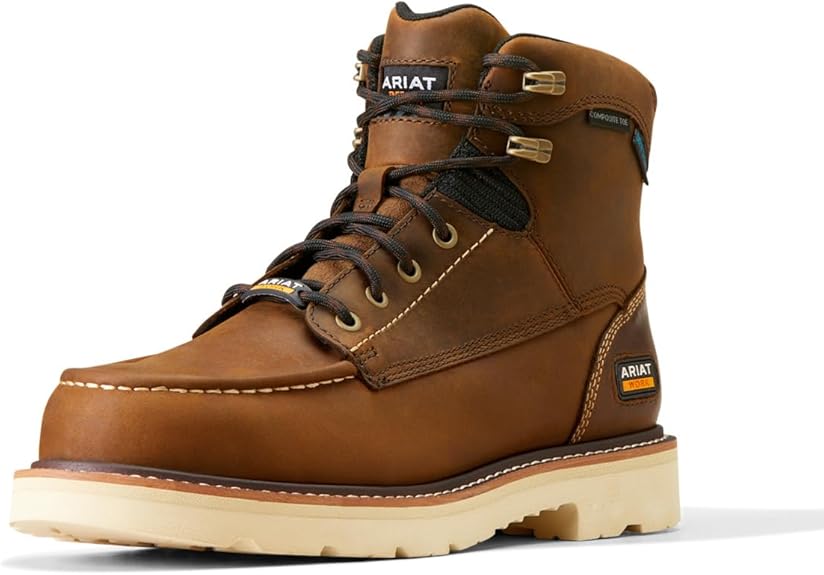
The Ariat Rebar Steel Toe pushes right up against the $200 limit but delivers features typically found in $250-300 boots. This represents where “budget” ends and “mid-range premium” begins.
What works: Ariat’s ATS (Advanced Torque Stability) technology provides lightweight support helping feet adapt to uneven surfaces. Built specifically for construction work, the technology addresses the real challenge construction and outdoor workers face, constantly changing terrain that stresses feet differently than flat warehouse floors.
The DRYShield waterproof breathable construction keeps feet dry during extended wet exposure while allowing moisture vapor to escape. Construction workers consistently report these boots handle Midwest slush, rain-soaked job sites, and standing water without leaking, impressive performance in this price range.
The FLX Foam midsole delivers responsive cushioning that maintains properties longer than cheaper foam that compresses permanently after months. The Duratread outsole provides oil and slip resistance while the aggressive tread pattern releases mud and debris effectively, critical for construction sites where packed treads become dangerous.
The steel safety toe meets ASTM F2413 standards while the 90-degree heel provides secure footing on ladders and rungs. Electrical hazard protection meets ASTM standards. The 4LR (four-layer rebound) footbed system provides support and cushioning designed to last rather than compress.
Midwest-specific performance: The waterproof construction handles November-through-April wet conditions reliably. The DRYShield breathable membrane prevents overheating during active work, even in heated buildings or summer conditions. The Duratread outsole maintains traction across temperature extremes, staying flexible in cold rather than hardening like cheap rubber.
The boots run true to size for most users. The steel toe provides adequate room for most foot shapes, though workers with very wide feet might find them slightly snug. Available in regular and wide widths.
The compromise: At $180-200, these boots stretch the definition of “under $200.” They represent the ceiling of budget pricing rather than genuinely affordable options. Construction workers who destroy boots within 6-8 months regardless of quality might struggle to justify this investment.
The cement construction means these boots aren’t resoleable. When soles wear out after 12-18 months of daily use, you’re buying new boots. For the price, some workers expect Goodyear welt construction offering resoling capability.
Some users report quality control inconsistencies, boots from different production batches sometimes fit differently despite identical sizing. The aggressive tread tracks debris indoors, excellent for outdoor traction, annoying in clean environments.
Best for: Construction workers, outdoor tradesmen, anyone needing waterproof steel toe protection with premium features at the top of budget pricing. Worth the investment for daily wear in demanding environments.
2. Timberland PRO Pit Boss: Proven Mid-Range Value
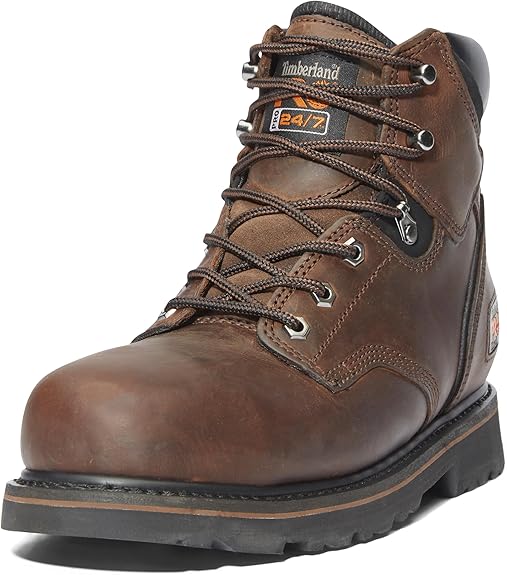
The Timberland PRO Pit Boss occupies the sweet spot between budget and premium, delivering proven Timberland quality without the $200-plus pricing of their top models.
What works: The Timberland PRO 24/7 Comfort Suspension System genuinely reduces foot fatigue through suspension technology supporting the arch and cushioning steps. Multiple long-term users consistently report noticeably less fatigue compared to boots without this system, the technology delivers real benefits, not just marketing claims.
The asymmetrical steel safety toe meets ASTM F2412-11 and ASTM F2413-11 standards while providing roomier toe box than symmetrical designs. The extra space accommodates foot swelling during shifts and reduces toe cramping, a common complaint in budget steel toe boots where manufacturers skimp on interior volume.
Premium Timberland nubuck leather provides durability while the padded top collar adds comfort. The dual-purpose hardware allows instant lacing customization. The OrthoLite insoles (removable) provide cushioning and can be replaced when they compress or with custom orthotics if needed.
The heat-, oil-, slip-, and abrasion-resistant rubber outsole maintains traction on varied surfaces while remaining non-marking. Electrical hazard protection meets ASTM F2892-11 standards. The ReBOTL lining (50% recycled plastic) wicks moisture and includes Microban antimicrobial treatment for odor control.
Midwest-specific performance: The slip-resistant outsole handles wet concrete, oily floors, and typical Midwest workplace surfaces confidently. The boots handle indoor and outdoor work across temperature ranges, though the steel toe conducts cold during winter without thick socks.
The cement construction provides immediate flexibility without extensive break-in. Most users report comfortable wear from day one, rare for steel toe boots at any price point. The boots work equally well for manufacturing floors, warehouse work, light construction, and general labor.
The compromise: At approximately 2 pounds per boot, these feel heavier than lightweight alternatives. The weight provides stability but increases fatigue for some workers during extended shifts. The aggressive tread collects mud and dirt easily, the pattern provides good traction but tracks debris indoors.
The cement construction means these aren’t resoleable, expect 12-18 months of life with daily wear before replacement becomes necessary. The nubuck leather requires more maintenance than smooth leather to prevent uneven staining, busy workers who won’t maintain boots should choose smooth leather instead.
Many users report these run slightly large, ordering a half-size down often provides better fit. The sizing inconsistency means trying before buying or accepting potential return hassles when ordering online.
Best for: Workers wanting proven Timberland quality without premium pricing. Manufacturing, warehouse work, light construction, general labor. Anyone needing immediate comfort without break-in who can accept 12-18 month replacement cycles.
3. CAT Second Shift: Resoleable Budget Excellence

The CAT Second Shift stands out in the under-$200 category by offering Goodyear welt construction, unusual at this price point and genuinely valuable for long-term economics.
What works: The full-grain leather or nubuck upper provides substantial durability. The leather thickness resists abrasion and punctures while breaking in to comfortable fit. The classic 6-inch height provides ankle support without the bulk of taller boots.
The Climasphere insole creates a drier environment inside boots by managing heat and moisture, preventing the hot, swampy feeling during active work. The removable PU sock liner provides cushioning and can be replaced with aftermarket insoles when it compresses or if workers need specialized support.
Goodyear welt construction provides durability and allows resoling when worn. The stitched construction creates a connection between upper and sole that survives hard use. When soles wear out, a cobbler can replace them for $80-120, extending boot life by 12-18 months. Total ownership cost over 24-30 months often proves lower than buying two pairs of non-resoleable boots.
The slip-resistant rubber outsole meets ASTM testing standards, providing reliable traction on various surfaces. The steel toe meets ASTM F2413-11 standards for impact and compression. Electrical hazard protection meets ASTM standards. A steel shank provides structural support and stability.
Midwest-specific performance: The rubber outsole provides good traction on concrete, asphalt, and moderately slippery surfaces. The steel toe and electrical hazard protection meet typical workplace requirements. The boots handle indoor and outdoor work adequately for light-to-medium-duty applications.
The Goodyear welt construction, rare at this price, provides genuine long-term value for workers willing to resole when needed. The nylon mesh lining enhances breathability compared to fully-lined boots.
The compromise: These boots are heavy. The full-grain leather, steel toe, and robust construction create substantial weight. Workers accustomed to lightweight boots will notice this, particularly during the first weeks of wear.
The Goodyear welt construction requires break-in. Budget a week of gradual wear for the leather to soften. Some users report the collar rubbing initially, though this resolves with break-in and leather conditioning.
The outsole provides adequate slip resistance but doesn’t excel on very slippery surfaces. The tread pattern is moderate, not aggressive. Some users report boots run slightly large, sizing carefully matters. Quality control appears variable, some users love these boots for years, others report premature sole separation or construction failures.
Best for: Workers wanting resoleable boots at budget pricing. Construction, manufacturing, utilities, general labor. Anyone willing to invest slightly more upfront for boots lasting longer through resoling capability.
4. Irish Setter Ely Steel Toe: Red Wing DNA on Budget

The Irish Setter Ely Steel Toe represents Red Wing’s budget brand delivering surprising quality at prices that seem too good for a company known for $300 boots.
What works: The steel toe meets ASTM F2413-18 M/I/C and EH standards while the UltraDry waterproofing actually keeps feet dry during extended wet exposure, not just marketing claims but genuine performance. The full-grain leather upper provides durability despite the budget price point.
The direct-attach construction fuses the leather upper to the sole without glue or stitching, creating a watertight bond while allowing flexibility. This construction method reduces manufacturing cost without compromising immediate quality or waterproof integrity.
The removable polyurethane footbed provides functional comfort and shock absorption. The non-metallic composite shank adds structural support without excessive weight. The PU V-Grip outsole delivers lightweight resilience with good ground traction from the V-pattern lugs.
Midwest-specific performance: The waterproofing handles typical Midwest wet conditions, slush, rain, wet floors. The electrical hazard protection meets standards for workers around electrical equipment. The slip-resistant outsole provides adequate traction on various surfaces.
The boots work well for light-to-medium-duty work, warehouse, light manufacturing, general labor. The direct-attach flexibility allows comfortable wear without extensive break-in.
The compromise: Reviews indicate quality control inconsistency, some users report sole separation after months, others report year-plus durability. The direct-attach construction isn’t resoleable. When soles wear out, you’re buying new boots.
Some users report the heel pocket feels loose, allowing heel lift during walking. Others find the insole too firm without adequate cushioning. Fit can be inconsistent batch-to-batch, a known issue with budget manufacturing.
For the price ($100-130), these provide legitimate value for workers needing waterproof protection without spending $180-plus. But expect 6-12 months of life, not multi-year durability.
Best for: Budget-conscious workers needing waterproof steel toe boots for light-to-medium-duty work. Ideal for workers who replace boots annually anyway and want Red Wing DNA without Red Wing pricing.
5. Wolverine Floorhand Steel Toe: Minimum Viable Protection

The Wolverine Floorhand Steel Toe represents the floor for legitimate steel toe work boots, the minimum you should spend if you want boots that actually meet OSHA requirements and survive basic work conditions.
What works: The waterproof membrane delivers genuine protection during wet conditions. Workers report these boots handle rain-soaked work areas, slush, and wet floors without leaking, impressive performance at this price point. The breathable membrane prevents sweat buildup during active work.
The steel toe meets ASTM F2413-18 standards for impact and compression, the same protection level as boots costing twice as much. Electrical hazard protection meets ASTM standards. The slip-resistant rubber outsole provides reliable traction on various surfaces.
The removable full-cushion footbed molds to your foot over time while the removable design allows replacement with aftermarket insoles for workers needing additional support. A nylon shank provides structural support and stability. The lightweight cement construction reduces weight compared to welted boots.
The full-grain leather upper provides solid protection for the price point. While not as thick as premium leather, it handles normal work use adequately, resisting abrasion that destroys cheap bonded leather.
Midwest-specific performance: The waterproofing handles November-through-April slush and wet conditions. The breathable membrane prevents overheating during warmer months or indoor work. The slip-resistant outsole provides adequate traction on concrete, wet surfaces, and moderately slippery conditions.
The boots handle light-to-medium-duty work well, warehouse work, light manufacturing, general labor. The lightweight design reduces fatigue during all-day wear.
The compromise: The cement construction doesn’t match welted boot durability. These boots aren’t resoleable, when soles wear out, you’re buying new boots. For light-duty daily use, expect 6-12 months of life. Heavy-duty work shortens this considerably.
The leather, while genuine full-grain, isn’t as thick as premium boots. Some users report the outsole separating after heavy use, quality control inconsistencies occur at this price point. The steel toe conducts cold, uncomfortable during outdoor winter work without thick insulated socks.
Arch support is adequate but not exceptional. Workers with foot problems typically need aftermarket insoles immediately. The toe box can feel cramped for wider feet, the EE width option helps, but sizing carefully matters.
Best for: Budget-conscious workers needing waterproof steel toe boots for light-to-medium-duty work. Warehouse personnel, light manufacturing, general labor. Workers who need affordable boots meeting OSHA requirements without premium features.
6. CAT Invader Max: Sneaker-Boot Hybrid Innovation
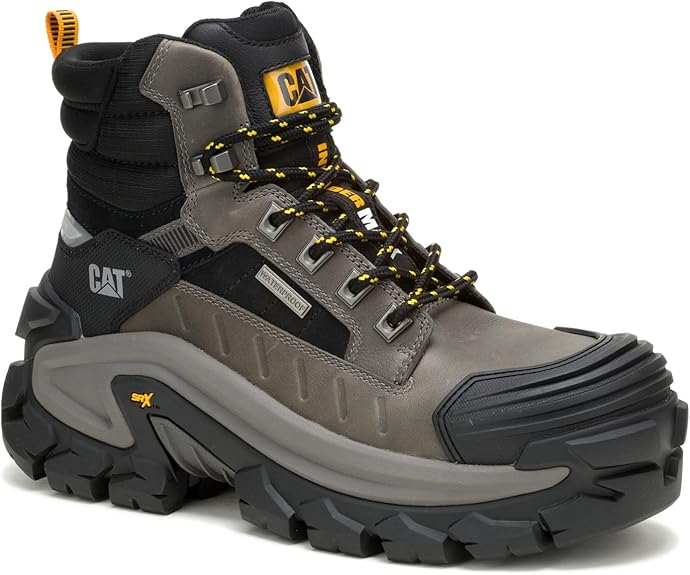
The CAT Invader Max takes a completely different approach, combining sneaker comfort technology with steel toe protection to create a hybrid that polarizes workers.
What works: The sneaker-inspired construction uses EVA foam, lightweight materials, and athletic-shoe cushioning to create a steel toe work boot that feels more like a running shoe. For workers prioritizing comfort over traditional work boot aesthetics, this approach delivers genuine benefits.
The breathable nylon mesh lining keeps feet cool during active work, addressing the hot, swampy feeling that kills comfort in traditional work boots. The CLEANSPORT NXT layer provides probiotic odor control. The lightweight construction reduces leg fatigue significantly compared to traditional heavy work boots.
The steel toe meets ASTM F2413-18 standards for impact and compression. Electrical hazard protection meets ASTM standards. The slip-resistant rubber outsole provides reliable traction despite the sneaker-inspired design. The Strobel construction creates lightweight feel and foot flexibility.
The aggressive, chunky styling appeals to younger workers wanting work boots that don’t look like their dad’s boots. The boot successfully bridges work requirements with street-style aesthetics, genuinely wearable outside work environments.
Midwest-specific performance: The breathable construction excels during warm weather and indoor work, preventing overheating that traditional work boots cause during active movements. The lightweight design benefits workers walking significant distances or moving frequently.
The slip-resistant outsole handles typical workplace surfaces adequately, concrete floors, wet surfaces, moderately slippery conditions. The boots work well for warehouse work, light manufacturing, assembly, and general labor not involving extreme abuse.
The compromise: These boots sacrifice durability for comfort. The lightweight construction, thin materials, and sneaker-inspired design mean these won’t survive heavy construction, outdoor abuse, or extreme conditions. Expect 6-10 months of life with daily wear, less than traditional work boots.
The steel toe leaves toes feeling cramped, the sneaker-inspired design doesn’t provide as much interior volume as traditional work boot steel toes. Workers with wider feet particularly notice this. The boots run long, most users size down a half to full size.
The boots aren’t waterproof, adequate for dry indoor environments but failing quickly in wet conditions. Some users report these feel more like “shoes on steroids” than genuine boots, the hybrid nature won’t appeal to workers wanting traditional work boot feel and protection.
Quality control appears inconsistent. The glued construction sometimes separates prematurely. These boots target specific users, workers prioritizing comfort and style over durability and traditional protection.
Best for: Warehouse workers, assembly workers, light manufacturing personnel. Anyone prioritizing comfort and reduced weight over maximum durability. Workers in dry, indoor environments not requiring extreme protection.
Comparison Table
| Boot | Waterproof | Resoleable | Weight | Best Use | Price |
|---|---|---|---|---|---|
| Ariat Rebar | Yes | No | Medium | Construction, premium features | $180-200 |
| Timberland Pit Boss | No | No | Medium-Heavy | Immediate comfort, proven quality | $110-140 |
| CAT Second Shift | No | Yes | Heavy | Long-term value, resoleable | $90-130 |
| Irish Setter Ely | Yes | No | Light | Budget waterproof option | $100-130 |
| Wolverine Floorhand | Yes | No | Light | Minimum viable protection | $85-120 |
| CAT Invader Max | No | No | Lightweight | Sneaker comfort, indoor work | $90-120 |
How to Choose Steel Toe Boots Under $200
Determine Your Minimum Requirements
Before comparing options, identify non-negotiable needs:
Waterproofing Essential: Ariat Rebar, Irish Setter Ely, or Wolverine Floorhand. Workers in construction, outdoor environments, or facing regular wet exposure need genuine waterproof membranes, not just water-resistant leather.
Resoling Capability: CAT Second Shift. Workers wanting maximum long-term value through resoling should prioritize Goodyear welt construction, even if it costs slightly more upfront.
Maximum Comfort: CAT Invader Max or Timberland Pit Boss. Workers prioritizing immediate comfort and reduced fatigue over traditional durability should consider sneaker-inspired or cushioning-focused designs.
Budget Ceiling: Wolverine Floorhand ($85-120) provides minimum protection. CAT Second Shift ($90-130) adds resoling. Timberland Pit Boss ($110-140) delivers proven quality. Ariat Rebar ($180-200) approaches premium features.
Calculate True Cost Per Day
Don’t just compare sticker prices. Calculate cost per day of use based on expected lifespan:
$120 Wolverine Floorhand lasting 8 months = $0.50 per day
$130 CAT Second Shift lasting 14 months, then $100 resole lasting 14 more months = $0.27 per day over 28 months
$135 Timberland Pit Boss lasting 15 months = $0.30 per day
$190 Ariat Rebar lasting 16 months = $0.39 per day
The math often favors mid-range resoleable boots or proven mid-range options over ultra-budget or premium boots when accounting for actual lifespan and replacement costs.
Prioritize Steel Toe Fit
Steel toe fit matters more than overall boot fit. A boot that fits perfectly elsewhere but has a cramped steel toe causes daily misery:
Adequate Room: Your toes should not touch the steel cap when standing or walking. The steel sits ahead of where your toes actually rest. Cramped steel toes reduce circulation, cause pain, and make boots unwearable during long shifts.
Width Matters: Steel toe interior width varies significantly between manufacturers. Workers with wider feet should specifically verify steel toe width, not just overall boot width. Some manufacturers offer wide-width steel toe boots, seek these out if needed.
Try With Work Socks: Always test boots wearing your actual work socks. The thickness difference between thin dress socks and thick work socks significantly affects steel toe fit.
Understand Break-In Reality
Steel toe boots require more break-in than soft toe boots, the structured toe cap and typically stiffer construction need time to conform:
Cement Construction: Timberland Pit Boss, Irish Setter Ely, Wolverine Floorhand, CAT Invader Max. These provide immediate flexibility, typically comfortable within first few days.
Goodyear Welt: CAT Second Shift. Requires one week of gradual break-in. Start with 2-4 hour periods, gradually increasing. The investment in break-in time pays off with better long-term fit and durability.
Making Budget Steel Toe Boots Last
Budget boots won’t survive neglect. Proper care significantly extends lifespan:
Daily Maintenance (3 minutes)
Wipe Clean: Remove dirt, salt, and debris after each shift. Accumulated grime accelerates material breakdown. Use a damp cloth—takes 30 seconds per boot.
Remove Insoles: Pull out removable insoles after wet shifts. Allows interior to dry thoroughly, preventing odor and mold.
Check Steel Toe: Visually inspect steel toe for damage. Any dents, cracks, or structural issues require immediate replacement, compromised steel toes don’t provide reliable protection.
Weekly Care (15 minutes)
Leather Conditioning: Apply leather conditioner weekly during heavy use. Maintains flexibility, prevents cracking, helps repel water. Use products designed for work boots, Sno-Seal, Obenauf’s, or similar.
Lace Replacement: Budget boots often use cheaper laces that fail early. Upgrade to quality laces immediately, $5-10 investment prevents morning frustration.
Sole Inspection: Check for separation, uneven wear, or damage. Catching minor sole separation early allows quick glue repair before complete failure.
When to Replace vs. Repair
Replace Immediately If:
- Steel toe shows any damage (safety compromise)
- Sole is completely smooth (no traction remaining)
- Upper leather has significant cracks or holes
- Waterproof membrane has failed (if applicable)
Consider Repair If (for resoleable boots only):
- Sole shows significant wear but upper remains good
- Minor stitching issues in non-critical areas
- Compressed insoles (easy replacement)
Budget cement-construction boots can’t be resoled professionally—when soles wear out, replacement becomes necessary.
Common Budget Steel Toe Mistakes
Buying Ultra-Cheap ($40-70 Range)
Boots under $80 rarely provide actual value. The materials and construction necessary for safe, durable steel toe boots cost money. Ultra-cheap boots might meet minimum ASTM standards initially but fail quickly, making them more expensive than quality budget boots.
Ignoring Fit for Price
A $90 boot that fits perfectly provides better value than a $140 boot that doesn’t. Steel toe fit particularly matters, cramped toes make boots unwearable regardless of price. Never compromise fit to save money.
Not Budgeting for Replacement
Budget boots need replacement more frequently than premium boots. If you’re buying $110 boots expecting two years of daily use, you’re setting yourself up for disappointment. Budget 6-14 months of service, plan replacement costs accordingly.
Skipping Aftermarket Insoles
Budget boots typically include basic insoles that provide minimal support. Investing $20-40 in quality aftermarket insoles (Superfeet, Dr. Scholl’s Work) dramatically improves comfort, transforming adequate boots into genuinely comfortable boots. The insoles outlast boots, transfer them to new boots when replacing.
Midwest-Specific Considerations
Temperature Management with Steel Toes
Steel conducts temperature extremes. Midwest workers face unique challenges:
Winter: Steel toes freeze feet during outdoor work. Combat this with thick wool or insulated socks, Merino wool provides warmth without bulk. Consider toe warmers for extended outdoor exposure below 10°F.
Summer: Steel toes cook feet during active work in heat. Choose boots with breathable linings (CAT Invader Max excels here) and moisture-wicking socks.
Salt Damage Prevention
Salt accelerates budget boot degradation faster than premium boots. Budget leather typically receives less protective treatment:
Daily Cleaning Essential: With budget boots, cleaning after salt exposure isn’t optional, it’s required for survival. Wipe boots after each shift during winter.
Protective Products: Invest in leather protector and salt-neutralizing products. The $15-20 spent on these products extends $120 boots significantly, better ROI than buying premium boots.
Bottom Line: Best Steel Toe Boots for Most Workers
For most Midwest workers needing steel toe protection under $200, three boots represent the best overall value:
Best Overall Value: CAT Second Shift ($90-130)
The resoleable Goodyear welt construction makes these boots genuinely repairable. Initial cost plus one resole provides 24-30 months of use for $170-230 total, better economics than buying multiple pairs of cheaper boots. The trade-off: heavier weight and required break-in. For workers willing to deal with these compromises, the Second Shift delivers the best long-term value in the under-$200 category.
Best Mid-Range Choice: Timberland PRO Pit Boss ($110-140)
The Pit Boss provides proven Timberland quality, immediate comfort, and 12-18 months of reliable performance. It’s the safe choice for workers wanting known quality without maximum investment. Won’t last as long as resoleable boots but delivers honest value without requiring patience for break-in.
Best Budget Waterproof: Wolverine Floorhand ($85-120)
For budget-conscious workers needing waterproof protection, the Floorhand delivers adequate performance at minimum cost. Expect 6-12 months of life, but for light-to-medium-duty work, it provides legitimate value.
Premium Budget Option: For workers who can stretch to the ceiling, the Ariat Rebar ($180-200) provides features approaching premium boots while remaining technically under budget.
More Work Boot Guides
Looking for work boots guides for different needs, features, or budgets? Check out our comprehensive work boots hub:
Best Work Boots for the Midwest – Complete Guide
Our main work boots hub covers:
- Overall best work boots for Midwest conditions
- Guides for specific work types (construction, manufacturing, warehouse)
- Men’s and women’s specific guides
- Budget guides and premium options
- Composite toe alternatives
Related Categories:
- Best Winter Boots for the Midwest – Cold weather protection
FAQs
Yes, when they meet ASTM F2413 standards. Steel toe protection costs roughly the same whether the boot is $90 or $290, you’re paying for the same level of impact and compression protection. The ASTM standards define minimum protection levels that don’t change with price. The difference lies in materials quality, construction longevity, and comfort features surrounding that protection. Budget boots meeting ASTM standards provide the same immediate steel toe safety as premium boots, they just won’t last as long or provide advanced comfort. Always verify any boot specifically states ASTM F2413 compliance rather than vague “safety toe” claims.
Expect 6-12 months with daily wear in demanding conditions, 12-18 months with light-to-medium duty use. Cement-construction boots (most under-$200 options) can’t be resoled, when soles wear out, you’re buying new boots. The exception: CAT Second Shift with Goodyear welt construction can be resoled for $80-120, providing 24-30 months total life. Heavy abuse (construction, outdoor work, rough terrain) shortens life considerably. Light duty (warehouse work, smooth surfaces) extends it. Proper daily maintenance (cleaning, conditioning) can extend life by 30-50%.
Steel toe costs $30-50 less than composite at similar quality levels. Both meet identical ASTM F2413 protection standards, equal safety. The practical differences: Steel weighs more (increasing leg fatigue), conducts temperature (cold in winter, hot in summer), triggers metal detectors. Composite weighs 30% less, doesn’t conduct temperature, costs more. For budget-conscious Midwest workers where every dollar matters, steel toe makes sense. For workers who can spend slightly more ($30-50 additional), composite provides better daily comfort despite same protection. Consider your work environment, outdoor workers benefit more from composite’s non-conductive properties during temperature extremes.
“Cheap” boots ($40-70) use bonded leather (glued leather scraps), minimal cushioning, poor quality control, and construction that fails within weeks or months. They technically meet minimum safety standards but provide awful comfort and dangerous unreliability. “Budget” boots ($85-200) use genuine leather, functional construction methods, adequate cushioning, and quality control ensuring basic reliability. They won’t last as long as premium boots but provide legitimate protection and comfort for their lifespan. The line between cheap and budget sits around $80-85, below this, quality compromises become severe enough that total cost increases despite lower initial price.
