


The average guy working in the Midwest goes through a pair of work boots every 8-12 months. Not because boots should fail that quickly, but because he bought the wrong boots to begin with, boots that prioritized price over performance, style over substance, or features he didn’t need over the fundamentals that actually matter.
Here’s what makes choosing men’s work boots particularly challenging: Unlike winter boots or hiking boots where one model can work for most guys, work boots demand consideration of your specific foot shape, your work environment, and how you actually use them. A warehouse worker on concrete all day needs completely different boots than a construction electrician working outdoors, even though both need “work boots.” Add Midwest-specific challenges, salt corrosion, temperature extremes, and slush that destroys cheap boots in weeks, and the decision gets even more complex.
After working with tradesmen, construction workers, manufacturing employees, and warehouse workers across Illinois, Wisconsin, Iowa, and Minnesota, we’ve identified the 10 men’s work boots that actually deliver in Midwest conditions. These aren’t recycled recommendations from generic boot lists. They’re boots tested in real Midwest work environments, evaluated for how men’s feet actually fit them, and proven to survive the abuse that kills cheap boots after one season.
What Makes Men’s Work Boots Different

Work boots for men aren’t just “work boots” in a men’s size. They’re designed around male foot anatomy, typical men’s work roles, and how men actually use boots daily.
Fit and Sizing Considerations
Men’s feet differ from women’s feet in more than just length. According to podiatric research, men typically have wider forefeet, narrower heels relative to forefoot width, and higher arches on average. Quality men’s work boots account for these differences through last design, the foot-shaped form boots are built around.
Width Matters More Than You Think: A D-width boot fits the average male foot, but many men need EE (wide) or even EEE (extra wide) options. Trying to wear too-narrow boots doesn’t just cause discomfort, it leads to bunions, hammer toes, and permanent foot deformation over time. Yet many budget boots only come in one width, forcing guys to “size up” for width, which creates length and heel problems.
Heel Lock is Critical: Men’s work boots need aggressive heel counters that lock the heel in place. During the 2,000-plus steps the average worker takes during a shift, even slight heel slippage causes blisters and reduces boot stability. A proper heel cup prevents lift while walking and provides the stable platform necessary for ladder work and uneven surfaces.
Common Men’s Foot Issues
Flat Feet (Overpronation): Approximately 20-30% of men have flat feet or collapsed arches. Without proper arch support, these guys experience knee pain, lower back problems, and foot fatigue. Standard footbeds in most work boots provide minimal support. Men with flat feet typically need aftermarket orthotics or boots specifically designed with substantial arch support.
High Arches (Supination): High arches reduce shock absorption, your foot doesn’t flex properly to distribute impact. This causes concentrated pressure on the heel and ball of the foot. High-arched guys need boots with substantial midsole cushioning and flexible construction that doesn’t fight natural foot movement.
Wide Toe Box Needs: Men’s toes spread naturally during standing and walking. Safety toes can compress this spread, causing pain and reducing circulation. The best men’s work boots provide adequate toe box volume while still meeting safety standards. Composite and alloy toes typically provide more interior space than steel toes of the same protection level.
Why This Matters for Work Boot Selection
Understanding your foot type isn’t optional if you’re wearing boots 40-60 hours weekly. The cumulative damage from poorly fitted boots doesn’t appear immediately, it develops over months and years. By the time you notice chronic pain, you’ve likely developed conditions that physical therapy or medical intervention won’t fully resolve.
The 10 Best Men’s Work Boots for Midwest Conditions
1. Thorogood American Heritage Moc Toe: The Gold Standard
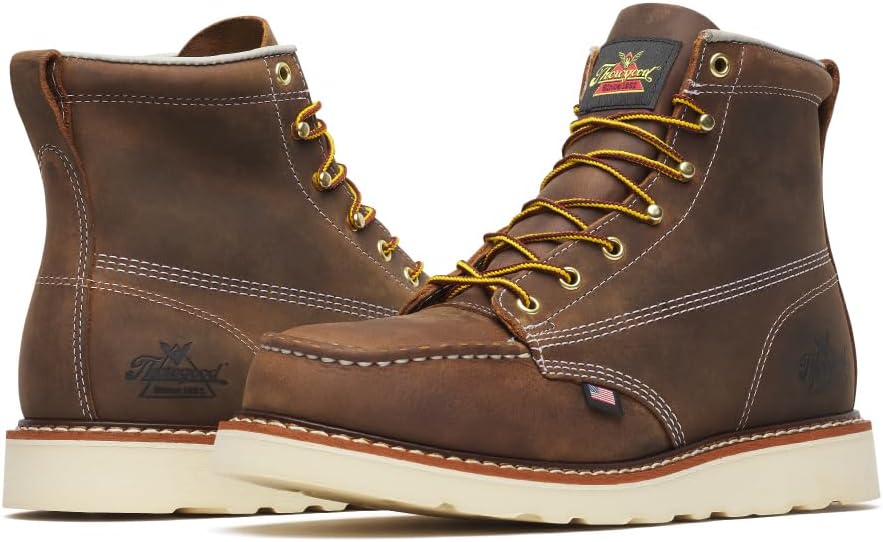
The Thorogood American Heritage isn’t just popular because tradesmen Instagram photos feature them. These boots earned their reputation through decades of actual performance in real work environments.
What works: The full-grain, oil-tanned American leather undergoes testing for density, pull resistance, and aging characteristics before Thorogood accepts it. This isn’t marketing, you can feel the leather quality immediately. The thickness provides genuine protection against abrasion and impact, while the oil-tanning process builds in natural water resistance and flexibility.
Goodyear welt construction means these boots last. When the MAXWear Wedge sole wears out after thousands of hours, a cobbler can resole them for $80-120, extending boot life by years. Compare this to cement-construction boots that get thrown away when soles wear out. Over five years, resoling twice costs less than buying three pairs of $120 boots.
The removable Ultimate Shock Absorption footbed uses dual-density polyurethane with extra cushioning under high-impact zones. Multiple long-term users report this footbed genuinely reduces fatigue during 10-12 hour shifts on concrete. When the footbed eventually compresses (typically after 12-18 months of heavy use), replacement footbeds cost $30-40.
Midwest-specific performance: The wedge sole excels on flat surfaces, manufacturing floors, warehouse concrete, indoor construction. The oil-and-slip-resistant rubber meets ASTM F3445-21 standards. Electrical hazard protection meets ASTM F2892-18 standards for guys working around electrical equipment.
The unlined leather breathes exceptionally well. During summer months or heated buildings, these boots don’t turn into sweat factories. During winter, the leather accommodates thick wool socks without feeling cramped. For guys working both indoors and outdoors, this versatility matters.
The compromise: The wedge sole doesn’t provide aggressive traction on loose gravel, mud, or outdoor terrain. If your work involves varied surfaces, consider a lugged sole. The soft wedge compound wears faster on rough surfaces like asphalt and gravel, Thorogood explicitly recommends these for smooth surfaces.
Break-in takes time. The thick leather and structured construction need two weeks of gradual wear. Some guys report ankle collar rubbing initially. Leather conditioner speeds break-in and prevents the stiffness that causes rubbing.
Best for: Men working primarily on concrete and smooth surfaces. Manufacturing, assembly, carpentry, indoor construction. Guys who value American craftsmanship and boots that improve with age.
2. Keen Utility San Jose: Lightweight Daily Driver
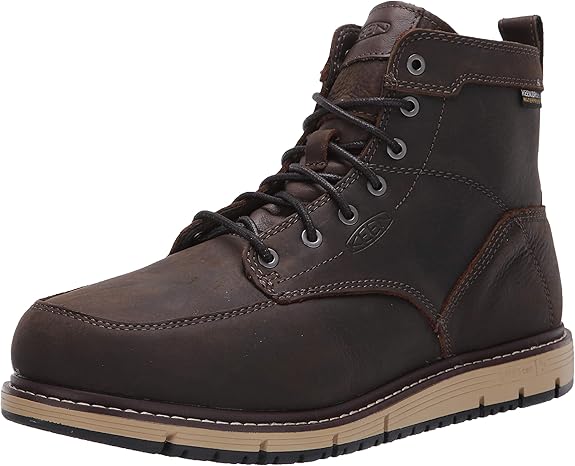
The Keen Utility San Jose challenges everything guys think they know about work boots. Safety protection doesn’t require heavy, clunky boots that beat up your legs all day.
What works: The aluminum safety toe weighs 35% less than steel while meeting identical ASTM F2413 protection standards. At approximately 1.7 pounds per boot, these boots weigh significantly less than traditional steel-toe alternatives. The weight difference compounds over a shift, moving 3-4 fewer pounds with every step reduces leg fatigue substantially.
The asymmetrical toe cap follows the natural contour of left and right feet instead of using the same toe shape for both. This creates more comfortable toe box volume and better natural fit. Most guys don’t realize how much cramped toes contribute to overall boot discomfort until they wear properly shaped safety toes.
Keen’s Luftcell PU midsole uses air-infused technology for cushioning without bulk. The midsole maintains properties longer than cheaper foam that compresses permanently after a few months. The metatomical dual-density EVA footbed provides arch support and heel cushioning. For guys without severe foot problems, the included footbed works well, though those with flat feet or high arches typically still need aftermarket insoles.
Midwest-specific performance: These boots excel for men who spend most shifts on concrete, warehouse workers, light manufacturing, facility maintenance. The wedge sole provides stability and comfort on flat surfaces. The KEEN.DRY waterproof membrane keeps feet dry while allowing sweat to escape, critical for guys working both indoors and outdoors.
The non-metallic construction includes composite puncture resistance and ESR electrical hazard protection. For electricians and maintenance guys, the non-conductive properties prevent cold transfer during winter and eliminate metal detector issues.
The compromise: The lightweight construction means these boots aren’t built for heavy construction or extreme abuse. The leather, while durable, lacks the thick armor quality of heritage work boots. The generous toe box fits most feet comfortably but can feel sloppy for narrow-footed guys.
Many users report these run large. Order a half-size down from your normal size. The wide toe box works great for guys with wider feet but creates fit issues for narrow feet, check if EE width is available if you typically need wide boots.
Best for: Men prioritizing comfort and reduced fatigue. Warehouse personnel, light construction, facility maintenance. Guys spending 8-12 hour shifts on their feet on relatively clean surfaces.
3. Danner 6″ Bull Run Steel Toe: Investment-Grade Quality
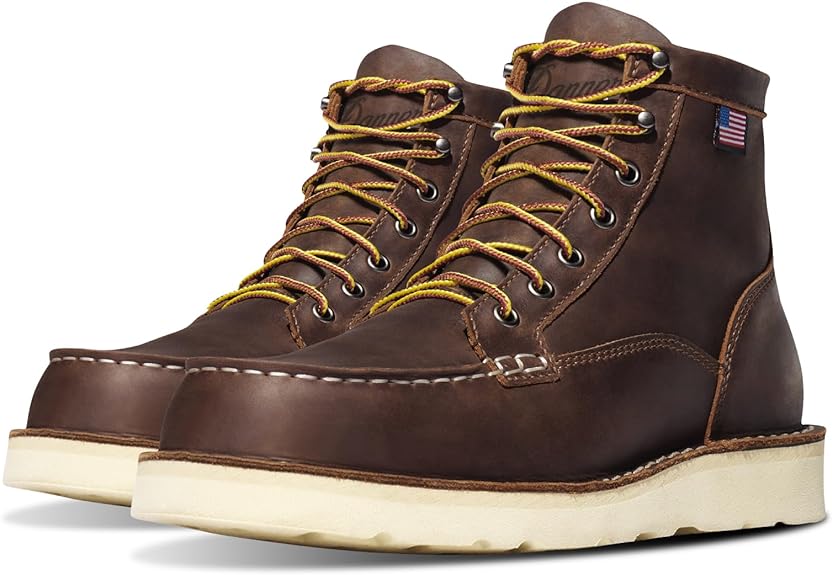
The Danner Bull Run represents what American bootmaking can achieve when quality trumps cost-cutting. These boots cost more, but the total ownership cost over years often proves lower than buying cheaper boots repeatedly.
What works: Danner tests leather hides through seven quality criteria before acceptance, strength, density, thickness uniformity, pull resistance, and others. The unlined full-grain leather breaks in beautifully, molding to your foot over weeks. Unlike lined boots that never truly conform, unlined leather creates a genuinely custom fit that gets better over time.
Stitchdown construction creates a wider platform than Goodyear welt while remaining resoleable. Danner’s Portland factory can recraft these boots, replacing worn soles, damaged components, and worn stitching. This service costs around $130 but provides essentially new boots. Compare this to buying new $200 boots every 18 months.
The three-layer open-cell polyurethane footbed promotes air circulation and heat dissipation. The design prevents the hot, swampy feeling that kills comfort during warm months or in heated buildings. The Danner Wedge outsole uses polyurethane specifically designed for concrete and wood floors, providing cushioning and traction without floor marking.
Midwest-specific performance: The unlined leather excels in moderate temperatures, breathable during warm months, accommodating thick socks in winter. The oil-and-slip-resistant wedge sole performs exceptionally on concrete. For manufacturing workers, warehouse guys, and indoor construction, these boots provide ideal traction and comfort.
The steel toe meets ASTM F2413 standards. Electrical hazard protection meets ASTM F2892 standards. The fiberglass shank provides structural support without excessive weight or stiffness.
The compromise: These cost significantly more than alternatives. While quality justifies the price, budget-conscious guys might struggle with the initial investment. The soft wedge sole wears quickly on abrasive outdoor surfaces, Danner explicitly states these aren’t recommended for daily asphalt use.
Break-in requires patience. Budget two weeks of gradually increasing wear. The thick leather and structured construction need time to soften and conform. The ankle collar benefits from leather conditioner to prevent rubbing during break-in.
Best for: Men spending most time on concrete or wood floors who value long-term quality over initial cost. Manufacturing, warehouse work, carpentry, facility maintenance. Guys who appreciate American craftsmanship and can invest in boots that last.
4. Ariat Stump Jumper: Modern Construction Tech
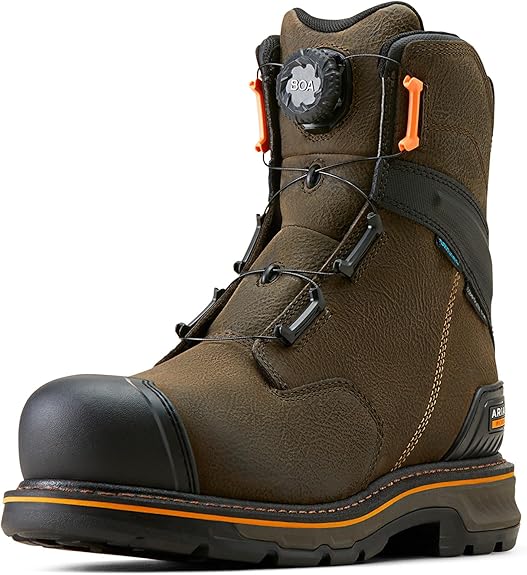
The Ariat Stump Jumper brings modern technology to work boots without gimmicks. When features actually solve real problems, they’re worth paying for.
What works: Ariat’s ATS (Advanced Torque Stability) technology uses a forked shank design that supports the foot while allowing natural flex and movement. Unlike traditional full shanks that create stiffness, ATS provides stability where needed while maintaining flexibility where feet naturally bend. This reduces fatigue during extended walking and standing.
The FLX Foam midsole creates a boot that feels responsive rather than rigid. The combination of ATS support and FLX cushioning makes these boots comfortable for guys who walk miles during shifts, not just stand in one spot. The Energy Max anti-fatigue insole adds another layer of cushioning.
The DRYShield waterproof construction keeps feet dry without the clammy feeling of non-breathable boots. For guys working outdoors or transitioning between inside and outside, this matters. The Duratread outsole provides oil and slip resistance while the aggressive tread pattern releases mud and debris effectively.
Midwest-specific performance: The lugged outsole handles varied surfaces well, concrete loading docks, muddy jobsites, icy parking lots, gravel. The debris-releasing tread prevents snow and mud buildup. The waterproof construction handles extended wet exposure.
The composite safety toe (in composite toe models) doesn’t conduct cold like steel, making these boots comfortable in winter without requiring thick insulated socks. Goodyear welt construction allows resoling.
The compromise: These boots run slightly large. Many guys report ordering a half-size down for proper fit. The aggressive sole provides excellent outdoor traction but creates more flex than wedge soles, better for mixed conditions, slightly less optimal for pure standing on concrete.
Break-in is brief compared to heritage leather boots, but the structured upper still needs a few days to conform. The lugged sole tracks debris indoors, not ideal for clean environments where appearance matters.
Best for: Construction workers, outdoor tradesmen, guys working on varied surfaces. Anyone needing waterproof protection and traction on different terrains. Men who value modern comfort features alongside traditional durability.
5. Timberland 6″ Premium Waterproof Boots: The Icon
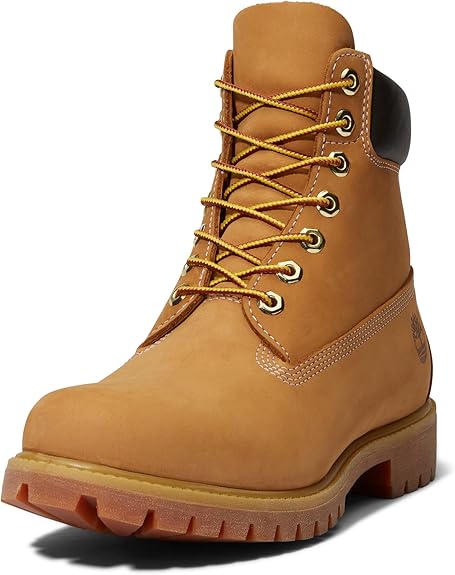
The Timberland 6″ Premium transcended work boots to become a cultural icon, but underneath the street-style reputation sits a genuinely capable work boot that’s been proving itself since 1973.
What works: The premium nubuck leather comes from tanneries rated Silver or Gold by the Leather Working Group for environmental responsibility. While nubuck requires more care than smooth leather, it provides excellent durability with proper maintenance. The padded ankle collar creates comfortable fit right out of the box, a rarity for work boots.
The 400g PrimaLoft insulation provides serious warmth without excessive bulk. For guys working outdoors during Midwest winters, this insulation handles sustained cold exposure comfortably. The seam-sealed waterproof construction keeps feet dry in rain, slush, and snow.
The Anti-Fatigue footbed uses conical foam technology that compresses and rebounds with each step, providing energy return that reduces fatigue. Multiple testers report noticeable difference compared to standard footbeds during long shifts. The steel shank adds structural support for working on uneven surfaces.
Midwest-specific performance: The lugged rubber outsole provides reliable traction on various surfaces, from icy parking lots to wet concrete to muddy terrain. The oil-and-slip-resistant rubber maintains grip on typical work surfaces. The insulation and waterproofing make these ideal for outdoor work during fall, winter, and spring.
The boot’s height provides good ankle support without the bulkiness of 8-inch boots. The iconic styling means these boots transition well from work to weekend wear, a consideration for guys who want one quality boot for multiple purposes.
The compromise: These aren’t safety-toe boots unless you specifically order safety-toe versions. The standard 6″ Premium provides no ASTM-rated protection, fine for workers not requiring safety footwear but inadequate for most industrial, construction, and manufacturing environments.
The cement construction means these aren’t resoleable. When soles wear out, you’re buying new boots. Nubuck requires more maintenance than smooth leather, you’ll need a nubuck eraser and brush to prevent uneven dirt staining.
Many guys report these run large. Timberland recommends ordering a half-size down. The break-in period is minimal compared to welted boots, but the first few wears still require gradual adjustment.
Best for: Men in trades not requiring safety toes, outdoor work in cold/wet conditions, guys who want one boot for work and weekend use. Landscaping, delivery, outdoor maintenance, light construction.
6. Carhartt Men’s Traditional Welt 6″ Steel Toe: Honest Value
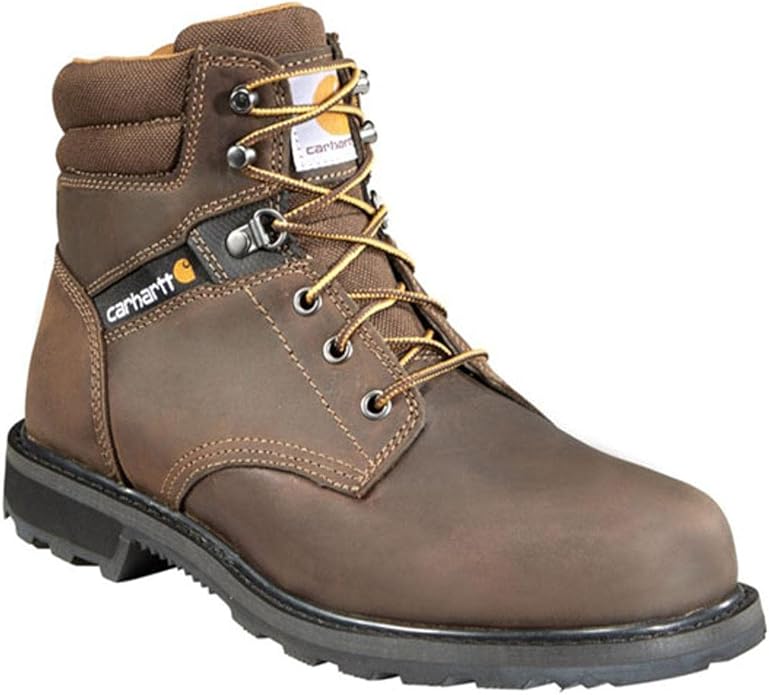
The Carhartt Traditional Welt delivers what Carhartt does best, honest, durable workwear at reasonable prices without unnecessary complexity.
What works: The oil-tanned leather develops character with use while resisting water naturally. The leather quality exceeds the price point, multiple reviewers comment on how substantial the leather feels compared to similarly priced competitors. The lace-up design with metal eyelets provides secure, adjustable fit.
The FastDry lining wicks moisture away from feet, preventing the clammy feeling that kills comfort. For guys working actively or in warm environments, moisture management matters as much as cushioning. The cushioned polyurethane insole provides shock absorption and support.
Goodyear welt construction means these boots can be resoled when soles wear out. The rubber outsole is oil-and-slip-resistant, meeting ASTM F3445-21 standards. The steel toe meets ASTM 2413-18 standards for impact and compression. Electrical hazard protection meets ASTM 2413-18 EH standards.
Midwest-specific performance: These boots handle typical Midwest work conditions reliably, indoor and outdoor environments, concrete floors, moderate wet exposure. The breathable waterproof membrane keeps feet dry without causing overheating. The rubber outsole provides adequate traction on most work surfaces.
The steel shank provides structural support and stability. The traditional lace-up allows precise fit adjustment, beneficial for guys whose feet swell during shifts or who wear varying sock thicknesses.
The compromise: These boots run slightly large and wide. Guys with narrow feet might struggle to achieve snug fit. The generous sizing works well with thick socks but feels sloppy with thin socks. Careful sizing matters.
Some users report quality inconsistencies, occasional issues with liner coming loose or insoles needing early replacement. While most boots perform well, Carhartt’s quality control doesn’t match premium brands. The laces are adequate but not exceptional, consider upgrading to higher-quality laces.
The boots require brief break-in despite the FastDry lining. The structured upper needs a few days to conform to your foot shape.
Best for: Men wanting reliable protection and comfort without premium pricing. Manufacturing, warehouse work, light construction, general labor. Guys who trust Carhartt’s reputation for honest, durable gear.
7. Blundstone Mens Steel Toe Safety Boots: Slip-On Convenience
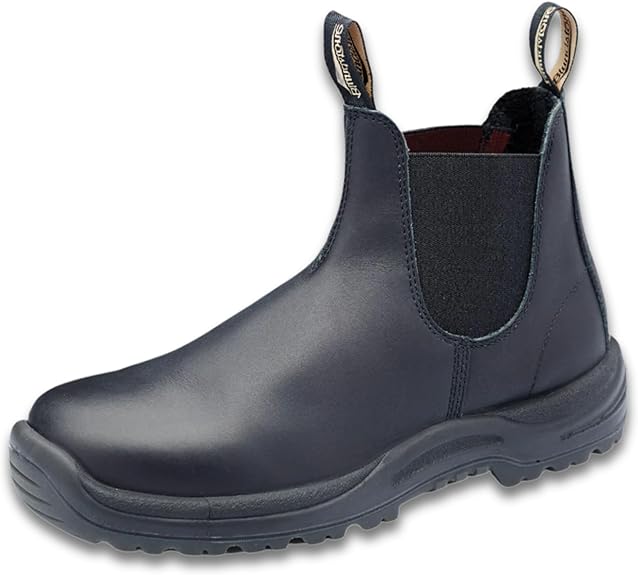
The Blundstone Steel Toe brings Australian bootmaking to American work sites. The slip-on design polarizes workers, guys either love the convenience or hate the lack of lacing adjustment.
What works: The pull-on Chelsea design with elastic side panels allows one-finger pull-on and easy kick-off. For guys entering and exiting work areas frequently, delivery drivers, electricians, HVAC techs, this convenience saves time and hassle. The lack of laces means no dealing with wet, muddy laces or relacing multiple times daily.
The steel toe is broader than most competitors, providing more toe box room. This helps guys with wider feet or those who find safety toes cramping. The steel toe meets ASTM F2413-18 standards for impact and compression protection. The boot includes electrical hazard protection.
Blundstone’s Shock Protection System in the sole absorbs up to 90% of impact under the heel and ball of foot. While this claim seems exaggerated, multiple users report these boots feel notably comfortable during extended wear on hard surfaces. The lightweight construction reduces leg fatigue.
Midwest-specific performance: The slip-resistant outsole provides good traction on most surfaces, though not as aggressive as lugged soles. The leather is water-resistant but not waterproof, adequate for light rain and wet floors but not for standing in puddles or extended wet exposure.
The boots work well for indoor-focused jobs with occasional outdoor exposure. The lightweight design and shock absorption make them excellent for concrete floors. The easy on-off suits jobs requiring frequent boot removal.
The compromise: Many construction sites ban Chelsea-style boots, considering them less secure than laced boots. Check your workplace rules before buying. The lack of lacing means limited fit adjustment, if they don’t fit well initially, you can’t fine-tune the fit.
The boots run slightly small in length and wider than average. Most guys need to go up a half-size. The generous width works great for wide-footed guys but creates fit issues for narrow feet.
The direct-attach construction means these aren’t resoleable. When soles wear out, you’re buying new boots. Some users report soles starting to separate after heavy use, quality control appears inconsistent.
Best for: Men in trades allowing slip-on boots who prioritize convenience. Electricians, HVAC technicians, delivery workers, light maintenance. Guys with wider feet who find traditional safety toes cramping.
8. CAT Second Shift: Budget Reliability

The CAT (Caterpillar) Second Shift brings heavy equipment manufacturer credibility to budget-priced footwear. These boots target guys needing legitimate protection without spending $200.
What works: The full-grain leather or nubuck upper provides solid durability. The leather thickness resists abrasion and punctures while breaking in to comfortable fit over time. The 6-inch height provides ankle support without the bulk of taller boots.
The Climasphere insole technology creates a drier environment inside the boot by managing heat and moisture. This prevents the hot, swampy feeling during active work. The removable PU sock liner provides cushioning and can be replaced with aftermarket insoles for guys needing additional support.
Goodyear welt construction provides durability and allows resoling. The slip-resistant rubber outsole meets ASTM testing standards, providing reliable traction on various surfaces. The steel toe meets ASTM F2413-11 standards for impact and compression. Electrical hazard protection meets ASTM standards.
Midwest-specific performance: The rubber outsole provides good traction on concrete, asphalt, and moderately slippery surfaces. The steel toe and electrical hazard protection meet typical workplace requirements. The boots handle indoor and outdoor work adequately for light-to-medium-duty applications.
The nylon mesh lining enhances breathability compared to fully-lined boots. The steel shank provides structural support and stability.
The compromise: These boots are heavy. The full-grain leather, steel toe, and robust construction create substantial weight. Guys accustomed to lightweight boots will notice this, particularly during the first weeks of wear.
The Goodyear welt construction requires break-in. Budget at least a week of gradual wear for the leather to soften. Some users report the collar rubbing initially, though this resolves with break-in and leather conditioning.
The outsole provides adequate slip resistance but doesn’t excel on very slippery surfaces. The tread pattern is moderate, not aggressive. Guys dealing with frequent very slippery conditions might want boots with advanced traction technology.
Some users report these run slightly large. The wide (EE) width helps guys with wider feet, but standard width can feel roomy on narrower feet. Careful sizing matters.
Best for: Men wanting solid, no-nonsense protection with brand reliability at reasonable prices. Construction, manufacturing, utilities, general labor. Guys who value rugged durability over advanced comfort features.
9. Wolverine Floorhand Steel Toe 6″: Entry-Level Protection

The Wolverine Floorhand provides legitimate protection at prices that make sense for guys who need affordable boots that actually work, not just the cheapest option available.
What works: The waterproof full-grain leather upper provides solid moisture protection. The breathable waterproof membrane keeps water out while allowing moisture vapor to escape, preventing both wet feet from external water and clammy feet from trapped sweat. The moisture-wicking mesh lining enhances breathability and comfort.
The steel toe meets ASTM F2413-18 standards for impact and compression, the same protection level as more expensive boots. Electrical hazard protection meets ASTM standards. The slip-resistant rubber outsole provides reliable traction on various surfaces.
The removable full-cushion footbed molds to your foot over time, providing personalized support. The removable design allows replacement with aftermarket insoles for guys needing additional arch support or cushioning. A nylon shank provides structural support and stability.
Midwest-specific performance: The waterproof construction handles typical Midwest wet conditions, rain, slush, wet floors. The insulation-free design works well for warmer months and indoor work where overheating is a concern. The slip-resistant outsole provides adequate traction on concrete floors, wet surfaces, and moderately slippery conditions.
The boots handle light-to-medium-duty work well, warehouse work, light construction, facility maintenance, general labor. The lightweight cement construction reduces weight compared to welted boots.
The compromise: The cement construction, while reducing weight and cost, doesn’t match the durability of Goodyear welt or stitchdown construction. These boots aren’t resoleable, when the sole wears out, you’re buying new boots. For light-duty daily wear, expect 6-12 months of life.
The leather, while genuine full-grain, isn’t as thick or robust as premium boots. The boots handle normal work conditions but won’t survive extreme abuse like heavy construction or outdoor industrial work. Some users report the outsole separating after heavy use.
Arch support is adequate but not exceptional. Guys with foot problems might need aftermarket insoles immediately. The toe box can feel cramped for wider feet, the EE width option helps, but sizing carefully matters.
Best for: Budget-conscious guys needing legitimate safety footwear for light-to-medium-duty work. Warehouse personnel, light manufacturing, general labor, workers who need affordable boots meeting OSHA requirements.
10. Danner Quarry: Maximum Protection
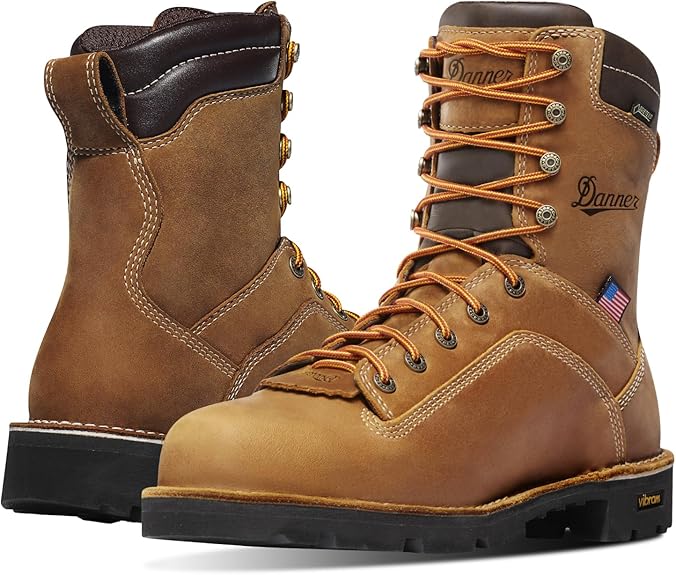
The Danner Quarry handles the work that lighter boots can’t. Originally designed for quarry workers and heavy construction, this boot delivers maximum protection for Midwest industrial work requiring serious durability.
What works: Danner manufactures Quarry boots in their Portland, Oregon facility using imported components assembled by hand. The quality control exceeds typical mass production. The full-grain leather upper undergoes nine separate quality tests before selection, ensuring consistent strength and durability.
The triple-stitched construction uses hyper-strong thread in high-wear areas. This reinforcement genuinely extends boot life in zones that typically fail first. The stitchdown construction creates a wide, stable platform while allowing the boots to be recrafted when soles wear out.
The Vibram Quarry outsole features a 90-degree heel and non-linear lug pattern designed for superior traction and debris release. The oil-and-slip-resistant rubber compound maintains flexibility in extreme temperatures. The aggressive tread provides reliable grip on loose gravel, wet concrete, muddy terrain, and slippery surfaces.
Midwest-specific performance: The Quarry excels in heavy construction, outdoor industrial work, and jobs requiring maximum protection. The aggressive outsole handles Midwest winter conditions confidently, snow, ice, mud, slush. Waterproof versions provide reliable protection during extended wet exposure.
The tall 8-inch shaft provides ankle support and prevents debris from entering boots. The substantial construction provides protection against impact, abrasion, and sharp objects. Electrical hazard protection meets ASTM standards.
The compromise: These boots are heavy. The robust construction, safety features, and aggressive outsole create a boot weighing more than lighter alternatives. Guys accustomed to lightweight boots will notice the difference, especially during the first weeks of wear.
The price reflects the quality and USA construction. At $300-plus, these cost significantly more than imported alternatives. However, the recraftable construction and exceptional durability mean lower long-term costs for guys who need maximum protection.
Break-in requires patience. The thick leather and structured construction need time to soften and conform. Budget at least two weeks of gradual wear. The collar benefits from leather conditioner to prevent rubbing during break-in.
Best for: Men in heavy construction, outdoor industrial work, utilities, and anyone facing severe working conditions. Guys who need maximum protection and durability, and can invest in boots lasting years rather than months.
Comparison Table
| Boot | Safety Toe | Waterproof | Weight | Best For Men | Price |
|---|---|---|---|---|---|
| Thorogood American Heritage | Steel/Soft | No | Medium | Indoor work, craftsmanship value | $170-220 |
| Keen Utility San Jose | Aluminum | Yes | Lightweight | Comfort, fatigue reduction | $140-180 |
| Danner Bull Run | Steel | No* | Medium | Quality investment, longevity | $230-270 |
| Ariat Stump Jumper | Varies | Yes | Medium | Varied terrain, modern features | $250-290 |
| Timberland 6″ Premium | No** | Yes | Medium | Cold weather, versatile use | $180-220 |
| Carhartt Traditional Welt | Steel | No | Medium | Value, reliable performance | $120-150 |
| Blundstone Steel Toe | Steel | Water-Resistant | Light | Slip-on convenience, wide toe box | $190-240 |
| CAT Second Shift | Steel | No | Heavy | Budget reliability, ruggedness | $70-120 |
| Wolverine Floorhand | Steel | Yes | Light | Budget-friendly, light duty | $80-130 |
| Danner Quarry | Alloy/Comp | Yes | Heavy | Maximum protection, heavy duty | $300-360 |
Waterproof versions available
Safety toe versions available
How to Choose Men’s Work Boots
Start With Your Actual Foot Shape
Before considering features or brands, understand your foot anatomy. Stand barefoot and have someone trace your foot outline on paper. Look at the shape:
Narrow Heel, Wide Forefoot: You need boots with aggressive heel cups and generous toe boxes. Many men have this shape, it’s why laced boots often work better than slip-ons.
Consistent Width: If your heel and forefoot are similar widths, you’ll fit most boots well. Focus on overall width (D, EE, EEE) rather than specific design features.
High Arches: Your foot’s underside shows significant space between heel and ball. You need boots with substantial midsole cushioning and won’t benefit much from arch support, your natural arch is already high.
Flat Feet: Your entire footprint shows on paper with minimal arch. You absolutely need boots with aggressive arch support or plan to add aftermarket orthotics immediately.
Match Protection Level to Actual Requirements
OSHA regulations specify when protective footwear is required, but understanding what you actually need prevents over-buying.
Steel Toe: Traditional, affordable, provides excellent protection. Conducts cold (uncomfortable in winter), triggers metal detectors, adds weight. Best for: guys working exclusively indoors where temperature isn’t a concern.
Composite Toe: Non-metallic, doesn’t conduct temperature, won’t trigger metal detectors. Weighs 30% less than steel. Costs slightly more. Best for: guys working in varying temperatures or around metal detectors. The reduced weight significantly reduces leg fatigue over 10+ hour shifts.
Alloy Toe: Aluminum or other metal alloys. Lighter than steel, still trigger metal detectors, conduct temperature less than steel. Middle ground between steel and composite. Best for: guys wanting lighter weight than steel at lower cost than composite.
Aluminum Toe: Specific type of alloy toe used by some manufacturers like Keen. Weighs 35% less than steel. More expensive. Best for: guys prioritizing minimum weight and maximum comfort.
No Safety Toe: Adequate for work not requiring ASTM-rated protection. Lighter, more comfortable, usually less expensive. Best for: trades without impact hazards, delivery, some maintenance roles, landscaping.
Waterproofing: When You Need It
Skip Waterproof If: You work exclusively indoors, never encounter standing water, and prioritize maximum breathability. Non-waterproof boots breathe better, dry faster if they get wet, and usually cost less.
Get Waterproof If: You work outdoors regularly, encounter standing water or deep puddles, work in areas with regular water exposure (food processing, car washes, etc.), or face Midwest fall/winter/spring slush conditions.
Breathable Waterproofing Matters: Cheap waterproof boots trap sweat, leaving feet clammy. Quality boots use breathable waterproof membranes (Gore-Tex, proprietary systems) that block external water while allowing sweat vapor to escape. For guys who need waterproof boots, pay extra for breathable construction—the comfort difference is substantial.
Construction Method Impacts Total Cost
Goodyear Welt: Initial cost $150-250. Resoling costs $80-130. Expected life with resoling: 4-6 years. Total cost over 5 years: $230-380 (initial + one resole). Cost per year: $46-76.
Cement Construction: Initial cost $80-120. Not resoleable. Expected life: 6-12 months. Total cost over 5 years: $400-600 (5 pairs at 12-month life). Cost per year: $80-120.
For guys buying work boots, the math clearly favors quality construction if you wear boots regularly. The exception: truly light-duty use where cement-construction boots last 2+ years, or guys who destroy boots through extreme abuse regardless of construction quality.
Fit Testing That Actually Matters
Don’t just walk around the store or living room. Test boots properly:
The Stair Test: Walk up and down stairs. Your heel should stay locked in place. If your heel lifts more than slightly, the boot is too big or the heel cup isn’t aggressive enough.
The Squat Test: Squat down fully. The boot should flex at the ball of your foot, not in the arch. If the boot creases in the arch, it’s too long.
The Toe Room Test: Stand up and slide your foot as far forward as possible. You should fit one finger width behind your heel. This gives adequate toe room for foot swelling and forward movement during walking.
The Width Test: The boot should feel snug through the midfoot without pinching. Your foot shouldn’t slide side-to-side when walking. If you need to over-tighten laces to prevent side-to-side movement, you need a narrower width.
The Arch Test: The boot’s arch support should align with your arch. If it’s too far forward or back, you’ll feel pressure in the wrong places. This creates hot spots and eventually pain.
When to Size Up or Down
Size Up If: You plan to wear thick socks regularly, you have wide feet and the boots don’t come in wider widths, your feet swell significantly during shifts (test by trying boots on in the afternoon/evening).
Size Down If: The manufacturer’s boots are known to run large (Timberland, Blundstone, some Keen models), you plan to wear only thin socks, you have narrow feet and need a tighter overall fit.
Never Size for Width: If you need more width, order wide sizes (EE, EEE), don’t just go up in length. Length affects how boots flex and fit, not just toe room.
Making Your Investment Last
Work boots represent significant investment. Proper care extends their useful life dramatically.
Daily Maintenance (5 minutes)
After Every Shift: Wipe boots with damp cloth, removing dirt, salt, and debris. This prevents material degradation. Pay attention to welt stitching and seams where dirt accumulates and causes premature wear.
Remove Insoles: Pull out removable insoles after wet shifts. Allows interior to dry thoroughly and prevents odor-causing bacteria. Hang or lay insoles separately to dry.
Brush Off Excess Dirt: Use a stiff brush to remove caked mud before it dries. Dried mud is harder to remove and holds moisture against leather.
Weekly Care (15-20 minutes)
Leather Conditioning: Apply leather conditioner every 1-2 weeks during heavy use. Maintains leather flexibility, prevents cracking, helps repel water. Use products designed for work boots—they maintain breathability while conditioning. Avoid products that over-soften leather or clog pores.
Lace Inspection: Check laces for fraying. Replace at first signs of wear. Lace failure leads to improper fit and reduces boot support. Quality laces cost $5-10 and significantly improve function.
Sole Inspection: Check for uneven wear patterns, cracking, or separation. Address problems early before they worsen. Minor separations can be glued; major damage requires professional repair or replacement.
Salt Damage Prevention
Midwest winters mean road salt exposure. Salt accelerates leather degradation faster than almost anything else.
Immediate Action: Wipe boots after each exposure to salt or de-icing chemicals. Don’t wait until end-of-day—salt starts corroding immediately. Use slightly damp cloth to remove salt residue.
Salt-Specific Products: Use products designed to neutralize and remove salt deposits. Water alone doesn’t remove all salt residue. Salt-removing products cost $8-12 and dramatically extend boot life.
Protective Treatments: Apply water-repellent treatments before winter. Creates a barrier helping prevent salt penetration. Reapply every few weeks during heavy salt exposure.
Storage
Daily Storage: Store boots loosely laced in well-ventilated areas. Avoid leaving wet boots in closed lockers, this encourages mold and odor. Position boots to promote air circulation.
Off-Season Storage: Clean and condition boots thoroughly before storage. Store in cool, dry locations away from direct sunlight. Use boot trees or stuff with newspaper to maintain shape. Check periodically for mold or material degradation.
When to Replace
Sole Wear: When treads wear smooth or soles show significant damage. Smooth soles become unsafe. For resoleable boots, plan resoling when tread depth decreases noticeably.
Upper Damage: Significant leather cracks, tears, or holes compromise protection and waterproofing. Minor scuffs are cosmetic; structural damage requires replacement.
Interior Degradation: When insoles compress permanently and new insoles don’t help, the boot’s midsole has collapsed. Continued use causes joint problems.
Safety Toe Damage: Any dent, crack, or structural damage to safety toes requires immediate replacement. Compromised safety toes don’t provide reliable protection.
Common Men’s Sizing Mistakes
Buying Based on Dress Shoe Size
Your work boot size differs from dress shoe size. Dress shoes typically fit snugger and don’t need room for thick socks or foot swelling. Most guys need work boots a half-size larger than dress shoes.
Ignoring Width Options
Many men need wide (EE) or extra wide (EEE) work boots but don’t realize width options exist. Trying to compensate by going up in length creates heel slippage, reduces stability, and causes blisters. If boots feel tight across the ball of your foot but have adequate toe room, you need wider width, not longer length.
Not Accounting for Socks
The socks you wear matter. If you’ll wear thin dress socks, boots should fit accordingly. If you’ll wear thick wool socks in winter, you need more room. Test boots with the socks you’ll actually wear.
Buying Without Break-In Consideration
Quality leather boots require break-in. They’ll feel stiff initially. This doesn’t mean they’re the wrong size, it means the leather hasn’t molded to your foot yet. Distinguish between “needs break-in” stiffness and “actually wrong size” tightness. If you can’t wiggle toes or the boot pinches severely, it’s too small. If it just feels stiff and structured, that’s normal for quality leather boots.
Midwest-Specific Considerations
Temperature Management
Midwest weather creates unique challenges you can’t optimize boots for simultaneously.
Single-Boot Approach: Choose non-insulated waterproof boots. Use thin socks for warm weather, thick insulated socks for winter. Works best for indoor workers or those with mostly moderate conditions.
Two-Boot System: Own separate summer and winter boots. Non-insulated, breathable boots for April through October. Insulated waterproof boots for November through March. More expensive initially but each pair lasts longer since they’re only used half the year.
Dealing with Salt and Slush
Late winter and early spring mean omnipresent slush mixed with road salt, this combination destroys boots faster than almost anything else.
Daily Maintenance Becomes Essential: The five minutes spent cleaning boots after work can double their lifespan. Wipe them down, remove salt deposits, allow proper drying.
Waterproofing is Essential: Slush finds every weak point. Waterproof boots are necessary for outdoor and construction work during slush season. Even indoor workers face slush during commutes and lunch breaks.
Leather Treatment Frequency Increases: Apply salt-removal products and leather conditioner more frequently during winter. The protection prevents accelerated degradation.
Concrete and Hard Surfaces
Most Midwest work boots encounter concrete frequently, manufacturing floors, warehouse surfaces, construction slabs.
Cushioning is Critical: Adequate midsole cushioning and quality footbeds prevent cumulative joint damage. The difference matters more over years than individual shifts.
Sole Hardness Balance: Too soft, soles compress quickly. Too hard, every step jars your body. Quality midsoles balance durability with shock absorption.
Consider Anti-Fatigue Technology: Features like Timberland’s Anti-Fatigue or Wolverine’s DuraShocks genuinely help for guys on concrete all day. They address the specific problem of impact absorption on hard surfaces.
Bottom Line: Best Men’s Work Boots for Most Midwest Workers
For the majority of Midwest men working in construction, manufacturing, warehouses, and the trades, three boots stand out:
Best Overall: Thorogood American Heritage Moc Toe ($170-220)
The Thorogood delivers exceptional quality, genuine American craftsmanship, and resoleable construction at a price that makes sense for daily users. The unlined leather breathes beautifully and molds perfectly to your foot over time. The Goodyear welt construction means you’re buying a boot that lasts years, not months. For guys on concrete and smooth surfaces who want boots that improve with age, this is the smart choice.
Best for Comfort: Keen Utility San Jose ($140-180)
Guys prioritizing comfort and reduced fatigue should seriously consider the San Jose. The lightweight aluminum toe, air-infused midsole, and immediate comfort without break-in make these boots ideal for 10-12 hour shifts. They won’t survive heavy construction abuse, but for warehouse work, light manufacturing, and facility maintenance, they deliver exceptional all-day comfort.
Best Premium Investment: Danner Bull Run ($230-270)
For guys willing to invest more upfront for boots that last significantly longer, the Bull Run justifies its price through exceptional materials, USA construction, and resoleable design. The unlined leather creates a custom fit that gets better over time. These boots aren’t for everyone, the price and break-in period require commitment. But for guys who appreciate quality and can invest in boots that last, these deliver.
Budget Choice: For guys needing affordable boots that meet OSHA requirements, the Wolverine Floorhand ($85-120) or CAT Second Shift ($90-130) provide legitimate protection without premium pricing. Neither will last as long as quality options, but both deliver honest value for light-to-medium-duty work.
Maximum Protection: For heavy construction, outdoor industrial work, or jobs demanding maximum durability, the Danner Quarry ($300-360) provides uncompromising protection and USA-made quality that justifies the investment.
More Work Boot Guides
Looking for work boots guides for different needs, features, or budgets? Check out our comprehensive work boots hub:
Best Work Boots for the Midwest – Complete Guide
Best Work Boots For Women In The Midwest
Our main work boots hub covers:
- Overall best work boots for Midwest conditions
- Guides organized by work type (construction, manufacturing, warehouse, electrician)
- Guides organized by features (waterproof, steel toe, composite toe, comfort)
- Budget-specific guides (under $150, premium options)
- Seasonal guides (winter insulated, summer breathable)
Related Categories:
- Best Winter Boots for the Midwest – Cold weather protection for daily wear
FAQs
Yes. Both steel and composite toes must meet the same ASTM F2413 standards, they provide identical protection levels against impact and compression hazards. The difference lies in weight (composite weighs 30% less), temperature conductivity (steel conducts cold, composite doesn’t), and metal detector compatibility (composite won’t trigger metal detectors). For protection level, they’re equal. For comfort and practical considerations, composite often wins for daily wear despite slightly higher cost.
Quality boots typically last 12-24 months with daily wear in demanding conditions. Light-duty work or indoor conditions might extend this to 2-3 years. Replace boots when tread wears smooth (traction loss is a safety issue), leather develops significant cracks or tears (compromises protection), safety toes show any damage (immediate replacement required), or cushioning compresses permanently (increases fatigue and joint stress). Budget boots often need replacement after 6-12 months. Premium resoleable boots can last 4-5+ years with proper care and timely resoling. Monitor your boots’ condition monthly rather than waiting for catastrophic failure.
Not necessarily, but it helps. A single quality boot can handle multiple roles if you choose carefully. Manufacturing workers spend all day on concrete, they need excellent cushioning and stability. Construction workers encounter varied terrain, they need aggressive traction and waterproofing. Electricians need non-conductive protection. If your work varies significantly, you might need multiple boots for optimal performance. However, many guys successfully use one versatile boot by choosing models that balance multiple needs, like waterproof composite-toe boots with lugged soles. Consider your primary work environment first, then look for versatility.
For guys wearing boots daily in demanding conditions, yes, quality boots provide better value long-term. A $200 pair of Goodyear-welted boots can be resoled for $100-130, providing 4-5 years of wear. That’s $0.15-0.25 per day of use. Three pairs of $100 boots over the same period cost $300 and provide inferior comfort. The math favors quality. However, expensive doesn’t automatically mean better. Some premium boots cost more for brand prestige or features you don’t need. Focus on construction quality (Goodyear welt, stitchdown), proven durability, and features addressing your specific work conditions. A $160 Thorogood often provides better value than a $120 budget boot or a $300 fashion-work boot hybrid.
