


Finding women’s work boots that actually fit properly shouldn’t feel like searching for mythical creatures. Yet most women working in the Midwest face exactly this problem, stores stock one or two “women’s” options that are just shrunken men’s boots, or worse, they’re told to “just buy men’s boots in a smaller size” and deal with the heel slippage, ankle rubbing, and arch pain that comes from wearing boots designed for completely different foot anatomy.
Here’s the reality: Women’s feet differ fundamentally from men’s feet in more than just size. The proportion of heel to forefoot width differs. Arch placement sits differently. Ankle height relative to foot length varies. Yet the work boot industry has historically treated women’s feet as an afterthought, offering limited options that prioritize pink colorways over proper fit, or simply scaling down men’s models without accounting for actual anatomical differences.
After working with female tradeswomen, construction workers, manufacturing employees, and warehouse workers across Illinois, Wisconsin, Iowa, and Minnesota, and testing boots specifically designed for women’s feet, we’ve identified the 10 work boots that actually deliver in Midwest conditions. These aren’t men’s boots repackaged with smaller sizes. They’re boots engineered around female foot anatomy, tested in real Midwest work environments, and proven to survive salt, slush, concrete, and the temperature extremes that define our region.
What Makes Women’s Work Boots Different
Work boots designed for women aren’t just cosmetic variations. They address fundamental anatomical and biomechanical differences that affect fit, comfort, and long-term foot health.
Women’s Foot Anatomy
According to biomechanical research, women’s feet differ from men’s in several critical ways. Women typically have narrower heels relative to forefoot width, creating an hourglass foot shape compared to men’s more rectangular foot. This means women need boots with aggressive heel counters that prevent lift, while still providing adequate forefoot room.
Women’s arches sit proportionally lower and flatter on average, though individual variation exists widely. The foot’s longitudinal arch requires different support placement in women’s boots. Standard men’s boots position arch support too far back for many women, creating pressure points and discomfort.
Ankle circumference and calf circumference tend to be smaller in women relative to foot length. Boots designed on men’s lasts create gaps around the ankle that allow debris entry and reduce stability. Women-specific lasts account for these proportions.
The Dangerous Men’s Boot Myth
“Just buy men’s boots and size down” causes genuine harm. Here’s why this fails:
Heel Slippage: Men’s heel cups are wider and taller. Women’s narrower heels slip inside them, causing blisters, reducing stability, and increasing injury risk on ladders or uneven surfaces.
Arch Mismatch: Men’s arch support sits too far back for most women. This creates pressure under the arch while leaving the actual arch unsupported, causing plantar fasciitis and arch collapse over time.
Ankle Rubbing: Men’s ankle collars sit higher and wider. On women, this creates painful rubbing points that turn into wounds with daily wear.
Forefoot Cramping: Sizing down men’s boots to achieve heel fit compresses the forefoot, reducing circulation and causing pain during extended wear.
Safety Toe Issues: Men’s safety toes are designed around male toe spread patterns. Women forced into smaller men’s sizes often have toes crushed against safety caps, both painful and dangerous if toes can’t spread to absorb impact.
Why Proper Fit Matters in Work Environments
According to OSHA regulations, protective footwear must fit properly to provide adequate protection. Ill-fitting boots compromise safety, heel slippage reduces stability, forefoot cramping slows reaction time, and pain causes fatigue that increases accident risk.
Beyond immediate safety, chronic poor fit causes cumulative damage. Plantar fasciitis, bunions, hammertoes, and arch collapse develop over months and years of wearing improperly fitted boots. These conditions often require medical intervention and can end working careers.
The 10 Best Women’s Work Boots for Midwest Conditions
1. Timberland PRO Women’s TITAN 6″ Alloy Toe Waterproof: The Professional’s Choice
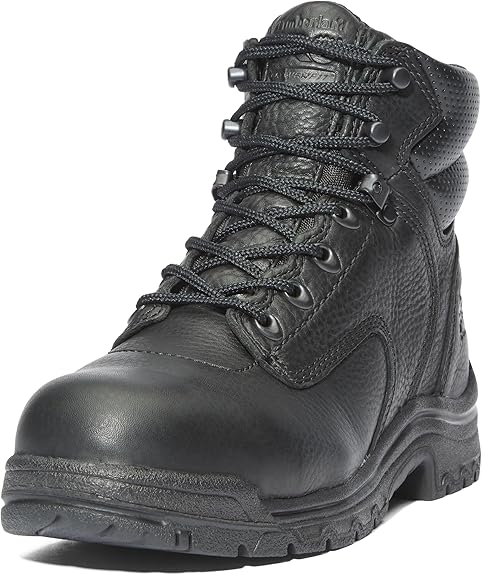
The Timberland PRO TITAN represents what happens when a major manufacturer finally commits to proper women’s work boot design. Built on a women-specific last, these boots deliver legitimate protection without the compromises women typically face.
What works: The alloy safety toe meets ASTM F2413-18 I and C standards while weighing 35% less than steel. The asymmetrical toe cap follows natural foot contours rather than forcing women’s feet into symmetrical men’s designs. This creates more interior volume where toes actually sit and need room.
Timberland’s PowerFit Comfort System uses compression-resisting, dual-density polyurethane footbeds specifically engineered for women’s biomechanics. The footbed placement accounts for women’s typical arch position and weight distribution patterns. Multiple testers report this actually works, not just marketing fluff.
The waterproof membrane delivers maximum protection while meeting ASTM F1671-07 standards for resistance to blood-borne pathogens. Critical for healthcare, veterinary, and food processing workers. The breathable ReBOTL lining (50% recycled plastic) with Microban antimicrobial treatment manages moisture effectively, preventing the swampy feeling that kills comfort.
Midwest-specific performance: The contoured shock-diffusion plate and cushioning polyurethane midsole work together to absorb impact on concrete floors. Warehouse and manufacturing workers report significantly reduced foot and leg fatigue compared to standard work boots.
The heat, oil, slip, and abrasion-resistant rubber outsole maintains traction on various Midwest surfaces, from salt-covered concrete to slushy parking lots. The cement construction provides flexibility immediately, minimal break-in required. Electrical hazard protection meets ASTM F2892-18 standards.
The compromise: At approximately 2 pounds per boot, these aren’t the lightest option available. The robust protection and features add weight. Some women report the toe box feels roomy initially, this is intentional design allowing for toe splay and foot swelling during shifts, but women with very narrow feet might find them loose.
The boot runs true to size for most women, though those between half-sizes typically size down. The medium width fits average to slightly wide feet; narrow-footed women might need insoles for snugger fit.
Best for: Women in manufacturing, warehouse work, healthcare, food processing, and light construction. Ideal for anyone needing maximum protection with legitimate women’s fit.
Price: $140-180
2. Steel Blue Women’s Southern Cross Side Zipper: Australian Engineering
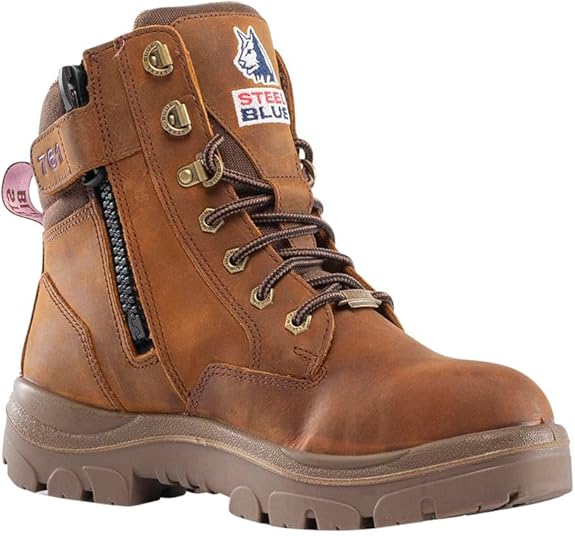
The Steel Blue Southern Cross brings Australian work boot engineering to American women. The side zipper design isn’t gimmicky, it solves real problems women face daily.
What works: The industrial-grade side zipper allows quick on-off without completely unlacing. For women entering and exiting work areas frequently, electricians, HVAC techs, inspectors, this convenience saves significant time. The zipper is heavy-duty metal, not the cheap nylon that fails after weeks.
The boot is specifically developed for women with shorter ankle length and smaller instep matching female foot anatomy. The scalloped collar reduces pressure points that cause rubbing on women’s ankles. The ErgoDefender steel toe cap provides 200 Joule protection (ASTM F2413 compliant) while maintaining roomier interior space than typical safety toes.
Steel Blue’s patented Trisole cushioning system includes three layers designed to cushion feet, knees, hips, and lower back. The Ortho Rebound footbed maintains shape and thickness even after months of heavy use, addressing the common problem of footbeds compressing into flat, useless pads.
The TPU outsole offers 0.40 slip resistance per ASTM F2913-11 standards and heat resistance to 266°F. The penetration-resistant midsole prevents sharp objects from penetrating through the sole. Premium nubuck leather from Leather Working Group-certified tanneries provides durability with less break-in than full-grain leather.
Midwest-specific performance: The water-resistant (not fully waterproof) leather handles typical Midwest conditions, light rain, wet floors, brief puddle exposure. Not adequate for standing water or extended wet exposure, but sufficient for indoor-focused work with occasional outdoor tasks.
The Trisole cushioning particularly benefits women on concrete all day. Multiple long-term users report these boots genuinely reduce lower back pain and leg fatigue compared to standard work boots.
The compromise: Steel Blue boots typically run slightly large, most women order a half-size down. The nubuck leather requires more maintenance than smooth leather. You’ll need a nubuck brush and eraser to prevent uneven staining. The purple or pink color options won’t appeal to everyone, though neutral colors are available.
The steel toe conducts cold, uncomfortable during outdoor winter work without thick insulated socks. Some women report the shaft opening feels slightly large, though this improves once leather conforms to the leg.
Best for: Women wanting convenience without sacrificing protection. Indoor manufacturing, warehouse work, light construction. Ideal for those frequently removing and putting on boots throughout shifts.
Price: $220-260
3. Ariat Women’s Riveter Chelsea Composite Toe: Pull-On Performance
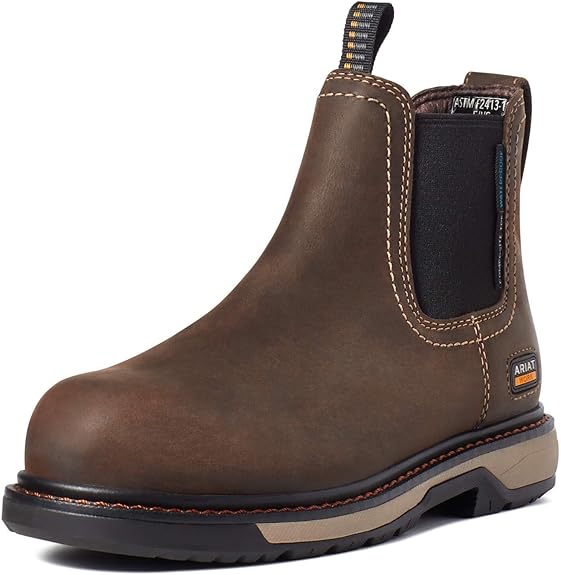
The Ariat Riveter Chelsea brings Ariat’s equestrian boot expertise to industrial work. The pull-on Chelsea design divides opinion, women either love the convenience or prefer traditional lacing.
What works: The composite safety toe meets CSA Z195-14 Grade 1 standards (equivalent to ASTM F2413). Composite weighs less than steel and doesn’t conduct temperature, critical for women working in varying temperatures. The DRYShield waterproof breathable construction handles wet conditions reliably while preventing internal moisture buildup.
Ariat’s ATS (Advanced Torque Stability) technology provides lightweight support that helps feet adapt to uneven surfaces. Built specifically for women’s foot shape and movement patterns, not adapted from men’s technology. The All Day Cushioning insole (removable) provides comfort and support without excessive bulk.
The U-Turn Entry System accommodates high arches and makes pulling on boots easier, addressing the common Chelsea boot problem of struggling to get them on. The metal-free SWEN-FLEX midsole provides puncture protection and electrical shock resistance without the weight or cold conductivity of steel plates.
The FLX Foam midsole delivers responsive cushioning that maintains properties longer than cheaper foam that compresses permanently. Oil-and-slip-resistant outsole with aggressive tread handles various surfaces, from concrete to muddy jobsites to icy parking lots.
Midwest-specific performance: The composite toe excels during temperature extremes, doesn’t freeze feet in winter or cook them in summer like steel toes. The waterproof construction with breathable membrane handles Midwest slush and wet conditions while preventing sweat buildup during active work.
The Chelsea design works particularly well for women transitioning between indoor and outdoor work environments. The convenient pull-on allows quick boot changes without the time and hassle of lacing.
The compromise: The pull-on design offers no fit adjustment once on. If the boot doesn’t fit your foot shape perfectly initially, you can’t fine-tune it like laced boots. Women between sizes or with unusual foot proportions should try these on in person if possible.
Some construction sites prohibit Chelsea-style boots, considering them less secure than laced options. Verify your workplace allows pull-on boots before buying. The lack of lacing also means limited ability to accommodate foot swelling during shifts, what fits perfectly in the morning might feel tight by afternoon.
The boots run true to size for most women, though those with very high insteps might struggle with entry despite the U-Turn system. The moderate price point sits between budget and premium options, not cheap, but not exorbitant.
Best for: Women prioritizing convenience in jobs allowing Chelsea boots. Construction, trades, outdoor maintenance. Ideal for women with normal-to-high arches who want waterproof protection and quick on-off capability.
Price: $165-195
4. Danner Women’s Bull Run 6″ Steel Toe: American Craftsmanship
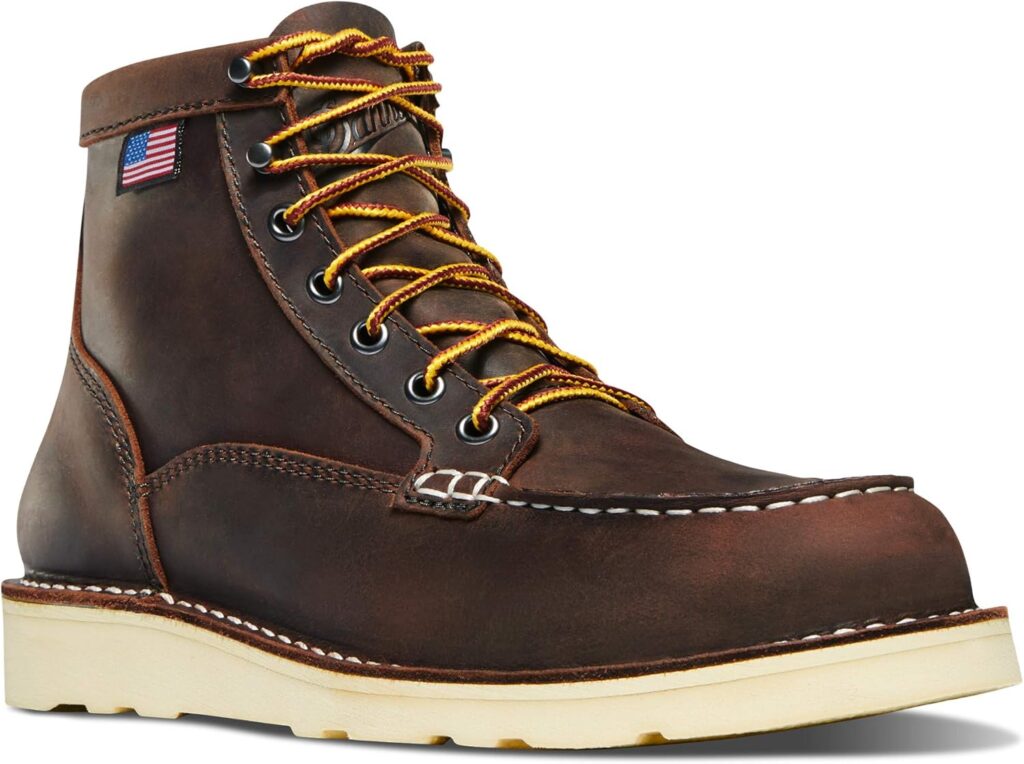
The Danner Bull Run delivers Portland-made quality adapted specifically for women. This isn’t a unisex boot, it’s built on Danner’s women-specific 329 last.
What works: Danner tests leather hides through seven quality criteria before acceptance. The oil-tanned full-grain leather is strong enough to survive work environments while soft enough to mold comfortably to women’s feet. The unlined construction allows the leather to conform perfectly over time, creating genuinely custom fit that lined boots never achieve.
Stitchdown construction creates a wider, more stable platform while allowing boots to be recrafted. Danner’s Portland factory can replace worn soles and repair damaged components. This service costs around $130 but essentially provides new boots, extending life by years.
The three-layer open-cell polyurethane footbed promotes heat dissipation and air circulation. The design prevents hot, swampy feet during warm weather or in heated buildings. The Danner Wedge outsole uses polyurethane designed specifically for concrete and wood floors, providing cushioning and slip resistance without marking floors.
The steel toe meets ASTM F2413 standards. Electrical hazard protection meets ASTM F2892 standards. The fiberglass shank provides structural support without excessive weight. The moc toe design provides extra room in the toe box, beneficial for women whose toes spread during standing.
Midwest-specific performance: The unlined leather breathes exceptionally well, comfortable during summer months while accommodating thick socks in winter. The oil-and-slip-resistant wedge sole performs excellently on concrete floors. For women working primarily indoors, manufacturing, warehouses, carpentry, these boots provide ideal traction and comfort.
The soft wedge compound cushions feet during extended standing and walking on hard surfaces. The stitchdown construction’s wide platform enhances stability, important for ladder work and uneven surfaces.
The compromise: These cost significantly more than most alternatives. The $230-270 price reflects genuine quality and USA construction, but budget-conscious women might struggle with the upfront investment. However, the recraftable construction means lower long-term cost for women needing boots that last.
The soft wedge sole wears quickly on rough outdoor surfaces. Danner explicitly states these aren’t recommended for daily asphalt use. Women whose work involves significant outdoor exposure on abrasive surfaces should consider more aggressive outsoles.
Break-in requires patience. The thick leather and structured construction need time to soften and conform. Budget two weeks of gradual wear. Some women report the ankle collar rubbing initially, though leather conditioner speeds break-in.
The boot runs true to size on Danner’s women-specific 329 last. This last features a lower profile fit than men’s 503 last, specifically designed for women’s proportions.
Best for: Women working primarily on concrete or wood floors who value American craftsmanship and long-term quality. Manufacturing, warehouse work, carpentry, facility maintenance. Ideal for women who can invest in boots that last years rather than months.
Price: $230-270
5. XTRATUF Women’s 15″ Salmon Sisters Legacy Boot: Maximum Wet Protection
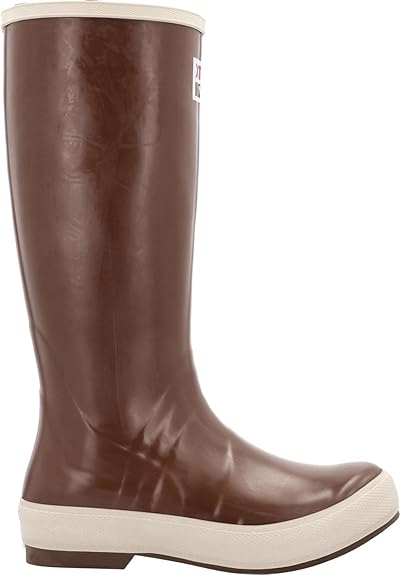
The XTRATUF Salmon Sisters Legacy brings Alaskan fishing industry reliability to Midwest work. These aren’t safety-toe boots, they’re specialized waterproof boots for extreme wet conditions.
What works: The triple-dipped latex neoprene construction creates a seamless barrier that’s 100% waterproof. Not “water-resistant” or “mostly waterproof”, actually, completely waterproof. Women working in food processing, veterinary medicine, outdoor maintenance, or anywhere involving standing water need this level of protection.
The signature Chevron outsole design and unique rubber compound provide maximum surface contact for traction on wet, slippery surfaces. The non-marking, slip-resistant sole excels on surfaces where traditional work boot soles fail, wet concrete, oily floors, fish slime, mud.
The latex neoprene is highly resistant to many organic and inorganic acids, chemicals, and contaminants. For women working with chemicals or in environments where boots face chemical exposure, this resistance extends boot life significantly. The material is ozone resistant, softer, lighter, and more flexible than ordinary rubber.
The boot is specifically designed on a women’s last, not just men’s boots in smaller sizes. The fit accounts for women’s narrower heels and different foot proportions. The 15-inch height provides coverage well above the knee when standing, preventing water from entering over the top.
Midwest-specific performance: These boots handle Midwest slush season better than any traditional work boot. When March means six inches of gray slush mixed with salt covering every surface, these boots keep feet completely dry. The flexibility allows natural movement despite the tall shaft.
The boots work excellently for outdoor winter work, snow removal, outdoor construction, utilities, landscaping. The flexibility prevents the stiff, awkward feeling of traditional rubber boots. However, they provide zero insulation, feet get cold in extreme temperatures without thick socks.
The compromise: These provide no safety toe protection. Women requiring ASTM-rated protection need different boots. The tall shaft limits mobility compared to 6-inch boots, not ideal for climbing ladders or working in tight spaces. The boots can be rolled down to show the interior Salmon Sisters print, but this reduces waterproof coverage.
The boots run snug, especially through the calf. XTRATUF recommends sizing up if between sizes, and definitely size up if planning to wear thick socks. The lack of insulation means cold feet in winter without proper sock layering. The boots weigh more than traditional leather work boots, approximately 3-4 pounds per boot.
The distinctive Salmon Sisters octopus print inside won’t appeal to everyone, though it’s only visible when rolled down. The boots require no break-in but take time to learn how to walk naturally in tall, flexible rubber boots if you’ve never worn them.
Best for: Women in food processing, veterinary work, outdoor maintenance, fishing/seafood industry, anywhere requiring maximum waterproof protection. Ideal for Midwest slush season and standing-water environments.
Price: $100-140
6. Wolverine Women’s Piper 6″ Composite Toe Waterproof: Proven Comfort
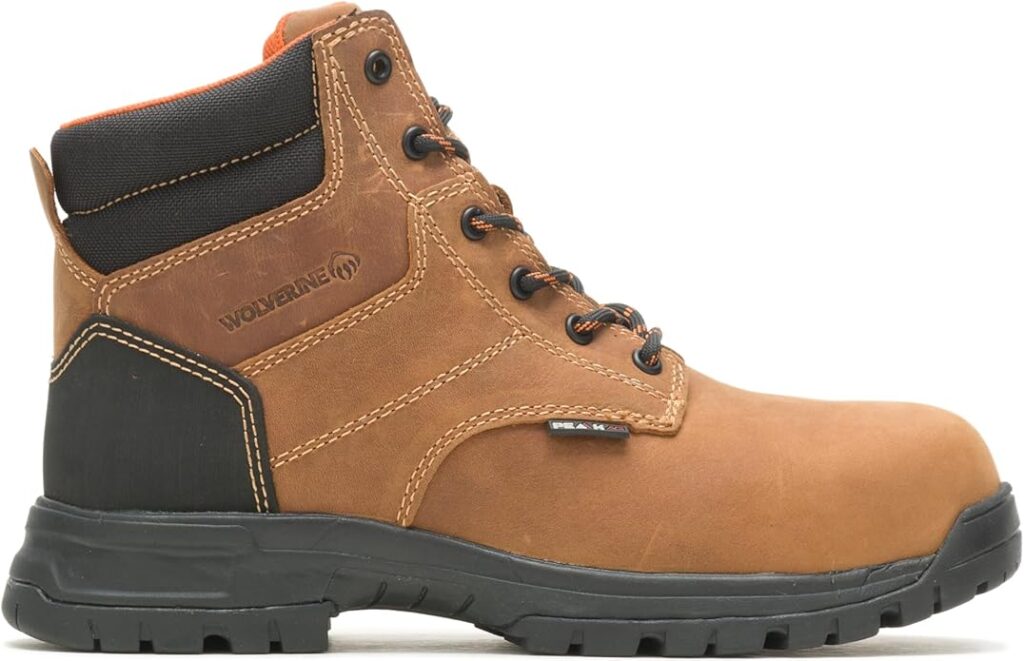
The Wolverine Piper delivers Wolverine’s DuraShocks comfort technology in a boot designed specifically for women’s feet.
What works: The composite safety toe meets ASTM F2413-18 standards while weighing 35% less than steel. The lightweight construction reduces leg fatigue during long shifts, critical for women working 10-12 hour days. The asymmetrical toe cap follows natural foot contours.
Wolverine’s Contour Welt construction creates flexibility where boots naturally bend during walking. This reduces break-in time and improves immediate comfort. The lightweight EVA midsole provides cushioning without excessive weight or bulk.
The waterproof membrane keeps feet dry while allowing moisture vapor to escape. For women working in varying conditions, indoor and outdoor, dry and wet, this versatility matters. The moisture-wicking mesh lining enhances breathability and comfort.
The slip-resistant rubber outsole provides reliable traction on various surfaces. The dual-density footbed provides cushioning and can be removed for replacement with custom orthotics if needed. Electrical hazard protection meets ASTM standards.
Midwest-specific performance: The waterproof construction handles typical Midwest conditions, rain, slush, wet floors. The breathable membrane prevents overheating during active indoor work. The composite toe doesn’t conduct cold during winter or heat during summer, more comfortable than steel across temperature extremes.
The lightweight design particularly benefits women who walk significant distances during shifts. The reduced weight compounds over thousands of steps, less fatigue, less joint stress, more energy at day’s end.
The compromise: The Contour Welt construction and lightweight design mean these boots aren’t built for heavy construction or extreme abuse. The materials and construction target light-to-medium-duty work. Women in heavy industrial settings might need more robust boots.
Some women report these run slightly large. Many users size down a half-size for proper fit. The generous toe box accommodates most foot shapes but can feel roomy for narrow feet. The moderate arch support works for average arches but might not satisfy women with very flat or very high arches.
The boots require minimal break-in, most women report comfortable wear within the first few days. However, the tongue can slip to the side during initial wear until it breaks in and stays centered.
Best for: Women in warehouse work, light manufacturing, facility maintenance, light construction. Ideal for women walking significant distances during shifts who prioritize lightweight comfort.
Price: $120-160
7. Muck Arctic Sport Steel Toe Waterproof Insulated Boot: Extreme Cold
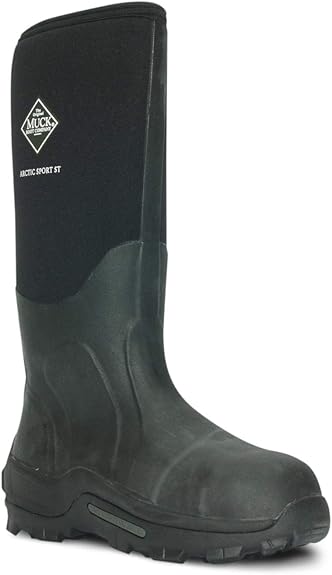
The Muck Arctic Sport Steel Toe targets women facing Midwest winter extremes. When temperatures drop below zero and ordinary boots fail, these boots deliver.
What works: The 5mm neoprene construction provides flexibility, 100% waterproofing, and excellent insulation. The steel toe meets ASTM F2413 protective toe standards while the rubber shell protects the toe from additional impact and abrasion.
The fleece lining and insulation work together to handle temperatures down to minus-20°F. For women working outdoors during Midwest winter, utilities, snow removal, outdoor construction, landscaping, this warmth is essential, not optional. The tall shaft prevents snow from entering over the top.
The self-cleaning outsole sheds mud and snow effectively. The aggressive tread pattern maintains traction on ice and snow, better than most traditional work boot soles on winter surfaces. The lightweight EVA midsole provides cushioning without the weight of traditional midsoles.
The pull-on design with stretch-fit topline hugs the calf, keeping warmth in and cold out. The boots are easy to pull on and off despite the insulation. The CR flex-foam allows natural movement and flexibility, no stiff, awkward feeling common in heavily insulated boots.
Midwest-specific performance: These excel for women working outdoors during November through March. The waterproofing handles snow, slush, and standing water. The insulation prevents frozen feet during extended cold exposure. The flexible neoprene allows natural movement despite the bulk.
The boots work well for utility workers, outdoor maintenance, snow removal, and anyone spending extended periods outside in winter. The tall shaft (approximately 12 inches) provides excellent coverage.
The compromise: The insulation makes these too warm for indoor work or temperatures above 40°F. Women working in heated buildings will overheat quickly. These are specialized winter boots, not year-round options. The bulk and weight (approximately 3.5 pounds per boot) take getting used to.
The steel toe conducts cold, seemingly contradictory in insulated boots, but the toe gets coldest. Women with circulation issues or Raynaud’s might still experience cold toes despite the insulation. The boots run large, most women order down one full size from their normal size.
The pull-on design offers no fit adjustment. If they don’t fit your calf circumference or foot shape perfectly, you can’t fine-tune the fit. The aggressive tread tracks mud and snow indoors, not ideal for clean environments.
Best for: Women working outdoors during Midwest winter in temperatures below freezing. Utilities, outdoor construction, snow removal, outdoor maintenance. Ideal for extended cold exposure requiring maximum warmth and waterproofing.
Price: $140-190
8. Xena Workwear Omega Boots: Direct-to-Consumer Innovation
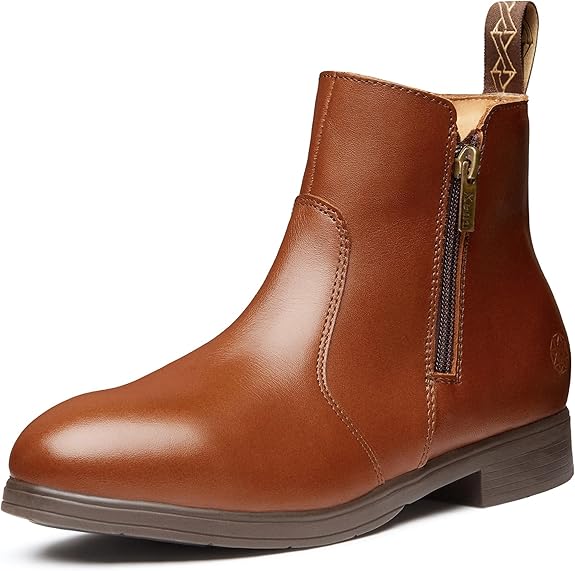
The Xena Workwear Omega represents a newer direct-to-consumer brand specifically targeting women in trades. The company was founded by women for women, understanding fit challenges firsthand.
What works: The boots are designed entirely around women’s foot anatomy from the start, not adapted from men’s lasts. The company surveyed hundreds of tradeswomen about fit problems and designed solutions specifically addressing those issues. The result is boots that fit women’s heels, arches, and forefeet properly.
The composite safety toe meets ASTM F2413 standards while remaining lighter than steel. The waterproof leather upper handles wet conditions. The cushioned insole and shock-absorbing midsole provide comfort during extended wear. The slip-resistant outsole provides traction on various surfaces.
The boots include electrical hazard protection meeting ASTM standards. The puncture-resistant plate prevents sharp objects from penetrating through the sole. The moisture-wicking lining helps manage perspiration.
Midwest-specific performance: The waterproof construction handles typical Midwest wet conditions. The composite toe doesn’t conduct temperature extremes. The cushioning benefits women on concrete floors.
As a direct-to-consumer brand, Xena eliminates retailer markup, delivering quality comparable to $150-180 boots at lower prices. The company’s focus on women’s specific needs shows in the attention to fit details that major manufacturers often miss.
The compromise: As a newer brand, long-term durability data is limited. User reviews are fewer than established brands, making it harder to assess how these hold up after 12-24 months of heavy use. The return policy and customer service are critical considerations with newer direct brands.
The boots may not be available for in-person try-on at local retailers. Ordering online requires trusting sizing information and dealing with returns if fit isn’t right. Some women prefer buying from established brands with decades of track records.
The company’s smaller production volumes mean less variety in styles, widths, and specialized options compared to major manufacturers.
Best for: Women wanting boots designed by women for women, willing to try newer brands. Light-to-medium-duty work where proven long-term durability isn’t yet established. Women frustrated with major brands’ poor attention to women’s fit.
Price: $130-160
9. Thorogood American Heritage Women’s Work Boots: Heritage Quality
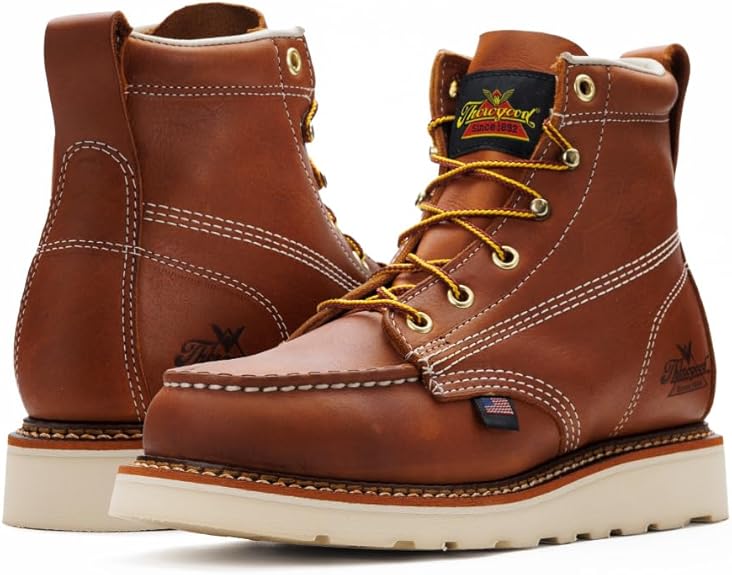
The Thorogood American Heritage Women’s adapts Thorogood’s legendary quality to women-specific lasts. These boots prove American craftsmanship works for women when done properly.
What works: The oil-tanned full-grain American leather undergoes rigorous testing for strength, density, and aging characteristics. The leather quality is immediately apparent, thick, substantial, and built to last years rather than months. The moc toe design provides generous toe box room.
Goodyear welt construction means these boots can be resoled when soles wear out. A cobbler can replace the worn sole for $80-120, extending boot life by years. This construction method also creates a wider, more stable platform underfoot.
The removable Ultimate Shock Absorption footbed uses dual-density polyurethane with extra cushioning under high-impact zones. The footbed genuinely reduces fatigue during extended standing and walking on concrete. When it eventually compresses (typically after 12-18 months of heavy use), replacement footbeds cost $30-40.
The MAXWear Wedge sole excels on flat, hard surfaces, exactly what most Midwest manufacturing and warehouse workers encounter. Oil-and-slip-resistant outsole meets ASTM F3445-21 standards. Electrical hazard protection meets ASTM F2892-18 standards.
Midwest-specific performance: The wedge sole performs exceptionally on concrete and smooth surfaces. The unlined leather breathes well during warm weather while accommodating thick socks in winter. For women working both indoors and outdoors, this versatility matters.
The boots are available in safety toe and soft toe versions. The soft toe version provides no ASTM protection but remains popular with women not requiring safety toes. Make sure you’re ordering the version you need.
The compromise: The wedge sole doesn’t provide aggressive traction on loose gravel, mud, or outdoor terrain. If work involves varied surfaces, consider different sole designs. The soft wedge compound wears faster on rough surfaces like asphalt and gravel.
Break-in takes time. The thick leather and structured construction need two weeks of gradual wear. Some women report the ankle collar rubbing initially, though leather conditioner speeds break-in and prevents stiffness.
The boots run true to size for most women. The moc toe design provides generous toe box room, but women with very narrow feet might find them roomy. The boots are available in medium width only, no wide or narrow options.
Best for: Women working on concrete and smooth surfaces. Manufacturing, assembly, carpentry, indoor construction where comfort matters as much as durability. Ideal for women who want boots that improve with age.
Price: $220-280
10. BLUNDSTONE Work & Safety Chelsea Boots: Australian Versatility
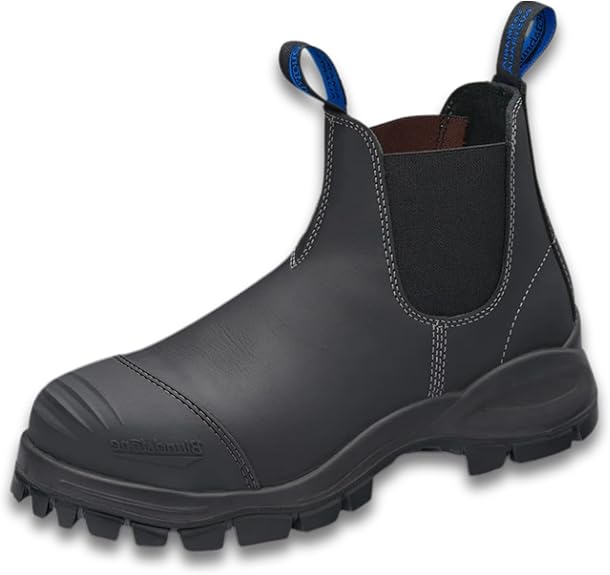
The Blundstone Work & Safety Chelsea brings Australian Chelsea boot heritage to women’s work environments. The slip-on design polarizes users, women either love or hate the convenience.
What works: The pull-on Chelsea design with elastic side panels allows quick on-off without lacing. For women entering and exiting work areas frequently, this saves time and hassle. The lack of laces means no dealing with wet, muddy laces or relacing multiple times daily.
The steel toe is broader than most competitors, providing more toe box room. This helps women with wider feet or those who find safety toes cramping. The steel toe meets ASTM F2413 standards for impact and compression.
Blundstone’s comfort technology in the sole absorbs impact under heel and ball of foot. The lightweight construction reduces leg fatigue. The removable footbed allows replacement with custom orthotics if needed. Electrical hazard protection meets ASTM standards.
The leather is water-resistant (not fully waterproof), adequate for light rain and wet floors but not standing water or extended wet exposure. The slip-resistant outsole provides good traction on most surfaces.
Midwest-specific performance: The Chelsea design works well for indoor-focused jobs with occasional outdoor exposure. The lightweight design and shock absorption make them excellent for concrete floors. The easy on-off suits jobs requiring frequent boot removal.
The boots handle typical Midwest conditions, brief rain exposure, wet floors, dry work environments. The flexibility allows natural movement despite being safety-toe boots.
The compromise: Many construction sites ban Chelsea-style boots, considering them less secure than laced boots. Verify your workplace allows slip-on boots before buying. The lack of lacing means zero fit adjustment, if they don’t fit perfectly initially, you can’t fine-tune.
The boots run slightly small in length and wide in width. Most women need to go up a half-size. The generous width works great for wide-footed women but creates fit issues for narrow feet. The direct-attach construction means these aren’t resoleable, when soles wear out, you’re buying new boots.
Some users report soles starting to separate after heavy use, quality control appears inconsistent. The water resistance (not waterproofing) limits use in very wet conditions. The pull-on design can be difficult for women with high insteps.
Best for: Women in trades allowing slip-on boots who prioritize convenience. Light manufacturing, assembly, indoor maintenance. Ideal for women with wider feet who find traditional safety toes cramping.
Price: $170-220
Comparison Table
| Boot | Safety Toe | Waterproof | Weight | Best For Women | Price |
|---|---|---|---|---|---|
| Timberland PRO TITAN | Alloy | Yes | Medium | All-around professional work | $140-180 |
| Steel Blue Southern Cross | Steel | Water-Resistant | Medium | Side-zip convenience, indoor work | $220-260 |
| Ariat Riveter Chelsea | Composite | Yes | Light | Pull-on convenience, construction | $165-195 |
| Danner Bull Run | Steel | No* | Medium | Premium investment, USA-made | $230-270 |
| XTRATUF Salmon Sisters | None | Yes | Heavy | Extreme wet conditions, food processing | $100-140 |
| Wolverine Piper | Composite | Yes | Lightweight | Walking-intensive jobs | $120-160 |
| Muck Arctic Sport | Steel | Yes | Heavy | Extreme cold, outdoor winter work | $140-190 |
| Xena Workwear Omega | Composite | Yes | Medium | Women-designed, direct-to-consumer | $130-160 |
| Thorogood Heritage | Steel/Soft | No | Medium | Heritage quality, concrete surfaces | $220-280 |
| Blundstone Chelsea | Steel | Water-Resistant | Light | Slip-on convenience, indoor work | $170-220 |
How to Choose Women’s Work Boots
Start With Your Actual Workplace Requirements
Before considering features or brands, verify your workplace safety requirements. OSHA mandates protective footwear in environments with foot hazards. Check your employer’s specific requirements, some require steel toes, others accept composite or alloy. Some jobs require metatarsal guards, puncture-resistant plates, or specific electrical hazard protection.
ASTM F2413 standards define safety toe protection levels. Most jobs require I/75 and C/75 ratings minimum, impact resistance of 75 foot-pounds and compression resistance of 2,500 pounds. Verify your specific requirements before shopping.
Understand Women-Specific Fit Needs
Women’s work boots must account for anatomical differences. Look for boots explicitly built on women’s lasts, not just men’s boots in smaller sizes. Check if the manufacturer specifies women-specific design or if they’re selling unisex boots.
Heel-to-Forefoot Ratio: Women need boots with narrower heels relative to forefoot width. Boots designed on men’s lasts create heel slippage that causes blisters and reduces stability.
Arch Placement: Women’s arches typically sit differently than men’s. Boots with adjustable or removable footbeds allow customization if needed.
Ankle Collar Height: Women’s ankle collars should sit lower than men’s versions. Boots designed for men create painful rubbing on women’s ankles.
Toe Box Volume: Safety toes compress toe spread. Women need adequate toe box volume to prevent cramping and circulation problems during extended wear.
Safety Toe Options for Women
Steel Toe: Traditional, affordable, provides excellent protection. Conducts cold (uncomfortable in winter), triggers metal detectors, adds weight. Best for: women working exclusively indoors where temperature isn’t a concern.
Composite Toe: Non-metallic, doesn’t conduct temperature, won’t trigger metal detectors. Weighs 30% less than steel. Costs slightly more. Best for: women working in varying temperatures or around metal detectors. The reduced weight significantly reduces leg fatigue.
Alloy Toe: Aluminum or other metal alloys. Lighter than steel, still trigger metal detectors, conduct temperature less than steel. Middle ground between steel and composite in price and performance.
No Safety Toe: Adequate for work not requiring ASTM-rated protection. Lighter, more comfortable, usually less expensive. Best for: trades without impact hazards, some delivery roles, certain maintenance positions, landscaping.
For Midwest work, composite or alloy toes often provide the best balance, they don’t conduct cold during winter work, reduce weight for all-day comfort, and meet all necessary protection standards.
Waterproofing vs. Water Resistance
Water-Resistant: Treated leather that repels light moisture. Works for brief rain exposure or light splashes. Won’t survive standing water or extended wet conditions. Adequate for indoor work with occasional outdoor exposure.
Waterproof: Sealed membrane construction that prevents water entry during extended exposure. Essential for outdoor work, food processing, anywhere involving standing water. The breathable membrane matters, non-breathable waterproof boots trap sweat, leaving feet clammy.
For Midwest conditions, waterproof boots make sense for outdoor work and construction from October through April. Indoor workers might prefer water-resistant for better breathability during summer, accepting reduced wet protection.
Construction Methods and Long-Term Value
Goodyear Welt: Uppers stitched to welt, then to sole. Creates durable, water-resistant boots that can be resoled. The gold standard for quality work boots. More expensive initially but lower long-term cost through resoling.
Stitchdown: Uppers stitched directly to sole, creating wide, stable platform. Can be resoled but fewer cobblers handle stitchdown repairs. Danner’s preferred construction.
Direct-Attach/Cement: Soles glued to uppers. Less expensive, no break-in required. More flexible initially but less durable long-term. Cannot be resoled. Good for budget boots or women who replace boots frequently anyway.
For women buying quality boots intended to last years, Goodyear welt or stitchdown construction justifies the higher initial cost through extended life and resoling capability.
Fit Testing That Actually Matters
Don’t just walk around the store or living room. Test boots properly:
The Stair Test: Walk up and down stairs. Your heel should stay locked in place. If your heel lifts significantly, the boot is too big or the heel cup isn’t aggressive enough for your foot shape.
The Squat Test: Squat down fully. The boot should flex at the ball of your foot, not in the arch. If the boot creases in the arch area, it’s too long.
The Toe Room Test: Stand up and slide your foot as far forward as possible. You should fit one finger width behind your heel. This provides adequate toe room for foot swelling and forward movement during walking.
The Width Test: The boot should feel snug through the midfoot without pinching. Your foot shouldn’t slide side-to-side when walking. If you need to over-tighten laces to prevent side-to-side movement, you need a narrower width.
The All-Day Test: Wear boots around the house for several hours with your typical work socks. Hot spots, pressure points, and fit issues become apparent during extended wear that you won’t notice in 5-minute store trials.
Making Your Investment Last
Quality women’s work boots represent significant investment. Proper care extends their useful life dramatically.
Daily Maintenance (5 minutes)
After Every Shift: Wipe boots with damp cloth, removing dirt, salt, and debris. This prevents material degradation. Pay attention to welt stitching and seams where dirt accumulates and causes premature wear.
Remove Insoles: Pull out removable insoles after wet shifts. Allows interior to dry thoroughly and prevents odor-causing bacteria. Hang or lay insoles separately to dry.
Brush Off Excess Dirt: Use a stiff brush to remove caked mud before it dries. Dried mud is harder to remove and holds moisture against leather.
Weekly Care (15-20 minutes)
Leather Conditioning: Apply leather conditioner every 1-2 weeks during heavy use. Maintains leather flexibility, prevents cracking, helps repel water. Use products designed for work boots—they maintain breathability while conditioning.
Lace Inspection: Check laces for fraying. Replace at first signs of wear. Lace failure leads to improper fit and reduces boot support. Quality laces cost $5-10 and significantly improve function.
Sole Inspection: Check for uneven wear patterns, cracking, or separation. Address problems early before they worsen. Minor separations can be glued; major damage requires professional repair or replacement.
Salt Damage Prevention
Midwest winters mean road salt exposure. Salt accelerates leather degradation faster than almost anything else.
Immediate Action: Wipe boots after each exposure to salt or de-icing chemicals. Don’t wait until end-of-day, salt starts corroding immediately. Use slightly damp cloth to remove salt residue.
Salt-Specific Products: Use products designed to neutralize and remove salt deposits. Water alone doesn’t remove all salt residue. Salt-removing products cost $8-12 and dramatically extend boot life.
Protective Treatments: Apply water-repellent treatments before winter. Creates a barrier helping prevent salt penetration. Reapply every few weeks during heavy salt exposure.
Storage
Daily Storage: Store boots loosely laced in well-ventilated areas. Avoid leaving wet boots in closed lockers, this encourages mold and odor. Position boots to promote air circulation.
Off-Season Storage: Clean and condition boots thoroughly before storage. Store in cool, dry locations away from direct sunlight. Use boot trees or stuff with newspaper to maintain shape. Check periodically for mold or material degradation.
When to Replace
Sole Wear: When treads wear smooth or soles show significant damage. Smooth soles become unsafe. For resoleable boots, plan resoling when tread depth decreases noticeably.
Upper Damage: Significant leather cracks, tears, or holes compromise protection and waterproofing. Minor scuffs are cosmetic; structural damage requires replacement.
Interior Degradation: When insoles compress permanently and new insoles don’t help, the boot’s midsole has collapsed. Continued use causes joint problems.
Safety Toe Damage: Any dent, crack, or structural damage to safety toes requires immediate replacement. Compromised safety toes don’t provide reliable protection.
Common Women’s Sizing Mistakes
Buying Men’s Boots to Save Money
The “just buy men’s boots and size down” advice causes genuine harm. Men’s boots are designed for different foot anatomy. Women forced into men’s boots experience heel slippage, arch pain, ankle rubbing, and forefoot cramping. The short-term savings lead to long-term foot problems and often premature boot replacement when they prove unwearable.
Ignoring Width Options
Many women need wide (W or 2E) work boots but don’t realize width options exist. Trying to compensate by going up in length creates heel slippage, reduces stability, and causes blisters. If boots feel tight across the ball of your foot but have adequate toe room, you need wider width, not longer length.
Not Accounting for Socks
The socks you wear matter significantly. If you’ll wear thin dress socks, boots should fit accordingly. If you’ll wear thick wool socks in winter, you need more room. Test boots with the socks you’ll actually wear at work.
Buying Without Break-In Consideration
Quality leather boots require break-in. They’ll feel stiff initially. This doesn’t mean they’re wrong size, it means the leather hasn’t molded to your foot yet. Distinguish between “needs break-in” stiffness and “actually wrong size” tightness. If you can’t wiggle toes or the boot pinches severely, it’s too small. If it just feels stiff and structured, that’s normal for quality leather boots.
Prioritizing Style Over Fit
Women face pressure to choose “cute” work boots over properly fitting ones. Resist this. Your feet matter more than appearance. A boot that fits properly but looks utilitarian is infinitely better than an attractive boot that causes pain and foot damage.
Midwest-Specific Considerations for Women
Temperature Management
Midwest weather creates unique challenges you can’t optimize boots for simultaneously.
Single-Boot Approach: Choose non-insulated waterproof boots. Use thin socks for warm weather, thick insulated socks for winter. Works best for indoor workers or those with mostly moderate conditions.
Two-Boot System: Own separate summer and winter boots. Non-insulated, breathable boots for April through October. Insulated waterproof boots for November through March. More expensive initially but each pair lasts longer since they’re only used half the year.
Dealing with Salt and Slush
Late winter and early spring mean omnipresent slush mixed with road salt—this combination destroys boots faster than almost anything else.
Daily Maintenance Becomes Essential: The five minutes spent cleaning boots after work can double their lifespan. Wipe them down, remove salt deposits, allow proper drying.
Waterproofing is Essential: Slush finds every weak point. Waterproof boots are necessary for outdoor and construction work during slush season. Even indoor workers face slush during commutes and lunch breaks.
Leather Treatment Frequency Increases: Apply salt-removal products and leather conditioner more frequently during winter. The protection prevents accelerated degradation.
Finding Women-Specific Options
Not all retailers stock women’s work boots properly. Major retailers often carry one or two token women’s options while offering dozens of men’s choices. Consider:
Online Shopping: Expands options significantly but requires dealing with returns for fit issues. Buy from retailers with easy return policies.
Industrial Supply Stores: Often stock broader women’s selections than general retailers. Staff tend to be more knowledgeable about fit requirements.
Direct-to-Consumer Brands: Companies like Xena Workwear focus exclusively on women, understanding fit challenges better than major manufacturers treating women as afterthoughts.
Bottom Line: Best Women’s Work Boots for Most Midwest Workers
For the majority of Midwest women working in construction, manufacturing, warehouses, and the trades, three boots represent the best overall value:
Best All-Around: Timberland PRO TITAN 6″ Alloy Toe Waterproof ($140-180)
The TITAN delivers professional-grade protection, genuine women-specific fit, and proven comfort at a price that makes sense for daily users. The alloy toe, waterproof construction, and PowerFit comfort system address the specific challenges Midwest women workers face. It’s not the cheapest option, but it provides proven performance from a reputable manufacturer. This is the safe choice, you’re getting quality that actually fits women’s feet.
Best Premium Investment: Danner Women’s Bull Run ($230-270)
For women wanting boots that improve with age and last years rather than months, the Bull Run justifies its higher price through exceptional materials, USA construction, and resoleable design. The unlined leather molds perfectly to your foot over time. These boots aren’t for everyone, the price and break-in period require commitment. But for women who appreciate quality and can invest in boots that last, these deliver exceptional long-term value.
Best Specialized: XTRATUF Salmon Sisters Legacy ($90-130)
For women working in extreme wet conditions, food processing, veterinary medicine, outdoor maintenance, the XTRATUF provides unmatched waterproof protection at reasonable cost. These aren’t all-purpose work boots, but for their specific application, nothing else compares. The complete waterproofing and chemical resistance make them essential gear for certain jobs.
Budget Choice: For women needing affordable boots that meet safety requirements, the Wolverine Piper ($120-160) provides legitimate composite toe protection and waterproofing without premium pricing. It won’t last as long as quality options, but it delivers honest value for light-to-medium-duty work.
Maximum Convenience: For women prioritizing easy on-off capability, the Ariat Riveter Chelsea ($165-195) or Steel Blue Southern Cross ($210-240) provide excellent pull-on or side-zip convenience without sacrificing protection.
More Work Boot Guides
Looking for work boots guides for different needs, features, or budgets? Check out our comprehensive work boots hub:
Best Work Boots for the Midwest – Complete Guide
Best Work Boots For Men In The Midwest
Our main work boots hub covers:
- Overall best work boots for Midwest conditions
- Guides organized by work type (construction, manufacturing, warehouse, electrician)
- Guides organized by features (waterproof, steel toe, composite toe, comfort)
- Budget-specific guides (under $150, premium options)
- Seasonal guides (winter insulated, summer breathable)
Related Categories:
- Best Winter Boots for the Midwest – Cold weather protection for daily wear
FAQs
Men’s work boots are designed around male foot anatomy, wider heels, different arch placement, higher ankle collars, and different forefoot proportions. Women forced into men’s boots experience heel slippage (causing blisters and reducing stability), arch pain (support sits in wrong location), ankle rubbing (collars sit too high), and forefoot cramping (sizing down for heel fit compresses toes). These aren’t minor comfort issues, they cause genuine foot damage over time including plantar fasciitis, bunions, and arch collapse. Women’s feet deserve boots designed for women’s anatomy, not adapted men’s boots.
Yes. Both steel and composite toes must meet the same ASTM F2413 standards, they provide identical protection levels against impact and compression hazards. The difference lies in weight (composite weighs 30% less), temperature conductivity (steel conducts cold and heat, composite doesn’t), and metal detector compatibility (composite won’t trigger metal detectors). For protection level, they’re equal. For practical daily wear, composite often wins for women, the reduced weight decreases leg fatigue during long shifts, and the non-conductive properties prevent frozen toes in winter and overheating in summer.
Not all retailers stock women’s work boots adequately. Industrial supply stores typically offer broader women’s selections than general retailers. Online shopping expands options significantly but requires dealing with potential returns for fit issues, buy from retailers with easy return policies. Direct-to-consumer brands like Xena Workwear focus exclusively on women and understand fit challenges better. When possible, try boots on in person wearing your typical work socks. Join online communities of tradeswomen who share recommendations and experiences, they understand fit challenges firsthand and can direct you to brands and models that actually work for women’s feet.
For women wearing boots daily in demanding conditions, yes, quality boots provide better value long-term. A $200 pair of Goodyear-welted boots can be resoled for $100-130, providing 4-5 years of wear. That’s $0.15-0.25 per day of use. Three pairs of $100 boots over the same period cost $300 and provide inferior comfort and fit. The math favors quality. However, expensive doesn’t automatically mean better. Some premium boots cost more for brand prestige or features you don’t need. Focus on construction quality (Goodyear welt, stitchdown), women-specific design (not adapted men’s boots), and features addressing your specific work conditions. A $160 Timberland PRO TITAN built for women often provides better value than a $120 unisex budget boot or a $300 men’s boot in smaller sizes.
